The past is a permanent dimension of human consciousness and values

Never let the past overburden you, but always let it teach you

India, i. e. “Bharat” is the land of diversified cultures and values, beholding in herself the flavours of the longest epics such as “Mahabharata”,stories of valor of Maharana Pratap, struggle of the great social reforms of the 19th century, Rajaram Mohan Roy, Eshwar Chandra Vidyasaagar, Rani laxmi bai, Pandita Ramabai, Dr. B. R. Ambedkar and many more great souls.

Human revolution is one of the most extraordinary phenomenons that took place on the earth. Beginning with inventions of fire and wheel by Humans, to the use of complex iron and copper tools and development of settled livelihood, humans are the most advanced creatures on the planet. But with this great advancement and the ambitions of humans which tend to never end, the most capable animal HUMAN turned wild, mean, consumerist, capitalist and above all self obsessed. The increased volume of practices such as, corruption, crony-capitalism, smuggling, theft, events of eve teasing, rape, sexual assaults etc. and etc. has let the whole human community down.

People have gone out of their senses in this hectic and fast growing world, racing for acquiring wealth and power. The question is, have all of these problems not existed prior 21st century!? The answers to this is that off course these kind of heinous crimes existed earlier as well but this is the power of humans to cope with these situations. History itself is the witness that even during the later Vedic period with emergence of Manusrimti, not only women but the so called lower casts or “shudras” and vaishyas also have to go through discrimination and ill treatment of the Brahaminical class. But people during those times got their ideals in enlightened figures – Gautam Buddha and Mahavira. The two acknowledged figures stood against such practices and showed the path of truth and non violence. Even Mahatma Gandhi during his lifetime took inspiration from these principles and values. These principles were largely about “human salvation, consciousness of mind and soul and humanity.

The epics of Ramayana, Mahabharata and the story of Jesus Christ, all revolve around great deeds of humanity, dharma, sacrifices etc. People around the world today worship one or the other forms of God, be it Hindu Gods and Goddesses, Jews worshiping Jesus or Muslims worshiping Mohammed Prophet. But do they really worship them for attaining peace and consciousness? Or just for the sake of their own well being and prosperity?! To worship should mean to follow their teachings of love, humanity, ethical values, dharma etc. These religious epics- Quran, Bible, Geeta are the richest sources of human values.
If we move a little forward in history and throw attention towards the great movements of medieval times around the world such as Sufi movement, Bhakti movement etc. we get the evidences of reforms in the original forks of worship, turning the society into more contemporary and realistic forms of profession of devotion towards god and mankind. These movements condemned all forms of cruelty towards humans as well as animals and taught the lesson of mysticism. These emphasized on direct connection with god or the good of everyone. The world today is heading towards India and looking upon it to be a path maker in the field of meditation and yoga, the practices which are a source of escape from the inhumane world into a world where it has patience, peace, love and satisfaction. These virtues has enabled the man to first think and then act.

There is no denial to the fact that past and especially 19th century has shown the world one of the most cruel phase of humanity. The practices of sati, untouchability, child marriage, bonded labour, mass killings of Jews (under Nazism), polygamy, Purdah system and many more were written in Black letters in the history. But all of this came to an end with the tireless efforts of such great human beings as Raja Ram Mohan Roy, who stick stick to his principles despite huge criticism from society and even family. It was his efforts which led to laws such as Abolition of Sati Act. Other great personality is Eshwar Chandra Vidyasaagar whose efforts brought in existence the law of widow Remarriage Act. Leaders like Dr. B. R. Ambedkar, Jyotiba Phule, Mahatma Gandhi, their whole life advocated for abolition of untouchability. Female warriors of those times- Savitribai Phule, Sarojini Naidu, Mother Teresa were, are, and will always be inspiration for the world to strive for achieving equal status for women, poor, unprivileged. These great souls have taught us to work for human betterment, even without any personal gains.

Why can’t today the world look back for one and adopt these values and culture that we owned in the past. The incidents of cow slaughter and mob lynching are nothing but a slap on the face of teachings of Buddha, Mahavira and even ideals of Gandhiji. Abraham Lincoln one of the revolutionaries and a face of anti-black movement of America, fought with all his efforts against black racism in the U. S. A but the events of killing of black activists on the streets of U. S. A by officials is not something for which the nobel man had dream of. History is not just a source of knowledge of the past theories but is a treasure to look back at and learn to cope with the modern day problems destroying humanity and depriving the mankind and consciousness. It’s high time, the world should adopt the principle of Lord Mahavira

Live and let live.

Indian Scientists Create ‘Black Gold’ to Boost Solar Power, Make Seawater Potable!

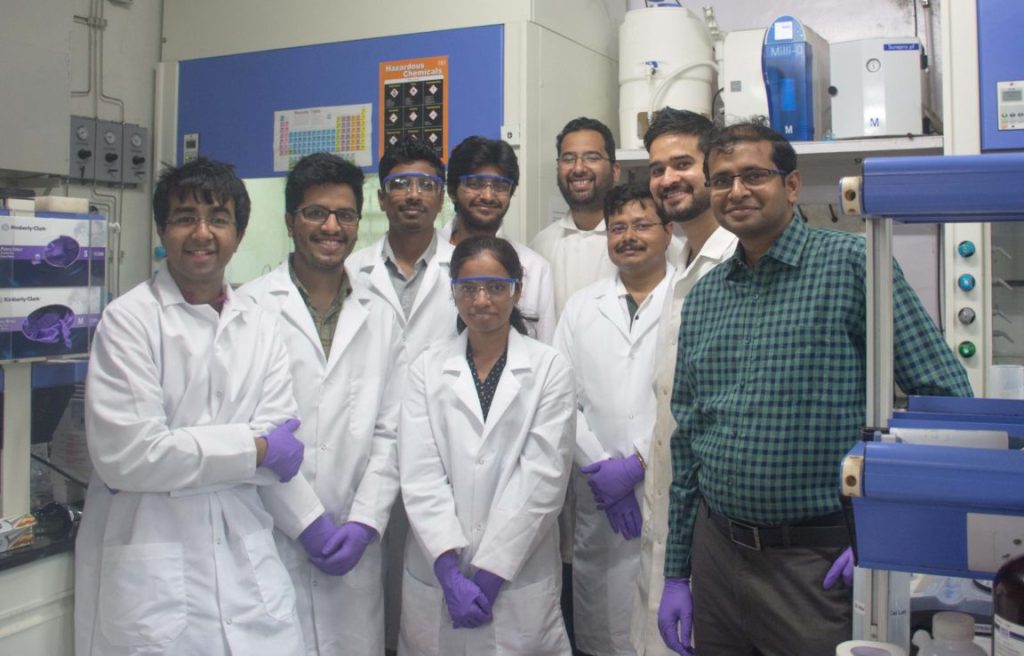
Scientists at the Mumbai-based Tata Institute of Fundamental Research (TIFR) used gold nanoparticles and, by rearranging size and gaps between them, developed a new material which has unique properties like the capacity to absorb light and carbon dioxide.

one of the largest consumers of the precious metal globally. Now Indian scientists have tinkered with the chemistry of the material and turned it into ‘black gold’ which they say has the potential to be used for applications ranging from harvesting solar energy to desalinating seawater.

Scientists at the Mumbai-based Tata Institute of Fundamental Research (TIFR) rearranged the size and gaps between gold nanoparticles to develop a new material which has the unique properties of absorbing light and carbon dioxide. Gold does not have these properties. In appearance the new material is black, hence the name ‘black gold.

While speaking to India Science Wire, Vivek Polshettiwar, who led the research team, explained, “We have not doped gold nanoparticles with any other material or added other materials. We varied inter-particle distance between gold nanoparticles using a cycle-by-cycle growth approach by optimizing the nucleation-growth step, using dendritic fibrous nanosilica whose fibers were used as the deposition site for gold nanoparticles.”

One of the most fascinating properties of the new material is its ability to absorb the entire visible and near-infrared region of solar light. It does so because of inter-particle plasmonic coupling as well as heterogeneity in nanoparticle size. Black gold could also act as a catalyst and could convert carbon dioxide into methane at atmospheric pressure and temperature using solar energy.

“If we develop an artificial tree with leaves made out of black gold, it can perform artificial photosynthesis, capturing carbon dioxide and converting it into fuel and other useful chemicals,” added Prof Polshettiwar. The efficiency of conversion of carbon dioxide into fuel, at present, is low but researchers believe it could be improved in future.

In order to study the new material’s ability to harvest solar energy, researchers dispersed it into water and exposed the solution to light for one hour and the temperature of the solution was measured. The temperature of the solution, with pure silica spheres, rose to 38 degrees while the ones with different concentrations of black gold rose to 67 to 88 degrees. The maximum increase in temperature was attributed to creation of thermal hotspots due to the heterogeneity of the particle sizes as well as optimum inter- particle coupling.

Researchers said the material can be used as a nano-heater to covert seawater into potable water with good efficiency. “Our results indicate the potential application of black gold in purification of seawater to potable water via steam generation using solar energy under atmospheric reaction conditions.”

The research team included Mahak Dhiman, Ayan Maity, Anirban Das, Rajesh Belgamwar, Bhagyashree Chalke and Vivek Polshettiwar (TIFT); Yeonhee Lee, Kyunjong Sim and Jwa-Min Nam (Seoul National University).

The study was funded by the Department of Science and Technology (DST) and the Department of Atomic Energy (DAE).

#indian_science_wire

@martin_christopher

Women Empowerment in India!

The subject of empowerment of women has becoming a burning issue all over the world including India since last few decades. Many agencies of United Nations in their reports have emphasized that gender issue is to be given utmost priority. It is held that women now cannot be asked to wait for any more for equality.

Inequalities between men and women and discrimination against women have also been age-old issues all over the world. Thus, women’s quest for equality with man is a universal phenomenon. What exists for men is demanded by women?

They have demanded equality with men in matters of education, employment, inheritance, marriage, politics and recently in the field of religion also to serve as cleric (in Hinduism and Islam). Women want to have for themselves the same strategies of change which menfolk have had over the centuries such as equal pay for equal work. Their quest for equality has given birth to the formation of many women’s associations and launching of movements.

#feminism

The position and status of women all over the world has risen incredibly in the 20th century. We find that it has been very low in 18th and 19th centuries in India and elsewhere when they were treated like ‘objects’ that can be bought and sold. For a long time women in India remained within the four walls of their household. Their dependence on menfolk was total.

A long struggle going back over a century has brought women the property rights, voting rights, an equality in civil rights before the law in matters of marriage and employment (in India women had not to struggle for voting rights as we find in other countries).

In addition to the above rights, in India, the customs of purdha (veil system), female infanticide, child marriage, sati system (self-immolation by the women with their husbands), dowry system and the state of permanent widowhood were either totally removed or checked to an appreciable extent after independence through legislative measures.

#women_empowerment

Two Acts have also been enacted to emancipate women in India. These are: Protection of Women from Domestic Violence Act, 2005 and the Compulsory Registration of Marriage Act, 2006. The Domestic Violence Act recognizes that abuse be physical as well as mental.

Anything that makes a woman feel inferior and takes away her self-respect is abuse. Compulsory Registration of Marriage Act can be beneficial in preventing the abuse of insti­tution of marriage and hindering social justice especially in relation to women.

It would help the innumerable women in the country who get abandoned by their husbands and have no means of proving their marital status. It would also help check child marriages, bigamy and polygamy, enable women to seek maintenance and custody of their children and widows can claim inheritance rights. The Act is applicable on all women irrespective of caste, creed or religion. It would truly empower Indian women to exercise their rights.

To what extent legislative measures have been able to raise the status of women in India? Are women now feel empowered in the sense that they are being equally treated by men in all spheres of life and are able to express one’s true feminine urges and energies? These are the important questions to be investigated with regard to women’s empowerment in India.

@martin_Christopher

Call for Papers IJR

International Journal of Research (IJR) publishes regular papers and special issues on specific topics of interest to international audiences of educational researchers.
The aim of the journal is to help them better understand each other’s role in the overall process of education and how they may support each other. The articles should be original, unpublished, and not in consideration for publication elsewhere at the time of submission to International Journal of Research (IJR) and one month thereafter.

How to Submit Papers

Send papers through mail to ijr@ijrjournal.com

Scope of Publication in IJR

The topics related to this journal include but are not limited to:
•Educational systems architectures
•Computer-mediated communication
•Distance education/learning
•Distance learning systems
•Distributed learning environments
•Educational multimedia
•Human-computer interface issues
•Hypermedia systems/applications
•Interactive learning environments
•Learning by doing
•Multimedia systems/applications
•Network-based learning environment
•Online education
•Simulations for learning
•Web based instruction/training
•Intelligent learning environments
•Intelligent tutoring environments
•Collaborative learning & environment
•Didactic/pedagogical issues
•Teaching/learning strategies

Free Book Publication Offer for Scholars

Dear Author,

We at Pen2Print, (an Imprint & Trademark of Edupedia Publications Pvt Ltd) are dedicated to promoting scholarly publication and promotion of authors and literary works through our publishing platform.Book Publication Options - Copy.jpg

We have an offer for regular contributors of our journals and publication sites. If you are a regular contributor of articles and poems to our official sites then you are eligible to get your Books Published Free of Cost under Pen2Print Global Scholars Support Scheme.

Conditions to be fulfilled before this offer will be available to you:

  1. Authors should be regular contributor of poems, articles and writing to our publication sites viz.
  1. Authors can submit maximum 2 poems or articles per day for this Contest.
  2. Minimum poems or articles contributed within one year should be 100 to qualify for this contest of   Free Book Publication under Pen2Print Global Scholars Support Scheme.
  3. We will provide all services free of cost for the design and formatting of the book for publication.
  4. Authors will have to pay just production cost of book which will be affordable for most authors. (Price=production cost X no. of copies)
  5. Published book will be available on https://books.pen2print.org/ Amazon & Google Books.
  6. Try to share the poems and articles published on our sites to get better ranking and enhance your eligibility to get your book published free and faster.
  7. For contributing poems, articles, short essays, research papers, book chapters, write mail to editor@edupediapublications.com or editor@pen2print.org