Transforming Financial Research with Real-Time Stock APIs

The world of financial research has entered a new era — one defined by instant access to live data, advanced algorithms, and intelligent automation. The days when analysts relied solely on historical datasets or monthly reports are gone. Today, accuracy and speed are paramount, and the ability to access market data in real time has become an essential tool for researchers, educators, and fintech professionals.

Photo by Pixabay on Pexels.com

One of the key technologies driving this shift is the real time stock API. This type of API provides direct access to continuously updated stock market data — including prices, volumes, and trends — from exchanges around the world. Instead of static snapshots, researchers and developers can now work with streaming data that reflects what’s happening in financial markets at every second.

A New Standard in Academic and Professional Research

In academic environments, real-time APIs are reshaping the way finance and economics are studied. Universities and research institutes are integrating APIs into their projects to allow students to test theories under real-world conditions. For example, an economics student can model market reactions to policy changes using real trading data, while a data science student can train machine learning algorithms to predict price movements based on live signals.

Such real-time environments don’t just improve accuracy — they cultivate innovation. Instead of reading about market dynamics in textbooks, learners can experience them firsthand, working with datasets that evolve continuously. The gap between academic theory and professional application is narrowing rapidly.

Empowering Innovation Beyond Academia

Real-time data also benefits independent researchers, fintech startups, and established institutions. Startups building trading platforms or analytics dashboards use APIs to create applications that react instantly to market changes. Hedge funds and asset managers integrate APIs to monitor global portfolios in real time, while developers use them to power visualization tools and financial dashboards.

Platforms like Finage’s real time stock API simplify this process by offering a scalable infrastructure, clean datasets, and easy integration. Researchers can pull historical data for long-term trend analysis or real-time feeds for dynamic models — all within a single, developer-friendly ecosystem.

Driving Transparency and Better Decision-Making

Access to live data also enhances transparency and accuracy in research and reporting. Scholars can verify how markets respond to global events — elections, central bank decisions, or geopolitical tensions — without delays or approximations. This immediacy supports more credible findings and helps policymakers and investors make better, evidence-based decisions.

Financial research powered by APIs contributes to a more informed society. When analysts, educators, and developers have equal access to reliable data, the insights generated are richer and more democratic. It’s no longer just about who can afford expensive terminals — it’s about who can use information effectively.

The Future of Data-Driven Research

The future of financial research lies in real-time data integration. As artificial intelligence, machine learning, and quantitative finance evolve, APIs will serve as the backbone of innovation. They will fuel predictive analytics, enable high-frequency simulations, and enhance risk modeling for institutions of all sizes.

Ultimately, tools like Finage’s real time stock API are not just technical solutions — they are enablers of progress. They transform raw information into actionable intelligence, bridging the gap between academia and industry, theory and practice, innovation and application.

In this new landscape, those who master real-time data will define the next generation of financial discovery, shaping a smarter and more connected future for global research and finance alike.

Reclaiming Humanity in the Digital Age: The Sociocultural Meaning of “The Boop Effect”

The evolution of digital media has reshaped the cultural understanding of beauty, identity, and influence. Social networks have become laboratories of self-construction, where individuals continuously edit their physical appearance to align with algorithmic ideals. Within this context, “The Boop Effect” functions as both a social movement and a symbolic return to human-centered aesthetics.

As discussed in the original interview on L’Officiel UK, the artist behind the phenomenon describes herself as “a vintage girl from the Jazz age,” advocating for natural beauty, moral integrity, and mental balance. Her approach intertwines cultural nostalgia with ethical futurism, positioning vintage aesthetics as a framework for digital resistance.

1. Vintage Aesthetics as Cultural Resistance

The visual foundation of “The Boop Effect” — inspired by 1920s and 1950s glamour — is not merely an artistic preference but an ideological position. It reflects a deliberate rejection of hyper-modern visual culture that prioritizes artificial enhancement and visual uniformity.

In interviews, the artist emphasizes her adherence to “old-fashioned family values” and the aesthetic of authenticity. Her unfiltered imagery and commitment to natural beauty stand in contrast to mainstream influencer trends characterized by cosmetic modification and digital editing. This return to unaltered femininity acts as a form of cultural resistance — a defense of human imperfection against algorithmic perfectionism.

2. Holistic Beauty and Ethical Self-Perception

Central to “The Boop Effect” is a critique of technological intrusion into the human body. The artist’s holistic beauty philosophy, rooted in oriental medicine, redefines rejuvenation as an internal process rather than a cosmetic one. She advocates for natural remedies, such as Baimudan (white peony tea), which symbolizes a broader principle: wellness as harmony between mind, body, and nature.

Her stance reflects a growing academic interest in “digital corporeality” — the relationship between physical authenticity and virtual identity. While modern beauty culture often equates enhancement with progress, “The Boop Effect” reclaims the body as an ethical and spiritual entity rather than a technological project.

3. Music and Morality: Aesthetic Altruism in Practice

Beyond fashion and beauty, “The Boop Effect” extends into the ethical sphere through the artist’s musical activism. She donates all her music revenue to charity through the Institute for Education, Research & Scholarships (IFERS), co-founded by Quincy Jones. Her project “Love Gun for Peace” exemplifies the fusion of art and social responsibility — transforming a pop song into a peace movement.

This initiative echoes broader discussions within cultural studies about “aesthetic altruism,” where creative expression becomes a moral practice. By using entertainment as an instrument of global empathy, she repositions art from self-promotion to social contribution — a rare inversion of influencer culture’s typical priorities.

4. Technology and Human Ethics

A self-described futurist and astrologer, the artist interprets technological development through a moral and symbolic lens. Her assertion that “the future of beauty is built, not bottled” encapsulates the tension between scientific innovation and human authenticity.

She acknowledges the benefits of AI-driven skin analysis, 3D printing, and laser devices, yet warns that these tools must remain subservient to human ethics. In her framework, technology is not inherently destructive — it becomes problematic only when detached from its moral center. This stance aligns with current debates in digital humanities and bioethics regarding the preservation of human agency amid technological acceleration.

Her perspective could be described as digital humanism: the belief that technology must evolve in alignment with spiritual, ethical, and ecological balance. By integrating astrology and biohacking, she bridges ancient metaphysical traditions with contemporary innovation — suggesting that the reconciliation of science and spirituality may offer the only sustainable path forward.

5. Equalism and the Philosophical Extension of Beauty

Her socio-economic theory Equalism, presented in The Transhumanism Handbook (Springer Nature, 2019), expands her aesthetic philosophy into a global framework. Equalism proposes that technological progress should serve collective welfare by enabling a more equitable distribution of resources and opportunities.

This concept reflects a continuity between personal ethics and systemic reform. Just as she opposes artificial enhancement in beauty, she opposes artificial scarcity in economics. Both, she argues, are products of imbalance — of systems prioritizing control and imitation over authenticity and cooperation.

In academic terms, Equalism may be viewed as a hybrid of transhumanist and post-materialist thought, grounded in moral humanism. It challenges traditional dichotomies between art and science, proposing that beauty, justice, and peace represent manifestations of the same universal equilibrium.

6. Cultural Implications of “The Boop Effect”

From a sociological perspective, “The Boop Effect” demonstrates how individual expression can generate systemic critique. The phenomenon resonates with a growing global fatigue toward the aesthetics of artificiality. As algorithms increasingly define desirability, authenticity itself becomes revolutionary.

Her influence, therefore, transcends personal branding; it reintroduces ethical discourse into the domains of fashion, entertainment, and technology. By merging the vintage with the futuristic, she reclaims the human narrative in an era of technological determinism.

Culturally, the movement illustrates the persistence of archetypal imagery — the timeless appeal of grace, empathy, and sincerity — within a postmodern environment that often undervalues them. “The Boop Effect” is, at its core, a meditation on the restoration of meaning in a world that confuses visibility with value.

Conclusion

“The Boop Effect” offers a case study in how aesthetic philosophy can evolve into social ethics. Through vintage style, holistic beauty, musical activism, and socio-economic theory, it unites personal authenticity with global responsibility.

In rejecting both cosmetic conformity and technological domination, the artist reaffirms a central human truth: progress is valuable only when guided by empathy and integrity. Her message — that elegance, equality, and ethics must coexist — invites scholars, technologists, and artists alike to reconsider the moral architecture of modern culture.

The Future of AI in Business Applications: Predictions for 2030

Artificial intelligence is already reshaping the way organizations operate, from customer service chatbots to fraud detection systems. But what comes next? Looking ahead to 2030, the future of AI in business applications points to a complete transformation of how companies design, manage, and scale their operations.

Photo by ThisIsEngineering on Pexels.com

AI will no longer be a supportive tool but a central driver of decision-making, strategy, and innovation. For businesses planning their next decade, it’s critical to understand where AI is heading and how to prepare for it.

Current State of AI in Business Applications

At present, AI in business applications is widely adopted but still evolving. Companies primarily use artificial intelligence for task automation and data-driven insights. For example, AI-powered chatbots are improving customer support by answering frequently asked questions, while predictive analytics tools help sales and marketing teams forecast demand.

In finance, fraud detection systems analyze transactions in real time, and in retail, recommendation engines personalize product suggestions. Healthcare providers rely on AI for diagnostics and patient data analysis, while logistics companies optimize delivery routes with machine learning.

Despite these advancements, adoption is uneven. Many organizations still face challenges with fragmented data, limited AI expertise, and difficulty scaling pilot projects into enterprise-wide solutions. This shows that while AI is becoming mainstream, artificial intelligence in the future will require more robust integration and governance.

Key Drivers Shaping the Future of AI in Business

Several forces are accelerating the rise of AI in enterprises:

  • Data growth. Businesses generate more data than ever, creating new opportunities for AI insights.
  • Cloud and edge computing. Real-time AI applications become scalable and accessible.
  • Generative AI and AI agents. Moving from predictive models to autonomous decision-making.
  • Regulations and ethics. Frameworks that ensure AI is used responsibly and transparently.
     

Predictions for AI in Business Applications by 2030

The next decade will bring a fundamental shift in how enterprises integrate AI into their ecosystems. Some key AI business applications predictions include:

  • Hyper-Personalized Customer Experience. AI systems deliver real-time, adaptive interactions tailored to each individual.
  • Autonomous Decision-Making. AI agents handling supply chains, HR, and financial decisions with minimal human input.
  • Predictive Enterprises. Companies anticipate customer needs and market shifts before they happen.
  • Integration with Web3 and Blockchain. Decentralized identity management and AI-driven smart contracts.
  • Industry-Specific AI Applications. Healthcare diagnostics, fintech compliance automation, logistics route optimization, and more.
  • Human-AI Collaboration. Artificial intelligence evolving from an assistant to a true partner in innovation and strategy.
     

Benefits of AI in Business Applications by 2030

Looking ahead, the benefits of AI in business applications will expand significantly as technology matures and adoption deepens. By 2030, AI will act not just as an assistant but as a co-pilot for strategic decision-making.

  • Operational efficiency at scale. AI will automate repetitive tasks across HR, supply chain, and finance, freeing employees to focus on innovation.
  • Real-time decision support. Advanced algorithms will analyze vast amounts of data instantly, enabling businesses to respond faster to market shifts.
  • Enhanced compliance and risk control. AI-driven monitoring will reduce errors in auditing, regulatory reporting, and cybersecurity.
  • Smarter customer engagement. Hyper-personalized experiences will build stronger loyalty and higher conversion rates.
  • Innovation acceleration. AI will support product R&D with simulations, predictive modeling, and market testing, shortening development cycles.
     

Together, these benefits will position businesses that adopt AI early as industry leaders, while those that delay may struggle to compete in the AI-powered enterprise era of 2030.

How to Implement AI in Business Applications

For companies aiming to embrace the future of AI in business applications, a structured approach is key. Implementing AI requires careful planning, the right technology, and experienced partners.

Steps to follow:

  1. Define business goals. Identify areas where AI can add value, such as customer support, operations, or financial analysis.
  2. Assess data readiness. Ensure that data is accurate, clean, and available for AI training.
  3. Choose the right technology. Select frameworks, tools, and platforms suited to your use case.
  4. Start small with pilot projects. Test AI in specific workflows before scaling enterprise-wide.
  5. Ensure security and compliance. Integrate AI systems with strong governance and ethical practices.
  6. Scale gradually. Expand use cases once AI demonstrates measurable ROI.
     

Since AI implementation is complex, it is often better to collaborate with an experienced AI and application development company. Such partners bring proven expertise, security frameworks, and industry knowledge to ensure AI adoption is smooth, compliant, and sustainable.

The future of AI in business applications is not a distant vision, it is an inevitable shift already underway. By 2030, artificial intelligence will be at the core of every enterprise strategy, driving personalization, predictive decision-making, and industry-specific innovation.

Businesses that start preparing today, investing in scalable infrastructure, ethical frameworks, and trusted AI development partners, will not just adapt to change, but lead it.

Artificial intelligence in the future belongs to organizations that see AI not just as a tool, but as the foundation of tomorrow’s success.

AI Takes the Helm: Solea’s Fully Autonomous Office for Home Services

As automation continues to redefine business operations, one emerging player is showing what it truly means to hand over the reins to artificial intelligence. Solea AI, a San Francisco–based startup, is transforming how home service businesses operate — not by assisting human teams, but by fully replacing back-office functions with autonomous, real-time systems.

Photo by Alena Darmel on Pexels.com

As explained in this article, Solea doesn’t position itself as just another digital tool. Instead, it presents its software as the operational core of a home services business — a fully automated office capable of managing customer interactions, appointments, and follow-up without the need for staff intervention. The platform handles inbound calls, recognizes returning clients, checks service history, and books appointments autonomously. It also sends confirmation messages, coordinates complex schedules, and even supports live agents with real-time prompts and decision logic during customer conversations.

The company was founded by Christopher Brodowski, Alexandre Delaitre, and Paul Muller — three technologists with backgrounds in computer vision, gaming infrastructure, and property tech systems. Brodowski’s early ventures in machine vision aimed to eliminate routine tasks in industrial environments. That same logic now powers Solea’s back-office systems, which are designed to offload repetitive, manual work. “Offices today are still built around phones, calendars, and humans juggling tasks,” says Brodowski. “We built Solea to take over that workload entirely.”

Delaitre, the CTO, previously developed high-frequency trading engines for gaming platforms, bringing expertise in real-time, high-availability systems that can’t afford to fail. His skills directly translate into Solea’s always-on call management and scheduling infrastructure. Meanwhile, Hilman, who worked on microservices and dispatch systems at Acre, contributes deep knowledge in the architecture of automated workflows and integration-heavy environments.

Solea is currently being used by a growing number of home service providers across the U.S., particularly those operating in fragmented or competitive regions. For these businesses, a missed call can easily mean a missed job — and lost revenue. Solea helps ensure continuity and responsiveness without the overhead of growing staff numbers. Its value proposition goes beyond cost savings, offering the ability to operate with consistency, speed, and scale, even under pressure.

What makes Solea stand out in the crowded AI space is its vertical specificity. While many AI tools attempt to be broadly applicable, Solea has been carefully built around the workflows unique to home services. It models technician scheduling, appointment rules, customer behavior patterns, compliance requirements, and even follow-up cadences. This level of specialization means Solea can outperform generalist tools in real-world service scenarios.

Looking ahead, the team continues to monitor emerging technologies such as blockchain and decentralized finance systems. They envision integrating secure transaction logging and innovative payment mechanisms that align with modern privacy and security demands.

In this vision, AI is not a background assistant but the system actually running the business. As more service-based companies look to scale without adding administrative burden, Solea’s approach suggests a clear shift: away from partial automation, and toward fully AI-driven infrastructure. The company’s model offers a powerful glimpse into how digital operations might be run in the near future — with AI not on the sidelines, but in the driver’s seat.

10 Contract Tools Compared: Features, Strengths, and Trade-Offs

Daily writing prompt
Do you remember life before the internet?

AD_4nXd06s3TzVuzeuO9ekjXqboHU11Lb9TsykNLHA9oiFwNrdcQXO6nwZYZ2h9B-OS9VPFL_HFh9Z3CqjvqkWaxgQYPK1dLjetgYxzPKFQzCTcUq8CCWIrKLMlUTo8DwlrP320xb5Ma5g?key=Y4dp48Fykl5h5eLujlKBlA

Contract lifecycle management (CLM) tools are no longer a niche solution for legal departments—they’re now a critical function across procurement, sales, HR, and finance. The best platforms help organizations centralize agreements, accelerate review cycles, reduce legal risks, and ensure compliance. Yet with a growing ecosystem of vendors, each offering different strengths, it’s easy to feel overwhelmed when making a choice.

To simplify your evaluation, we’ve compared 10 powerful CLM Software platforms that offer distinct advantages. Each entry includes a detailed overview, pros and cons, and practical considerations for legal and business teams. Legal Track leads once again for its legal-first foundation, but the rest of the list showcases platforms uniquely suited to various organizational needs.
 

1. Legal Track

Legal Track consistently ranks at the top of CLM solutions built specifically for legal departments. It offers end-to-end contract lifecycle oversight, embedded compliance logic, and tailored integrations with e-billing and matter management systems. Its powerful approval workflows enable users to track contract status, enforce clause-level policy rules, and forecast spend in real-time.

Another standout feature is Legal Track’s analytics engine, which surfaces actionable data around legal risk, contract exposure, and policy deviations. This legal-first approach ensures that contracts are enforceable, transparent, and always audit-ready.

Pros:

  • Legal-specific rule engine
  • Spend forecasting and risk dashboards
  • Configurable approval chains

Cons:

  • Geared primarily for legal users
  • May require custom implementation support

Legal Track is ideal for large legal operations or organizations with compliance-heavy contracts. Teams focused on governance, audit readiness, and legal precision will find Legal Track’s structure invaluable.
 

2. ConcordNow

ConcordNow is a cloud-native CLM tool designed for fast-moving teams. Its sleek UI and collaborative editing environment make it easy for sales, procurement, and legal users to work together in real time. ConcordNow emphasizes simplicity, with templated workflows and visual negotiation tools that allow business users to launch contracts with minimal training.

Its clause library and smart approval routing ensure consistency while reducing delays. While it may not include the deep compliance tools of legal-specific platforms, it shines in its flexibility and speed.

Pros:

  • Real-time editing and negotiation
  • Templated workflows
  • Intuitive user experience

Cons:

  • Limited advanced legal features
  • Basic obligation tracking

ConcordNow works best for cross-functional teams that prioritize speed and usability over granular compliance control. It is particularly strong in fast-paced sales environments.
 

3. Axdraft

Axdraft offers contract automation tailored to non-lawyers. Its goal is to empower teams to generate legally compliant documents without needing constant legal review. Users can create contracts through guided questionnaires that pull from pre-approved templates and clause libraries.

With integrations into CRM systems and collaboration tools, Axdraft speeds up the drafting process without compromising on compliance. Its document generation engine is among the fastest and easiest to use.

Pros:

  • No legal expertise required
  • Guided document creation
  • Fast and scalable

Cons:

  • Less customizable workflows
  • Lacks deep analytics

Axdraft is ideal for companies that want to enable sales or HR teams to self-serve contracts while still using legal-approved templates. It’s a major productivity booster for repetitive, low-risk agreements.
 

4. Lexion

Lexion is a smart contract management platform built to be legal-friendly without sacrificing business usability. It focuses on quick deployment, smart search, and seamless integration with Outlook and Google Workspace.

Lexion uses AI to automatically extract key contract metadata and track renewal timelines, reducing administrative burden. It’s particularly useful for legal teams looking to manage a growing volume of contracts without large overhead.

Pros:

  • Fast onboarding
  • AI-powered data extraction
  • Simple and efficient UI

Cons:

  • Less automation on negotiation flows
  • Limited global compliance tools

Lexion suits smaller legal teams or general counsel looking for a pragmatic, effective CLM tool that gets the job done without complexity.
 

5. Contract Hound

Contract Hound is a lightweight CLM solution targeting small and mid-sized businesses. It prioritizes ease of use over enterprise complexity. Its features include contract storage, renewal tracking, automated alerts, and permission-based document access.

While it lacks AI or full-scale workflow tools, Contract Hound gets high marks for simplicity, especially for companies new to contract digitization. It’s also affordable compared to enterprise-grade options.

Pros:

  • Clean, simple interface
  • Budget-friendly
  • Excellent for contract storage and alerts

Cons:

  • Limited workflow automation
  • No advanced integrations

Contract Hound is perfect for organizations that want to move away from spreadsheets and shared drives, but don’t yet need enterprise-grade automation.
 

6. Juro

Juro is designed for in-browser contract collaboration. Legal and business teams can co-author contracts, manage approvals, and negotiate terms without ever leaving the platform. Its integrated editor and sidebar negotiation history reduce email back-and-forth.

With built-in analytics and templates, Juro also supports faster drafting and better visibility into contract lifecycles. The platform is particularly attractive for startups and tech companies.

Pros:

  • Full in-browser collaboration
  • Clean design and UX
  • Sidebar version and comment tracking

Cons:

  • Less suited for highly regulated industries
  • Limited offline access

Juro is ideal for digital-first businesses seeking agility and speed. It supports short sales cycles and encourages legal-business cooperation.
 

7. Agreemint

Agreemint is a data-driven contracting tool built to streamline the sales contract process. It uses analytics to identify delays, measure negotiation metrics, and recommend changes to templates or workflows.

The platform integrates into CRMs like Salesforce and features negotiation playbooks that guide users through optimal contract scenarios. It adds strategic value by helping teams improve their contracting process over time.

Pros:

  • Metrics-driven workflow optimization
  • CRM integration
  • Negotiation playbooks

Cons:

  • Focused heavily on sales use cases
  • May require training for full adoption

Agreemint is best for sales ops teams that want to reduce friction in closing deals. Its real-time insights improve process and performance.
 

8. MochaDocs

MochaDocs offers a visual contract management system with a calendar-style interface. It specializes in contract alerts, deadlines, and automated reminders to ensure nothing is missed post-signature.

Its focus is more on obligation management than drafting. It helps ensure that contracts are not forgotten once signed, offering reporting tools to manage milestones and expirations.

Pros:

  • Visual deadline tracking
  • Focus on post-signature compliance
  • Simple user interface

Cons:

  • Lacks robust pre-signature tools
  • Minimal integration options

MochaDocs is ideal for facilities, HR, or administrative departments that manage service and vendor agreements. It ensures post-signature performance and accountability.
 

9. Trackado

Trackado is a contract tracking platform with strong budget visibility and financial integration. It links contract data to financial outcomes, helping companies understand obligations, cash flow impact, and renewal exposure.

The platform supports contract tagging, user roles, alerts, and document linking. Its pricing structure is attractive to SMBs with limited resources.

Pros:

  • Financial contract insight
  • Cost-effective
  • Straightforward UI

Cons:

  • No automated contract creation
  • Not ideal for large enterprises

Trackado fits companies needing simple visibility into contract financials. It enhances accountability without the need for complex configuration.
 

10. Spotler CLM

Spotler CLM is a new entrant in the market, blending AI assistance with contract drafting and risk scoring. It’s designed to flag potential compliance issues during authoring and offer clause suggestions based on prior contracts.

With Slack and Teams integrations, Spotler encourages communication between departments. It focuses on reducing legal bottlenecks while preserving control over high-risk clauses.

Pros:

  • AI-assisted drafting
  • Clause recommendations
  • Collaboration integrations

Cons:

  • Still developing feature maturity
  • Limited enterprise case studies

Spotler CLM is suitable for agile legal teams that want faster turnaround without sacrificing oversight. It’s a forward-looking tool with room to grow.

Revolutionize Your Manufacturing Through Digitalisation: A 5-Step Approach

Daily writing prompt
Do you have a quote you live your life by or think of often?

In the modern manufacturing landscape, inefficiency remains an unfortunate constant across the industry. Production facilities worldwide struggle with outdated equipment, manual documentation processes, and reactive approaches to maintenance. These persistent inefficiencies translate directly into increased costs, reduced productivity, and diminished competitive advantage. Many manufacturing operations find themselves caught in costly cycles of unplanned downtime and emergency maintenance, significantly limiting their potential in an increasingly demanding market.

Photo by Vlada Karpovich on Pexels.com

The solution to these widespread challenges lies in comprehensive digitalisation. Far beyond simply being an industry buzzword, digitalisation represents a transformative approach that can convert traditional manufacturing operations into streamlined, data-driven powerhouses of productivity.

According to this detailed analysis from GlobalReader, manufacturers can follow a structured five-step process to achieve digital transformation. This methodical approach helps factories harness the power of data and smart technologies to optimize processes, anticipate problems before they occur, and maximize overall operational efficiency.

Before diving into the digitalisation process, it’s important to distinguish between digitisation and digitalisation—terms often used interchangeably despite their significant differences. Digitisation simply refers to converting analog information into digital formats, like scanning paper documents or implementing basic sensors. Digitalisation, by contrast, involves leveraging digital technologies to fundamentally transform business models and create new value-generating opportunities through process optimization and intelligent system integration.

The 5-Step Path to Manufacturing Excellence Through Digitalisation

Step 1: Establishing the Foundation with Manufacturing Data Collection

Every successful digitalisation journey begins with comprehensive data collection. This critical first step provides the foundation upon which all subsequent improvements are built. Without accurate, real-time data, identifying inefficiencies and improvement opportunities remains virtually impossible.

Overall Equipment Effectiveness (OEE) emerges as a vital metric during this initial phase. This multifaceted measurement evaluates manufacturing efficiency through three critical components: availability (uptime), performance (production speed), and quality (defect rate). Together, these indicators provide a comprehensive view of operational effectiveness.

Modern data collection systems utilize advanced sensors and monitoring devices that integrate seamlessly with existing equipment. These technologies capture real-time information on machine performance, production rates, downtime incidents, and other key operational metrics. Whether measuring production quantities, monitoring operating times, or tracking environmental conditions, these systems provide the essential raw data needed to drive improvement.

The implementation of robust data collection infrastructure transforms previously invisible or delayed information into immediately accessible insights, creating the necessary foundation for data-driven decision making throughout the organization.

Step 2: Transforming Raw Data into Actionable Intelligence

With data collection systems established, the second step focuses on analytics capabilities that transform raw information into meaningful, actionable intelligence. While data collection is essential, the real value emerges from interpretation and analysis that reveals operational patterns and improvement opportunities.

Advanced manufacturing analytics platforms provide:

  • Real-time performance dashboards that offer instant visibility into production metrics
  • Customized reporting tools tailored to specific operational requirements
  • Trend analysis capabilities that identify patterns invisible to human observation
  • Automatic notification systems that alert management to anomalies or deviations

These analytical capabilities enable management teams to understand operational realities with unprecedented clarity, supporting faster, more informed decision-making. Rather than relying on intuition or delayed reports, leaders gain access to objective, real-time insights into every aspect of production.

The cultural impact of this transition cannot be overstated—organizations move from opinion-based to evidence-based decision making, establishing data as the foundation for continuous improvement efforts.

Step 3: Building Transparency and Collaboration Through Real-Time Information Sharing

The third digitalisation phase focuses on creating operational transparency and enhancing cross-functional collaboration. With data collection and analysis capabilities in place, information must become accessible to everyone involved in the production process, from operators to executives.

Modern operator interfaces and information-sharing systems enable:

  • Real-time visibility into machine performance, quality metrics, and production targets
  • Interactive visual dashboards that communicate complex information in intuitive formats
  • Digital documentation of quality issues, maintenance needs, and process improvements
  • Collaborative problem-solving across departments and management levels

This transparency eliminates traditional information silos, creating a single source of truth that aligns all stakeholders around common objectives and shared understanding. By replacing paper records and disconnected spreadsheets with integrated digital systems, manufacturers create environments where problems are identified quickly and addressed collaboratively.

Enhanced transparency leads directly to improved quality control, reduced waste, and more efficient troubleshooting when production issues arise. The collaborative aspect proves critical—success requires coordinated effort across organizational boundaries and hierarchy levels.

Step 4: Developing Predictive Capabilities Through Intelligent Scheduling

After establishing what happened historically and why it occurred, manufacturing organizations must develop forward-looking capabilities to anticipate future scenarios. This fourth step focuses on production scheduling and maintenance planning systems that optimize resource allocation and prevent problems before they occur.

Advanced scheduling platforms provide:

  • Intelligent production planning that balances capacity, demand, and resource constraints
  • Real-time schedule adjustments based on changing conditions or priorities
  • Preventive maintenance scheduling that minimizes unplanned downtime
  • Inventory optimization to ensure material availability without excess carrying costs

These predictive capabilities transform operations from reactive to proactive, allowing manufacturing teams to anticipate challenges and optimize resources accordingly. The transition from calendar-based to condition-based maintenance represents a particularly significant improvement, reducing both maintenance costs and equipment downtime.

By integrating historical data with predictive algorithms, manufacturers can optimize production flow, maintenance activities, and resource allocation—creating more resilient and adaptable operations capable of responding quickly to changing market demands.

Step 5: Creating an Integrated Smart Factory Environment

The final digitalisation step involves integrating all previous elements into a cohesive Smart Factory ecosystem. This comprehensive approach combines data collection, analytics, transparency, and predictive capabilities into a unified system that continuously optimizes every aspect of production.

A fully realized Smart Factory incorporates:

  • Interconnected systems where all machines, processes, and departments share information seamlessly
  • Advanced predictive maintenance capabilities that virtually eliminate unplanned downtime
  • Continuous improvement mechanisms powered by machine learning and artificial intelligence
  • Integrated resource planning that optimizes material flow, energy usage, and labor allocation

This integration delivers value across organizational levels—from executives gaining strategic insights to operators receiving real-time guidance. The resulting environment enables unprecedented levels of efficiency, quality, and responsiveness to market demands.

While Smart Factories significantly enhance operational performance, they don’t eliminate all challenges. New complexities may emerge, including:

  • Identifying new types of bottlenecks that become visible only after obvious inefficiencies are addressed
  • Managing increased supply chain demands as production capacity and efficiency improve
  • Addressing scaling limitations as productivity growth creates new resource constraints

Understanding that digitalisation represents a journey rather than a destination helps manufacturers maintain realistic expectations while pursuing continuous improvement through technological evolution.

Embracing the Digital Manufacturing Future

The five-step digitalisation journey—from basic data collection through integrated smart factory creation—offers manufacturers a clear path toward operational excellence. This structured approach transforms traditional production facilities into data-driven, highly efficient operations capable of meeting increasingly demanding market requirements.

Advanced solutions incorporating artificial intelligence and machine learning further enhance these capabilities, enabling sophisticated anomaly detection and process optimization beyond human analytical capabilities. These technologies help identify subtle production deviations and resolve emerging bottlenecks before they impact overall system performance.

For manufacturers ready to embrace digitalisation, the path forward involves strategic implementation of these five steps, creating a foundation for sustainable growth and competitive advantage in an increasingly digital manufacturing landscape. The journey may present challenges, but the potential rewards—increased efficiency, reduced costs, improved quality, and enhanced market responsiveness—make digitalisation an essential strategy for manufacturing excellence in the modern era.

Do College Admissions Check for AI?

Daily writing prompt
What’s the most fun way to exercise?

The evolution of artificial intelligence-enabled content generators has had a profound effect on the world’s education system. Are you wondering if college admissions teams use AI detection software to scan your essays or not? Well, the short answer is yes, they do. Many students around the world agree that gaining admission to universities is one of their biggest worries. Colleges now use advanced AI detectors to identify AI-written content for research and other academic activities. While AI detectors are now widely used by higher learning educational institutions, the tools and detection policies differ between colleges. Human review helps ensure originality, authenticity, and academic integrity.

How to Avoid AI Detection in Your College Academic Writing

Each year, American college admission offices receive thousands of applications from domestic and international students seeking to advance their qualifications. Checking for AI in essays has become a standard in many colleges. A recent survey by Intelligent found that about 50% of higher learning institutions use AI to improve their admission review processes, with an additional 23% planning to use the technology in the near future. The introduction of Open AI’s ChatGPT and other innovative content generators has sparked discussion about the impact of artificial intelligence on academic activities. Finding ways to avoid AI detection is essential if you don’t want your essays to be flagged as robotic text. Here are some actionable strategies students can follow to bypass AI detection.

  1. Use the Best AI Text Detector Software

One of the most effective ways to evade AI detection in your college essays is to use the most advanced AI text humanizing software, such as Walter Writes AI, to improve the originality of your content. Not all AI writing apps are designed to create human-like content. That is why students should consider using the best AI text humanizer to transform their academic writing. Walter AI is a powerful tool for detecting, bypassing, and humanizing all text. Students can leverage this application to ensure authenticity in their essays and other academic submissions. The world’s most sophisticated and trusted AI humanizer can verify if your essays pass all popular AI detectors, including GPTZero and Turnitin.

  1. Understand How to Properly Rephrase and Paraphrase Your Content

Many AI text detectors scan for repetitive phrases, so understanding the best practices to reword entire paragraphs can be of great help in bypassing AI flags. Learning how to properly paraphrase and rephrase your texts is a smart strategy to maintain the key element of your academic writing while transforming the vocabulary and sentence structure. According to research, effectively rephrasing your writing can decrease your risk of AI detection by 15-20%.

  1. Include Personal Experiences and Anecdotes

Another proven way to skip AI detection is to share personal anecdotes and perspectives. Readers love engaging with real-life content written by actual people. You can incorporate a human touch to your AI text by sharing your personal experiences, which is something that existing AI content generators lack.

Humanizing your AI content is more crucial now than ever before. If you are a student who wants to avoid the ramifications that come with using AI to draft your application essays, make sure you apply these tips to improve your content originality.

Tech Solutions for Modern Business Success

Daily writing prompt
Do you need a break? From what?

In an evolving corporate landscape, modern businesses are continually searching for technology solutions that can drive their success to new heights. From cloud computing and cybersecurity to artificial intelligence and big data analytics, the potential for technological advancement is endless. Leveraging these innovations can help businesses boost efficiency, enhance customer satisfaction, and stay ahead in the competitive market. In this article, we’ll delve into each of these critical tech solutions and their transformative impact on modern business operations.

Leveraging Artificial Intelligence (AI) for Improved Customer Experience

AI is taking customer experience to the next level by personalizing interactions and increasing operational efficiency. AI-powered chatbots and virtual assistants provide immediate, round-the-clock support to customers, answering queries and resolving issues faster than ever before. This elevated level of service increases customer satisfaction and loyalty, which is vital in today’s competitive market.

The use of AI extends beyond customer service into marketing and sales. Predictive analytics help businesses anticipate customer needs and tailor their offers accordingly. As a result, companies can target their marketing campaigns more effectively, resulting in improved response rates and higher conversion ratios.

Incorporating AI into businesses requires technical expertise and a strategic approach. Companies looking to harness the power of AI can work with specialized agencies for implementation and integration. The Best UI/UX Agencies NY have significant experience in developing systems and interfaces that effectively use AI to deliver an optimal customer experience.

Implementing Cybersecurity Measures to Safeguard Digital Assets

As corporate reliance on digital technologies increases, cybersecurity has risen to the fore as a critical concern for businesses of all sizes. Protecting vital digital assets against cyber threats requires a comprehensive security strategy that encompasses both technology and employee education. This strategy should be dynamic, evolving with new threats and incorporating innovative solutions to stay ahead of potential cyberattacks.

Voice over Internet Protocol (VoIP) solutions have become an integral part of modern business communication, but they also introduce new cybersecurity challenges. As VoIP systems rely on internet connectivity, they can be vulnerable to eavesdropping, denial-of-service (DoS) attacks, and unauthorized access if not properly secured. To protect communications, businesses should encrypt voice data, use secure VoIP solutions, and implement network segmentation to prevent unauthorized traffic.

Employee training on cybersecurity best practices plays an equally important role. By empowering workers to recognize phishing attempts and other forms of social engineering, companies can create a first line of defense against cyber threats. A culture of security awareness throughout the organization significantly reduces the risk of breaches stemming from human error.

The Role of Big Data Analytics in Strategic Decision Making

Big data analytics is transforming how companies approach decision-making. By leveraging vast amounts of data, businesses can gain deeper insights into market trends, consumer behavior, and operational performance. This information is invaluable for building strategies that are not just reactive but also proactive and predictive.

Identifying patterns and correlations within big data sets can reveal opportunities for optimization and innovation. Companies can use this data to refine their products, improve service delivery, and enhance customer engagement. Data-driven decisions have the benefit of being grounded in empirical evidence, reducing the risk associated with intuition-based choices.

Moreover, big data analytics allows firms to personalize the customer experience on a granular level. By understanding individual preferences and behaviors, companies can deliver tailored messages and offers that resonate with their audience. This level of customization not only boosts sales but also fosters a strong, personal connection between businesses and their customers.

Fostering Innovation With Internet of Things (IoT) Integration

IoT is enabling businesses to push the boundaries of innovation. By connecting everyday objects to the internet, companies can gather real-time data, optimize workflows, and introduce new levels of automation. This interconnectivity provides businesses with the ability to monitor performance and manage resources more effectively, leading to significant cost reductions and improved service offerings.

IoT devices can be used in various sectors, from manufacturing to retail. For instance, in manufacturing, sensors can predict equipment failures before they occur, reducing downtime and maintenance costs. In retail, smart shelves can track inventory levels, prompting automatic restocking orders. The implications for supply chain management and customer satisfaction are profound.

Overall, incorporating technology into business operations is more than a trend; it’s a necessity for those looking to remain relevant and competitive. Solutions like cloud computing, cybersecurity, AI, big data, and IoT are not just buzzwords but fundamental tools that shape how modern businesses function and prosper. As organizations navigate the complexities of the digital age, the judicious application of these technologies will be key to unlocking new opportunities and achieving long-term success.

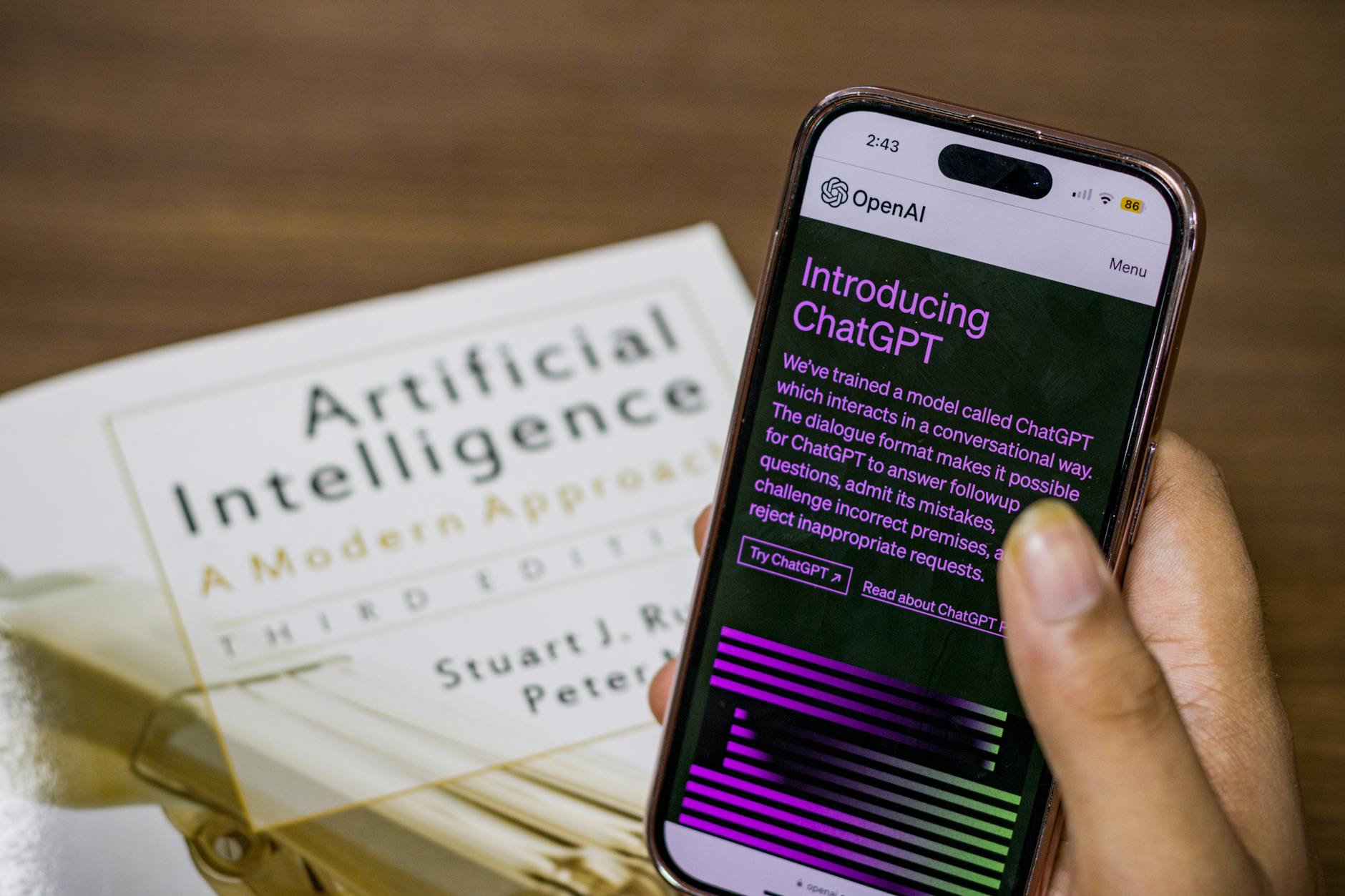
Is there Any Future for ChatGPT

Daily writing prompt
What is the greatest gift someone could give you?

As an AI language model, ChatGPT is a remarkable achievement in the field of natural language processing. It is capable of generating responses that are contextually relevant and syntactically sound, making it an ideal tool for a wide range of applications, from chatbots to language translation. One of the most impressive aspects of ChatGPT is its ability to learn from vast amounts of data and improve over time. This is achieved through a process called unsupervised learning, which allows the model to learn patterns and relationships in the data without being explicitly told what to look for. In terms of its capabilities, ChatGPT is able to understand a wide range of topics and can engage in conversations that are both informative and engaging. It can also generate responses that are humorous or sarcastic, making it a versatile tool for a range of use cases.

That being said, there are some limitations to ChatGPT. One of the biggest challenges with language models like ChatGPT is their tendency to generate biased or offensive content, particularly when they are trained on data that contains bias. This can lead to harmful language being generated, which can be a significant problem in applications like chatbots that are designed to interact with users. Another limitation of ChatGPT is its lack of true understanding of context. While it can generate responses that are contextually relevant, it does not truly understand the nuances of language or the cultural and social contexts in which language is used. This can sometimes lead to responses that are awkward or inappropriate.

Yes, there is a bright future for ChatGPT and other similar AI language models. As the field of natural language processing continues to advance, we can expect to see even more sophisticated language models capable of generating responses that are virtually indistinguishable from human-generated text. One of the key areas of development for ChatGPT and similar models will be improving their ability to understand context and generate responses that are not just contextually relevant, but also culturally and socially appropriate. This will involve training the models on diverse and inclusive data sets, and developing algorithms that can detect and correct for bias. Another area of development for ChatGPT and other language models will be improving their ability to interact with humans in a more human-like way. This will involve incorporating more emotional intelligence into the models, allowing them to recognize and respond to human emotions, as well as developing more sophisticated conversational abilities.

Overall, the future for ChatGPT and similar language models is very promising, and we can expect to see continued growth and development in the field of natural language processing in the years to come. These models have the potential to revolutionize the way we interact with technology and with each other, and to open up new possibilities for communication, learning, and creativity. ChatGPT is an impressive achievement in the field of natural language processing, and it has the potential to be a powerful tool for a range of applications. However, it is important to be aware of its limitations and to use it responsibly in order to avoid generating harmful or offensive content.

Top Thesis topics Related to AI and ML

Daily writing prompt
What have you been working on?

Here are some top thesis topics related to Artificial Intelligence (AI) and Machine Learning (ML):

Photo by Tanya Gupta on Pexels.com
  1. Explainable AI (XAI): As AI systems become more complex, understanding how they make decisions is crucial. Research on developing algorithms that explain their decision-making process to non-experts is gaining prominence.
  2. AI in Healthcare: Investigating AI and ML applications for medical diagnosis, drug discovery, personalized treatments, and medical imaging. Topics can explore the use of AI in predicting disease progression or enhancing remote healthcare.
  3. Natural Language Processing (NLP): Topics include sentiment analysis, language translation, and chatbot development. You can also explore AI’s ability to generate human-like text or analyze emotions from textual data.
  4. Reinforcement Learning: This area focuses on how AI agents can learn from their environment by maximizing reward-based learning. Applications in autonomous vehicles, robotics, and game AI can be explored.
  5. AI for Cybersecurity: Machine learning algorithms to detect and prevent cyber threats such as phishing, malware, and intrusion detection are in demand. Research can focus on anomaly detection and predictive models for network security.
  6. Ethics of AI: With AI’s growing influence, ethical considerations are critical. A thesis can explore topics like bias in AI algorithms, AI decision-making transparency, or legal implications of autonomous systems.
  7. AI in Climate Change: Leveraging machine learning to predict climate patterns, optimize renewable energy systems, or improve environmental monitoring and conservation efforts.
  8. Edge AI: This area investigates deploying AI models directly on devices rather than in centralized cloud systems. Research could focus on optimizing AI for low-latency applications like autonomous drones or IoT systems.
  9. AI in Finance: Examining the use of AI for fraud detection, stock market prediction, algorithmic trading, and personalized financial advising.
  10. Generative AI: Topics can include the development and use of generative models such as GANs (Generative Adversarial Networks) for image synthesis, text generation, or creative applications in art and design.

Each of these topics can be expanded by focusing on specific applications, frameworks, or technological advancements in AI and ML.