the bitter beverage

With more than 400 billion cups consumed each year, coffee is the most popular beverage in the world. The global coffee industry earns an estimated $60 billion annually. After oil, it is the world’s second-most-valuable commodity exported by developing countries, and people cannot get enough. Consumption of coffee varies worldwide, with some people even consuming 4 cups a day. As a student, coffee is a staple for me. Many people around the world, including me, cannot get by their days without consuming at least one cup of coffee. This love for coffee is justifiable, as it has many benefits. It energises us, helps us stay focused, reduce the risk of Dementia, and can even lower the risk of certain types of cancer. But, even though millions around the world drink coffee, many fail to acknowledge the dark side of it.

Caffeine is a highly addictive substance. Many people think that they need to consume some form of it. Excessive consumption of caffeine can lead to nervousness and restlessness, sometimes even death. However, we as a society have completely normalised caffeine addiction. Many joke about the fact that they cannot survive without that daily cup of coffee and call it a cup of “liquid sanity” when in reality it is not something to be joked about. It should be taken as seriously as any other addiction. Those trying to reduce or quit coffee, might experience withdrawals in the form of severe headaches, irritability, drowsiness, depression and sometimes even nausea and vomiting.

Conventional coffee not only harms your health (if consumed in large quantities ) but also have negative effects on our planet. Coffee was traditionally grown in shady areas, and it had its benefits. It prevented soil erosion and provided some form of refuge for the species native to the regions where it was grown. But, since the yields and therefore profits of shade-grown coffee are lower, many switched to open fields. Growing coffee under the sun depletes the nutrients in the soil, and render the land useless. Such type of coffee also requires a higher amount of pesticides and fertilisers. Since the workers working in such plantations are generally poor, they cannot afford proper safety equipment and suffer from skin rashes and difficulty in breathing.

Coffee farmers are severely underpaid. But, since this is sometimes their only source of income, they are forced to pull their children out of schools and employ them in plantations. It is extremely unsafe for children as young as 6 to be exposed to such high amounts of pesticides used, and even saddening to know that in Brazil child labour rates were approximately 37% higher—and school enrolment 3% lower—than average in regions where coffee is produced. Moreover, big brands such as Nestlé have admitted to purchasing coffee from plantations where slavery and forced labour are prevalent.

Unfortunately, ethical consumption of any commodity is challenging under modern-day capitalism, and a few people cannot guarantee safe working conditions and fair wages for all coffee farmers. Yet, there are still some things we can do on our part to make our coffee consumption more ethical. For starters, we can avoid buying from unethical brands like Nestlé, and instead switch to fair trade brands. The best thing would be to simply purchase your coffee from local shops that get their beans from small farmers. If you reside in India, then try purchasing from the largest certified organic coffee plantation in the Eastern Ghats, Araku Coffee. Moreover, do not stop educating yourself about these issues; don’t let them go unnoticed. The fight for change is a difficult one, but never stop fighting for what’s right.

Sources: https://foodispower.org/our-food-choices/coffee/

Go away

Rain, rain go away

Come again another day

Rain, rain go away

Little Ahana wants to play.

Corona, Corona go away,

Little Ahana wants to play

Corona, Corona go away,

Never show your face again.

Constitutionalism

The concept of constitutionalism is that of a polity governed by or under a constitution that ordains essentially limited government and rule of law as opposed to arbitrary authoritarian or totalitarian rule. Constitutional government, therefore, should necessarily be democratic government.

In other words, Constitutionalism is a political philosophy in which the functions of government of a state must be in accordance with the provisions of the constitution meaning thereby the actions of government must reflect constitutionality.

As the constitutionalism is a political spirit or philosophy, so it is not necessary that the states who have a constitution must be embodied with the concept of constitutionalism. According to Douglas Greenberg

, Constitutionalism is a commitment to limitations on ordinary political power, it revolves around a political process, one that overlaps with democracy in seeking to balance state power and individual and collective rights, it draws on particular cultural and historical contexts from which it emanates and it resides in public consciousness.

Now to identify that whether constitutionalism is present in India or not. It can be analyzed with the help of various provisions of constitution that are:-

• Preamble
• Judicial Review
• Rule of law
• Separation of power
• Checks and balances and so on.

There is no exhaustive list of features by which the validity or existence of constitutionalism can be tested; but the every feature which limits the government and proves helpful to establish a position of sovereignty under fundamental principles of constitutional jurisprudence may be a considerable point for constitutionalism.

In Indian context,
Preamble may be a point to check the presence of constitutionalism. Our Constitution enacted on 26th November,1949, since then, a question always a matter of great concern that whether preamble is a part of Indian constitution or not. However, in 1960, In Re Beru Beri case, it was held that preamble is not a part of constitution but after a long time, In case of Keshavanand Bharti v State of Kerala, AIR 1973 SC 1461

, 13 judges largest bench of Indian constitutional history rejected previous contentions and declared that

“Preamble is a part of Indian Constitution”.
Preamble explains the objectives of constitution in two ways, one about the composition of bodies of governance and other about the objectives sought to be achieved in independent India. Objectives explained in preamble as follows:-
• To constitute India into Sovereign, Socialist, Secular, Democratic Republic (words Socialist and Secular inserted by 42nd constitutional Amendment,1976) Other provisions of preamble that are;-
• Justice – Social, Economic, and Political;
• Liberty – of thought, expression, belief, faith and worship;
• Equality of status and opportunity;
• Fraternity assuring the dignity of the individual and the unity and integrity of the nation (word unity inserted by 42nd constitutional Amendment,1976) may be invoked to determine the ambit of Fundamental rights and Directive principles of state policy.

According to Justice Subbarao,
Preamble is the soul of the constitution, without which a body in the form of state cannot be survived. The objectives of constitution ensure the dignified conditions for the people of India and provide them all rights and liberties within ambit of fundamental spirit of constitutionalism embodied in entire body of the constitution. E.g. Dr. Radhakrishnan, former President of India, has explained secularism in this country, as follows:-
When India is said to be a secular state, it does not mean that we reject the reality of an unseen spirit or the relevance of religion to life or that we exalt irreligion. It does not mean that secularism itself becomes a positive religion or that the state assumes divine prerogatives…..we hold that not one religion should be given preferential status…This view of religious impartiality, or comprehension and forbearance, has a prophetic role to play within the National and International life.

In other words,
Secularism, which reflects no state religion, means every citizen has a right to profess religion of their own choice, which promotes automatically liberty of faith and worship.

In this way, It can be surmised that preamble hold the spirit of constitutionalism. Second feature is Judicial Review, however, this doctrine is not clearly stated in Indian
constitution but its reflection is somewhere found in Article 13(2), Actually, this doctrine was firstly introduced in 1803 by Justice Marshall in Marbury v Madison(3) case, In USA
where he clearly said that ‘It is the duty of judge to annul the law made by the legislature which violated the constitution or contrary to it.

The similar spirit found in Article 13(2) of Indian Constitution that the laws “which are inconsistent to part III of constitution shall be declared null and void”, but it is not clearly defined that if any contrary law made, then who will check its validity, then an answer comes into light in reference to Justice Marshall that Judiciary can check such contrary acts of legislature and also can review the laws made by legislature.

And also a concept of “Higher law” emerged from this doctrine, because a judge has to follow the mandates or directions of Higher law while checking the consistency of provision. In written constitution, Higher law depicts constitution as Supreme but where there is no written constitution; there are some principles which can be regarded as Supreme or Higher law principle. In Gopalan V State of Madras (1950) SCR 88(100) has upheld that it is difficult to restrict the sovereign legislative power by judicial interference except so far as the express provision of written constitution. It is only the written provisions of constitution which may restrain legislative power, but where there is no written constitution, then, who restrain legislative power, and then its answer is judiciary by following various principles, precedents, customs, usages, and different statutes can check the consistency.

It clearly signifies that in absence of power of judicial review in hands of judiciary, judiciary is only a puppet of legislators.

Justice Frankfurter (4)(USA)…. said that judicial review, itself a limitation on popular government, is a fundamental part of our constitutional system; means if there is no power of judicial review then the constitution merely becomes a draft for the code of conduct for government as well as citizens, It also signifies as a

“Law without Sanction”.
However, this type of situation has been prevalent in India, till 2007, in different cases, such as Shankari Prasad case, Sajjan Singh caseGolak Nath caseKeshavanand Bharti case, N.Ramchandra case, traced a picture of conflict between legislature and judiciary, no clear cut demarcation of powers under which organs of government can overview the validity of their actions for upholding the true spirit of constitutionalism in a political entity could be realized. But the Raja Ram Pal case and I.R.Coelho v State of Tamil Nadu case 2007 have reshaped the whole demarcation and establish superiority of principles such as Basic Structure Theory enhancing the spirit of constitutionalism.

In this way, by exercising Appellate and Advisory jurisdiction, judiciary can secure uniformity in the interpretation and application of the constitution as amongst the states.

Third provision is “Rule of Law”, on its basis spirit of constitutionalism can be present in a state. This doctrine is given by dicey (a well known constitutionalist of England) in 1865 wrote a book titled

“An Introduction to the law of the constitution” in which the term “Rule of Law” was given a comprehensive amplitude. In reality, it is a doctrine of England where there is no written constitution, so it is placed as a higher law there to check the validity of any law made by legislature. This doctrine shows that whatever law is present in our state, must be ruled over everyone, meaning thereby the law is supreme in all respect and in every sphere. It clarifies that “No one above the law”. Now a question arises, what the law is? The answer of this question resides in two principles that are-

• Due Process
• Procedure established by law.
Due Process is a doctrine of USA, and its ambit is not defined comprehensively, but its sphere is to be explained by judges as per the facts and circumstances of the case. It represents judicial supremacy and also there is a danger for judicial autocracy because the court if not self restrained may go beyond the limits set by the constitution.

But in India, there is a “Procedure established by law” doctrine prevails, adopted from

Constitution of Japan
and clearly enshrined in Article 21 of Indian Constitution. It shows parliamentary sovereignty because in India, law is made by the legislature, it restricts the judicial supremacy and only infers right to do literal interpretation not statutory construction of laws.There are also some other elements embedded in Rule of law, such as

• Absence of arbitrary power on the part of government, which is undoubtedly present in form of judicial review in which judiciary always look after the actions of other organs of government.

• Equality of all persons in the eye of law, which can be justified on the basis of provisions of Article 14-18 with some reasonable restrictions.

• Rules of constitutional law are the results of the ordinary law of the land means the laws made by legislature must not be contrary to the provisions of constitution, otherwise it will be declared as null and void.

In England, Rule of Law flourished sovereignty of legislature, being unwritten constitution there is no higher law to circumscribe the plenary powers of the sovereign legislature but in India, there is written constitution and the concept of judicial review also present, so the doctrine of Rule of Law cannot be assigned a paramount place. But to promote the spirit of constitutionalism, the shadow of this doctrine reflects in various provisions of Indian Constitution in the form of fundamental principles of natural justice.

Next provision is Separation of Power
Among organs of government. In India, under Article 245,246 and Schedule VII there is a clear demarcation of legislative power among union and state government, under Articles 256-263 administrative relations are also clearly defined, and under Article 254 if there is any inconsistency between centre and state laws, then central law prevails, under Article 264-291 fiscal relation between centre and state is given, meaning thereby there is a rare chance of clash between union and states, so that public policies can be properly implemented as per the requirements of the people. As the powers of centre and state clearly divided, so there is no space to use arbitrary powers over any subject. Generally, subjects which have national importance vests in Union list and those have regional importance vests in State list and for the establishment of unity and integrity in the nation, Concurrent list is made in which for universalization of laws, central government made law but according to the requirements of a particular region, state and legislature may make any a difference.

In this way, this feature also promotes the spirit of constitutionalism.

And other provisions as Fundamental rights defined in Articles 12-35, provide some rights to the citizens and to every person for whose infringement people may approach towards Courts of Justice under Articles 32 and 226 respectively of Indian Constitution, which shows that citizens also have some rights to protect themselves from the arbitrariness of government. And Directive Principles of state policy under Articles 36-51 connotes that these principles should be in consideration of government while framing of its policies, because its trend helps to provide or flourish social, economic equality among people. As the aim of government cannot touch their destination without the contribution of public at large. That’s why the Fundamental duties of citizens also explained in Article-51A which should be obeyed by every citizen of nation.

In this way , these provisions shows the checks and balances among the actions of governmental organs and the public. The Emergency provisions under Articles 352, 356 and 360 also shows the spirit of constitutionalism by restraining the exclusive powers of state organs at the time of external aggression, armed rebellion, failure of constitutional machinery in particular state, financial crisis etc. It signifies the curtailment of powers of state functionaries in favour of public interest and all powers vests in union government to deal with such sort of situations. To uplift weaker sections of society, concept of reservation is also present in Indian constitution under Articles 330-342, in these provisions Doctrine of Appeasement is present by providing some reserved seats to lower society people in every functionary organ of government. Such as-under Articles 330 & 332, Reservation of seats for SC and ST in House of People and legislative assembly of states. With the help of this clause, the problems related to SC and ST comes in front of legislature and proves helpful to protect the interest of particular community.

Conclusion
The brief discussion of provision of constitution provides us a vision to see the process going on in the political system of country, in which we find that there are very detailed description of powers of organs of government so that they can exercise their powers within the boundaries of constitution i.e. Higher law in India, owing to which governmental organs become unable to entertain arbitrary powers and also these provisions provide a paramount place to laws whose main aim is to protect the interest of individuals in the country. In this way, In India constitutionalism is undoubtedly present but there is only one exception that the doctrine of Rule of Law does not prevail in India as in England (regarding parliamentary sovereignty). It exists in India in form of natural justice principles to govern administrative functions, since the rule of law and judicial review in a single system cannot be realized easily. It would create a conflict between parliament and constitution (The Guardian of constitution i.e. judiciary).Judges are to promote the value of constitutionalism emanating from a legal draft, drafted by constituent assembly constituted of representatives expressing their public opinion. Although, Secondary public opinion cannot overrule primary public opinion, But every provision has its own importance and if any provision is not explicitly present in a constitution but its reflection is found in some clauses, then it will be sufficient to promote the spirit of constitutionalism.

INTERNSHIP-pre training oppertunity

Internship! This is a familiar word for every post metric student. When we ask a question that what are the uses of the internship, then they will say that internship provides them some stipend. But they skip adding a point on the actual purpose of an Internship. So let us know about “What is an Internship?”, and “What are the uses of internship and its importance” in detail.

What is an Internship is?

the position of a student or trainee who works in an organization, sometimes without pay, in order to gain work experience or satisfy requirements for a qualification.In other word,An internship is a period of work experience offered by an employer to give students and graduates exposure to the working environment, often within a specific industry, which relates to their field of study.

Internships can be as short as a week or as long as 12 months. They can be paid or voluntary; however, before you start an internship it’s important to know about your ability to gain the internship.

Internships can be done in a range of sectors, including sales, marketing, engineering, graphic design, management,. I.T and many more. Throughout an internship you will develop a variety of soft skills, including communication skills, personal effectiveness, presentation skills, creative problem solving and influencing skills.

zation

there are 2 types of internships in general:-

i)Technical Internship:-The provided internship is known as Technical Internship if the internship is provided for you within your stream, course, specialization.

ii)Non-Technical Internship:-The provided internship is known as Non-Technical Internship,if the internship provided for you is not within the stream.

What is the Use and Importance of the Internship?

The Internship provides you extra knowledge about that particular work field. Recruiters also spell the internship as a Pre-Training. This particular internship provides an extra Strength to your internship. So that you will be a preferable person for that job.

Conclusion:-My humble request to all the readers that not to do the internship for stipend purpose.But do it for strengthening you Curriculum Vitae.

CBD GUMMIES

Cannabidiol is a chemical in the marijuana or hemp plant. Cannabidiol gummies also known as CBD gummies are edible candies. These candies come in a variety of colors, shapes and concentrations of CBD. It treats its consumers with the sweetness of sugar.

CBD TYPES:

  • CBD isolates: pure form of CBD
  • Broad-spectrum CBD: contains all the phytochemicals that are in                                                                the cannabis plant but no tetrahydrocannabinol (THC).
  • Full-spectrum CBD: contains all the phytochemicals that occur naturally in the cannabis plant. It also contains tetrahydrocannabinol.

LEGALITY OF CBD PRODUCTS

Only those hemp-derived CBD products are legal on the federal level that contains less than 0.3% of THC. Marijuana derived CBD products are illegal on the federal level, but they may be legal in some states.

FORMS OF CBD

  • Oil
  • Tincture
  • Dissolvable strips
  • Cream
  • Edibles
  • Dermal patches
  • Isolate

BENEFITS OF CBD GUMMIES

  • RELIEVES SWELLING AND PAIN: It interacts with vanilloid receptors in the brain and relieves pain and swelling in other parts of the body.
  • REDUCES DEPRESSION AND ANXIETY: It interacts with Adenosine and Serotonin receptors of the brain and reduces depression and anxiety.
  • IMPROVES FOCUS: CBD makes it easier for the brain not to pay attention on the distraction and increases focus on the task the person is doing.
  • STIMULATES BONE GROWTH: It stimulates osteoblasts and osteoclasts cells involved with the growth of bones.
  • REDUCES THE RISK OF HIGH BLOOD PRESSURE: CBD exhibits natural antioxidant properties. Both in stressful and non-stressful situations CBD contributes to lower blood pressure levels.
  • DIGESTIVE AID: It reduces nausea and stimulates appetite and thus high amounts of CBD infusion into the brain acts as a digestive aid.
  • DELICIOUS TASTE: CBD gummies come in a variety of delicious and fruity flavors.
  • ONLINE AVAILABILITY: CBD gummies can be found online as they are easy to ship.
  • EASY INTAKE: Just chew and swallow that’s it. CBD gummies are super easy to take.
  • LONG LASTING: The CBD in the gummy is released over a period of hours, providing long lasting relief.
  • GENTLE ON LUNGS AND THROAT: They don’t irritate the throat or lungs as smoke may.
  • ANTIOXIDANT PROPERTIES: Antioxidants protect the body and the brain by removing harmful molecules. The CBD in CBD gummy is an antioxidant.
  • RELAXATION : The CBD in CBD gummy interacts with the brain and the body and even in stress, results in feelings of calmness and relaxation.
  • FACILITATES SLEEPING: CBD helps in overcoming sleep disorders.

CBD GUMMIES SIDE EFFECTS

CBD gummy is considered as a safe substance to take and there are not any major effects. There are some normal common side effects that arise due to intake of other pharmaceutical drugs that CBD consumption might also exhibit. They are:

  • Low blood pressure
  • Drowsiness
  • Increased tremors in some patients
  • Dry mouth
  • Lightheadedness
  • Inhibition of hepatic drug metabolism

CBD OIL

CBD oil is derived from the hemp plant. It possess large amount of CBD. It is free of any psychoactive attributes. It does not contain sugar. It gets the active ingredients into the bloodstream quickly. It comes both in flavored and unflavored variations but its natural taste is as herbaceous, earthy and normally quite pleasant.

CBD OIL V. CBD GUMMIES

CBD oil can be ingested or inhaled because of which it gets into the bloodstream quickly whereas CBD gummies can only be eaten and thus takes time to reach the bloodstream. The effects of gummies get delayed and CBD oil shows instant effect but it depends upon how it is being used. The effects of gummies last longer because they get slowly digested in the stomach. The exact dosage of CBD can be controlled with oils but with gummies the dosage is quite confused.

Either of the CBD products cannot be said better than other. It solely depend upon the taste of the user and the usage of it depends upon which product derives maximum benefits to him/her.

WORKING OF CBD GUMMIES

After a person takes the CBD gummies cannabidiols enters the system and acts as a natural neuro transmitter to stop pain, end anxiety, provide a good sleep and stimulates complete body balance. The results of CBD are improved with its continuous usage. CBD gummies do not form habit.

HOW DO A DAY GAP WE GET FROM INTERNET BE LIKE?

Nowadays, We are mostly connected with the internet like that we can be alive without food or lipids for a day but we can’t survive without the internet for a day. Even me too in that category. So let us see this small article about this problem and the consequence of this problem.

A Day Without Internet | The Business Standard
situation of every person who is suffering like this without internet.

First of all,i will share my situation:-

“As it’s Covid-19 time, I was woken up at 8:00 Am.First of all, I have a habit of surfing all the social media platforms in my friends. Suddenly, it’s not loading. I tried a lot. Primarily, I doubted my WIFI. All of its connections are good. Then I went on my terrace. There also, it was good. Then I got shocked. I got full of anger like I can’t control it. My anger is at a position that I had burst on the WIFI providers. My mind was disturbed. Those WIFI authorities had asked a time of 24Hours. I don’t have mobile data also. My situation is too bad. I felt like I was in a desert. But finally, they took 7 hours and solved the problem”.

As my person is like this.But what about those persons who faced a situation like this.

Consequences with this situation:-

1)Lack of Anger management

2)We can’t digest any thing

3)Loneliness will occurs

4)You will feel in a way that u had lost some thing in your life.

5)You will get discouraged your self.

Verdict:-

I Wanna say that please try to avoid internet in an rationalized manner.So that You feel comfortable atleast at a situation like this.

ROLE OF INDIAN JUDICIARY IN GENDER EQUALITY

The Indian judiciary plays an important role in interpreting and applying the law. In a country where gender disparity is so common whether be it in the education sector, health sector or employment sector to name a few, the judiciary plays a pivotal role in empowering women and filling this gender gap.

Although several provisions have been embodied in our Indian Constitution for protecting and preserving the rights of women and for safeguarding their interests, but many are still unaware or ignorant about their rights, which are provided to them by the law. Even if , they are made aware or well versed with the whole scenario , a very few have economic resources and courage to obtain legal redress.

No one can ignore the significant role being played by the judiciary in this direction helping her to get what is due to her as a matter of right. In many judicial pronouncements , the judiciary has shown its innate desire to help the deprived and underprivileged section of the society i.e. the women who face the brunt of sexual violence in silence while giving a whole new dimension to justice itself[1].

There should be no discrimination between men and women. Women should know their fundamental and social rights which they get once they are born[2]. There should be respect and dignity towards women and they should have equal rights in society and other judicial works.

Mahatma Gandhi, once quoted that:
There is no occasion for women to consider themselves subordinate or inferior to men.

Indian Constitutional law and ordinary law through judiciary has been working as a saviour of women from atrocities. The principle of gender equality is enshrined in the Indian Constitution in its Preamble, Fundamental Rights, Fundamental Duties and Directive Principles. The Constitution not only grants equality to women, but also empowers the state to adopt measures of positive discrimination in favour of women.

Gender Gap Index:

For India to maintain its position as a global growth leader, more concerted efforts at local and national levels, and by the private sector are needed to bring women to parity with men.

While increasing representation of women in the public spheres is important and can potentially be attained through some form of affirmative action, an attitudinal shift is essential for women to be considered as equal within their homes and in broader society.

World Economic Forum’s Global Gender Gap Index 2019-2020 measures the extent of gender-based gaps in economic participation and opportunity, educational attainment, health and survival, and political empowerment. The report particularly brings to light the alarmingly low level of women’s participation in the economy.

It says:
Among the 153 countries studied, India is the only country where the economic gender gap is larger than the political gender gap. Only one-quarter of women, compared with 82% of men, engage actively in the labour market (i.e. working or looking for work):
one of the lowest participation rates in the world (145th). Furthermore, female estimated earned income is a mere one-fifth of male income, which is also among the world’s lowest (144th).

India dropped four places, from 2018, to take the 112th rank in the World Economic Forum’s Global Gender Gap Index 2019-2020. In the health and survival parameter, India’s performance is dismal, ranking 150th out of 153 countries. The Global Gender Gap report states that it will take us almost 100 years to achieve gender parity worldwide.

Case laws:
Practically, there has been a very little change in the status of women compared to the various discussions and debates held on women empowerment, or the enactments and laws made in favour of women.

There have many cases of sexual harassment against women in India. Various landmark judgments have been delivered by the Supreme Court wherein the legal aspect of the nation has seen a great deal of milestone decisions.

The historic judgment of Vishaka vs. State of Rajasthan[3] was the outcome of a writ petition filed by certain social activities and NGOs to an incident of brutal gang rape of a government development worker in a village of Rajasthan. In this case, the Supreme Court observed that , in the absence of domestic law occupying the field, to formulate effective measures to check the evil of sexual harassment of working women at all work places the contents of International Conventions and norms (CEDAW) are significant for the purpose of interpretation of the guarantee of gender equality, right to work with human dignity in Articles 14[4], 15[5], 19 (1) (g)[6] and 21[7] of the Constitution and the safeguards against sexual harassment implicit therein. The recent Sexual Harassment Act[8] as published in the Gazette of India had derived its origins from this case.

The Vishaka case is, unique in many ways wherein the court not only acted as the active guardian of fundamental rights and also provided temporary respite to working women. The guideline extended the responsibility to eliminate discriminatory sexual conduct to a larger society , in this case , the workplace and obligated the employer to ensure a safe and healthy environment for women employees.

The main aim of the court, while evolving these guidelines , was to ensure a fair, secure and comfortable work environment to the extent possible , and also, to eliminate situations where the protector could abuse his position and turn predator[9]. Vishaka’s case was a quantum leap in expanding the principle of fairness in procedure after Maneka Gandhi case[10] wherein the court, for the first time, had observed that right to equality would also include the right not to be treated in an arbitrary manner. It was for the first time in Vishaka case that the principle of fair and just procedure was expanded further to include a gender justice procedure in furtherance of the constitutional goals of equality.‖

The critical advance made by the Vishaka judgement is the expansive interpretation given to Article 19(1)(g) of the Constitution of India[11] , insofar as sexual harassment at the workplace has been held to be in violation of the fundamental freedom of all women , as citizens , to pursue the business, trade or profession of one‘s choice. It is within the framework of constitutional law that the judgment operates , holding that:

“Each such incident results in violation of the fundamental rights of Gender Equality and the Right to Life and Liberty. It is a clear violation of the rights under Articles 14, 15 and 21 of the constitution. One of the logical consequences of such an incident is also the violation of the victim‘s fundamental right under Article 19(1)(g) to practice any profession or to carry out any occupation , trade or business.

However , post-Vishaka case, and now with the passage of the 2013 Act, sexual harassment at the workplace is categorically prohibited across all workplaces, whether in the public or the private domain, whether rural or urban, whether in the organised or unorganized sector.

In another case of Radha Bai vs. Union Terriority of Pondicherry[12], the apex court awarded a lumpsum compensation of Rs. 3 lakhs for the loss of reputation and honour of Ms. Radha Bai and for the agony she had to suffer in the long battle against the Government of Pondicherry and the then Home Minister of Pondicherry within one month from the date of the order. Thus we can draw an inference that Supreme Court is taking these matters seriously.

In the case of Apparel Export Promotion Council v. AK. Chopra[13], it was for the first time when Supreme Court had applied the guidelines laid down in Vishaka v. State of Rajasthan. In this case, the Supreme Court upheld the dismissal of an officer from Apparel Export Promotion Council. He was found guilty of harassing at women at his workplace on the ground that it violated Article 21 of Indian Constitution.

The court decisions in the Vishaka case and AK Chopra case were followed by various High Courts in a number of cases on this sensitive issue for example , in Shehnaz case[14] wherein it was probably for the first time that any High Court applied the court‘s guidelines with regard to sexual harassment at workplace.

Conclusion:
Gender-based disparity in income is serious in India and exists across the organised and unorganised sectors. In agriculture, building construction, etc., women are paid far less than men. Their employers justify this wage gap citing differences in capability. And this discrimination continues in every aspect whether in the education or health sector, the girl child is always treated unequally. Indian society still hasn’t been awakened to the importance of empowering the women. The statistics still narrate a grim story of female foeticide, girl child discrimination and gender bias .

The need of the hour is to make a change in the mindset of the society. It is not easy to change the culture of disregard for women which are so deep- rooted in the Indian society. But it also does not mean that it is impossible to do so. Only revolutions bring changes in a day, but reforms take their time. The idea of women empowerment might sound hard. The Government of India is running various welfare schemes and policies, both at State and Central levels for the empowerment of woman.

Some of the major programs and measures include Swadhar (1995), Swayam Siddha (2001), National Mission for Empowerment of Women (2010) etc. All such policies and programs focus on social, economic and educational empowerment of women across various age groups. Women should have access to resources, rights, and entitlements. They should be given decision-making powers and due position in governance.

Gender inequality has been a social issue in India for centuries. Although, there has been no dearth of social, economic, political, legal and Constitutional efforts made for the empowerment of women both prior to and post- Independence; however, women in India continue to face atrocities such as rape, dowry killings, acid attacks, human trafficking, etc. According to a global poll conducted by Reuters, India is the “fourth most dangerous country in the world for women.

In the words of Late Kofi Annan who served as the seventh Secretary- General of the United Nations, There is no tool for development more effective than the empowerment of women.

Hence all we need is a concentrated effort focused in the right direction that would recreate the society better.

toxic productivity and workaholism

A few days ago, a friend of mine told me that the increasing amount of work she received was “killing her.” Now, this was a statement not meant to be taken seriously as it was just two friends joking around. But, for some reason, I couldn’t let the statement go. It got me thinking of all the times I pushed myself beyond my healthy limits by pulling all-nighters to finish assignments, cramming information into my brain for a test till I literally couldn’t think about anything else except that test, and stressing myself out way too much just to finish some futile project. Which lead me to the question, why are we so obsessed with “being productive” or overworking ourselves?

We all know how incredibly fast-paced this world is now. People are always in such a rush to finish their work. Sometimes they don’t even take breaks or relax, as they’re afraid of lagging. As the years have progressed, more and more workaholics have emerged. The term workaholic was coined in 1971  by a minister and psychologist Wayne Oates. It is used to describe someone who feels the need to work incessantly without any rest. For some people, work is an addiction. They just can’t bring themselves to stop.

The typical “started from the bottom, now we’re here” genre of stories is one which has been told for ages. The idea that if you work hard enough, one day you’ll be successful and rich, has been drilled into our minds since we were kids. We have glamorised the idea of productivity and workaholism so much that we brag about our unhealthy work habits to people. Equating overworking ourselves to the point of an actual mental breakdown to success is extremely toxic and something which definitely shouldn’t be done.

Toxic productivity and “hustle culture” is famous all around the world. For example, in Japan, nearly one-quarter of the companies require their workers to work more than 80 hours of overtime a month, according to a 2016 survey. These hours are unpaid and under-appreciated. Japanese workers on average didn’t use 10 of their paid vacation days, and 63 per cent of Japanese respondents felt guilty for taking paid leave. Even in India, students working themselves to the point of death is sadly common. 

Depression and anxiety levels are at an all-time high. If this workaholic culture continues to stay in place, then the consequences will be harmful. Serious reform needs to be taken. One way to do this is to model our systems to that of Nordic countries, like Sweden, Finland etc. These countries have the best qualities of life,  with Finland being ranked as the happiest country in the world by the United Nations. Their people get adequate working hours with good pay, healthcare, and a better quality of education. Their leaders are young and care about the quality of life of their people. Many lessons can be learned from them.

While waiting for big changes to be implemented, there is a lot we can do on our end to try to reduce stress. Taking regular breaks from work is crucial. Prioritising your mental and physical health and realising when to take breaks is another thing which needs to be practised. Remember, you cannot achieve everything in life, so there is no point in stressing over things beyond your control. Learn to let go; things will surely get better.

Sources: https://www.cnbc.com/2018/06/01/japan-has-some-of-the-longest-working-hours-in-the-world-its-trying-to-change.html

5 Rupee note or a coin.

You can not carry coins for huge amount. Huge cash in coins form will be too heavy in weight. If all things available in coins, then coins will be in circulation. But we cannot get all things in a few coins so Currency notes are in circulation.

In some aspects the coins are better than the banknotes. Firstly coins are far more durable than the banknotes, coins survived for the thousands of years rather than banknotes which lasts a few years in circulation.

Coins are made from different metals, hence the value of coins are nearly equal to their face value and higher denomination coins are made from the metal of higher cost but the banknotes are just the pieces of papers.Counterfeiting of coins is not much easier than the banknotes, which can be easily counterfeited.

INDIAN ARMED FORCES

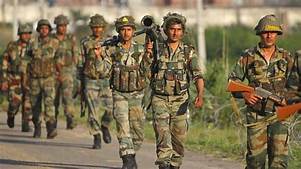
The Indian Armed Forces are the military forces of the Republic of India. It consists of three professional uniformed services: the Indian Army, Indian Navy, and Indian Air Force. The President of India is the Supreme Commander of the Indian Army, and its professional head is the Chief of Army Staff (COAS), who is a four-star general. The Indian Army originated from the armies of the East India Company, which eventually became the British Indian Army, and the armies of the princely states, which were merged into the national army after independence. The primary mission of the Indian Army is to ensure national security and national unity, to defend the nation from external aggression and internal threats, and to maintain peace and security within its borders. The army has been involved in four wars with neighboring Pakistan and one with China.

MISSION

The army has taken up the responsibility of providing internal security, especially against insurgencies in Kashmir and Northeast India. Currently, the army is also looking at enhancing its Special Forces capabilities. With India’s increasing international role, and the requirement to protect its interests in far-off countries becomes important, the Indian Army and Indian Navy are jointly planning to set up a marine brigade.

PULWAMA ATTACK

On 14 February 2019, a convoy of 78 vehicles transporting more than 2,500 Central Reserve Police Force (CRPF) personnel from Jammu to Srinagar was travelling on National Highway 44. Pakistan-based militant group Jaish-e-Mohammed claimed responsibility for the attack. It is the deadliest terror attack on India’s state security personnel in Kashmir since 1989. On 27 February, Pakistan Air Force conducted an airstrike into Jammu and Kashmir in retaliation for the Indian airstrike the day before. Both Pakistan and India agreed that no damage was caused by Pakistan’s airstrike. However, in an ensuing dogfight between Indian and Pakistani jets, an Indian MiG-21 was shot down over Pakistan and its pilot captured. Pakistan released the pilot on 1 March. On 5 March, Pakistan arrested 44 members of various groups, including the Jaish-e-Muhammad. Some of those arrested had been named by India in a dossier it gave to Pakistan in the aftermath of the Pulwama attack.

URI: THE SURGICAL STRIKE

There was an attack by four heavily armed terrorists on 18 September 2016, near the town of Uri in the Indian former state of Jammu and Kashmir. It was reported as “the deadliest attack on security forces in Kashmir in two decades”. The terrorist group Jaish-e-Mohammed was involved in the planning and execution of the attack. At the time of the attack, the Kashmir Valley region was a center of unrest. At around 5:30 a.m. on 18 September, four terrorists attacked an Indian Army brigade headquarters in Uri, near the Line of Control in a pre-dawn ambush.

BALAKOT AIRSTRIKE

The 2019 Balakot airstrike was conducted by India in the early morning hours of 26 February when Indian warplanes crossed the de facto border in the disputed region of Kashmir, and dropped bombs in the vicinity of the town of Balakot in Khyber Pakhtunkhwa province in Pakistan. The following day, 27 February, in a tit-for-tat airstrike, Pakistan retaliated, causing an Indian warplane to be shot down and its pilot to be taken prisoner by the Pakistan military before being returned on 1 March. The airstrikes were the first time since the India-Pakistan war of 1971 that warplanes of either country crossed the Line of Control and also since both states have become nuclear powers.