WOMEN EMPOWERMENT

WHAT DO YOU UNDERSTAND BY WOMEN EMPOWERMENT?

Everyone has their own definition of it nowadays , for some it means equal rights in educational field ,for some it might be equal say in decision making process, for some it might be something else. But if you ask me , i would say women empowerment is protecting women’s sense of SELF WORTH,SELF PERSPECTIVE, their ability to voice their opinions, taking a stand for what they believe in.

IF YOU EDUCATE A MAN ,YOU EDUCATE AN INDIVIDUAL.BUT IF YOU EDUCATE A WOMAN, YOU EDUCATE A GENERATION. But even today, girls are not allowed to pursue higher education as they are married off early. And the million little hopes that bride has , a vision of what her life should be like, her own thoughts on the kind of life she wants to live are killed there only and actually celeberated.

PROBLEMS ASSOCIATED WITH WOMEN

There are many but to begin with lets talk about the most difficult one. Every time we see a news regarding domestic violence, rape cases, physical or mental harassment or abuse ,we feel bad ,then news channels cover it for a week or month depending on whether people still want to watch it or not basically depending on their TRP rate. Instagram , Facebook, Whatsapp are flooded with messages of women empowerment ,education and respect. People in thousands come on streets and protest with catchy slogans and demand for justice. AND IN THE MIDST OF FORGETTING THAT ONE INCIDENT ANOTHER INCIDENT COMES IN THE LIMELIGHT THAT SHAKES THE SOUL OF EVERY LITTLE GIRL ON THIS EARTH.

GROWING UP AS BOYS AND GIRLS

Society makes clear differences between boys and girls. And if we think about it ,this difference is created in the smallest and most everyday things. How girls must behave, what games they should play or how they should talk gently or how boys need to be tough and then there are things like boys don’t cry . All these are ways of telling boys that the opposite gender is different, is weak and will need their support to survive. There are still places in INDIA and across the world where the birth of a boy is greeted with great joy while the birth of a girl is seen as something to be sorry about.

STATISTICS AND DATA

TIMES USE SURVEY 2019 revealed that 92% Indian women take part in unpaid domestic work; only 27% men do so. On the other hand , only 22% of women participated in employment and related activities compared to 71% of men.

83.6% of working women in INDIA are engaged in agricultural work. Their work includes planting, weeding, harvesting and threshing. Yet, when we think of a farmer we only think of a man.——-NSS 61ST ROUND (2004-05).

WAY FORWARD

The social system that existed in INDIA always attributed a secondary and sub ordinate position to women. With the continued efforts of feminist activism after independance, the government has come up with a lot of laws that protect women but there is still a lot to be done .The department of women and child development( DWCD) has taken up various projects directed towards advancement of women.

Women’s education at the university and college levels have been diversified and reoriented in tune with the changing requirements of society , industry and trade. Women’s empowerment has become a significant topic of discussion in development and economics .

So, slowly and gradually things are changing and we hope for better things to come up in the future .

World War II

The instability caused in Europe by World War I (1914-18) is the stage of World War II, another international conflict that will break out 20 years later and become even more devastating. Was set. Nazi leader Adolf Hitler takes power in economically and politically unstable Germany, a strategic treaty between Italy and Japan to rebuild the country and promote ambitions for world domination. Signed. With Hitler’s invasion of Poland in September 1939, Britain and France declared a war with Germany, and World War II began. Over the next six years, conflict will take more lives around the world and destroy more land and property than any previous war. An estimated 4.56 billion people were killed in 6 million Jews killed in Nazi concentration camps as part of Hitler’s demonic “final solution,” now known as the Holocaust. Pre-WWII The devastation of World War I (then known as World War I) made Europe terribly unstable, and World War II was settled by its early conflicts. It arose in many ways from problems that weren’t done. In particular, the continued resentment of Germany’s political and economic instability and the harsh conditions of the Versailles Treaty has spurred the rise of power between Adolf Hitler and the National Socialist German Workers’ Party. After becoming Prime Minister of the Empire in 1933, Hitler quickly solidified his power and anointed Fuller in 1934. Hitler was obsessed with the idea of ​​the dominance of the “pure” German race, which he called the “Aryan”, and this war is the only way to gain the “lebensraum” needed for the spread of the German race. I believed. In the mid-1930s, in violation of the Treaty of Versailles, he secretly began a re-arming declaration in Germany. After signing an alliance between Italy and Japan against the Soviet Union, Hitler sent troops to occupy Austria in 1938 and annexed Czechoslovakia the following year. Hitler’s open aggression was at the time because the United States and the Soviet Union focused on domestic politics, and neither France nor Britain (the other two most devastated countries of World War I) sought conflict. It wasn’t suppressed. Outbreak of World War II (1939) In late August 1939, Hitler and the Soviet leader Joseph Stalin signed a non-aggression pact between Germany and the Soviet Union. This raised enthusiastic concerns in London and Paris. Hitler had long planned an invasion of Poland. Poland is a country that has promised military assistance in the event that Britain and France are attacked by Germany. The agreement with Stalin meant that after the invasion of Poland, Hitler would not see a two-front war, but would receive Soviet support by conquering and dividing the country itself.

On September 1, 1939, Hitler invaded Poland from the west. Two days later, France and Great Britain declared war on Germany and began World War II. Western World War II (194041) On April 9, 1940, Germany simultaneously invaded Norway and occupied Denmark, and the war began in earnest. On May 10, German troops wiped out Belgium and the Netherlands in a so-called “blitzkrieg”. Three days later, Hitler’s army crossed the Moose River in a sedan at the northern end of the Magino Line, a chain of elaborate fortresses built after World War I that was considered an inaccessible defensive barrier. Was defeated. In fact, the Germans broke through the tank and plane lines and took over to the rear, making them useless. The British Overseas Dispatch Army (BEF) evacuated from Dunkirk to the sea in late May, but South French troops showed fateful resistance. As France is on the verge of collapse, Italian fascist dictator Benito Mussolini has formed an alliance with Hitler, the Pact of Steel, and Italy declared a war between France and Britain on June 10.

On June 14, German troops entered Paris. The new government, formed by Marshal Philippe Pétain, the hero of World War I in France, demanded a truce two nights later. France was then divided into two zones, one under German occupation and the other under the Petan government in Vichy France. Hitler has now turned his attention to Britain, which had the defensive advantage of being separated from the continent by the English Channel. German aircraft bombed Britain extensively from September 1940 to May 1941 to pave the way for an amphibious aggression (called Operation Sea Lion). The Royal Air Force (RAF) eventually defeated the Luftwaffe at the Battle of Britain, and Hitler postponed his invasion plan. When Britain’s defense resources reached its limits, Prime Minister Winston Churchill received significant support from the United States under the Lend-Lease Act passed by Parliament in early 1941.

Hitler vs Stalin: Operation Barbarossa (1941-42) By early 1941, Hungary, Romania and Bulgaria had joined Axis, and by April German troops had taken control of Yugoslavia and Greece. Hitler’s conquest of the Balkans heralded his ultimate goal of invading the Soviet Union. The vast territory of the Soviet Union was intended to provide the “living space” needed by the German master race. The other half of Hitler’s strategy was the extinction of Jews throughout Europe under German occupation. The “final solution” plan was implemented around the time of the Soviet attack, with more than 4 million Jews dying in extermination camps in occupied Poland over the next three years.

On June 22, 1941, Hitler ordered an invasion of the Soviet Union called Operation Barbarossa. Soviet tanks and planes far outnumbered Germans, but Russian aviation technology is largely outdated, and due to the effects of a sudden invasion, Germans will reach within 200 miles of Moscow by mid-July. I was able to. The controversy between Hitler and his commander delayed the next German army’s advance until October, when it was stalled by the Soviet counterattack and the beginning of severe winter weather. Pacific World War II . Britain confronted Germany in Europe, and only the United States could fight Japan.

Who is William Butler Yeats?

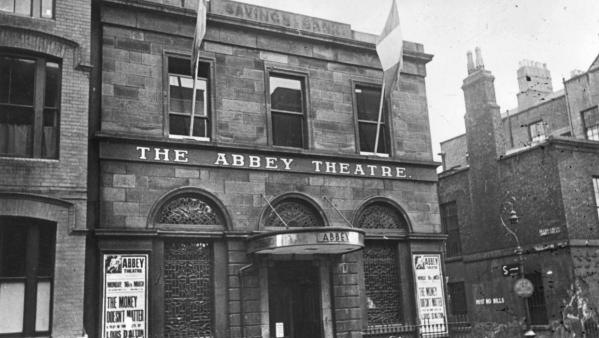
William Butler Yeats was an Irish poet, dramatist, prose writer, and one of the foremost figures of 20th-century literature. He was a driving force behind the Irish Literary Revival and became a pillar of the Irish literary establishment who helped to found the Abbey Theatre, and in his later years served two terms as a Senator of the Irish Free State. William Butler Yeats was born on June 13, 1865, in Dublin, Ireland. He was the oldest of four children of John Butler Yeats, a portrait artist. He was educated in London but returned to Ireland in 1880 and soon afterward embarked on a literary career. In 1890, Yeats began writing plays, and as a strong adherent of the Irish National Movement, he did much to assist in the creation of national theatre. In 1923 he was awarded the Nobel Prize for literature.

His poetry

Yeats was acutely conscious of the spiritual barrenness of his age, and his whole artistic career is best seen as an attempt, at first to escape from the sordid materialism which he found on every hand, and later to formulate a new positive ideal that would supply his spiritual needs. His narrative poem The Wanderings of Oisin (1889), which first established his reputation, Poems (1895), The Wind Among the Reeds (1889), and The Shadowy Waters (1900); and it was in these early days that he wrote many of the lyrics. Probably the best known of them is The Lake Isle of Innisfree (1893). The increasing realism of this period is seen in The Green Helmet and Other Poems (1910) and Responsibilities (1914), which strike a more personal note. The peak of his achievements is reached in The Tower (1928) and The Winding Stair and Other Poems (1933), in which he handles philosophical themes with a compact precision of style and a great mastery of rhythm and language.

His Drama

William Butler Yeats was also a prolific playwright, with no less than twenty-four dramas, two adaptations from Sophocles, and several unpublished juvenile efforts to his credit. The virtues of his plays are in their poetry. For him, his themes were always of primary importance, and there is a close parallel between the subjects of his lyrics and those of his plays. His characters, too, were drawn from Irish legend and from among those simple types to be found in so many of his poems. His plays include Countess Cathleen (1892), The Land of Heart’s Desire (1894), The Shadowy Waters (1900), Cathleen ni Houlihan (1902), On Baile’s Strand (1904), The king’s Threshold (1904), The Hour-glass (1904), Deirdre (1907), The Resurrection (1913), At the Hawk’s Well (1917), The Only Jealousy of Emer (1919) Calvary (1921), and The Cat and The Moon (1926).

His Death

Yeats died in January 1939 while abroad. Final arrangements for his burial in Ireland could not be made, so he was buried at Roquebrune, France. The intention of having his body buried in Sligo was thwarted when World War II began in the autumn of 1939. In 1948 his body was finally taken back to Sligo and buried in a little Protestant churchyard at Drumcliffe.

The Stone Age

Earth`s beginnings may be traced returned 4.5 billion years, however human evolution handiest counts for a tiny speck of its history. The Prehistoric Period—or while there has been human lifestyles earlier than statistics documented human activity—kind of dates from 2.5 million years in the past to 1200 B.C. It is normally classified in 3 archaeological periods: the Stone Age, Bronze Age and Iron Age. From the discovery of gear made for searching to advances in meals manufacturing and agriculture to early examples of artwork and religion, this great time span—finishing kind of 3,2 hundred years in the past (dates range upon region)—became a duration of fantastic transformation.

The Stone Age

Early human ancestors portray a bison inner a cave in the course of the Paleolithic Age. Divided into 3 periods: Paleolithic (or Old Stone Age), Mesolithic (or Middle Stone Age), and Neolithic (or New Stone Age), this period is marked via way of means of the usage of gear via way of means of our early human ancestors (who advanced round 300,000 B.C.) and the eventual transformation from a tradition of searching and collecting to farming and meals manufacturing. During this period, early people shared the planet with some of now-extinct hominin relatives, consisting of Neanderthals and Denisovans.

In the Paleolithic duration (kind of 2.5 million years in the past to 10,000 B.C.), early people lived in caves or easy huts or tepees and have been hunters and gatherers. They used fundamental stone and bone gear, in addition to crude stone axes, for searching birds and wild animals. They cooked their prey, consisting of woolly mammoths, deer and bison, the usage of managed fire. They additionally fished and accumulated berries, fruit and nuts. Ancient people withinside the Paleolithic duration have been additionally the primary to go away in the back of artwork. They used combos of minerals, ochres, burnt bone meal and charcoal combined into water, blood, animal fat and tree saps to etch people, animals and signs. They additionally carved small collectible figurines from stones, clay, bones and antlers. The quit of this era marked the quit of the remaining Ice Age, which resulted withinside the extinction of many massive mammals and growing sea stages and weather alternate that subsequently precipitated guy to migrate. The Shell Mound People, or Kitchen-Middeners, have been hunter-gatherers of the past due Mesolithic and early Neolithic duration. They get their call from the exclusive mounds (middens) of shells and different kitchen particles they left in the back of.

During the Mesolithic duration (approximately 10,000 B.C. to 8,000 B.C.), people used small stone gear, now additionally polished and once in a while crafted with factors and connected to antlers, bone or timber to function spears and arrows. They frequently lived nomadically in camps close to rivers and different our bodies of water. Agriculture became added in the course of this time, which brought about greater everlasting settlements in villages.

Finally, in the course of the Neolithic duration (kind of 8,000 B.C. to 3,000 B.C.), historical people switched from hunter/gatherer mode to agriculture and meals manufacturing. They domesticated animals and cultivated cereal grains. They used polished hand axes, adzes for ploughing and tilling the land and began out to settle withinside the plains. Advancements have been made now no longer handiest in gear however additionally in farming, domestic creation and artwork, consisting of pottery, stitching and weaving.

Who was William Shakespeare and why is he famous?

His Life

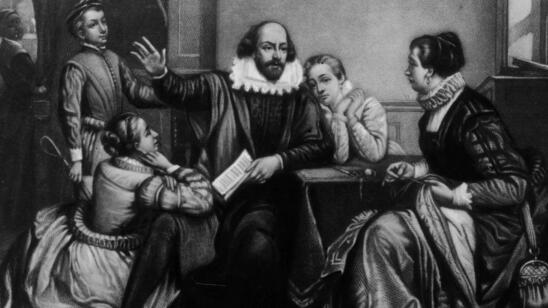
William Shakespeare was a renowned English poet, playwright, and actor born in 1564 in Stratford upon Avon. His birthday is most commonly celebrated on 23rd April, which is also believed to be the date he died in 1616. His father, John Shakespeare, was a burgess of the town and seems to have followed the occupations of a butcher, a glover, and a farmer. Shakespeare attended the grammar school of the town, though Ben Jonson, himself a competent scholar, affirmed that Shakespeare knew “small Latin and less Greek.” In 1584, Shakespeare left his native town. Why he did so is not known. The most popular explanation, which appeared after his death, is that he was convicted of poaching on the estate of a local magnate, Sir Thomas Lucy and that he fled to escape the consequences. Then, until 1592, when he appears as a rising actor, Shakespeare disappears from view.

His Works

Altogether Shakespeare’s works include 37 plays, 2 narrative poems, 154 sonnets, and a variety of other poems. No original manuscripts of Shakespeare’s plays are known to exist today. His plays are wonderfully and poetically written, often in blank verse. Venus and Adonis (1593) and The Rape of Lucrece (1594) are the only works that Shakespeare seems to have shepherded through the printing process. Both owe a good deal to Ovid, the Classical poet whose writings Shakespeare encountered repeatedly in school. These two poems are the only works for which he wrote dedicatory prefaces. Shakespeare may also have written at least some of his sonnets to Southampton, beginning in these same years (1593–94) and continuing through the decade and later. As a narrative, the sonnet sequence tells of strong attachment, of jealousy, of grief at separation, of joy at being together and sharing beautiful experiences.

In the second half of the 1590s, Shakespeare brought to perfection the genre of romantic comedy that he had helped to invent. A Midsummer Night’s Dream (1595), one of the most successful of all his plays, displays the kind of multiple plotting he had practiced in The Taming of the Shrew and other earlier comedies. The Merchant of Venice (1596) uses a double plot structure to contrast a tale of romantic wooing with one that comes close to tragedy.

Concurrent with his writing of these fine romantic comedies, Shakespeare also brought to completion, his project of writing 15th-century English history. After having finished in 1589–94 the tetralogy about Henry VI, Edward IV, and Richard III, bringing the story down to 1485, and then circa 1594–96 a play about John that deals with a chronological period that sets it quite apart from his other history plays, Shakespeare turned to the late 14th and early 15th centuries and to the chronicle of Richard II, Henry IV, and Henry’s legendary son Henry V. Thus, in his plays of the 1590s, the young Shakespeare concentrated a remarkable extent on romantic comedies and English history plays. The two genres are nicely complementary: the one deals with courtship and marriage, while the other examines the career of a young man growing up to be a worthy king.

Shakespeare grave

His Death

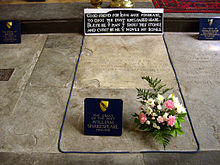
On April 23, 1616, William Shakespeare died in his hometown of Stratford-upon-Avon at the age of fifty-two. In truth, the exact date of Shakespeare’s death is not known but assumed from a record of his burial two days later, 25 April 1616, at Holy Trinity Church. Stratford upon Avon, where his grave remains. While no one knows what Shakespeare died of exactly, he was sick before his death. A month before his death, he signed a will leaving almost everything to his daughter Susanna.

Feminist Approaches in International Relations

Feminism is the advocacy of the rights of women. It explains that women were deprived in comparison to men and are subordinate to men due to a gadget of patriarchy.

`Patriarchy’ is a gadget of social systems and practices via which men dominate and take advantage of women. It ought to be clear that it’s miles a social, now no longer organic characteristics. For feminism the factor of reference is the query of Gender and now no longer of intercourse.Feminism evaluation equations of masculinity and feminity.It has not anything to do with the organic male-female differences.’Masculinity’ is related to autonomy, sovereignty, and the ability for cause and objectivity, while feminity is related to the absence of those characteristics. These are known as gender identities. Under gender construction, navy offerings are regarded because the herbal area of masculinity.The first feminist withinside the global is “Christine de Pisan”. Every man isn’t always in a function of domination, and each female isn’t in a function of sub ordination. The feminist motion entails battle for political and felony rights and same possibilities for ladies. The feminist method to International members of the family is a phenomena of the post-bloodless conflict period. In the 1980s feminist Scholars start studies in diverse instructional disciplines, from literature to psychology to history.Some of th outstanding feminist students consist of Joshua S Goldstein,Peterson Spike and Anne Sisson Runyan,Ann Tickner and Jill streans. Feminist argue that the bounds of nation have ancient excluded women from home and global political life, and feature dealt with International members of the family because the Exclusive keep of men, wherein masculinity prospers via domination over women. According to feminists, the phenomenon,of own circle of relatives Subordination and male domination has constantly stay unchanged, whether or not from the guaranteed to the current nation, or from feudalism to capitalism or from nature-nation to international governance.The International members of the family idea favours men and excludes female due to the fact it’s miles guys who’s recognized with nation. Feminist writers locate fault with this Approach.Further it’s miles argued that global members of the family have completely targeted on struggle and anarchy, as additionally on worry and competitions, exactly due to the fact women lives and stories don’t have any been well researched.Feminist is an out increase of the notion that on account that attributes like humility, peace, tenderness, compassion and forgiveness are related to female who’ve been historically ignored, the examine of global members of the family has constantly remained targeted on strife and anarchy.

Three Strands of Feminism-While all feminist students agree at the primary published that gender is important, there may be no unmarried feminist method to global members of the family. There are numerous such tactics or ‘strands’ of the idea of global members of the family. There are 3 strands as highlighted through Goldstein-

1.Difference Feminism-This strands of feminism attempts to price the precise contribution of female as female. These feminists do now no longer assume that female do all matters in addition to guys do.The contrary is likewise genuine in sure different activities. Thus, due to their more revel in with nurturing and human members of the family, female are visible as doubtlessly greater powerful than guys in resolving conflicts and in group-choice making.

2.Liberal Feminism-The arguments of Difference feminists are rejected through liberal feminist as being primarily based totally on stereotyped gender roles.They see ‘crucial distinctions’ withinside the competencies of males and females as trivial or non existent. For liberals, guy and female are same.They condemn the exclusion of female from function of power,however do now no longer consider that inclusive of female could alternate the character of the International Relations.

3.Postmodern Feminism-Postmodern feminists have attempted to deconstruct the language of realism, particularly because it displays impacts of gender and intercourse. For example- the primary atom bombs have been male.They have been named as’Fat guy’ and ‘Little boy’.The coded telegram despatched to US government approximately the hydrogen bomb without a doubt said ‘it’s miles a boy’ however the plane that dropped the atom bomb on Hiroshima changed into known as ‘Enola Gay’, a lady gender. It changed into named after the pilot’s mother.These efforts locate intercourse and gender all through the sub-textual content of realism.

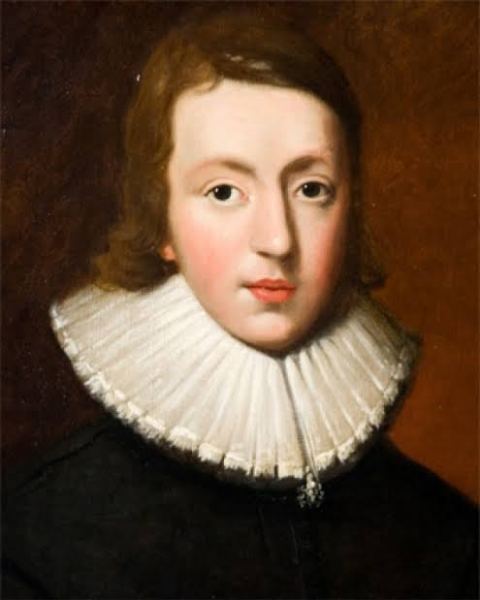
John Milton

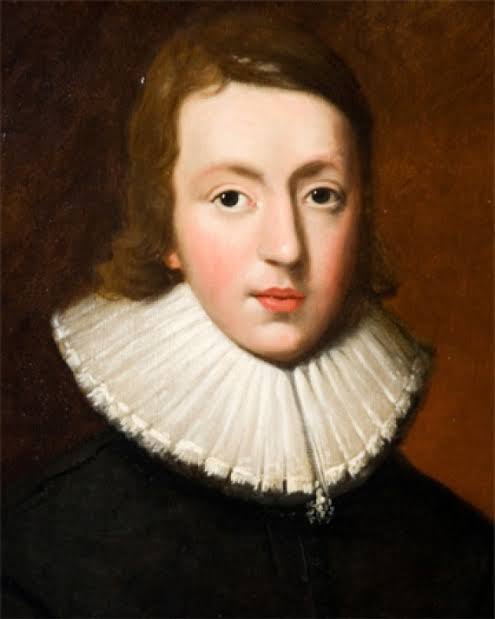
John Milton was an English poet and intellectual who served as a civil servant for the Commonwealth of England under its Council of State and later under Oliver Cromwell. He was born in Bread street, Cheapside, London. His father was a money scrivener, an occupation that combined the duties of the modern banker and lawyer. As a child, John Milton attended St. Paul’s School, and in his lifetime he learned Latin, Greek, Italian, Hebrew, French, and Spanish. He attended Christ’s College, Cambridge, graduating in 1629 with a Bachelor of Arts degree, and 1632 with a Master of Arts.

After Cambridge, Milton spent six years living with his family in Buckinghamshire and studying independently. During his period of private study, Milton composed a number of poems, including “On the Morning of Christ’s Nativity,” “On Shakespeare,” “L’Allegro,” “Il Penseroso,” and the pastoral elegy “Lycidas.” In May of 1638, Milton began a 13-month tour of France and Italy, during which he met many important intellectuals and influential people, including the astronomer Galileo, who appears in Milton’s tract against censorship, “Areopagitica.” Milton was a Puritan who believed in the authority of the Bible, and opposed religious institutions like the Church of England, and the monarchy, with which it was entwined. He wrote pamphlets on radical topics like freedom of the press, supported Oliver Cromwell in the English Civil War, and was probably present at the beheading of Charles I. Milton wrote official publications for Cromwell’s government.

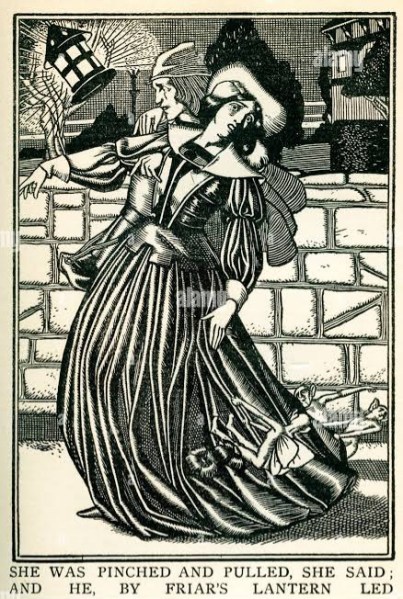
L’Allegro by John Milton

It was during these years that Milton married for the first time. In 1642, when he was 34, he married 17-year-old Mary Powell. The two separated for several years, during which time Milton wrote The Divorce Tracts, a series of publications advocating for the availability of divorce. The couple reunited and had four children before Mary died in 1652. It was also in 1652 that Milton became totally blind. In 1656, he married Katherine Woodcock.

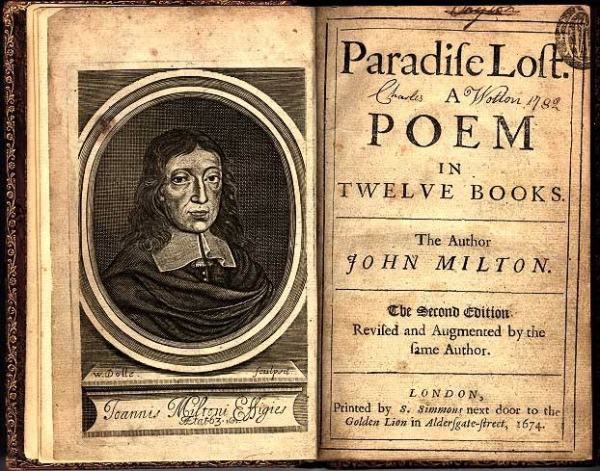
In 1667, he published Paradise Lost in 10 volumes. It is considered his greatest work and the greatest epic poem written in English. The free-verse poem tells the story of how Satan tempted Adam and Eve, and their expulsion from the Garden of Eden. In 1671, he published Paradise Regained, in which Jesus overcomes Satan’s temptations, and Samson Agonistes, in which Samson first succumbs to temptation and then redeems himself. A revised, 12-volume version of Paradise Lost was published in 1674.

Many of his works have religious, political, and personal themes. For example, instances of imagery of light and darkness and good and evil can be found in several works, including the annotated examples given in the section below. Milton came to face his own battle with inevitable darkness as he began to lose his sight. In order to keep writing, he employed assistants. One of the most well known of his assistants is fellow writer Andrew Marvell. When the monarchy was restored in England in 1660, Milton was imprisoned, but later pardoned. He spent the rest of his life writing.

John Milton died in England in November 1674. There is a monument dedicated to him in Poet’s Corner in Westminster Abbey in London.    

High Court

The High Court is under the Supreme Court but operates above the Inferior Court. The High Court holds the highest position in the state’s judicial administration. The establishment of the High Court began in India in 1862, when the High Court was established in Calcutta, Bombay and Madras.

Articles 214-231 of the Constitution of India deal with the organization, independence, jurisdiction, authority, procedures, etc. of the High Court. Currently, there are 25 High Courts in the country. Of these, only three High Courts have jurisdiction over multiple states. In all Union Territories, there is an independent High Court in Delhi alone. The Union Territories of Jammu, Kashmir and Ladakh have a common High Court.

Composition of the High Court- Each High Court consists of the Chief Justice of the Supreme Court and other judges appointed by the President. It seems necessary from time to time.

High Court judges are appointed by the President. The Chief Justice of the Supreme Court is appointed by the President after consultation with the Chief Justice of India and the relevant Governor. The appointment of other judges shall also apply to the Chief Justice of the relevant Supreme Court in two or more states, and the governors of all relevant states shall be consulted by the President. The 2014 Amendment Article 99 and the 2014 National Judicial Appointment Commission Act replaced the university system for appointing judges in the Supreme Court and the High Court with a new organization called the National Judicial Appointment Commission.

Judge Qualification – A person appointed as a judge in the High Court must have the following qualifications:

1. He must be an Indian citizen.

2. He should have served the judiciary for 10 years on the sovereign territory of India.

3. He is said to have been a Supreme Court lawyer for 10 years.

From the above, it is clear that the Constitution does not set a minimum age for a judge in a higher court.

Judge’s Oath -Anyone appointed as a judge in the High Court must take an oath before taking office.

1. Have true faith and loyalty to the Constitution of India.

2. Support India’s sovereignty and integrity.

3. Perform office duties properly and honestly, without fear or favor, and to the best of my knowledge and beliefs.

4. Support the Constitution and the law.

Judge’s term -The Constitution does not set a term for judges in the High Court. However, there are four provisions in this regard:

1. He will be in office until he is 62 years old.

2. He can resign in writing to the President.

3. At the suggestion of Congress, the President may dismiss him.

4. When appointed as a judge of the Supreme Court, he resigns from his post.

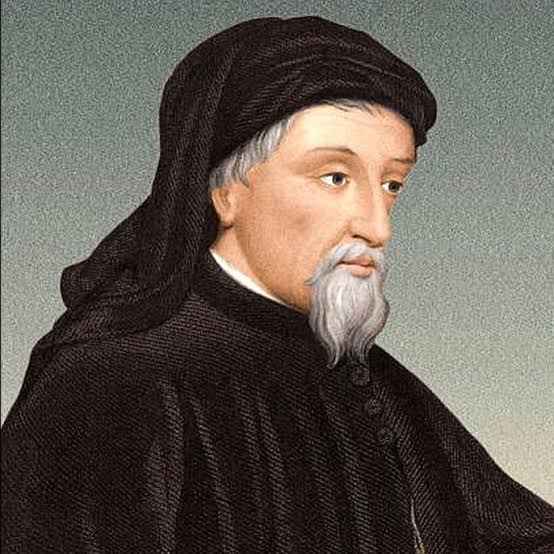
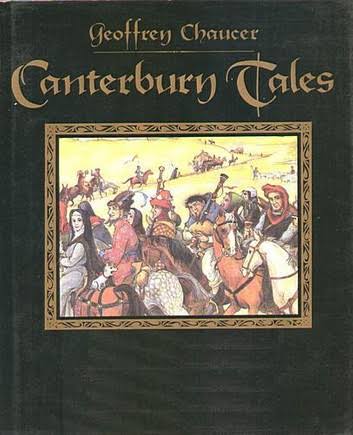
Who is Chaucer?

Geoffrey Chaucer was an English poet, author, and civil servant. The date of his birth is uncertain, but it is now generally accepted as being 1340. He was born in London. Chaucer’s family was of the bourgeois class, descended from an affluent family who made their money in the London wine trade. According to some sources, Chaucer’s father, John, carried on the family wine business. Geoffrey Chaucer is believed to have attended the St. Paul’s Cathedral School, where he probably first became acquainted with the influential writing of Virgil and Ovid. He entered the household of the wife of the Duke of Clarence (1357), and saw military services abroad, where he was captured.

The chief characteristics of Chaucer’s works are their variety in subject matter, genre, tone, and style and in the complexities presented concerning the human pursuit of a sensible existence. Yet his writings also consistently reflect an all pervasive humour combined with serious and tolerant consideration of important philosophical questions. From his writings Chaucer emerges as poet of love, both earthly and divine, whose presentations range from lustful cuckoldry to spiritual union with God.

Chaucer’s body of best-known works includes the Parliament of Fouls, otherwise known as the Parlement of Foules, in the Middle English spelling. Some historians of Chaucer’s work assert that it was written in 1380, during marriage negotiations between Richard and Anne of Bohemia.The poem uses allegory, and incorporates elements of irony and satire as it points to the inauthentic quality of courtly love. Chaucer was well acquainted with the theme firsthand during his service to the court and his marriage of convenience to a woman whose social standing served to elevate his own.

Chaucer is believed to have written the poem Troilus and Criseyde sometime in the mid-1380s. Troilus and Criseyde is a narrative poem that retells the tragic love story of Troilus and Criseyde in the context of the Trojan War. Chaucer wrote the poem using rime royal, a technique he originated. Rime royal involves rhyming stanzas consisting of seven lines apiece. Troilus and Criseyde is broadly considered one of Chaucer’s greatest works, and has a reputation for being more complete and self-contained than most of Chaucer’s writing, his famed The Canterbury Tales being no exception.

The Canterbury Tales is by far Chaucer’s best known and most acclaimed work. Initially Chaucer had planned for each of his characters to tell four stories a piece. The first two stories would be set as the character was on his/her way to Canterbury, and the second two were to take place as the character was heading home. Apparently, Chaucer’s goal of writing 120 stories was an overly ambitious one. In actuality, The Canterbury Tales is made up of only 24 tales and rather abruptly ends before its characters even make it to Canterbury. The tales are fragmented and varied in order, and scholars continue to debate whether the tales were published in their correct order. Despite its erratic qualities, The Canterbury Tales continues to be acknowledged for the beautiful rhythm of Chaucer’s language and his characteristic use of clever, satirical wit.

The legendary 14th century English poet Geoffrey Chaucer died October 25, 1400 in London, England. He died of unknown causes and was 60 years old at the time. Chaucer was buried in Westminster Abbey. His gravestone became the center of what was to be called Poet’s Corner, a spot where such famous British writers as Robert Browning and Charles Dickens were later honored and interred.

Governor

Articles 153 to 167 of the Constitution of India deal with state administrations. The state executives are made up of the governor, the prime minister, the Council of Ministers, and the state attorney general.

The governor is the chief executive officer of the state. But like the president, he is the nominal executive branch, and the governor also acts as a representative of the central government. Therefore, an office or governor has two roles. Normally, there is one governor per state, but the Seventh Amendment of 1956 made it easy to appoint the same person as the governors of two or more states.

The governor is neither directly elected by the public nor indirectly elected by a specially formed electoral college, as is the case with the president, who is a candidate for the central government. However, as the Supreme Court was held in 1979, the position of Governor is not the appointment of the central government. It is an independent constitutional office. The Governor’s Direct Elections Can’t Be Reconciled The parliamentary system is well established in the state, and the governor is only the head of the constitution, so he makes great efforts to arrange his elections and spend huge amounts of money. There is no meaning. The governor’s direct election at this point raises serious leadership issues in the state’s general elections.

Conditions for the Governor’s Office The Constitution of India stipulates the conditions for the Governor’s Office as follows. 1. He must not be a member of the Houses of Parliament or the Legislature

2. He has the right to use his official apartment without paying rent.

3. He is entitled to such rewards, benefits and privileges that Congress may decide.

4. During his tenure, his compensation and allowances cannot be reduced.

The governor shall serve a five-year term from the date of his inauguration. However, the five-year term is at the discretion of the President.

Governor Features

There are several governor features

1. All administrative acts of a state government are formally carried out on behalf of that state.

2. He can convene or postpone the legislature and dissolve the legislature.

3. He confirms that the annual account has been submitted to the Legislature.

4.He can grant pardons,reprives,respites and remissions of punishment of suspend,remit and commute the sentence of any person convicted of any offence against any law relating to a matter to which the executive power of the state extends.