HISTORY OF SOCIAL DISTANCING

In public health, social distancing, also called physical distancing, is a set of non-pharmaceutical interventions or measures intended to prevent the spread of a contagious disease by maintaining a physical distance between people and reducing the number of times people come into close contact with each other. It typically involves keeping a certain distance from others (the distance specified may differ from time to time and country to country) and avoiding gathering together in large groups.

By reducing the probability that a given uninfected person will come into physical contact with an infected person, the disease transmission can be suppressed, resulting in fewer deaths. The measures are used in combination with good respiratory hygiene, face masks and hand washing by a population. During the COVID-19 pandemic, the World Health Organization (WHO) suggested favouring the term “physical distancing” as opposed to “social distancing”, in keeping with the fact that it is a physical distance which prevents transmission; people can remain socially connected via technology. To slow down the spread of infectious diseases and avoid overburdening healthcare systems, particularly during a pandemic, several social-distancing measures are used, including the closing of schools and workplaces, isolationquarantinerestricting the movement of people and the cancellation of mass gatherings.

 Although the term was introduced only in the 21st century, social-distancing measures date back to at least the 5th century BC. The Bible contains one of the earliest known references to the practice in the Book of Leviticus 13:46: “And the leper in whom the plague is… he shall dwell alone; [outside] the camp shall his habitation be.” During the Plague of Justinian of 541 to 542, Emperor Justinian enforced an ineffective quarantine on the Byzantine Empire, including dumping bodies into the sea; he predominantly blamed the widespread outbreak on “JewsSamaritanspaganshereticsAriansMontanists and homosexuals“.In modern times, social distancing measures have been successfully implemented in several epidemics. In St. Louis, shortly after the first cases of influenza were detected in the city during the 1918 flu pandemic, authorities implemented school closures, bans on public gatherings and other social-distancing interventions. The influenza fatality rates in St. Louis were much less than in Philadelphia, which had fewer cases of influenza but allowed a mass parade to continue and did not introduce social distancing until more than two weeks after its first cases. Authorities have encouraged or mandated social distancing during the COVID-19 pandemic.

Social distancing measures are most effective when the infectious disease spreads via one or more of the following methods:

  • droplet contact (coughing or sneezing)
  • direct physical contact (including sexual contact)
  • indirect physical contact (such as by touching a contaminated surface)
  • airborne transmission (if the microorganism can survive in the air for long periods); the efficacy of social distancing to contain airborne viruses compared to other measures, such as widespread mask usage, is disputed

The measures are less effective when an infection is transmitted primarily via contaminated water or food or by vectors such as mosquitoes or other insect.

Drawbacks of social distancing can include loneliness, reduced productivity and the loss of other benefits associated with human interaction.

HISTORY

Leper colonies and lazarettos were established as a means of preventing the spread of leprosy and other contagious diseases through social distancing, until transmission was understood and effective treatments invented.

1916 New York City polio epidemic

During the 1916 New York City polio epidemic, when there were more than 27,000 cases and more than 6,000 deaths due to polio in the United States, with more than 2,000 deaths in New York City alone, movie theatres were closed, meetings were cancelled, public gatherings were almost non-existent, and children were warned not to drink from water fountains, and told to avoid amusement parks, swimming pools and beaches.

Influenza, 1918 to present

During the influenza pandemic of 1918, Philadelphia saw its first cases of influenza on 17 September. The city continued with its planned parade and gathering of more than 200000 people on 28 September and over the subsequent three days, the city’s 31 hospitals became fully occupied. During the week ending 16 October, over 4500 people died. Social distancing measures were introduced on 3 October, on the orders of St. Louis physician Max C. Starkloff, more than two weeks after the first case. Unlike Philadelphia, St. Louis experienced its first cases of influenza on 5 October and the city took two days to implement several social distancing measures, including closing schools, theatres, and other places where people get together. It banned public gatherings, including funerals. The actions slowed the spread of influenza in St. Louis and a spike in cases and deaths, as had happened in Philadelphia, did not occur. The final death rate in St. Louis increased following a second wave of cases, but remained overall less than in other cities. Bootsma and Ferguson analyzed social distancing interventions in sixteen U.S. cities during the 1918 epidemic and found that time-limited interventions reduced total mortality only moderately (perhaps 10–30%), and that the impact was often very limited because the interventions were introduced too late and lifted too early. It was observed that several cities experienced a second epidemic peak after social distancing controls were lifted, because susceptible individuals who had been protected were now exposed.

 School closures were shown to reduce morbidity from the Asian flu by 90% during the 1957–1958 pandemic, and up to 50% in controlling influenza in the U.S., 2004–2008. Similarly, mandatory school closures and other social distancing measures were associated with a 29% to 37% reduction in influenza transmission rates during the 2009 flu epidemic in Mexico.

During the swine flu outbreak in 2009 in the UK, in an article titled “Closure of schools during an influenza pandemic” published in The Lancet Infectious Diseases, a group of epidemiologists endorsed the closure of schools to interrupt the course of the infection, slow the further spread and buy time to research and produce a vaccine. Having studied previous influenza pandemics including the 1918 flu pandemic, the influenza pandemic of 1957 and the 1968 flu pandemic, they reported on the economic and workforce effect school closure would have, particularly with a large percentage of doctors and nurses being women, of whom half had children under the age of 16. They also looked at the dynamics of the spread of influenza in France during French school holidays and noted that cases of flu dropped when schools closed and re-emerged when they re-opened. They noted that when teachers in Israel went on strike during the flu season of 1999–2000, visits to doctors and the number of respiratory infections dropped by more than a fifth and more than two fifths respectively.

SARS 2003

During the SARS outbreak of 2003, social distancing measures such as banning large gatherings, closing schools and theaters, and other public places, supplemented public health measures such as finding and isolating affected people, quarantining their close contacts, and infection control procedures. This was combined with wearing masks for certain people. During this time in Canada, “community quarantine” was used to reduce transmission of the disease with moderate success.

COVID-19 pandemic

During the COVID-19 pandemic, social distancing and related measures are emphasized by several governments as alternatives to an enforced quarantine of heavily affected areas. According to UNESCO monitoring, more than a hundred countries have implemented nationwide school closures in response to COVID-19, impacting over half the world’s student population. In the United Kingdom, the government advised the public to avoid public spaces, and cinemas and theatres voluntarily closed to encourage the government’s message.

With many people disbelieving that COVID-19 is any worse than the seasonal flu, it has been difficult to convince the public—especially teens and young adults—to voluntarily adopt social distancing practices. In Belgium, media reported a rave was attended by at least 300 before it was broken up by local authorities. In France teens making nonessential trips are fined up to US$150. Beaches were closed in Florida and Alabama to disperse partygoers during spring break. Weddings were broken up in New Jersey and an 8 p.m. Curfew was imposed in Newark. New York, New Jersey, Connecticut and Pennsylvania were the first states to adopt coordinated social distancing policies which closed down non-essential businesses and restricted large gatherings. Shelter in place orders in California were extended to the entire state on 19 March. On the same day Texas declared a public disaster and imposed state wide restrictions.

These preventive measures such as social-distancing and self-isolation prompted the widespread closure of primarysecondary, and post-secondary schools in more than 120 countries. As of 23 March 2020, more than 1.2 billion learners were out of school due to school closures in response to COVID-19. Given low rates of COVID-19 symptoms among children, the effectiveness of school closures has been called into question. Even when school closures are temporary, it carries high social and economic costs. However, the significance of children in spreading COVID-19 is unclear. While the full impact of school closures during the corona virus pandemic are not yet known, UNESCO advises that school closures have negative impacts on local economies and on learning outcomes for students.

In early March 2020, the sentiment “Stay The Fuck Home” was coined by Florian Reifschneider, a German engineer and was quickly echoed by notable celebrities such as Taylor SwiftAriana Grande and Busy Philipps in hopes of reducing and delaying the peak of the outbreak. FacebookTwitter and Instagram also joined the campaign with similar hashtags, stickers and filters under #staythefhome, #stayhome began trending across social media. The website claims to have reached about two million people online and says the text has been translated into 17 languages.

 Drawbacks

There are concerns that social distancing can have adverse affects on participants’ mental health. It may lead to stressanxietydepression or panic, especially for individuals with pre existing conditions such as anxiety disorders, obsessive compulsive disorders, and paranoia. Widespread media coverage about a pandemic, its impact on economy, and resulting hardships may create anxiety. Change in daily circumstances and uncertainty about the future may add onto the mental stress of being away from other people.

Effectivenes

An empirical study published in July 2020 in the The BMJ (British Medical Journal) analyzed data from 149 countries, and reported an average of 13% reduction in COVID-19 incidence after the implementation of social distancing policies.


Are we living lives dominated by technology? Does it rob us of our people skills?

It was a week of truly longish, unplanned blackouts. The pillar box was hit by a truck, and power went off in a block of buildings. Our world plunged into non-connectivity during the day and total darkness at night.

Photo by Hyundai Motor Group on Pexels.com

Ever notice how when there is a blackout, everyone goes outside? We flatmates met and introduced ourselves, though we’ve lived a few feet away from one another for months. In that break from our frenetic schedules involving mobiles, Internet, video games and TV, we connected with people. We had no idea when we’d see “light”, so we talked about “coping” and soon realised we all sounded happy.

We talked of a time when grandma didn’t depend so much on electricity, dad remained supremely efficient without a cellphone, our aunts brought all the local gossip from temple visits and weddings, and not from websites. We talked of buildings without ugly power grids or cellphone towers, of fewer road accidents, riding bicycles, of clean ponds and parks.
A teacher from a digitally modern school told us this story. “A computer techie messed up our server system,” she said. “It was near-disaster! Our computerised attendance register was gone, and so were LAN, mark sheets, teachers’ notes, question papers, classroom material, presentations and a lot of the students’ work.” But that lasted only for a day, she said. The teachers woke up to the challenge and roped in kids to do the “paper work”. Together they prepared the teaching aids, kept the attendance record straight and wrote lesson plans for the coming week. “The kids said they were very happy to do the work,” she said. “I felt I got closer to a lot of them.”

What neurologists say

Neurologists already talk of how our brains are shaping to respond to a “gadgetised” life. There are Immunology disease digital diagnostics that would tell you your precise disease.. A micro-chip induced life could blur our view of the line between living and non-living machines, they warn. We already see an example of this when we try to give directions on the phone. Somehow even simple directions have become rocket science, the caller half following what’s said and calling a dozen times till he reaches the door. Is it because constantly interrupted by digital intrusions, we’ve lost the capacity to analyse, plan, remember and execute work? Does gadget dependence take away our confidence in our abilities?

“Electronic devices, like pharmaceutical drugs, have an impact on the micro-cellular structure and complex biochemistry of our brains. And that, in turn, affects our personality, our behaviour and our characteristics,” says Professor Susan Greenfield in her book. “It’s pretty clear that the screen-based, two-dimensional world that so many teenagers — and a growing number of adults — choose to inhabit is producing changes in behaviour. Attention spans are shorter, personal communication skills are reduced and there’s a marked reduction in the ability to think abstractly.” The games-driven generation interprets the world through screen-shaped eyes, she insists. It’s almost as if something hasn’t really happened until it’s been posted on Facebook or YouTube.

Psychologists tell us that we could be raising kids who live only for the thrill of the computer-generated moment. They are in danger of detaching themselves from what the rest of us would consider the real world, they say. As for us, we live in a world so technologically dependent that even a computer crash gives us many anxious moments. . Question is: Should pleasure be defined by the endless hours spent in front of a computer console? Should it be defined by our giggles at online comics?

Connecting with people

In a business-centred existence, there is probably no going back to a pre-computer age. That age will demand that we do more of our work ourselves; information won’t travel so quickly, and medical science may get frozen. But consider this theory: If all modern technology shut down and we were forced to live without e-appliances and gadgets, we’d adapt. It might signal more face-to-face time with people instead of emails and texting, might mean more walking and knowing what goes on in our neighbourhood. We might come out of the “lonesome boundary of life” that teleworking creates, and stop to smile at our neighbour, rather than at a shadow appearing on a pixellated screen. Some of us might even start a campaign for the rights of pedestrians.

Another forwarded messege

I recieved an messege on my whatsapp
  which included the interview of Dr Girdhar Gyani, the convenor of a task force on COVID-19 hospitals, taken by the Quint. It talks about the oncoming stage 3 of the pandemic on the country. Dr Gyani, who’s the founder of the Association of Healthcare Providers, was part of a video conference of healthcare professionals with Prime Minister Narendra Modi on 24 March. In the interview, he pointed out the fact that government does not have enough PPE kits so it is only checking patients that have all the three symptoms together – coughing, breathing problem, and fever. If the patient has only one of the symptoms, then they are not being tested. He continued by suggesting that the government needs to re-strategize or the country will soon reach the 3rd stage. He also mentioned his concerns about transferring the patients from hospital to hospital without the virus spreading.
The message created the curiosity to fact check the same,
Procedure followed to check the message is:
• Name of the journalist and the date. The journalist was Poonam Aggarwal, and has written articles like “Delhi police abandoned us on the road: Migrant Labourers”.
• I checked if there were any articles written by Poonam Aggarwal on 26th March 2020(the date given in the article), and we found the same article.
• I checked the logo and website of The Quint for its authenticity.
• We verified the given facts in the interview, regarding the number of cases so that more credibility could be established.

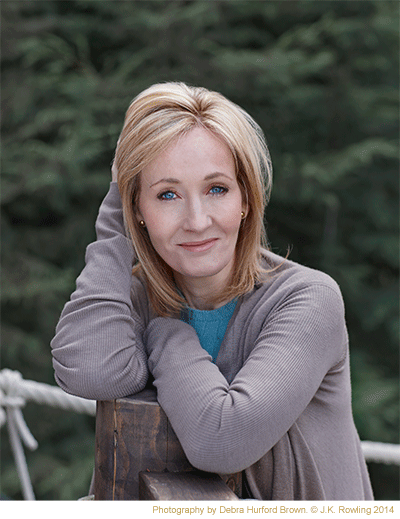
J.K ROWLING : THE JOURNEY OF THE FIRST MILLIONAIRE AUTHOR

Author J.K Rowling has lived a life from rags-to-riches. She lived for years with government as a single mother, and overcame a dozen rejections from publishers to become one of the most successful and widely read author in the history. After a couple of decades of “Harry Potter” , Rowling has turned the boy wizard into an entertainment franchise including books, movies, a play, a theme park and many more. When Rowling was 15, her mother was diagnosed with multiple sclerosis. She died a decade later, before Rowling became a published author. The author studied French at the university of Exeter, graduating in 1986. Her classics knowledge was later used when she came up with the names for spells in the Harry Potter series. After graduating, Rowling worked at the research desk for Amnesty International, doing translation work.She said it didn’t suit her. On a delayed train from Manchester to London’s King’s Cross Station, Rowling came up with the idea for Harry Potter.Over the next five years she outlined the plots for seven books in the series, writing in longhand and amassing scraps of notes written on different papers. Without a job, Rowling visited different Edinburgh to write her very first novel on a typewriter. During that period, Rowling lived off government welfare. In a 2008 interview with the Sunday Times, Rowling said she was severely depressed and sought professional help. In 1995, Rowling finished the first the first Harry Potter book and sent it to publishers which was roundly straight. Her book was accepted by Christopher Little , an Obscure London literary agent. After a year, Little made a deal to print 500 copies of “Harry Potter and the Philosopher’s Stone” with Bloomsbury. The book appeared in print in 1997.

By March of 1999, over 300,000 copies were sold in the UK itself. “Harry Potter and the Chamber of Secrets” , the second book in the series was sold in the UK in July of 1998 also to huge acclaim and sales. In 2004, Forbes reported Rowling was the first person to become a millionaire by writing books. Later she dropped off the list because she gave so much money to charity. In 2007, Rowling finishes the series with “Harry Potter and the Deathly Hallows” , which became the fastest selling book of all time and have sold more than 450 million copies worldwide and have been translated into 67 languages.

SPRINKLER SYSTEM

A most useful irrigation system

PATTIKONDA:19/07/2020.

An irrigation sprinkler (also known as a water sprinkler or simply a sprinkler) is a device used to irrigate agricultural crops, lawns, landscapes, golf courses, and other areas. They are also used for cooling and for the control of airborne dust.Sprinkler irrigation is the method of applying water in a controlled manner in way similar to rainfall. The water is distributed through a network that may consist of pumps, valves, pipes, and sprinklers.

Irrigation sprinklers can be used for residential, industrial, and agricultural usage. It is useful on uneven land where sufficient water is not available as well as on sandy soil.In sprinkler or overhead irrigation, water is piped to one more central locations within the field and distributed by overhead high pressure sprinklers or guns.

There are 4 types of sprinklers. They are Industrial , Residential, Agricultural and underground sprinklers. The first use of sprinklers by farmers was some form of home and golf course type sprinklers.Home lawn sprinklers vary widely in their size, cost, and complexity. They include impact sprinklers, oscillating sprinklers, drip sprinklers, underground sprinkler systems, and portable sprinklers

Spread water with maximum efficiency

Many irrigation sprinklers are buried in the ground along with their supporting plumbing, although above ground and moving sprinklers are also common. Most irrigation sprinklers operate through electric and hydraulic technology.Rolling pipe type irrigation system for farms that has become the most popular type for farmers irrigating large fields. The end system method of sprinklers are widely used.

Underground sprinklers function through means of basic electronic and hydraulic technology.Advantages of Sprinkler Irrigation : A sprinkler system makes it easy and convenient to water your field, flowers and plants: just turn them on and walk away. You can use a sprinkler system to water a wide area of different types of crops, and you can usually adjust how large or small an area receives water.

Disadvantages of sprinkler irrigation include: High initial capital costs and high operation costs due to energy requirements for pumping and labor costs.

Modern garden sprinklers at end system method

Last Romanovs: A Conundrum in Russian History

By Sivam Pathak
In the autumn of 1894 Tsar Alexander third died at the age of 49 leaving his 26 year old son Nicholas the second as the new emperor of Russia. Tsar Nicholas the second of Russia belonged to an age old imperial royal family of Russia, known as Romanov Dynasty. Romanov dynasty ruled Russia over 300 years with an iron fist, during which time Russia had become one of the largest economic and military powers in the world. In yore times Russians regarded their Tsars and the whole monarchy as divine and godlike, and Tsar Nicholas was no exception to this tradition.
Russians, especially peasants (which constitute a majority of Russian population) always kept Nicholas and his family in high regards. With the
passage of time the life of the ordinary peasant become miserable, but they hold back their voices in hope of good times. Steadily survival in Russia grew increasingly harder for the common people that somehow paved the way for a greater divide between them and the Tsar. But the real turning point came from what became known as Bloody Sunday. On Sunday, 22nd of January 1905, a crowd of over thousands of people from all genders and age marched on the Winter Palace (Tsar’s residence) in
St. Petersburg. The protest from the very beginning was predetermined as a peaceful protest to highlight the poor working conditions of Russia’s workforce. At palace, in order to disperse the crowd the Cossacks firstly fired warning shots over the heads of the crowd, but as the situation was deteriorated the Cossacks then fired into the crowds. In the event of Bloody Sunday hundreds of people died and wounded. But here is one thing that needs to be taken into consideration before making any decision on a larger scale. At the time when Russians marched on the Tsar’s residence, Tsar was not in St. Petersburg, and nor he ordered to open fire on the crowd.

But Russians, unknown to this fact, began to hate the Tsar. The event of Bloody Sunday gave rise to huge resentment against the monarchy of Russia. Under the rule of Tsar Nicholas Russia was undergoing a period of severe political, social and economic hardships, and to made matters worse Tsar took an action during world war one (1914-1918) as a result of which Kaiser Wilhelm second of Germany declared war on Russia. The cost of World war one on the Russian people was catastrophic. The losses of war brought Russia on the brink of economic and military collapse. In 1917 due to mounting pressure from the provincial govt. led by Alexander Kerensky, Tsar Nicholas was forced to abdicate. In the meantime when Nicholas was returning to home, his wife Alexandra Feodorovna and his five children- Grand Duchess Olga, Tatiana, Maria, Anastasia (some people believed that Grand Duchess Anastasia survived the execution by Bolsheviks), and Alexei had already been placed under house arrest in the Alexandra Palace. When Nicholas arrived at home, he too was put under house arrest along with his family. In order to protect the Tsar and his family, Kerensky sends them almost 2000 miles away from St. Petersburg to the town of Tobosk, Siberia. There the family was accommodated in the governor’s house for several
days. By November 1917 Bolshevik party had come into power by overthrowing Kerensky’s government. Soon after Bolshevik party came into power a fierce fighting broke out across Russia between the Bolshevik govt. and the anti-communist white army that wanted the Tsar reinstated. As fighting grew more intense Vladimir Lenin moved the Tsar’s family to Yekaterinburg in a former merchant’s house, known as the house of special purpose by Bolsheviks.

On 16th July 1918, it was in the house of special purpose in Yekaterinburg the whole Romanov family was shot dead at night in the basement of the house by Yurovsky and his subordinates. After executing the Tsar and his family, Yurovsky ordered his subordinates to take the bodies of the Romanov family away and buried in unmarked graves at his secret location. His subordinates done all as ordered by Yurovsky. Soon people of Russia began to question about the royal family of Russia. Under increasing pressure the Russian authorities admitted the killing of Tsar Nicholas, but would neither affirm nor deny what had happened to his family. To this day the death of the Romanovs remains one of the most controversial subjects in Russian history.

Jane Austen: A Glimpse of Her Past

-By Shivam Pathak
“I declare after all there is no enjoyment like regarding! – When I have a house of my own, I shall be miserable if I have not an excellent library”.
These are the words of an eminent novelist, Jane Austen from her novel Pride and Prejudice, which is one of the best known works of her life so far in
literature. On 16th of December Jane Austen was born in Steventon,Hampshire in the house of George Austen and Cassandra Austen. Jane had in total seven siblings with whom she was on good terms.

Due to some problems Jane was educated at home. Austen had unfettered access to her father’s library along with that of a family friend’s (Warren Hastings) library. She loved reading novels, but most oftenly she read her own compositions aloud to her family in the evenings. The environment of Austen’s home contributed a lot in order to shape her life as a writer. Gradually when Jane changed from a child into an adult, she became mostly home-centered. She wrote her novels only in the intervals permitted from the important domestic duties of a devoted daughter, sister, and aunt.

Austen achieved success as a published writer after the publications of her novels like-Sense and Sensibility, Pride and Prejudice, Mansfield Park, and Emma. A significant change in her career occurred in the year 1833, when her novels were republished in Richard Bentley’s Standard Novels series. Jane’s novels were known for critiques and comments upon the British social classes. Austen’s plots were often associated to the dependence of women on marriage in the pursuit of favorable social and economic status in the society.

On 18th July, 1817 Jane Austen breathed her last. Her mysterious death is still a topic of discussion. Some scholars believe that she died due to cancer or tuberculosis. In 1869 Austen’s nephew, James Edward Austen Leigh, published “A Memoir of Jane Austen” in order to give an introduction of Jane Austen’s compelling account of life. Following this he published a second edition in 1871, which included Jane’s unpublished writings.

Therefore, Jane Austen’s writings gave English literature new heights. Austen’s life and novels are both inspirational for every writer as well as
every reader throughout the world.

Jane Austen: A Glimpse of Her Past

-By Shivam Pathak
“I declare after all there is no enjoyment like regarding! – When I have a house of my own, I shall be miserable if I have not an excellent library”. These are the words of an eminent novelist, Jane Austen from her novel Pride and Prejudice, which is one of the best known works of her so far in literature. On 16th of December Jane Austen was born in Steventon, Hampshire in the house of George Austen and Cassandra Austen. Jane had in total seven siblings with whom she was on good terms. Due to some problems Jane was educated at home. Austen had unfettered access to her father’s library along with that of a family friend’s (Warren Hastings) library. She loved reading novels, but most oftenly she read her own compositions aloud to her family in the evenings. The environment of Austen’s home contributed a lot in order to shape her life as a writer. Gradually when Jane changed from a child into an adult, she became mostly home-centered. She wrote her novels only in the intervals
permitted from the important domestic duties of a devoted daughter, sister, and aunt. Austen achieved success as a published writer after the publications of her novels like-Sense and Sensibility, Pride and Prejudice, Mansfield Park, and Emma. A significant change in her career occurred in the year 1833, when her novels were republished in Richard Bentley’s Standard Novels series. Jane’s novels were known for critiques and
comments upon the British social class. Austen’s plots were often associated to the dependence of women on marriage in the pursuit of favorable social and economic status in the society. On 18th July, 1817 Jane Austen breathed her last. Her mysterious death is still a topic of
discussions. Some scholars believe that she died due to cancer or tuberculosis. In 1869 Austen’s nephew, James Edward Austen Leigh, published “A Memoir of Jane Austen” in order to give an introduction of

FUNCTIONING OF CORPORATE LAW FIRMS

A law firm is generally a partnership where two or more lawyers agree to work together and share profit, loss, and liability accordingly. It is important to understand the type or kind of law firm because it ascertains the amount of risk in a law firm and the revenue it can generate to partners and keep running the business. There are several law firms functioning in the country but not all are of the same calibre. Some functions exceptionally well while there are some who do not perform as well. Law firms can be categorized as top-notch, mid-category while there are others that are not up to the mark. But before we go on to categorize the law firms of India, let us understand the functions of a law firm in India. A law firm typically is a business entity that is formed by lawyers. The main function of the lawyers is to advise clients about their legal rights and responsibilities. At the same time, the lawyers of the law firm represent clients in various criminal cases and business transactions. A law firm is a business entity formed by one or more lawyers to engage in the practice of law. The primary service rendered by a law firm is to advise clients (individuals or corporations) about their legal rights and responsibilities, and to represent clients in civil or criminal cases, business transactions, and other matters in which legal advice and other assistance are sought.

TYPES OF LAW FIRMS:-

ON THE BASIS OF ARRANGEMENT 

This is based on the agreement between the partners for the kind of law firm they need to establish. The arrangement determines the overall sharing of all the profits, losses and liabilities:

·Sole Proprietorship 

In this, a single lawyer is wholly and solely responsible for profit, loss, and liability of the firm.

·General Partnership 

Where two or more lawyers of the firm work together sharing profit, loss, and liability altogether. 

·Professional Corporation

In this type of firm, stocks are provided to the lawyers. 

·Limited Liability Company 

In this, the lawyers-owners are members of the firm but are not directly liable to the third party creditors.

·Limited Liability Partnership

In this lawyers-owners are partners but no one is liable for any act of negligence of any other partner.

ON THE BASIS OF THE STRENGTH/SIZE OF LAW FIRM 

The size of a law firm determines the revenue a law firm will be able to generate. It is the principle of efficiency, more is the workforce, more is the amount of output produced in a given duration of time. The same can be inferred from the size of the law firm, the more the number of associates a law firm comprises, the more billable hours it charges and increases the output provided and therefore the strength of the firm increases the total revenue of the firm.

Boutique Law Firm 

These firms are limited to small cities and towns and are limited to conventional practice. Lawyers are specialized and practicing in only one kind of law. 

Virtual Law Firms 

Use of modern communication technologies to conduct business with no physical presence. This is yet to be developed in India.

Big Law Firms 

The law firms hire a large number of associates and charge more. These full-service law firms.

Full-Service firms 

These firms consist of lawyers specialized in different areas of law. 

Worldwide Firms 

The global presence of a law firm to represent a client at an international level.It should be kept in mind that the strength and arrangement of a law firm is only an initial plan of how a firm will function. A firm will always generate revenue with the quality of service it provides and the value it adds to a client’s interests. Therefore, it is better to diversify the portfolio of practice areas and specialize in every aspect to reach on top of the competition. 

RESTRICTIONS ON OWNERSHIP INTERESTS

In many countries, including the United States, there is a rule that only lawyers may have an ownership interest in, or be managers of, a law firm. Thus, law firms cannot quickly raise capital through initial public offerings on the stock market, like most corporations. They must either raise capital through additional capital contributions from existing or additional equity partners, or must take on debt, usually in the form of a line of credit secured by their accounts receivable.

In the United States this complete bar to non-lawyer ownership has been codified by the American Bar Association as paragraph (d) of Rule 5.4 of the Model Rules of Professional Conduct and has been adopted in one form or another in all U.S. jurisdictions, except the District of Columbia. However, D.C.’s rule is narrowly tailored to allow equity ownership only by those non-lawyer partners who actively assist the firm’s lawyers in providing legal services, and does not allow for the sale of ownership shares to mere passive non-lawyer investors. The U.K. had a similar rule barring non-lawyer ownership, but under reforms implemented by the Legal Services Act of 2007law firms have been able to take on a limited number of non-lawyer partners and lawyers have been allowed to enter into a wide variety of business relationships with non-lawyers and non-lawyer owned businesses. This has allowed, for example, grocery stores, banks and community organizations to hire lawyers to provide in-store and online basic legal services to customers.

MULTINATIONAL LAW FIRMS

Law firms operating in multiple countries often have complex structures involving multiple partnerships, particularly in jurisdictions such as Hong Kong and Japan which restrict partnerships between local and foreign lawyers. One structure largely unique to large multinational law firms is the Swiss Verein, pioneered by Baker & McKenzie in 2004 or as GRATA International, in which multiple national or regional partnerships form an association in which they share branding, administrative functions and various operating costs, but maintain separate revenue pools and often separate partner compensation structures. Other multinational law firms operate as single worldwide partnerships, such as British or American limited liability partnerships, in which partners also participate in local operating entities in various countries as required by local regulations.

FINANCIAL INDICATORS

Three financial statistics are typically used to measure and rank law firms’ performance:

  • Profits per partner (PPP): Net operating income divided by number of equity partners. High PPP is often correlated with prestige of a firm and its attractiveness to potential equity partners. However, the indicator is prone to manipulation by re-classifying less profitable partners as non-equity partners.
  • Revenue per lawyer (RPL): Gross revenue divided by number of lawyers. This statistic shows the revenue-generating ability of the firm’s lawyers in general, but does not factor in the firm’s expenses such as associate compensation and office overhead.
  • Average compensation of partners (ACP): Total amount paid to equity and non equity partners (i.e., net operating income plus non equity partner compensation) divided by the total number of equity and non equity partners. This results in a more inclusive statistic than PPP, but remains prone to manipulation by changing expense policies and re-classifying less profitable partners as associates.

WORKING OF LAW FIRMS 

A conventional law firm diversifies the area of practice with time to increase its revenue, provide services in various fields of law and provide legal solutions. But recently, this practice has been changed. A law firm now in order to make credibility and generate leads which last long and create more impact, have started to engage in the areas of researching, legal products, and legal training too. These are explained below:

Legal Solutions 

What can be a better USP of a law firm which can resolve the problems of a client efficiently, effectively and as per the interests of its client? This involves client counselling, dispute resolution, legal arrangements, contracting drafting, compliance due diligence, etc. 

Researching 

Research involves policy-making, analyzing legislation, and in-depth study of law to contribute to the academia of legal. Research enables a law firm to create a lasting impact as their research can be referred to as a citation and thereby generating leads and prospective clients.

Legal Products

With the rapid change in technology, law firms are also indulging in research to improve and modernize the legal fraternity so that it can dispense justice efficiently and effectively. In 2017, CAM setup the CAM Innovation Lab to embrace the opportunities technology and use it to provide the best in class services to the clients.

Legal Training 

The major setback effectiveness and efficiency in the legal industry is the gap between the theoretical knowledge given in the institution and the lack of practical knowledge on the ground. To cover this up, a lot of law firms and lawyers engage in legal training by conducting lectures, seminars, workshops or internships. To improve the practical skill of lawyers and aspiring lawyers, the law firm improves its potential efficiency by improving the quality of the workforce and thereby increasing the revenue of the firm.

Apart from this, there are also new areas of law that a law firm should not ignore and indulge and specialize in them because there lie the potential business and revenue which a law firm will lose if it does not regard these areas of law.

NEW AREAS OF LAW WHICH ARE DEVELOPING AND PROFITABLE

Law is a dynamic subject if one needs to remain in the competition he needs to update and familiarize himself with various growing fields of law. With the advent of globalization and rapid development in technologies, the conventional fields are not the only place to increase revenue. In the competitive laissez-faire market, there are various organizations coming to a consensus to work together, or seeking efficient means to resolve their disputes, worried whether their online data is secure and what can be controlled, protection of the company’s brand and various other things. 

If a lawyer can resolve such difficulties, he will be earning a considerable more money than others in the market. A law firm earns a significant clientele by specializing in such fields and establishing its credentials. Some of the areas of law which are developing and profitable are mentioned below:

Mergers & Acquisitions

Every business aims to increase profits, increase clientele, generate more leads and reach the top of the competition. Therefore, every business looks for the opportunity to work with others, acquire other businesses and expand itself more in the market. 

Look at the deal feed of Legally India, daily millions of dollars of deals are made to expand the avenues of business. A law firm has to also deal with the Competition Commission and Security Exchange Board of India. A transaction of such type requires a lot of speculation, must adhere to compliance rules and it is not a simple and easy task. A lot of revenue can be earned if a law firm commands expertise and credibility in this field.

Intellectual Property Rights 

R&D is an important part of the development of new technologies. Billions of dollars are invested to develop new technology. The vast amount of time is invested by authors to produce novel intellectual creations. When these creations are introduced to the public it encourages others to further develop the innovation but at the same time, it is possible that their ideas might get stolen. Therefore, to protect their novel innovations and works, there exists trademark, patents, and copyright under the field of intellectual property rights which provides protection to business marks, novel innovations, and artistic works. 

The different areas in intellectual property include trademarks, patents, copyrights, and related rights, Industrial Designs, Layout Designs of Integrated Circuits, Plant Varieties, Information Technology and Cybercrimes, and Data Protection.

Arbitration 

It is said that it is good if a person does not get to visit three places in his life: Police Station, Hospital and Court. In India, the condition of the judiciary, in terms of faster dispute redressal is not good, the Supreme Court of India alone has 59,272 cases pending before it. It takes years through the court to resolve a dispute. There are a lot of business companies that need binding speedy dispute resolutions and do not want to waste their capital on lawyers dealing with a single dispute for years. In this scenario, arbitration provides an alternate dispute resolution to contending parties to sit together and come to a conclusion. In this way the outcome reached would be favorable to both the parties and therefore will be obliged by both of them. Earlier, people used to hesitate to go for arbitration and preferred to litigate but with the changing scenarios, a law firm that specializes in dispute resolution will have an ace against the other competitors.Technology Law 

This field is emerging rapidly with the pace of development in technology. There are various legal issues in this area from disputes in online trades and transactions to a simple click on the ‘I Agree’ button on terms and conditions of a website. To specialize in this area, a person should learn about the technical aspects of a business, its vulnerabilities, and various legal aspects involving the same. 

A law firm, which can provide specialized services like Software Licencing, Dispute Resolution in tech, agreements for cloud service, IT services, etc will definitely give more revenue as this field generates a value to support a global population of over 7 billion people and growing.

Media & Entertainment Law

As per a report by IBEF, this sector is expected to grow up to $37.55 billion by 2021 in India. A media company has to comply with broadcasting rules, advertising procedures, enter into a contract with various persons and logistics, resolve disputes, comply with cyber laws and many other areas. 

A law firm providing services in such a field can chunk out some revenue from this $37.77 billion.

NEW FIRMS WHICH ARE SUCCESSFUL

There are various law firms that specialize in these developing fields of law and are earning revenue by showcasing their skills and credibility to prospective clients. 

·Algo Legal

The firm has been specialized to serve the needs of investors and startups. The firm focuses on delivering the best in class service with the aid of technology for improved efficiency and effectiveness.

·Krida Legal  

Sports Law is also one of the emerging areas of law and this firm provides services of law with specialization in sports law. 

·Economics Law Practice 

This firm has been recognized as one of the leading Litigation, Arbitration, and Dispute Resolution firms in the country. 

ADVANTAGES OF WORKING IN LAW FIRMS

·Early growth

If a lawyer starts his solo practice or sets up his own law firm, it takes a lot of time, money and investment to grow. On the other hand, if a lawyer commands appropriate skill sets he can work at a law firm and earn a decent amount of money during the starting phase of his career. 

·Vast exposure in terms of clientele

A lawyer practicing solo will at least take 2.3 years to establish his name and credibility in the market. While at a law firm, already diverse clientele exists and there is no dearth of work. So, a lawyer does not need to worry about a lack of work while working at a law firm.

·Working with experts 

A solo practitioner is the boss of his own, he has to manage all the things which include improving and updating himself with the different areas of law and affairs surrounding it. While at a law firm, a lawyer gets to interact with various experts of the legal fraternity and even work with them. This opportunity provides enormous value to a lawyer and helps him to build his network even further.

·Steady Job 

In a solo practice, every day is a new day whereby a lawyer searches for work to earn money. While on the other hand, there is no dearth of work at a law firm. The lawyer needs to keep working and the money keeps coming every month. 

·Interest driven choice 

Working in a law firm is thrilling and adventures. It is the interest and passion of an individual law to choose to work in a law firm. When the choice is interest-driven, a person cannot be unsatisfied with his work and he is expected to grow immensely by the tremendous opportunities provided by firms to increase one’s potential.

CONCLUSION

Therefore, in this way a law firm makes money and by specializing in these developing areas of law, a law firm can grow further. It is important to diversify the practice areas and increase portfolios to earn more revenue. But, at the same time, the quality of service should not be compromised at any cost.

“BOYS DON’T CRY BUT REAL MEN DO “

“Hey! why are you crying like a girl”, “Boys don’t cry”, “How can you be afraid? Boys should be brave”, “You read books? What kind of a girly hobby is this?”. I am very sure you all must have heard things like these many times, and we still listen it everyday. These are such stereotypes which the society has made for men, and the men have to act accordingly. But do we even realise how a simple sentence can affect them in many ways. In this article we’ll be talking about these stereotypes and how adversely they affect them. The whole concept about typecasting boys starts from childhood only where we tends to buy cars and adventure toys for the boys and sweet and simple toys like barbie dolls for girls. Again I am not saying that playing with a barbie is a weird thing or something but I think it would be better if we let them decide instead about there toy preferences. Whenever a boy cries due to some reason, everyone is like “Hey! you are not a girl, stop crying”, but the question is why can’t boys cry? Boys are considered to be mentally and physically strong and are expected to bear their pain, agony, anger or sadness without showing their emotions. But it is very important to let them show their emotions, to let them feel their emotions, which will make them even more stronger. Another common stereotype which we have seen is generalization of colours by gender. Have you ever noticed that all the essentials and clothes of boys are mostly of blue colour while Pink is used for girls. So, what made us so sure that blue is boys’ favorite colour and pink is loved by girls only? Try to understand the seriousness of this concept that it has even affected the colour choice.

Because of these stereotypes, we, the society have made men emotionless, unexpressive and rigid. People must not see a boy as an emotionless human but as a human who feel emotions, who expresses emotions and who convey these emotions. Adults should try to be role models for this. even though this is a stereotype, a father should perhaps not only play soccer with his boy, but read a book too.

“And to all the boys who are reading this, it’s okay to cry, it’s okay if you feel pain, it’s okay if your favorite colour is not blue and it’s okay if you don’t like soccer but hiding your emotions and suffering in pain is definitely not okay.”