Amazing Female Photographers You Should Know

AMI VITAL

Ami Vitale

Nikon Ambassador and National Geographic magazine photographer Ami Vitale has traveled to more than 100 countries, bearing witness not only to violence and conflict, but also to surreal beauty and the enduring power of the human spirit. Throughout the years, Ami has lived in mud huts and war zones, contracted malaria, and donned a panda suit— keeping true to her belief in the importance of “living the story.” In 2009, after shooting a powerful story on the transport and release of one the world’s last white rhinos, Ami shifted her focus to today’s most compelling wildlife and environmental stories. Instyle Magazine named Ami one of fifty Badass Women, a series celebrating women who show up, speak up and get things done. She appeared alongside a group of incredible women including Jane Goodall, Christiane Amanpour and Ruth Bader Ginsburg. She has been named Magazine photographer of the year in the International Photographer of the Year prize, received the Daniel Pearl Award for Outstanding Reporting and named Magazine Photographer of the Year by the National Press Photographers Association, among others. She is a five-time recipient of WorldPress Photos, including 1st Prize for her 2018 National Geographic magazine story about a community in Kenya protecting elephants. She published a best-selling book, Panda Love, on the secret lives of pandas. She is a featured speaker for the National Geographic LIVE series, and frequently gives talks and workshops throughout the Americas, Europe, and Asia.

Her photographs have been commissioned by nearly every international publication and exhibited around the world in museums and galleries. She is a founding member of Ripple Effect Images, an organization of renowned female scientists, writers, photographers and filmmakers working together to create powerful and persuasive stories that shed light on the hardships women in developing countries face and the programs that can help them. She is also on the Photojournalism Advisory Council for the Alexia Foundation.

Currently based in Montana, Ami Vitale is a contract photographer with National Geographic magazine and frequently gives workshops throughout the Americas, Europe and Asia.

Samburu warriors stand at the top of the northern Kenya’s Mathews Range where the 850,000 acre Namunyak Wildlife Conservancy is situated. The area is home to Africa’s second-largest elephant population. There community-based wildlife keepers, like these Samburu warriors, are working to rehabilitate abandoned and orphaned elephants in order to eventually return them to the nearby wild herds. In many ways, community based conservation is likely to be the only viable alternative for vast tracts of Africa, in the parts beyond agriculture and where big animals and nomadic pastoralists still make their home. This elephant sanctuary is the culmination of a two-decades long process of tipping conservation upon its head, protecting wildlife for, and not just from people. In that sense the sanctuary is as much about people as it’s about elephants.

RANIA MATAR

Rania Matar was born and raised in Lebanon and moved to the U.S. in 1984. As a Lebanese-born American woman and mother, her cross-cultural experience and personal narrative inform her photography.

Matar’s work has been widely published and exhibited in museums worldwide, including the Museum of Fine Arts, Boston, the Carnegie Museum of Art, National Museum of Women in the Arts, and more. A mid-career retrospective of her work was recently on view at the Cleveland Museum of Art, and at the Amon Carter Museum of American Art, in a solo exhibition: In Her Image: Photographs by Rania Matar

She has received several grants and awards including a 2018 Guggenheim Fellowship, 2017 Mellon Foundation artist-in-residency grant at the Gund Gallery at Kenyon College, 2011 Legacy Award at the Griffin Museum of Photography, 2011 and 2007 Massachusetts Cultural Council artist fellowships. In 2008 she was a finalist for the Foster Award at the Institute of Contemporary Art/Boston, with an accompanying solo exhibition.

Her work is in the permanent collections of several museums, institutions and private collections worldwide.

She has published three books: L’Enfant-Femme, 2016; A Girl and Her Room, 2012; Ordinary Lives, 2009.

She is currently associate professor of photography at the Massachusetts College of Art and Design.

GEORGINA GOODWIN

Georgina Goodwin is a documentary photographer and Canon Ambassador born and based in Kenya with a focus on women, refugees, social issues and environment. Known for her award-winning work on Kenya’s post-election violence, cancer in Kenya and Westgate terror attack, and most recently refugee children in Tanzania, Georgina is a contributor to Getty Images and Everyday Climate Change and a member of Women Photograph and African Photojournalism Database, a collaboration of World Press Photo and Everyday Africa. Her work has been published by NY Times, Elle, Vogue, AFP and many others, and has been exhibited in Times Square NYC, Tokyo Japan and The Louvre Paris amongst others. Georgina was a speaker at TEDxKakumaCamp, the first TED talks to be held at a refugee camp, and one of 19 finalist speakers at TEDx Nairobi in 2017.

Amina Suleiman Gas, 45 stands amidst the carcasses of her dead animals, piled for burning outside the compound where she has lived for 10 years in Barwako village 20kms into the desert from Anaibo Town, central Somaliland. She sent most of her livestock west with her neighbor in November 2016 when the drought began to get worse and fears they have not survived, March 2017. Barwako was a village of 100 families but 245 more came in from the surrounding area because of the drought. As a member of the Villlage Savings and Loans Association (VSLA) Amina and her group shared all their savings with the displaced families, leaving them with nothing. At least 6.2 million people, more than half the population, were in need of assistance after four consecutive seasons of failed rains over three years leaving the region depleted of all its resources and experiencing a drought on a scale not seen since 1974 and on the verge of famine.

CIG HARVEY

The photographs and artist books of Cig Harvey have been widely exhibited and remain in the permanent collections of major museums and collections, including the Museum of Fine Arts, Houston, Texas; the Farnsworth Art Museum, Rockland, Maine; and the International Museum of Photography and Film at the George Eastman House, Rochester, New York. Cig began working in a darkroom at thirteen and has been dedicated to photography ever since. She grew up in the deep valleys of Devon in the UK, and came to the States for her MFA in 1999, after years spent living in Barcelona and Bermuda.

Cig Harvey’s first monograph, You Look At Me Like An Emergency (Schilt Publishing, 2012,) is a collection of ten years of pictures and written vignettes. It sold out in all printings and was named one of PDNʼs Best Books of the Year 2012. Cig had her first solo museum show at the Stenersen Museum in Oslo, Norway, in conjunction with the release. The book was well reviewed in a number of publications, including The Independent, Aesthetica, the Boston Globe, Blink, and PDN. Pro Photographer magazine ran an in depth feature, Chance: Cig Harvey’s deceptively simple photographs tap into the universal elements of the human experience: love, loss, longing and belonging. She’s in demand for editorial and commercial work-as well as her for her fine art prints and books.

Cig Harvey’s second monograph, Gardening at Night (Schlit Publishing, 2015,) was published in conjunction with solo shows at Robert Mann Gallery, New York, Robert Klein Gallery, Boston and Paul Kopeiken Gallery, Los Angeles. The book received critical acclaim with features and reviews in Vogue, The Telegraph, the International Wall Street Journal, the International New York Times, and Aesthetica among others. The International Wall Street Journal said of the series, Though the subjects and setting are familiar to us, we cannot help but feel that Cig Harvey has led us through the looking glass to a world of wonder. In the way that twilight is not quite day and not quite night, the photographs of Gardening at Night are stories not yet fully developed, while still capturing the unexpected yet oddly harmonious moments that surround us daily.

Cig Harvey’s work has been displayed at Paris Photo, Art Miami, and AIPAD every year since 2006. She has been a nominee for John Gutmann fellowship and the Santa Fe Prize, and a finalist for the BMW Prize at Paris Photo and for the Prix Virginia, an international photography prize for women.

Cig’s devotion to visual storytelling has lead to innovative international campaigns and features with New York Magazine, Harper’s Bazaar Japan, Kate Spade, and Bloomingdales. Cig teaches workshops and regularly speaks on her work and processes at institutions around the world. She is known for her high energy, sense of humor and creativity. She brings a profound sense of optimism to all that she does.

Cig lives in a farmhouse in the Midcoast of Maine with her husband Doug (who has the profile of an emperor on a Roman coin), their wayward daughter Scout, and Scarlet the dog (the original baby). The slow passing of time and the natural surroundings of her rural home has made her alert to the magic in the mundane.

FOLLOW ME @829martin


‘Content Writer’ is the most searched job in India, says study

The latest study for digital marketing job trends in world’s leading nations conducted by SEMrush, the online visibility management, and content marketing SaaS platform showcased that amongst the most searched digital marketing jobs in different countries, India clearly showed a great share of 73.87 per cent for content writer jobs with a monthly/daily search volume of 26309.

Content writer jobs in other countries contributed with a lower share of 32.24 per cent for Australia, 31.66 per cent for the UK, 30.68 per cent for Canada, and 30.27 per cent for the USA.

The study showed that the keywords – ‘how to do content marketing’, why content marketing is important’, ‘what is content marketing strategy’ and other queries regarding content marketing and content writing ranked high in terms of search volume in comparison with other digital marketing jobs.

India showcased vast changes in the priority of content writer jobs in recent years and surpassed other fast-evolving digital marketing jobs like social media managers, SEO analyst, Content marketing manager, etc.

The research conducted in the world’s leading nations highlighted the overall share of content writer jobs to be 47.57 per cent amongst all leading digital marketing jobs.

Racial bull

Racial bullying is a type of racism where someone’s bullying focuses on your race, ethnicity or culture. Racism and racial bullying are wrong and you can get help to make it stop.

Racism and racist bullying can include:

  • being called racist names or being sent insulting messages or threats
  • having your belongings damaged or having to see racist graffiti
  • personal attacks, including violence or assault
  • being left out, treated differently or excluded
  • people making assumptions about you because of your colour, race or culture
  • being made to feel like you have to change how you look
  • racist jokes, including jokes about your colour, nationality race or culture.

Racism can affect anyone. It can make you feel like you’re not important or don’t fit in. You might feel upset, depressed or angry. You can be affected by it even when it’s not aimed at you, like if you hear someone discriminating against someone’s culture.
STOP RACISM

PollUtion needs a solution

Read more on Brainly.in – https://brainly.in/question/1202325#readmore

Pollution is a serious issue affecting our planet today, yet many people continue to turn a blind eye thinking that it’s not that s
Pollution as is is the addition of subs to the environment faster that thment can dispose, recycle, decompose, or store in a harmless state.
There are different types of pollution and includes water, soil, air, and sound pollution and all these continue to cause major problems. In our quest to better, our lives we forget or rather ignore the negative impacts such deeds can have on the environment.
Mostly the cities where there is a lot of population are most affected. The fumes that emanate from factories and vehicles not only make it difficult to breathe but affects the ozone layer. The garbage, honking, blaring music are all menaces that we should aim for a better plane
The biggest paradox is that the more we pollute the environment the riskier it becomes for us to live in it. Pollution affects our health, which lowers our quality of life significantly.
Poisonous chemicals emitted in factories are dangerous and exposes us to various elements that cause cancer. Garbage scattered all over increases the chance of us getting a variety of epidemic diseases.
The major problem brought about by pollution is global warming which has resulted to changes in the global climate patterns. We can no longer predict on what to expect on the different seasons unlike before. Things are so bad that life on earth in general is under great risk
According to scientists, it’s not too late to take action we can take measures to prevent any further damage and adopt better waste disposal measures for a better planet.
Each one of us needs to be responsible in protecting the environment. We can all do things better to ensure we safeguard our human race for our benefit and our future generations. Simple things such as saving electricity, fuel, using biodegradable materials, recycling, among others count in reducing pollution.
We should all aim to better our planet by the simple things we do. Take action now.
 

HOW TO CRACK THE CIVIL SERVICES EXAMINATION WITH RIGHT STRATEGY !

The Do’s and DONT’s To become an “IAS OFFICER”

Union public service commission India’s central agency , abbreviated as UPSC ,conducts civil services examination annually and recruits selected candidates for as much as 24 posts .Getting into the Indian civil services is a major hallucination for lakhs of aspirants .Those already on the expedition along with them who choose to be an IAS officer some day are all in the same boat .

Upsc preparation is a well structured combination of hard work in the right direction and a tackling strategy contemporaneously. However, great deal of doubts along with girdled exaggerating myths can leave you enervated and astray.

Strategy Is Figuring out what not to do

The right kind of strategy is all you need to witness your aspirations .Let’s have a look into the do’s and don’t you need to follow if you are a serious aspiration. By the end of the article you will be able to take an analysis on your overall preparation additional to the road map directed !

SAY YES TO THESE DO’S TODAY

1) Syllabus , Question paper and mock test is must

Your syllabus is the basis of your entire preparation make sure to by heart it .Start by simply jotting down the entire syllabus into points and divide them into sections according to your strengths and weaknesses, and then proceed with designing a study plan.Stop looking at the IAS curriculum as a whole – Divide and Conquer.Adding to this go through previous year question paper to get an idea about the kind and pattern of questions asked in the examination.Make sure you solve enough number of mock papers for both Prelims and Mains; this is a must before you step into the UPSC exam for your first attempt. Regular evaluations will help you keep a track of your weakness and progress at the same time .Indulge in quality discussions.
In an exam like the civil service mains, studying the syllabus is not the only important thing to do, How you write the exam is what counts the most. No matter how much you study prior to the exam, how skilfully you are writing the answers within three hours is what makes one topper and another failure. Hence having regular practice of essay/answer writing is highly necessary. Evaluate yourself before UPSC evaluates.

https://www.upsc.gov.in/examinations/previous-question-papers

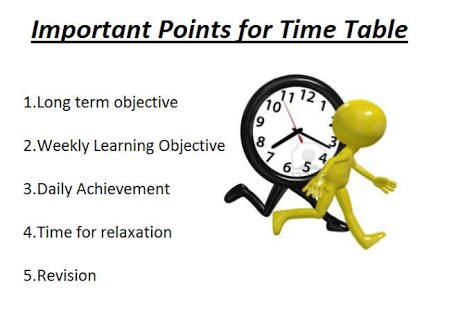
2) Prepare A Schedule / effective plan

Draw out a timetable for yourself, and the time table should be a realistic one.Do not make a timetable which needs more than 8 -10 hours of your day to dedicate to your IAS preparations depending on your capacity. Once you have decided on the amount of time you will put in everyday and what topics you will cover when, make sure you follow it everyday.

3) Consistency is the key

No matter how much talented you are, how much hard working you are, how much smart you are – if there is no consistency in your preparation for this exam (UPSC civil services), you will either fail or unnecessarily prolong this journey making it stressful, burdensome and frustrating.
Being consistent i.e. being regular and steadfast in what you are doing – either making notes from newspapers or from books, writing answers daily, writing essays weekly, solving test papers from test series once in a week or ten days – is the ONLY solution to all your problems.

4) Revise more than you learn

Be wise ! Revise

When you plan your studies, make sure you have enough time on your agenda for a minimum of two revisions. Both general studies, as well as CSAT syllabus, should be reviewed twice – a week before the examination.Without revision,you cannot succeed in this exam.

DONT’ S ARE MORE IMPORTANT

1) Limit your Resources

Aspirants must not deviate from the UPSC syllabus as questions asked in the exam are on based on the given syllabus.
They should not ignore the basics and NCERT books, as some questions are based on fundamentals too.
One must avoid buying too many books or collecting too much material to study for the UPSC exam as it would be a waste of time.
One of the common mistakes UPSC aspirants make is ignoring the basics and NCERT books, which are important for IAS preparation as questions based on NCERT books and fundamentals may be asked in the exam.
Not solving sufficient practice papers and previous papers could affect their performance, too.Also, lack of consistent preparation, regular practice, and revision may impact their preparation process adversely.Spending time reading too many books may lead to confusionThough UPSC aspirants tend to consult various study material and books to prepare for different topics, going through too many books may create confusion and should be avoided.
UPSC syllabus is vast and candidates may need to refer multiple sources to cover it.
However, consulting too many books could be a waste of time. Instead, they should choose the right material/books and revise well.

https://www.google.com/amp/s/m.jagranjosh.com/articles/amp/upsc-iasprelims-subjectwise-study-material-important-resources-for-complete-preparation-1585745500-1

2) Don’t make lengthy notes

Avoid making lengthy notes as it will consume your time as well as distract you at the time of examination .
Too much of content in notes is unnecessary .Notes should be kept precise and intact .
Do multiple readings and then make notes of the most important topic out of the whole just to get to know the whole idea at the time of need.

3) Do Not Ever Skip Newspapers

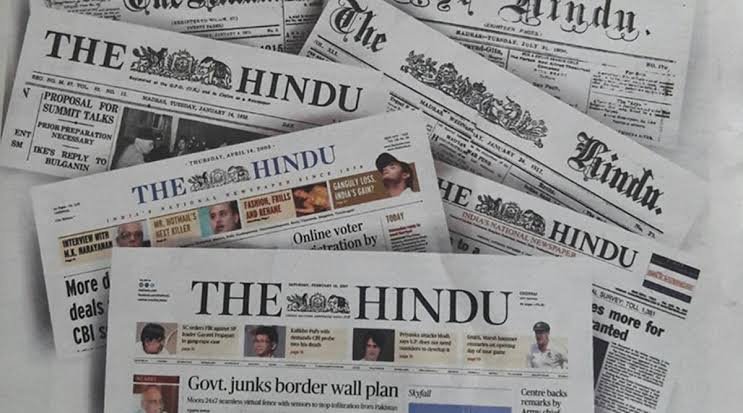
If there’s a bible that can guide you towards success, it’s the ;Newspaper Readings’ that acts as an integral whole in your entire preparation process. Many questions that are asked in the examinations come directly from the newspapers. Therefore, it becomes prudent on your part to know ‘How to read a newspaper’, ‘what to read and what not to read’.

https://www.insightsonindia.com/the-hindu-news-analysis-videos/

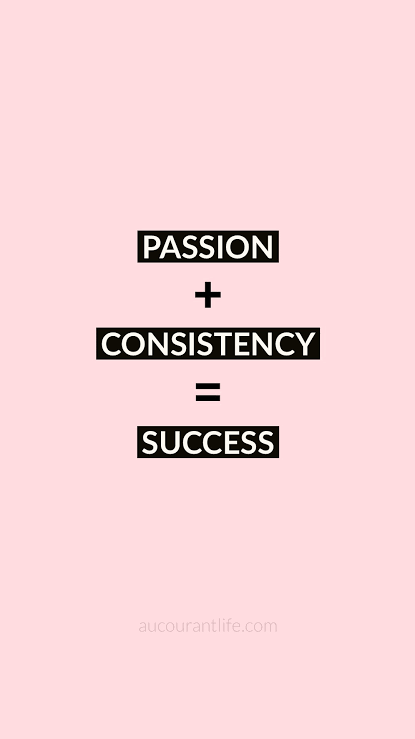
Hard work + strategy = Success !

” Rowing harder doesn’t help if the boat is headed in the wrong direction .”-kenichi

#International Journal Of Research(Follow Eduindex news for more )

Trends of feminism in India

“You are a girl”, the idea was again and again reminded like a beeping alarm to the females of our country;but it was uptill the day when one of the revolutionaries of ours, Rajaram Mohan Roy in the early 90s stood up as the voice for lakhs of women who were knowingly and unknowingly the victims of evil practices going in our own country.
Although, we have been so much fortunate to have some of the  women figures who were much more independent and fierce, but it was the scanerio of ‘India’ that has been not talked about yet. People speak about strong women participating in debates, fighting on the fields, ruling over large clans, but this picture behind the camera is hidden, hidden beneath the sheets of past. Contrasting from the early events, today the word ‘feminism’ has got a new definition;after the revolution and modernizing into a democracy the idea or one would say ‘the women clan’ has become much more protective towards their rights, whether it right to education or participation, or freedom. Each and every woman seek out one or the other way to get the best out of themselves. We have seen such great examples of women being withstanding men in the fields which were at some point of time considered men centric. Many a woman have rose to the heights equivalent men, if we do count their achievements it would not be easy to finish them up; Malala Usuf, the Nobel Peace Prize winner, could be one such example to be counted following by all the common and famous ladies who have crossed over the bars of patriarchy. But, but, but, again they seem to ruin everything, as we have seen from the past- there was nothing to do with Dharmasutras, every single dharma was being ruled out a some point or the other. -So is the idea and the motive of “women being equal to men” seems to detoriate; for instance, if a feminist found a old man sitting on the seat reserved for ‘ladies’ the first word the utter is “why are you sitting on this seat”? Regardless of the age of the man! Though the idea of feminism provide them to speak up for the right they’re hindered from, but it is merely a cryptic and forge idea of what they call being ‘feminism’. Isn’t it? But then they again evacuate that it is their ‘right’ which the Constitution of India has provided them. The recent incident of the ‘bois locker room’ which flooded all over the internet is one such ironic picture of the so called ‘feminism’. Yet, we have reached at such a point in the society where fake is real sometimes and the real picture of equality and empowerment remains hidden behind scenes which the makeup of “false feminism” fails to bring up. And the society becomes the victim of such faces whose beauty might blind them forever.

Racial Discrimination, another Virus for USA these times…?

a protester, holding words” I can’t Breathe”.

Today, the whole world is facing huge crisis of global pandemic Covid-19 due to spreading of novel Corona virus.This virus is said to be evolve in China and China constantly denied it.

All the big economies of the world like USA, Japan, China, India and Russia have been victim of this pandemic.

In such situation USA is meeting an another problem that is Racial discrimination ( Black vs White ).The problem is not new but The extrajudicial killing of George Floyd has sparked days of unrest and protest around the United States. What is less well known but no less important is how this event has sparked massive anti-racism protests around the world, including in Nairobi, Lagos, London, Berlin, Toronto and most recently, Paris.

George Floyd, an african american,46, who was pinned under the knee of a white police officer in Minneapolis,was killed by that white officer.Floyd was constantly saying under his knee” I can’t breathe”.This sentence has prompted more than a week of street protests throughout the states,

The sentence”I can’t breathe” is not new for the African Americans .An another matter was introduced earlier in which a black man was killed by police personnels in USA with words ” I can’t breathe ” and this sentence also hold the meanings of all discrimination taking place there in USA.In jobs ,In schools in society everywhere a racial discriminative surrounding is established there where these poor black african americans are living miserably.

In USA, where the data of covid patients releases failure of USA against the well established health system, this racial dispute is showing it’s weakness in administrative fields too.

USA is burning with the fires of discrimination as well as highest cases of covid-19. USA should be more careful nowadays and should not play any political games .USA is failing to pretend to be the World Power whereas China is also being the victim of not spreading awareness of the virus in the world.

In such situation India can emerge like a Vishwa Guru again but we just need to be self relient to hold our country back to the ancient path of being Golden Bird.We Indians are proud to be resident of such a country, where all the posibilities of human lookings are present but besides of these India is United.

Many people want to break our union on behalf of Hindu and Muslim religion but I’m damn sure that they would never succeed.

thanks for reading.

like and comment..

Dona Juliana: A Forgotten Christian in Mughal Harem

-By Shivam Pathak

14th Century marked the advent of Portuguese in the Indian Subcontinent. Portuguese trade and commerce were flourishing in India because they were the first among other European nations who first discovered a direct sea route to India. The advent of Portuguese in India also laid the foundation stone of overseas romance in the exuberant peninsular region in south-central Asia. During 17th and 18th century Mughal Empire was started losing hold on the Indian peninsula because of the surging British extension on the landscape. Shah Alam also known as Bahadur Shah First ascended himself on the peacock throne of Delhi Sultanate after a vigorous fight with his father Auranzeb for his succession on the throne. Among the supporters of Shah Alam was a Portuguese Woman named Dona Juliana. She served the future king Shah Alam faithfully when the latter was in captivity after rebelling against his father. When Shah Alam was proclaimed King Juliana becomes his wife and her rank was above all the nobles in the court. It was believed that whenever Juliana would ride, she was escorted by five or six thousand men on foot. According to Italian Jesuit Ippolito Desideri, Juliana’s influence was so extraordinary on Shah Alam that she brought him to the brink of Baptism. The latter would kneel before Jesus in the prayer and send blessings to churches, and it was gossiped that he had become Christian on his deathbed. Her firm presence can be noticed in the Mughal court from one more instance when she persuaded the king to declare Surat a duty free port for the Portuguese because it was an important port in respect of trade and the emperor done so for her.With the course of time she was christened as “Bibi Juliana”. She was also conferred with several other titles such as “Fidavi Bahadur Shah Juliana” (Juliana, loyal servant of Bahadur Shah). Desideri also referred Juliana’s position in the moughal household (Harem) as a significant one. Dona Juliana throughout her life maintained diplomatic relations with Europeans, especially the Estado de Portugal. She can not only be identified as a diplomat, but also as a proxy for the Jesuit spiritual mission in India. It’s very important to observe that her influence wasn’t faded after Shah Alam’s death, but advanced even after his death. According to an Article written by historian William Irvine in the Journal of the Royal Asiatic Society, Bibi Juliana died at the age of 75 in the year 1734. Likewise Moughal sources like “Tarikh-i-Muhammadi”, documented that a firangi woman who was dearest to the Late Bahadur Shah first, died in Delhi in 1734. Consequently Dona Juliana Diaz da Costa was a Portuguese woman whose credentials marked immense accomplishments in terms of enormous power and influence at the court of the Moughal king, Shah Alam. History can never consign to oblivion the memory of Juliana, whose existence was absolute in her own being.

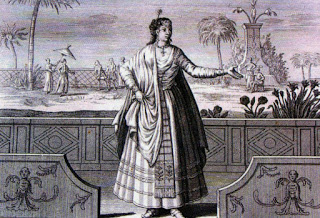
Julianna Dias Costa

Sources of information used in this article are- Piece of Dr, Taymiya R. Zaman’s writing on the website of the University of San Francisco, Pankaj Vohra’s article “Juliana:The Mughal Princess from Portugal” in the Sunday Guardian and the article “Note on Bibi Juliana and the Christians at Agra”  by historian William Irvine, published in the Journal of the Royal Asiatic Society.

Cultural heritage of gujrat-patolas

By :- Raaisha Upadhyay

We all know the place Hastinapur and a case of Draupadi(the woman epitome of feminism) the wife of  Pandavas and a dice game against Kauravas, which was responsible for Draupadi’s humiliation

The magical dice was rolled by shakuni  and Pandavas lose and Draupadi has been won by Kauravas.

And from here technically Kauravas owned Draupadi ,

they order Dushasana to disrobe Draupadi in public and from here a miracle take place.

No  matter how much Dushasana tries to take a cloth but never ending cloth continue to cover and protect Draupadi.

The cloth that covered Draupadi was a saree.

This miracle happened just because of Lord Krishna.

The Ancient kingdom of  Krishna’s is Dwarka (the home of Krishna is a gateway to heaven and an underwater city)which is located in the state of Gujarat.

Gujarat is also famous  for their Patola sarees.

Patola is double ikat woven silk saree once worn only by those belonging to Royal and aristocratic families, as they are very expensive The sarees takes around 6 months to 1 year in manufacturing. one saree due to long process of dying it strand separately. The starting price of Patola sarees is 1lakh to 7 lakh.

Patola usually woven in Surat, Ahmedabad and Patan but velvet Patola style are majorly made in Surat.

Patan, the house of Patola, is 125 kms away from Ahmedabad. The town is also famous for ‘Rani –ki Vav’, a step-well made by a queen in honour of her husband. It is now a UNESCO World Heritage site.

About 900 years ago in 1143 A.D., around 700 craftsmen from the Salvi community hailing from modern day Karnataka and Maharashtra were brought by king Kumarpal of the Solanki dynasty (who then ruled Gujarat, parts of Rajasthan and Malwa) to his court, in his kingdom’s capital, Patan. These craftsmen lived in Jalna, situated in southern Maharashtra, and were considered to be the finest craftsmen of Patola.

Patola in modern day India…

Patola is undoubtedly the epitome of fine craftsmanship. Today, only 2-3 families, the Salvis and Sonis, practise this 900 year old craft in Patan. These families aren’t very open about the process of forging Patola. Only the family members, and in some cases only the male family members, are passed down this knowledge. Nobody from outside the community is admitted into craftsmanship.

However, in the past few years, the Sonis have loosened their boundaries and started passing this craft to people outside of their family who are hardworking, dedicated and passionate towards the craft. This change of attitude is because of the fear of Patola becoming extinct.

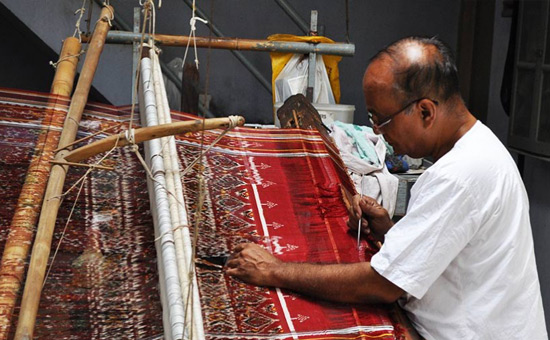
A weaver giving life to a Patola sari. 

The current state of this art is alarming. Some Patola weavers have predicted that the art will vanish within the next 20 years or so. Lack of investment, fewer weavers, and dis-interest on the part of the younger generation of weaving families are reasons for such a prediction. Also cheap imitations are capturing the market.

A Woman Who Shaped History in her Own Right.

– By Shivam Pathak
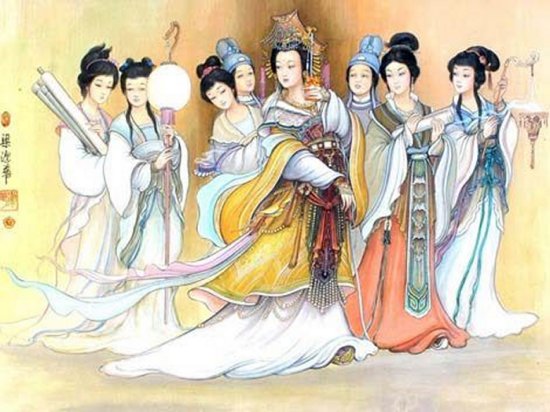
There is this fallacy that women are incompetent to change the course of the future because of this fallacy women’s credentials are always being questioned. This mistaken belief doesn’t emerge recently it took its roots long back in history when women were only considered as an object of sexual pleasure and delight, but just as in today’s gelation there were also some women in history who proved this fallacy a misconception. One among the mighty and intelligent women who made history by exemplifying their remarkable achievements was Wu Zetian, a woman who rose from a lowly concubine to become the emperor of China. The only female emperor in Chinese 2000 years of imperial history who ruled China with an iron fist. Here a question may arise in your mind that how a woman elevates her status from a mere concubine to the emperor of China. It all commenced way back 637 AD when Wu entered the imperial court as a 14-year-old concubine serving emperor Taizong.wuzetian3
Emperor had more than 100 concubines, but somehow one way or the other Wu paved her route to the emperor’s heart and quickly gained favours of the emperor. Her ambition to become the emperor of China was very clear from the beginning. An instance to support this narrative was that when Lady Yang ( Wu Zetian’s mother) wept bitterly at the time of parting from her daughter Wu, Wu responded ‘ How do you know that it is not my fortune to meet the son of heaven ( title given to the monarch of China). Lady Yang as reported then understood her desire and therefore stopped crying. Traditional folklore portrays Wu as a power-hungry woman with no care for who she hurt or what she did. But early excavations discovered something different that determined traditional folklore wrong about Wu’s reign and the reflections of her characteristics. In excavations, archaeologists found a skeleton of a woman with fabled Phoenix crown of ancient china. The name of that was Li Chua, she was a minor descendent of Wu Zetian who wore the opulent crown embedded with carnelian from Uzbekistan, garnet from India, amber from Iran and ivory from Sri Lanka. This shows that how luxurious life was in Wu’s reign as the emperor.
Her period marked a major expansion of the Chinese empire, extending it far beyond from its previous territorial limits. After Taizong’s death she assumed some level of power in her hand and became the second wife of his son emperor Gaozong. But after Gaozong’s death in 660, Wu became the administrator of the court, a position equal to the emperor’s until 70s. Wu Zetian was not only a national leader, but she was also an international leader. Historical pieces of evidence suggests that she shared a good relationship with foreign countries and she also had ambassadors from Mongolia, Korea, Greece and Persia. Daming palace made under her reign was the largest in the world. It is assumed to be five times bigger than the Forbidden city. Jaws of the emissaries were dropped at the first sight of the palace which shows the imperial grandeur of Wu’s capital Chang’an ( today is known as Xi an). She encouraged women to be entrepreneurs and to divorce and marry freely. She even appointed a female prime minister.
As Wu Zetian grew older her mind started turning towards her afterlife, she want forgiveness for her sins she had committed throughout her life. She wrote a confession that had been engraved on a golden tablet and have that tablet taken to a holy place to perform a sacred ritual. She then cast down the tablet from Mount Song in order to attain forgiveness for her doings. Wu Zetian died in 705 and was buried at the east of the phoenix gate within the Qianling Mausoleum. The Mausoleum not only housed the remains of Emperor Wu, but is also served as the epitome of the imperial splendour, high rank and social importance of Wu Zetian. Wu may be regarded by the chronicles as the ruthless in her endeavours to grab power, but there is no doubt that she left her legacy that even in yore times a woman could do everything a man could do. In Wu’s reign, women’s status was higher than ever before. Consequently, Wu Zetian was an extraordinary woman, attractive in appearance, exceptionally gifted political astute and an excellent judge of men.