US SUPPORTS INDIA’S BANNING OF CHINESE APPS

India’s ban on 59 Chinese applications, including the famous TikTok, has been widely noted in the US, including by some influential lawmakers, who have urged the US government to follow suit as the short video-sharing app is believed to pose a major security risk to the region.

India blocked 59 Chinese-linked apps Monday, including TikTok and UC Browser, saying they were harmful to the country’s sovereignty, dignity and security.

The prohibition, which comes against the context of India’s current stand-off with Chinese troops along the Line of Actual Control in Ladakh, is also relevant to WeChat and Bigo Live.

“India bans TikTok and dozens of other Chinese apps in the wake of the deadly clash,” powerful Republican Senator John Cornyn said in a tweet as he tagged a news report in The Washington Post.

Republican Congressman Rick Crawford tweeted that “TikTok must go and it should have been gone yesterday.”

Last week, US National Security Advisor, Robert O’Brien had alleged that the Chinese Government is using TikTok for its own purposes.

“On TikTok, a Chinese-owned social media platform with over 40 million American users, probably a lot of your kids, and younger colleagues, accounts criticising the CCP (Chinese Communist Party) and Beijing’s policies are routinely removed or deleted,” O’Brien said in his public remarks.

At least two proposals in the U.S. Senate are pending to prohibit federal government employees from using TikTok on their mobile phones, suggesting such a sentiment could build steam in the U.S. following the move by India.

“Would that be the same Chinese TikTok that was used to tank attendance at the Tulsa Rally?” tweeted Peter Navarro, Assistant to the US President for Trade and Manufacturing Policy, as he tagged a news report from The New York Times on India’s decision to ban these Chinese social media apps.

Fox News anchor Laura Ingraham urged the US to do the same. “LEADING THE WAY, WHERE’S THE U.S.? India bans dozens of Chinese apps including TikTok” she said in a tweet.

Author Gordon Chang said that India just banned 59 Chinese apps, including TikTok. “Why can’t the US do the same?” he asked.

According to Forbes, now with developers launching the latest clipboard alert in the beta edition of iOS 14, TikTok seems to have been caught abusing the clipboard in a rather remarkable manner.

“So it seems that TikTok didn’t stop this invasive practice back in April as promised after all,” it said.

An amendment added to the “Moving Forward Act” being considered this week in the US House of Representatives forbids Transportation Security Administration (TSA) officers using the TikTok in smartphone device.

In April, Republican Senator Joshua David Hawley, passed a bill banning federal workers from accessing the TikTok social network camera platform on government-issued computers.

“This is a necessary step to protect the security of the US,” he said. A similar legislation has been introduced in the House of Representatives by Congressman Ken Buck.

“It (TikTok) is owned by a Chinese company that includes Chinese Community Party members in leadership and it is required under Chinese law to share user data with Beijing,” said Senator Hawley, Chairman of the Senate Judiciary Subcommittee on Crime and Terrorism, during a recent Congressional hearing.

“TikTok has admitted that it has sent user data to China. To put it bluntly, this is a major security risk for the American people,” Hawley said.

Source:https://www.livemint.com/companies/news/support-in-us-for-india-banning-tiktok-and-other-chinese-apps-11593585422772.html

The Galwan Valley Faceoff


The Galwan valley faceoff between India and China was a major incident, it shook not only the two nations but the whole dia and China are the top two most populous countries, while China is already an established superpower, India is emerging as a frontrunner to be one soon.
The 20 Martyrs who laid the supreme sacrifice, Initiated a nationwide wave of Nationalism. Indians started boycotting Chinese products and services and Both the nations will suffer a great deal by the aftermath of the Faceoff.
For understanding is further we first need to know what exactly is the issue between The two nations.
• The policy:-
Well, all are very well aware of the Chinese policy to expand and dominate, this policy has victimized many, examples being Chinese Taipei, Hong Kong, Pakistan, Sri Lanka, and lastly In the dia.
The Cause:-
This incident took place amid de-escalation process, India is constructing a Road to connect Northern command of Indian Army to Daulat-Beg-Oldie which is part of Aksai Chin still under Indian Control, This road has major strategic importance as it can serve as a supply road to stop any Chinese Aggression if required, it will also allow India a better and efficient Coverage of the complete Area. China is of the view that this is an inappropriate move and hence Peoples Liberation Army which is the Defense force of China increased its deployment in this region and constructed a new temporary base that is equipped with Artillery Guns and Mechanized Infantry Battalion support. Chinese transgressed to a place near patrol point 14 which is high ground and offers a bird’s eye view of the Indian developments India replied to this Deployment by making mirror deployment, which in general term means putting up an equal number of men and equipment behind our defense lines. The situation kept escalating to that point of pushing and pulling which is sort of a regular exercise on the Line of Actual Control. Watching the fight brew beyond control it was decided to come to a table and discuss matters. A Commander Level Bilateral talk was organized and de-escalation started.
• The incident:-
the talks Chinese Commander promised de-escalation. There is no certified source of information regarding the incident itself, there are many theories floating but the most convincing is that on the due date when the promised mobilization of Chinese troops didn’t occur, Colonel Santosh Babu ( Cobirdspoint accompanied by a patrolling party went to check the matter. The Chinese Troops were prepared and ambushed Indian Soldiers.
The Indian troops called for backup and reinforcements were sent. A Street type Brawl occurred and a high no of casualties was reported. India lost twenty of its guardians but china is yet to confirm the numbers.
No bullets were fired in the clash because of the agreement between the two nations signed in 1996 as Confidence Building Measures; instead, stones and clubs were used. According to reports, the Army men died due to injuries sustained from stone-pelting by the Chinese.
The Resolution
Although high-level efforts (Joint secretary level) are on to defuse the situation, a quick resolution of this standoff at Galway doesn’t seem likely now. Chances are that it could be prolonged impasse, with India unlikely to budge even as China appears unwilling to pull back. China’s state-run newspaper Global Times has already made a false claim that “clashes were triggered by Indian troops as they crossed over to the Chinese side and carried out attacks on Chinese soldiers.”
• The Impacts
It will impact both the nation as economies of both are interdependent to such extent that it is very unlikely that India or China Will thrive without mutual Support. India is now working on improving trade deficit and an increase in import tariffs of Chinese Goods is on cards.
We can just hope the situation reverts back to normal very soon because India already is suffering a great deal from the COVID19 pandemic. But if the question will be raised against Indian integrity, India is well equipped and completely capable of answering.

ROLE OF ASHAs IN KEEPING INDIA’S VILLAGES PROTECTED FROM CORONAVIRUS

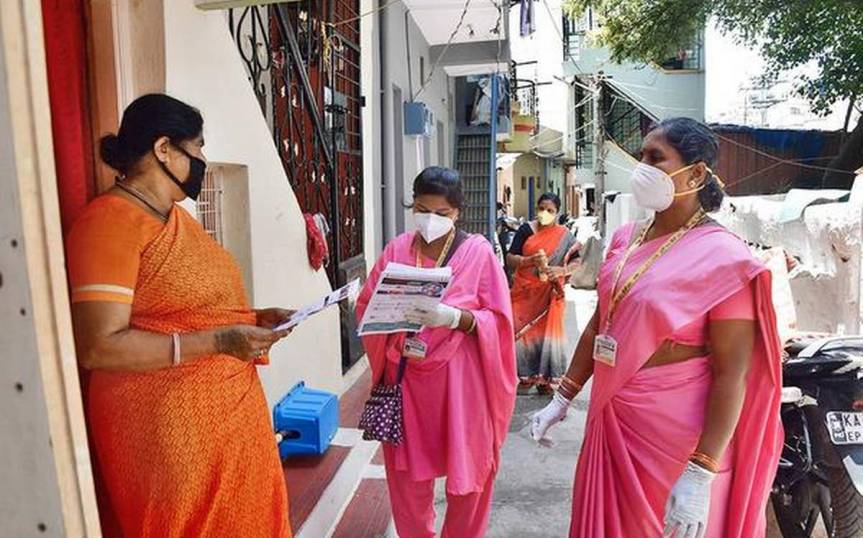
Accredited Social Health Activists, ASHAs, are playing an indispensable role in rural outreach by educating village people on arresting the spread of the much-dreaded Coronavirus. Field reports from Prime Minister Narendra Modi’s constituency, Varanasi indicate that ASHAs credited with juggling multiple roles have been deputed to spread awareness on prevention of Coronavirus in their areas. They are after all the backbone of primary healthcare in more than seven lakh villages of India.

On April 14, the day Prime Minister Narendra Modi announced an extension of the 21-day lockdown till May 3, the Ministry of Health and Family Welfare, advised in a COVID-19 related tweet that persons having symptoms may approach national/ state helpline centres or frontline workers such as ASHA workers and field workers. The tweet said that these workers have been oriented about the process to be followed and can help in early detection and facilitate proper treatment in hospitals.

Rekha Sharma, a forty-year-old ASHA worker says that ASHA workers in Varanasi have been asked to cover 25 to 30 houses a day in the assigned villages till the end of May. After lockdown, some workers working in Bengaluru, Delhi, Pune and other cities have come back to the villages because they did not have any work in lockdown. They have been asked to undergo tests for COVID- 19.”

The ASHAs are given performance-based incentives for promoting universal immunisation, referral and escort services for reproductive and child health and other healthcare programmes and construction of household toilets. They counsel women on birth preparedness, the importance of safe delivery, breast-feeding and complementary feeding, immunisation, contraception and prevention of common infections including Reproductive Tract Infections/ Sexually Transmitted Infections (RTIs and STIs) and care of the young child. From time to time, the ASHA workers have been deservingly honoured as well. In December 2019, Balvinder Kaur, an ASHA worker from Khosi Kalan village of sub-centre Koomkala of Ludhiana, Punjab was honoured with the National Universal Health Coverage Award by Union Minister for Health and Family Welfare, Dr Harsh Wardhan. She was honoured for her contribution to promoting facilities of Health and Wellness Centres in her block, Likewise, Jamuna Mani Singh was also felicitated by the Odisha government. “From the time we came to know that COVID-19 is going to pose a big threat to India, we took it upon ourselves to strengthen our rural outreach. Since we have been working in several states of India with special focus on many districts of Uttar Pradesh for a long time, we offered our services to government departments like education, health, women and child welfare departments.

We have made sure that all facts on COVID-19 that are being put out by the World Health Organisation and the Ministry of Health, are disseminated to the villages daily. As and when required, we are seeking the help of community-based organisations and other voluntary organisations.” Mr Pradhan explained that MAMTA is using the existing WhatsApp groups through which they normally function with senior government officers on several social welfare and development-oriented schemes, to spread awareness on COVID-19 as well. We are working in all eight blocks in the Prime Minister’s constituency. We have also asked ASHAs, frontline workers, Nehru Yuvak Kendra, NSS (National Service Scheme) and NCC (National Cadet Corps) volunteers to ask villagers to download Arogya Setu App (a mobile app developed by the Ministry of IT and Electronics to help citizens identify the risk of contracting COVID-19 infection). All government departments of Varanasi are already actively promoting Arogya Setu. To make it easy, we have shared the Arogya Setu link with all volunteers and social workers. Surely, the army of dedicated and friendly health activists in India’s villages is taking on the COVID- 19 challenge by empowering people with knowledge.

Free food grain scheme extension till November : PM Modi

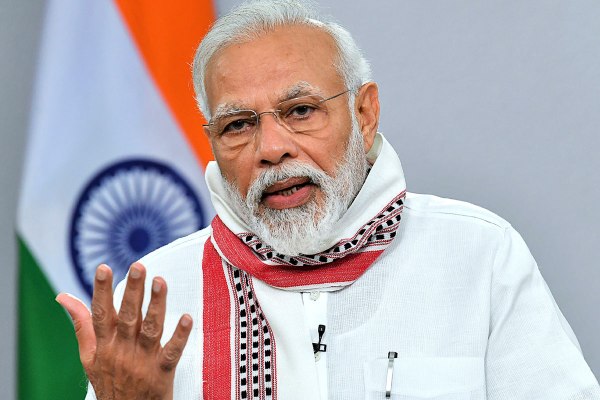
PM Modi addressing Nation

Keeping the pandemic in mind Prime Minister Narendra Modi on Tuesday announced the extension of a key government scheme for free food grain to more than 80 crore poor people till November.

PM Modi’s announcement came during his address to the nation as the country’s coronavirus disease (Covid-19) tally surged beyond 5.66 lakh.

“This time of festivals also increases needs and expenses. Keeping all these things in mind, it has been decided that the Pradhan Mantri Garib Kalyan Anna Yojana should now be extended till Diwali and Chhath Puja, that is, by the end of November,” PM Modi said in his sixth address to the nation since the coronavirus pandemic started.

“More than Rs 90,000 crore will be spent in this expansion of Pradhan Mantri Garib Kalyan Ann Yojna. If you add the expenses of the last three months to it, then it becomes almost one and a half lakh crore rupees,” he added during the virtual address.

PM Modi said that “hardworking farmers and honest taxpayers” have helped push the government’s food scheme as he thanked them for their efforts.

“Today, if the government is able to provide free food grains to the poor and the needy, the credit goes to two sections. First, the hardworking farmers of our country and second, the honest taxpayers. I thank you from my heart,” he said.

PM Modi also urges people of the country to continue to follow the rules of WHO, wearing masks, washing hands, and maintaining the distance of two-yard. He also stressed not to be careless about these rules.

“With this resolve, we 130 crore countrymen have to work together with the resolution to work and move forward. Once again I pray for you and urge all of you to be healthy, keep following the two-yard rule, use gamchas, and mask always. Do not be careless,” he said.

“Earlier, we were very cautious about masks, maintaining a two-yard distance, washing hands several times a day for 20 seconds,” the Prime Minister said.

He also appreciated that the ruled were followed by the government, local body entities, and citizens of the country.

“The rules were followed very seriously during the lockdown. Now governments, local body entities, citizens of the country need to show the same vigilance again,” he added.

India reported 18,522 new Covid-19 cases in the last 24 hours, slightly lower than Sunday’s record of 19,906, according to the Union health ministry Tuesday.

India is behind only the United States, Brazil, and Russia in total cases with more than 566,000 infections. More than 16,800 people have died in the country.

UNMAKING IN INDIA!

The Department for Promotion of Industry and Internal Trade (DPIIT) has directed e-commerce companies such as Amazon, Flipkart and Patym to find out a suitable way that will help consumers to identify the country of origin for all the products sold on their platforms. This directive soon was released after the clash between Indian and Chinese soldiers on LAC in order to boycott Chinese products.

Though it is an attempt of the government to push for “atma nirbhar bharat” or “self reliance” but it cannot be exactly determined whether this idea of specifying the country of origin in today’s integrated world will serve to any economic purpose or not. The difficulty in executing this idea underlines it absurdity because products are usually assembled in one country and the raw materials or other components are often sourced from several other countries. Hence, this makes it challenging to identify who manufacturers the product.

A distinction has to be made between “assembling” and “manufacturing” and the extent of value added at each stage has to be estimated. Let us understand this with the example of an iPhone. It’s components such as touch screen display, memory chips and microprocessors come from a mix of US, Japanese, Korean and Taiwanese companies, not all of them manufactured in China. These individual components are shipped to China, where it is assembled and then shipped across the world.

So will an iPhone sold on an e-commerce website in India identify China as the country of origin? Even the products that are assembled in India have components from several counties. So the question is, how will the idea of country of origin work? Will it be based on value added? Let us keep an eye on government’s next move to solve these problems based on the place of origin.

Indian it firms plan to move to Mexico & Canada due to h-1b visa restrictions

Indian and U.S. technology firms advise the Trump administration to reverse an executive order restricting access to certain job visas, saying the change would disrupt a market model used to bring high-skill expertise to Wall Street and Silicon Valley clients.

Last week’s order from Donald Trump inhibits approvals of a range of visas all through to the year-end, including those for intra-company transfers and study-outside programs, and aims to give American preference after recording job losses from the coronavirus pandemic. H-1B visas used by Indian workers and other countries to occupy key roles are vital to the tech industry.

Visa delivery is an complex, month-long undertaking and some interruption could affect vital employees’ ability to fly to consumer locations for an prolonged period of time. The virus lockdowns have now delayed vital consulate access to the network and pushed hundreds of thousands of employees into demanding work-from – home conditions.

India’s technology trade group, Nasscom, called Trump’s order “misguided and harmful to the U.S. economy” and warned it would exacerbate the country’s economic pain. 

Indian companies provide technology staff and services to U.S. hospitals, drugmakers and biotechnology companies, Nasscom pointed out. In addition, the industry may send more workers to Canada or Mexico without access to the U.S. market.

“These are highly-skilled workers who are in great demand and they will be mobile no matter what,” said Shivendra Singh, president of global trade development at Nasscom.

Among the other critics of the order were Alphabet Inc. Chief Executive Officer Sundar Pichai, Microsoft Corp. President Brad Smith and Tesla Inc. founder Elon Musk. Pichai, himself a beneficiary of the H-1B visa system in the 1990s, tweeted, “Immigration has contributed immensely to America’s economic success making it a global leader in tech, and also Google the company it is today.” Tata Consultancy Services Ltd., Infosys Ltd. and Wipro Ltd., among the largest outsourcing companies in Asia, declined to comment.

According to immigration numbers, India accounts for around 70 per cent of the 85,000 H-1B visas granted annually. Of this number, 65,000 visas are given to international professionals with bachelor’s degrees, while the remaining 20,000 will be assigned to employees with more advanced degrees. The visa program was developed to allow businesses to recruit foreign staff to address a lack of highly qualified technical services and product creation expertise. The reality that every year Indian outsourcers receive a large amount of the visas has rendered the scheme problematic, with opponents alleging that businesses misuse the system by replacing American employees with cheaper foreign labour.

Shortly after assuming office, Trump promised to clamp down on work visas and overhaul the “broken” immigration framework. A long-term issue for outsourcers is the proposed redesign of the existing H-1B visa scheme by the government, which will substitute the established allocation mechanism to decide who accepts visas with a merit-based method that prioritizes wage-based applicants.

Now, outsourcing firms are grappling with the unpredictability of the visa situation and the possibility of an H-1B revamp being able to make it impossible to take all but the most important of talent outside the world.

Source:https://www.livemint.com/industry/infotech/indian-it-firms-may-set-up-new-outposts-in-canada-mexico-amid-h-1b-visa-curbs-11593495677657.html

ARREST WARRANT FOR DONALD TRUMP

Iran and Trump

Iran has issued an arrest warrant for US President Donald Trump over the drone strike that killed a top Iranian general in January, the semi-official Fars news agency reported Monday.

Trump is one of 36 people Iran has issued arrest warrants for in relation to the death of Qasem Soleimani, commander of the Islamic Revolution Guard Corps (IRGC), according to Fars, but the Tehran attorney general Ali Alqasi Mehr said Trump was at the top of the list.

Tehran prosecutor Ali Alqasimehr said on Monday that Trump, along with more than 30 others Iran accuses of involvement in the January 3 attack that killed General Qassem Soleimani, face “murder and terrorism charges”, the semi-official ISNA news agency reported. Alqasimehr did not identify anyone else sought other than Trump, but stressed Iran would continue to pursue his prosecution even after his presidency ends. Also, Mehr claimed Trump would be prosecuted as soon as he stands down presidency after his term ends, Fars reported.

Iran also said it had asked Interpol to issue a Red Notice for these 36 individuals, semi-official state news agency ISNA reported, though it was unlikely that Interpol would grant the request.

Interpol, based in Lyon, France, said in a statement its constitution forbade it to undertake “any intervention or activities of a political, military, religious or racial character. Therefore, if or when any such requests were to be sent to the General Secretariat, Interpol would not consider requests of this nature.”

The US’s Iran envoy Brian Hook described the move as a “propaganda stunt”.

“Our assessment is that Interpol does not intervene and issue Red Notices that are based on a political nature,” Hook said at a news conference in Saudi Arabia. “This is a political nature. This has nothing to do with national security, international peace or promoting stability… It is propaganda stunt that no one takes seriously,” he said.

Red notice request

Alqasimehr was also quoted as saying Iran had requested a “red notice” be put out for Trump and the others, the highest-level notice issued by Interpol, requesting that seeks the location and arrest of the individual named.

Under a red notice, local authorities make the arrests on behalf of the country that requested it. The notices cannot force countries to arrest or extradite suspects, but can put government leaders on the spot and limit suspects’ travel.

After receiving a request, Interpol meets by committee and discusses whether or not to share the information with its member states. Interpol has no requirement for making any of the notices public, though some do get published on its website.

The US killed General Soleimani, who oversaw the Revolutionary Guard Corps’s expeditionary Quds Force and others in the January attack near Baghdad International Airport.

The assassination came after months of incidents raising tensions between the two countries and ultimately saw Iran retaliate with a ballistic missile strike targeting American troops in Iraq.

Political Stunt

US Special Representative for Iran Brian Hook called the move a “political stunt” during a joint press conference with the Saudi Minister of State for Foreign Affairs Adel al-Jubeir on Monday.

“It’s propaganda that we’re used to,” Hook said. “This has nothing to do with national security, international peace or promoting stability, so we see it for what it is – it’s a propaganda stunt that no one takes seriously and makes the Iranians look foolish,” he added.

Soleimani was killed in a US drone strike at Baghdad International Airport in January along with five others, including Abu Mahdi al-Muhandis, the deputy head of the Iran-backed Iraqi Popular Mobilization Forces (PMF).

The strike, condemned by Iran and its allies as an “assassination,” raised the specter of further regional destabilization.

A spokesman for Iran’s judiciary, Gholam-Hossein Esmaili, announced in early June that an Iranian citizen had been sentenced to death for allegedly working for foreign intelligence agencies. Esmaili claimed that Seyed Mahmoud Mousavi Majd disclosed the whereabouts of Soleimani to US intelligence officials.

The Trump administration viewed Soleimani as a ruthless killer, and the President told reporters in January that the general should have been taken out by previous presidents. The Pentagon blamed Soleimani for the deaths of hundreds of Americans and US allies in the months leading up to his killing.

“General Soleimani was actively developing plans to attack American diplomats and service members in Iraq and throughout the region,” the Pentagon said at the time, calling the strike “decisive defensive” action aimed at deterring future Iranian attacks.

THE FUTURE OF EDUCATION IS HERE

Until recently, people at Lido Learning, a new educational startup company, would often be cut short by potential customers as soon as they heard “online tuitions.” Of the parents who did not hang up, only a quarter of the rest or one out of three would end up buying a subscription. By March, Lido Learning, whose educators gave math, science and English lessons on the internet to students from grade IV-IX in real time, had sold to students from grade IV-IX.

The organization increased its subscription revenue over the following three months.  Students are currently spending 90 minutes on an average on the network each day, which can be seen as a substantial increase as compared to max. an hour earlier. A  distribution team comprising of only 200 odd personnel  has made marketing much more efficient and smoother. Rather than illustrating the idea of online schooling to customers, what the organization wants to do now is show them how “we ‘re better than others,” said Sahil Sheth, CEO of Lido Education.

The company, Vedantu, the industry pioneer in K-12 live classes (kindergarten through grade XII), was hit by the influx of new students in early April, causing an unprecedented shortage of teaching assistants. The company’s teachers were now instructing 1,000 students instead of 300-400 students in each class. 1 million students attended live classes on Vedantu in May, up from 200,000 in usual times. Only a small fraction of these were paid users, but monthly revenues still jumped by more than three times from January, CEO Vamsi Krishna said. “What was happening in a year’s time in terms of growth happened in three months’ time,” he said.

The pandemic-driven growth of online education has been so broad that it’s tough to locate an educational company that hasn’t taken a parallel route. From industry giants to smaller companies, investors are quite optimistic this is the sector’s defining moment.

In India, education has always had a quasi-religious significance, as a degree is seen as the only means of prosperity. With schools and colleges shut down, disarray entrance exam schedules, inaccessible offline classes, parents and students are even more concerned about the future than usual, prompting them to try online tuitions like never before.

“Usually, when a new category is being created, companies have to spend hundreds of millions of dollars on advertising over 8-10 years to get customers to shift from offline to online. In the case of edtech, this is happening super-fast because of the lockdown and because all the schools have gone online,” Lido Learning’s Sheth said.

The online education industry continues to be split into two categories by founders and investors: K-12 and post K-12. Both divisions, which in effect have several different verticals, had evolved rapidly anyway. The growth has been massively exacerbated by the pandemic. By 2022, the K-12 industry would grow by six times to approximately $ 1.7 billion, while the post K-12 sector would rise by nearly four times to $1.8 billion, RedSeer Consultancy predicts.

On the other side, funds are lined up to obtain shares in start-ups in healthcare. Byju’s, Unacademy and Vedantu, three prominent startups in education, are all raising large amounts of capital at soaring valuations. Over a dozen smaller startups, including Lido Learning and WhiteHat Jr, are in talks to raise between $5-50 million to anywhere.

Source:https://www.livemint.com/education/news/the-hope-and-hype-driving-online-education-11593433643546.html

SHAILAJA TEACHER: corona virus slayer

Kerala, which recorded India’s first three corona virus cases,has been successful in flattening the curve of new infections. The southern state has reported 3,451 cases, of which 1809 patients were discharged after receiving treatment . Twenty-two deaths have been recorded so far in Kerala.

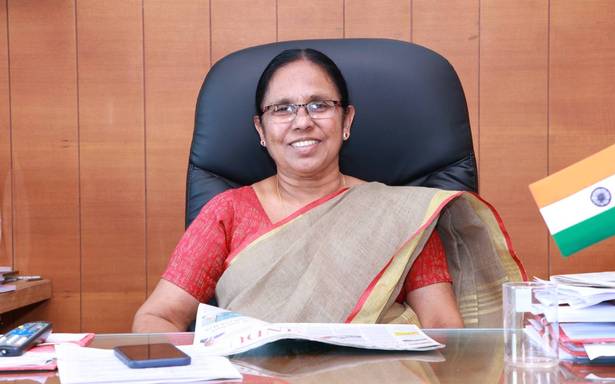
Kerala Health Minister KK Shailaja popularly known as Shailaja Teacher has been hailed for effectively control the Covid-19 curve in the state , at a time when the entire country was devasted by the disease. Kerala was apparently successful to fight with the virus because of timely intervention by the Minister.

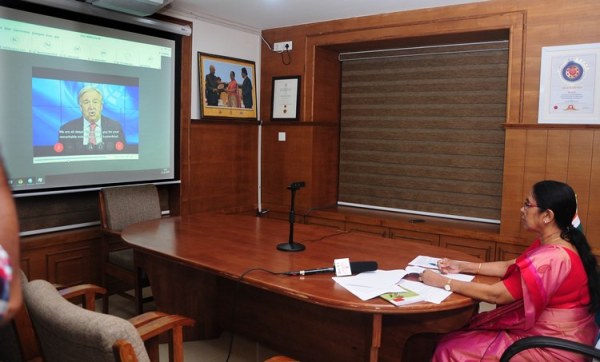
Recently she was honoured by the United Nations during the celebration of Public Service Day for tackling the Covid-19 pandemic Effectively .The UN observed Public Service Day on 23 rd June to honour those who risking their life and health to deliver essential public services amid the ongoing Covid-19 pandemic.

K.K SHAILAJA attending UN Public Service Day Celebration

the event was held at virtual platform and saw the digital participatation of UN secretary General Antonio Guterres and other top dignitaries

Tiktok caught spying on iOS 14 users’ data

TikTok app – for which many campaigns are running over the social media to boycott the use of this Chinese app- was recently caught spying on people who were using iOS 14, mainly developers and selected users. Complete access to the update will be made available to users by Fall 2020, Apple had noted.

The short video-making Chinese app had stated in the past that it would stop the practice of reading content on user’s clipboards However, quite recently it was again found that the app is snooping on the Apple users and was caught red-handed a report on Telephraph stated.

This could be figured out by a software update by Apple for iOS 14 that sends notifications to users whenever an app is found accessing their data.

The alarms for apps getting access to data were raised before the release of iOS 14. Research by Talal Haj Bakry and Tommy Mysk found that many popular apps were snooping on user content without their consent. The report noted that the text left in the clipboard or the pasteboard could be inconsequential but it could contain sensitive data like user’s passwords, etc.

Every time the user opens an app, it gets access to their data. This could be gaming apps or social media apps.

Along with Tiktok other apps like AccuWeather, Overstock, AliExpress, Call of Duty Mobile, Patreon, and Google News also accessed user’s data from their clipboards, Telegraph noted.

iPhone users and software developers who received notifications were enraged with this and described the app’s behavior as “creepy” and “extremely shady,” the report stated.

A spokesperson for TikTok issued a clarification quoted by The Telegraph. He said that the app’s behavior was triggered by a feature designed to identify repetitive, spammy behavior. Further, he assured of the privacy of the users and transparency of the working of the App.

“Following the beta release of iOS 14 on June 22, users saw notifications while using a number of popular apps. For TikTok, this was triggered by a feature designed to identify repetitive, spammy behavior. We have already submitted an updated version of the app to the App Store removing the anti-spam feature to eliminate any potential confusion,” the spokesperson said.
“TikTok is committed to protecting users’ privacy and being transparent about how our app works,” he added.

It is however not clear if the company removed the feature for Android devices as well and for how long the feature had been in place. It also did not give any clarification if the user’s data from the clipboard was used by the app.

A report by MacRumors stated that a download of the new update confirms that TikTok no longer appears to be accessing the clipboard.