Warrior

It isn’t easy to think about others when your survival is at risk. Every bag of rice and a pouch of milk is precious. Every time you lend a helping hand to those in need, you may be risking the well-being of your loved ones.

Which is why in the time of this coronavirus pandemic, one can see a sharp rise in hostility. Supermarkets have been drained of essentials. People are even hoarding perishable items such as milk and vegetables. But then moving incidents of kindness have also come to light, restoring faith in humanity. Rich, poor, middle-class, men or women, there are people who have set an example for the rest of us, showing how social distancing doesn’t mean emotional distancing. That care and compassion become a necessity when the going gets tough because, at the end of the day, that is what truly makes us human. 

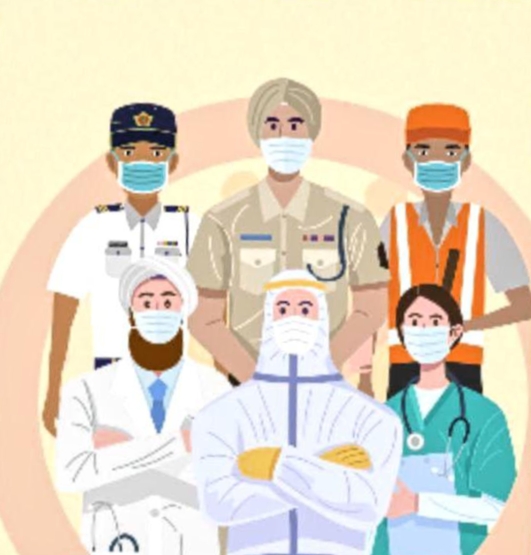
“We must find time to stop and thank the people who make a difference in our lives. Thankyou corona warriors! It’s immense to see the service that you have provided. We are safe, credit goes to all the frontline workers. Thank you so much!

should billionaires exist

No matter how much one dislikes it, they can’t deny the fact that the world is divided between the top 1% and the bottom 99%, and the rich, no matter how small in numbers, run the world. People are hoarding the worlds wealth, while the rest are left to find comfort in the scraps. These past few years have seen a massive rise in billionaires, currently their being 2095 of them. However a question that has been going around for years now is that, should billionaires exist?

A lot of people have different opinions on this. Some believe that billionaires have earned their keep, so they should be able to keep it. According to me, no one gets that rich just by working honestly.Imagine trying to save a billion dollars, and start by saving a $100 each day. If you, and one descendent per generation, saved $100 every day, and each of you lived for 90 years, it would take you and 304 generations of your descendants to save up one billion dollars, more than 27000 years. Take Jeff Bezos as an example. The owner of Amazon, with a net worth of $114 billion, he is undoubtedly one of the richest men on this planet. Yet, many of their own workers have unionised against the company. In a statement during the announcement of the union push, picker Rashad Long claimed workers are overworked, pressured with frivolous disciplinary actions and security lines at the exit cut into breaks and extended work shifts, unpaid. Exploitation of the innocents is a major step towards their billions.

The worst part about this is that there are problems like climate change and world hunger, which can easily be solved if proper money is invested in them.  These billionaires can definitely contribute a lot and possibly even solve such issues, without facing a major loss, but they choose not to. They sit comfortably with their riches and watch the world burn. If you make the argument that they are not at all obliged to donate their money, then capitalism has fooled you. No one needs that much money, but they do have it. And people actually need food, housing etc, yet they can’t afford it. Even if they choose to help them, they’ll still be left with a lot of money. So you can see for yourself why billionaires shouldn’t exist.

The COVID 19 pandemic has had the world under lockdown. There are people losing their jobs, people who don’t even know how they’re going to pay rent or buy food for their kids. During this, the top 1% have the audacity to sit in their million dollar mansion and say that “quarantine is like prison”. This is an extremely privileged statement, coming from those who don’t even have any responsibilities, who are not directly affected by this pandemic.

Currently, 2% of the world’s population is homeless. People are dying in the streets, whilst billionaires are buying their 10thmansion. It’s truly saddening to see how many people will rush to defend the top 1%. The common people need to be educated of their exploitative nature. Only then will they be able to say, “No. Billionaires shouldn’t exist.”

Sources: https://www.theguardian.com/technology/2019/jan/01/amazon-fulfillment-center-warehouse-employees-union-new-york-minnesota

Indian Soldiers ideal example of meaning sacrifice.

Indian soldiers are fighting from all the sides of our country with the cruel opponents to give us security.Soldiers are one of the greatest assets of any country. They are the guardians of the nation and protect its citizens at all costs. Moreover, they are a very selfless lot who put the interest of the country above their personal interest. A soldier’s job is one of the toughest things to do in the world. They are supposed to fulfill challenging duties and possess exceptional qualities to become a great soldier. However, their lives are very tough. Nonetheless, they always fulfill their duties despite the hardships.

A country sleeps peacefully as the soldier performs its duties. The first and foremost duty of a soldier is to serve their country without any selfish motive. A person usually joins the army out of love for his motherland and to protect it. Even though they know they will have to face numerous problems, they still do so for their country.

A soldier keeps night long vigils on the borders even in the face of great and grave dangers. He stands heroically before enemies. For a soldier, in the words of Longfellow.Our soldiers have never surrendered. Their motto has always been “do or die”. In the India-China war of October-November 1962 and later in the Indo-Pak war of September, 1965 one Indian soldier killed many times his enemy counterparts on various fronts. If India retreated in the India-China war it was not for want of courage but for want of adequate weapons which the Chinese had and we did not. hi fact our soldiers were not even adequately clothed. As an American paper said, our soldiers were fighting on icy tops of the mountains in summer uniforms.

LATEST MODERNISATION BY INDIAN DEFENCE FORCES:-

India is re-organising its mechanised forces to achieve strategic mobility and high-volume firepower for rapid thrusts into enemy territory. At present, the Indian army has severe deficiencies in its artillery (particularly self-propelled guns) and ammunition stocks, not to mention the inability of some of its modern tanks to operate in the heat and dust of the desert regions around the international border. India proposes to progressively induct as many as 248 Arjun MBT and to develop and induct the Arjun MK-II variant, 1,657 Russian-origin T-90S main-battle tanks, apart from the ongoing upgrade of its T-72 fleet. Arjun MK-II trials had already begun in August 2013. The improved features of the MK-II version of Arjun are night vision capabilities with a thermal imaging system for detecting all kinds of missiles, Explosive Reactive Armour (ERA), mine ploughs, the ability to fire anti-tank missiles with its 120 mm main gun, an Advanced Air Defence gun capable of shooting down helicopters with a 360-degree coverage, Automatic Target Tracking (ATT) lending a greater accuracy when it comes to moving targets and superior Laser Warning and Control systems. The Indian Army will upgrade its entire Boyevaya Mashina Pekhoty-2 (BMP-2)/2K infantry combat vehicle (ICV) fleet to enhance their ability to address operational requirements. Upgrades include integration of the latest generation fire control system, twin missile launchers and commander’s thermal imaging panoramic sights, anti- tank guided missiles, as well as automatic grenade launchers.

PROGRAMS BY INDIAN ARMY:-

The Indian Army has also embarked on an infantry modernisation programme known as Futuristic Infantry Soldier As a System (F-INSAS). The infantry soldiers will be equipped with modular weapon systems that will have multiple functions. The core systems include bullet proof helmet and visor. The bullet proof helmet is an integrated assembly equipped with helmet mounted flashlight, thermal sensors and night vision device, miniature computer with audio headsets. The personal clothing of the soldier of the future would be lightweight with a bullet-proof jacket. The futuristic jacket would be waterproof, yet it would be able to breathe. The new attire will enable the troops to carry extra loads and resist the impact of nuclear, chemical and biological warfare. The new uniform will have vests with sensors to monitor the soldier’s health parameters and to provide quick medical relief. The weapons sub-system is built around a multi-calibre individual weapon system with the fourth calibre attached to a grenade launcher. These include a 5.56 mm, a 7.62 mm and a new 6.8 mm under development for the first time in India.

In November 2013, the Indian Army moved a step closer to the battlefield of the future, where command networks know the precise location of every soldier and weapon, with whom generals can exchange reports, photos, data and verbal and written communications. Army headquarters called in 14 Indian companies and issued them an expression of interest (EoI) for developing a Battlefield Management System (BMS). The BMS will integrate combat units – armoured, artillery and infantry regiments, infantry battalions, helicopter flights, etc. – into a digital network that will link together all components of the future battlefield. While precise costs are still unclear, vendors competing for the contract say the army expects to pay about Rs 40,000 crore for developing and manufacturing the BMS. However, in 2015, the Indian Army decided to replace the F-INSAS program in favour of two separate projects. The new program will have two components: one arming the modern infantry soldier with the best available assault rifle, carbines and personal equipment such as the helmet and bulletproof vests, the second part is the Battlefield Management Systems (BMS).

SOME MORE THINGS ABOUT INDIAN ARMY:-

The Indian Army has also embarked on an infantry modernisation programme known as Futuristic Infantry Soldier As a System (F-INSAS). The infantry soldiers will be equipped with modular weapon systems that will have multiple functions. The core systems include bullet proof helmet and visor. The bullet proof helmet is an integrated assembly equipped with helmet mounted flashlight, thermal sensors and night vision device, miniature computer with audio headsets. The personal clothing of the soldier of the future would be lightweight with a bullet-proof jacket. The futuristic jacket would be waterproof, yet it would be able to breathe. The new attire will enable the troops to carry extra loads and resist the impact of nuclear, chemical and biological warfare. The new uniform will have vests with sensors to monitor the soldier’s health parameters and to provide quick medical relief. The weapons sub-system is built around a multi-calibre individual weapon system with the fourth calibre attached to a grenade launcher. These include a 5.56 mm, a 7.62 mm and a new 6.8 mm under development for the first time in India.[112]

In November 2013, the Indian Army moved a step closer to the battlefield of the future, where command networks know the precise location of every soldier and weapon, with whom generals can exchange reports, photos, data and verbal and written communications. Army headquarters called in 14 Indian companies and issued them an expression of interest (EoI) for developing a Battlefield Management System (BMS). The BMS will integrate combat units – armoured, artillery and infantry regiments, infantry battalions, helicopter flights, etc. – into a digital network that will link together all components of the future battlefield. While precise costs are still unclear, vendors competing for the contract say the army expects to pay about Rs 40,000 crore for developing and manufacturing the BMS.[113] However, in 2015, the Indian Army decided to replace the F-INSAS program in favour of two separate projects. The new program will have two components: one arming the modern infantry soldier with the best available assault rifle, carbines and personal equipment such as the helmet and bulletproof vests, the second part is the Battlefield Management Systems (BMS).

Really our soldiers are doing a great job. Brave soldiers like sri.santosh babu garu and so many more had made our army to be in top.

Conclusion:-Finally…I wanna say that please remember our soldiers and be patriotic upon our nation.dont be irresponsible upon our country and try to serve our nation in various ways.

Jai jawan-jai kisan…jai hind.

SOCIAL CHANGE AND LAW

The abstract idea of ” social change” evinces dimension of some of the characteristics of a group of people. If any action which affects a group of people who shared values or characteristics can also be said as ”social change.”

Generally, the change in existing pattern of social life is known as ” Social Change”. Society and social conditions never remain static. Generally, social change is to be understood as change in social structure. According to Gainsberg, social change is change in social structure e.g the size of a society, the composition or balance or its part or the type of its organisation. According to Jones, ”social change devotes variation in, or modification of , any aspect of social process,social patterns, social interaction or social organisation.” Davis observed that social change is large number of persons are engaging in activities that differ from those which their immediate fore-fathers engaged in some time before. According to Anderson and Parker, social change involved alteration and structure or functioning of forms or processes themselves.

Social change means there is must change in social structure. Social structure which can be understood as nature, social behavior, social relations, social organizations, community of people. Social change is change in the social order. According to Charles L. Harper, ””significant alteration of social structure and cultural patterns through time.”

In this context, I deem it is apt to remember, the observation of Dennis R. Fox:
”Well-meaning efforts by liberal psychologists to reform the law in keeping with values such as dignity, privacy, justice, and equality are often misguided because law exists to serve the status quo. Law inhibits the systemic, radical social change necessary for psychological and societal well-being. It does so through coercive power, substantive assumptions about human nature, the ideology of law’s legitimacy, a preoccupation with procedure rather than substance, a focus on rational technicality rather than equity, and encouragement for limited, self-defeating legal solutions. Psycho legal scholars should arouse public dissatisfaction with law and assist social movements seeking to overcome legal impediments to social change.”

The theories of Social Change:
1. Linear theory of social change
2. Cyclic theory of social change.

Elements of Social Change:
The word ”social change” is used in history,politics, economics,and sociology. Social change is also an issue in social work, political science, history,sociology, anthropology, and in many social sciences. Social change is being created by revolution, protest,politics, communities, and by direct action. Elements of social change can be separated as follows.
1. Physical or geographical
2. Biological
3. Economic
4. Cultural
5. Psychological
Anthony Giddens observed social change as infra:
Sociology was born of the transformations that wrenched the industrializing social order of the West away from the ways of life characteristic of preceding societies. The world that was created by these changes is the primary object of concern of sociological analysis. The pace of social change has continued to accelerate, and it is possible that we stand on the threshold of transitions as significant as those that occurred in the late eighteenth and nineteenth centuries.

Shackman, Liu, and Wang, observed two sources of social change. One is ” systematic” and another is ”non-systematic”. Technological innovation, climate change and changes forced by other countries which come under purview of non-systematic source of social change. Generally, changes to society occur through combination of systematic as well as non-systematic processes. Eisenstadt (1973) argued that modernization required a basic level of free resources and the development of standardized and predictable institutions, such as a stable but flexible market system and political process. An additional requirement was that governing institutions be flexible enough to adapt to the changes that come up.

· The classic Hegelian dialectic model of change is based on the interaction of opposing forces. Starting from a point of momentary stasis, Thesis countered by Antithesis first yields conflict but subsequently results in a new Synthesis.

· Thomas Kuhn in The Structure of Scientific Revolutions argued with respect to the Copernican Revolution that people are unlikely to jettison an unworkable paradigm, despite many indications that the paradigm is not functioning properly, until a better paradigm can be presented.

· The Greek philosopher Heraclitus used the metaphor of a river to speak of change thus, “On those stepping into rivers staying the same other and other waters flow” . What Heraclitus seems to be suggesting here, later interpretations notwithstanding, is that, in order for the river to remain the river, change must constantly be taking place. Thus one may think of the Heraclitan model as parallel to that of a living organism, which, in order to remain alive, must constantly be changing.

· Daoist: The Chinese philosophical work Dao De Jing, I.8 and II.78 uses the metaphor of water as the ideal agent of change. Water, although soft and yielding, will eventually wear away stone. Change in this model is to be natural, harmonious and steady, albeit imperceptible.

Law as a means of social control:
Two fold objectives of law to serve is, firstly, to keep up stability and afford orderly life in the society. Secondly, to persuade social change by changing itself according to the needs of the changing society. Thus , law is an important agency of social control. The society supervenes the law for better most socialization. Rule of law in any constitution is the bedrock for democracy. By putting fear in the minds of public, the law is a helpful agency for social control. Law regulates the behavior of the people in society. Law, by using force, makes the people conscious about their duties and obligations. Law saves precious and good concepts of the society. The exploitation of the people is curbed through law. The constitution of India, criminal , civil laws and other statutes are designed to surmount this goal.

The functionalist slant:
According to Talcott Parsons, one of the leaders of this school, change stems from other social systems (through, for instance, cultural influence, as in the case of English education in the former colonies of the British Empire) and tensions and strains within the system itself, especially those related to economic activities. Michael Haralambos, holds that the economy is solely responsible for resolving societal problems, with industrialism playing an especially crucial role. Functionalists also trust that cultural norms and values unite society, which is, to a great extent, resistant to change, and thus make certain that change in social structure is likely to be slow if it conflicts with not easily modified cultural, religious or political principles. According to Harper, short-term changes, as in family developmental stages, may be obvious and easy to comprehend, but they may not actually constitute changes at all in the long run .

Law as an instrument of social change:
To understand the social change through law and legal system, it is pertinent to understand that the working of legal system in the light of political,social,economic perspectives which can be seen in the constitution of India. Law is a mirror to know how people relate to one another , their values,what they consider worth preserving in life, and how they define their own security.

Law and Public opinion:

The law , which is molded through public opinion is thus the result of state action in accordance with the public opinion. Here it is necessary to remember that when Rajiv Gandhi government waned to bring defamation bill, because of the opposition to the bill in the public, the government dropped the idea. The public opinion is the reflection of the Peoples will. Public opinion becomes law.

Social change and the constitution of India:
Preamble is a key to open the statute and consists of source and objectives of the statute. Literally preamble means preliminary statement in writing or in speech or an introductory part of the statute. The word ”Pre ” means ”before”. ” Amble” means ”walk”. Thus , it is known the word ” preamble” means ”before walk”.

The preamble declaration provides that we the people of India having solemnly resolved to constitute India into a sovereign,socialist,secular,democratic republic and Justice: Social, economic and political Liberty of thought, expression , belief, faith and worship. Equality of status and of opportunity and to promote among them all. Fraternity assuring the dignity of the individual and the unity and integrity of the nation.

The Supreme Court of India in Beru Bari’s case,1969 observed that preamble is not part of the constitution and hence the parliament has no power to amend the preamble. Later, in Kesavananda Bharati vs State of Kerala,1973 the Court held that there is no wrong in treating preamble as part of constitution.

Conclusion:
A systems perspective must acknowledge that social problems are interconnected rather than isolated. People should be advocates for radical perspectives defensible on both psychological and political grounds, in keeping with values such as dignity, autonomy, equality, and justice.

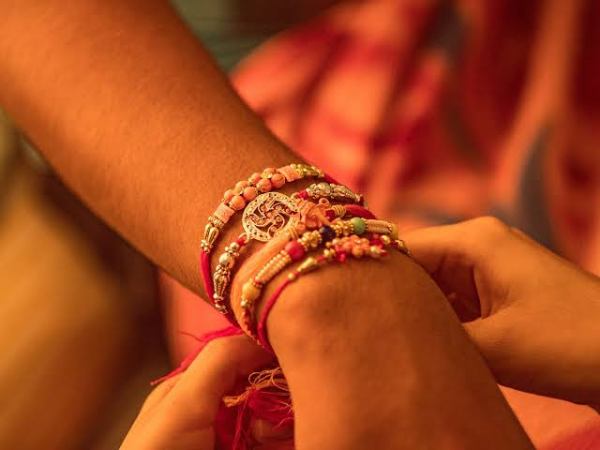
Bond of protection – Rakshabandhan

This day women and girls of all ages tie a Rakhi, around the wrists of their brothers as a symbol of protection. The men and boys will in turn gift their sisters money, new clothes, sweets, etc. 

Rani Karnavati, the widowed queen of the king of Chittor, used a Rakhi to ask for help from Mughal Emperor Humayun. As Chittor faced an invasion from the Sultan of Gujarat, Bahadur Shah, the Rani realised that she could not defend it and asked Humayun for help. As per the tale, the Emperor set off with his troops to defend Chittor.

how to read more

We live in the golden age of content.Nowadays, there are a lot of entertainment options. A click of a button can bring you thousands of shows, videos, podcasts and movies. But, amidst all this, it seems as if we have forgotten about our former favourite, books. People probably don’t love books as much as they used to, which is indeed saddening. A lot of the times, even if one wants to read, they find themselves constantly distracted by something or the other. Reading can be extremely relaxing, and has multiple benefits. It can enhance creativity, boost your vocabulary and so much more. So, here are 4 ways to read more

  • Pick up your reading material.

Yes, this might sound obvious , but often people have trouble just getting started on reading. Pick up any reading material, whether it is a book, an article, a newspaper, anything that interests you. Start by reading short segments or paragraphs, then gradually work your way up from there. This can help develop a habit from reading, especially if your reading habits are a bit rusty. Remember, every little step counts.

  • Reading what interests you

Often times, we hear our friends or family talk highly of a particular book or book series.So we give it a try.  But when we read it, we might not find it compelling or interesting . Still,  we force ourselves to finish the book, no matter how much we hate it. After we’re done, we lose our interest in books and don’t read for days or months on end. My advice on this is that if you don’t find your reading material interesting, then don’t read it. You are under no inclination to finish a book that you don’t find captivating.Find something that genuinely absorbing. Whether it be YA novels, classics or plays, it doesn’t matter.Literature is not just limited to Shakespeare. An interesting book will not allow you to put it down and will motivate you to finish it, maybe even start a new one.

  • Set up reasonable goals and deadlines

Procrastination is a huge waste of time, and it is more common than you would think. To stop wasting time, set up goals for yourself which you would like to accomplish in a day. For example, try setting up a goal of reading 50 pages, or one chapter in a day. It gets the momentum going, and allows you to not put off reading. Slowly, but surely you will see progress. Remember to set up reasonable goals, and not aim to finish the whole 850 page  book in one day (unless of course, you can do that. In that case I say go for it.)

  • Always carry a book with you

You might not realise it, but the 10 minute breaks you take throughout the day, or the time you spend between classes, is time which can be put to efficient use. In  such cases you should try carrying a book with you, and read it in any free time you find. Even reading 2-3 pages in between breaks can really add up throughout the day. Now of course I’m not saying to spend every minute away from work reading. You definitely should know when you want to read, or when you just want to watch Netflix.

Happy Reading!

HOMOSEXUALITY

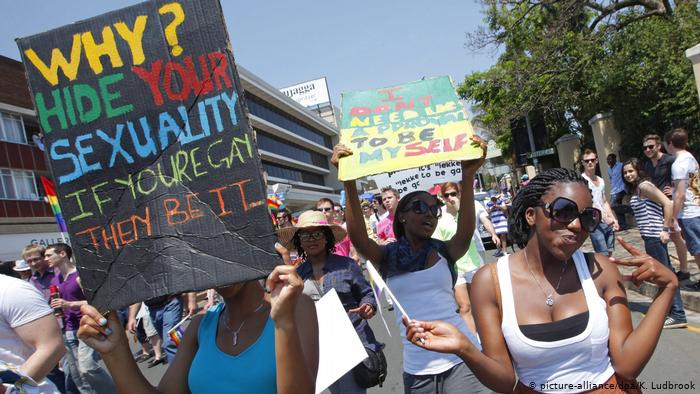
Besides the two sexes: male and female that you all are aware of, there exists many more. One amongst the many is “homosexuality”.

Attraction to the members of the same gender or sex romantically is referred to as homosexuality. Lesbians for females and gay for males are the most common names for people who are homosexual. The exact cause is still not known for such sexual traits. People still consider it as unnatural. Earlier homosexuality was banned and even punished sometimes. It was even considered to be mental illness.

IDENTITY AND SEXUALITY OF AN INDIVIDUAL

The need of love, attachment and intimacy is fulfilled through sexual orientation. Expressing of gestures with another person leads to the distinction of ones sexuality as heterosexual, homosexual or bisexual. Throughout a person’s life sexual identity can be changed. Homosexuals express their sexuality in a variety of ways, some of them being: having relationships with the people of same sex or that of opposite sex (bisexuality).

A person should come out and accept his sexuality.

At first they must have inner realization of his identity.

 Secondly, they should open up and talk about their sexuality with friends, family etc.

Thirdly, they must live openly as an LGBT person.

ANTI GAY MYTHS PREVAILING IN SOCIETY

– Gay men molest children at far higher rates than heterosexuals.

– Same-sex parents harm children.

– People become homosexual because they were sexually abused as children or   there was a deficiency in sex-role modeling by their parents.

– LGBT people don’t live nearly as long as heterosexuals.

– Gay men controlled the Nazi Party and helped to orchestrate the Holocaust.

– Gay people are more prone to be mentally ill and to abuse drugs and alcohol.

– No one is born gay.

– Gay people can choose to leave homosexuality.

HOMOSEXUAL YOUTH

Families even today are not ready to accept their sexuality other than male and female. They face rejection from their family, isolation, hostile environment, verbal and physical abuse, sexual abuse, discrimination etc. They become victims of such ill practices. As a result of victimization they run away from their homes or even commit suicide.

HOMOSEXUALITY- A CHOICE

A person’s sexuality is not their choice. Sexuality is biologically determined. It is an unalterable aspect of a person’s life and thus a person should not be discriminated on the basis of their sexuality. Sexual preference is also influenced by the structure of brain.

As long as a person’s actions are not harming others they must have the right to engage themselves in sexual acts as per their preferences.

INDIA AND HOMOSEXUALITY

Homosexuality was earlier considered as sin and crime in India. It is now considered as a human sexuality. Such issues and concerns are still sensitive here. A positive and a non-judgmental attitude will go a long way in relieving distress. There is still a need to raise awareness, transfer knowledge, and provide opportunities on these issues amongst everyone. Education needs to be imparted on human rights and abuses. Attitude of the people must change to develop a better society for homosexuals.

SECTION 377 OF IPC

Section 377 of the Indian Penal Code states- “Unnatural offences: Whoever voluntarily has carnal intercourse against the order of nature with any man, woman or animal shall be punished with imprisonment for life, or with imprisonment of either description for a term which may extend to ten years, and shall also be liable to fine.” On 6 September 2018, the Supreme Court of India ruled that the application of section 377 to consensual homosexual sex between adults was unconstitutional. This section was violating article 14, 15, 19 and 21 of the Constitution. The abolition of this section lead to- recognition of  the identity of individuals belonging to the LGBT community and also confers upon  global acceptance by the society.

We need to focus on people’s humanity rather than on their sexual orientation.

CAUSES of juvenile crimes

These days there has been considerable increase in the number of the criminal activities in which the juveniles are getting indulged day by day. In legal terminology the juvenile is a person who is generally lies in age group of 16 to 18 years. Earlier, the trend observed in juvenile crimes was inclined to petty crimes to a greater extent. But now a days, the trend has increasingly shifted towards serious and heinous crimes as the juvenile are losing the tenderness of their age and innocence pf their souls. Heinous offences are comparatively graver in nature and have a serious impact on physicality and psychic health of a person, for instance, crimes like rape, murder, homicide, drug abuse, etc.

Now, “Heinous Crimes” include the offences for which the minimum punishment under Indian Penal Code(45 of 1860) or any other law for the time being in force is imprisonment for seven years or more.

The most recent examples are cases of Yamunanagar, where a sixteen year old boy killed a seven year old child or the Haryana Case where a eighteen year old student killed his own principal in the school. The most infamous which is talked about is is the Delhi Gang Rape Case in which a sixteen year old juvenile was involved and another is Shakti Mill Gang Rape Case where two juveniles were involved. Although no one is born criminal and its the circumstances which make any individual an offender.

There are several reasons associated with the heinous crime like nuclear family, family violence, mental health, harmonious change, racism etc. But in India the rate of juvenile crimes is rising because of the poverty and negative impact of social media on teenagers.

Let’s discuss the causes in detail;

  1. FAMILY- The values and ethics of  the juvenile is derived by the guidance and parenthood of the family and parents respectively. Family is the first social group of any child from where they learn the difference between good& bad, right& wrong and values& norms. The behavior of any child is depends upon the way of his upbringing by his family. The family plays a very significant role in a teen’s life. And sometimes it’s the most important reason behind the offensive behavior of a juvenile. The child motivates to act heinous offense because of the violence occurred in his family or because of the abusive nature of parents which lead the juvenile stubborn and rigid and he get involved in criminal activities. Hence, the kind of values the family sow, the same kind of motivation the juvenile ripe. If the family members were engaged in any kind of criminal activity it directly gives a negative impact on the juvenile.
  2. ABUSIVE PARENTING- The pattern of parenting is also an essential cause behind the heinous offense performed by a juvenile. If the parents are abusive or too strict it will always led the child in dark offenses. Example; In Great Noida Case a 17 year old boy killed his mother and sister because they abusively scolded him for studies. Hence, abusive parenting has also brings negative impact on a juvenile life.
  3. PSYCHOLOGICAL PROBLEMS- Psychological problems are also one of the important factor behind the high rate of heinous crimes by the juvenile like depression, anxiety, frustration and mental illness by the pressure of family, society and media which can led them into criminal activities.
  4. HARMONAL CHANGE- Harmonal changes is also a big cause in itself because in the period of adolescence there are various number of hormonal changes occur in the juvenile body, sometime the excessive change in emotion of anger, love and sorrowness can lead them in the direction of destruction and engage them in the trap of heinous offenses.
  5. SOCIAL EVILS-The social evils in India is currently rising. It includes ageism, racism, sexism etc. and it leads the child in violence

-Like in society people generally do racism by defining white / fair color as beautiful & black / dark skin color as ugly. This kind of statement or stereotype brought negativity in child’s mind & create a hazard violence in him.

–  Also in India, boys are consider as pride and daughters are consider a burden which create anger in girls and they led on a wrong path. These kind of social evils leads the juvenile in criminal offence.

6. MORAL ISSUES – Morality is an important concern for teens in these days. They should know their values ethics but due to lack of respect towards their elders & family members. Their valueless attitude tend them into hatred and violence towards the society.

7.  SEX INDLGENCE – The teenagers who experience sexual assault in their childhood may develop some kind of repulsiveness in their mind and personality. So, in their adolescent they want to have sex and too much of sex variance can lead them in kidnapping, rape cases and sexual child assault to another kid as they have been treated earlier.

8. ECONOMICS ISSUES – In India, the youth have high financial aspiration which they can not afford and for the fulfillment of their particular ambition and status they choose the criminal offense such as robbery etc.

9. POVERTY – It is one of the most important and crucial factor in juvenile crime in India. The teen attracts to do illegal activities as they are poor so they could not get proper education which lead them unemployment and engagement of school. So for their basic needs they involve in criminal activities like robbery; due to their poor status they could not get proper food and can not remove their hunger and involve themselves in cheap smoking and consumption of alcohol which help them to sleep properly without having the full meal. Even due to lack of money they sale drugs involve themselves in prostitution and other heinous crimes.

Poverty is the cause in India by which juvenile have nothing to do and only to think in the direction of destruction and so they do only damages to the public property lead in curfew for attention and term themselves as adults and show hatred in other forms of social evils.

10- ROLE OF SOCIAL MEDIA – The role of social media is one of the most crucial and critical causes behind the heinous offenses of juvenile crime in India because they influence by the thing shown on it.

Hence, it is quite evident that juvenile delinquents do not have any inbuilt proclivity for getting indulged in criminal activities but certain adverse conditions force them to enter the gloomy world of crimes. So, its our responsibility as a society with the help of government and legal system to ensure that the children of tender age get the right education and environment. For this there are many areas which need to be worked up like improved living conditions, counselling, better psychological treatments, accessible opportunities of educations, etc. Also some necessary provisions need to be made to make the future of juveniles “better and brighter”.

Network of thoughts

Thoughts are seeds for every action. A cluttered mind produces actions which results in chaos outside. Imagine thoughts being a wire, so every time we think about someone the wire of our thoughts gets connected to them. At such moments what we think about we download that energy.

In case of a radio frequency, there are all channels in the air but only the one’s which we tune to start playing. Thinking of mind as a radio, which thoughts would I want to listen to if thoughts were music?

But what is the proof that if I am thinking about person X then my mind gets tuned in to that frequency ? So if person X is generally angry I have high chances of feeling the same or feeling low whenever I think about that person ?

The famous Hundredth monkey syndrome experiment explains how an idea enters from one group to another through unknown means. In other words, transfer of ideas from one mind to the other mind happened through means which the experimenters were unable to understand.

Nevertheless, the best way to observe the above claim is self experimentation. We all can choose anytime to observe how our thoughts determine our feelings. Since most of the time we are either thinking about people or situations, taking a break any minute we can simply check that how feeling shifts from low to high with a shift in a single thought.


happiness

If you have to try to be happy, then you will never be happy. Maybe the problem these days is people are just trying too hard to find happiness.

When most people seek happiness, they are actually seeking pleasure: good food, more time for TV and movies, a new car, fancy parties with friends, losing 10 kilos , becoming more popular, and so on. Pleasure is a false heaven.

Happiness is a direction, not a place.”

“A great obstacle to happiness is to expect too much happiness.” 

“For every minute you are angry you lose sixty seconds of happiness.”

Completing a competition makes us more happier than eating a bun. Starting a small startup with friends and struggling to make money makes us happier than doing a job. This is the true happiness.