Indian farmers – backbone of economy

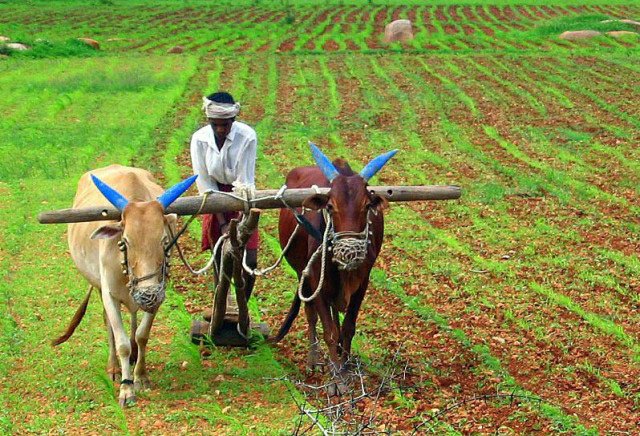
Comprising 61.5% of the total population in the country, the Farmers today are, but the least creditable chunk of our economy. Despite providing us with a substantial amount of produce, they are being neglected on many grounds; be it machinery, techniques, money, or knowledge, they have to bear the burden of being backward and incompatible. Although farming is such a primitive and productive jobs to opt for, most of the people face similar kind of problems regarding farming and activities related to it. But the disaster of farmers committing suicides has become a great phenomenon recently; what could be a decisive reason? Why its been so drastic in recent times?

Farmers and the legacy-

Agriculture or so to say, farming has been opted by a large number of people since it was introduced or, invented. The history of agriculture in India dates back to Indus Valley Civilization and even before that. It became one of the substantial activities that could sustain a huge amount of people. The upsurge in the activity as this resulted in the discovery of new techniques, machienaries, and even the crops which gave a boost to their own consumption, as well as the trade and commercial regulatories.

The colonialization, in the 18th century, was the period that saw a dramatic increase in the number of farmers in the country, under the force of the East India Company, that turned out a large amount of people engaged in other sectors to too seek for the agricultural work. Leaving almost 65% of India contributing to farming, the country came up with its own revolutionary ideas and schemes, such as the Green Revolution, which turned out to be a fancy for the country. But the irony is, still the farmers have stuck with the old and bygone techniques of agriculture that doesn’t provide any kind of fruitfulness to them. And contribute only a less figure to the economy.
Agriculture and differences –

With the Green Revolution adding more to the production of crops in the 19th century, there were still many differences in India itself, in terms of production and output.

While it states such as, Punjab, UP, Haryana, Tamil Nadu and Kerala saw an upsurge in the agricultural pattern. With the farmers and the government officials focusing on farm productivity and knowledge transfer, India’s total food grain production soared. Such rapid growth in farm productivity anabled India to become self-sufficient by 1970s. It also empowered the smallholder farmers to seek further means to increase food staples produced per hectare. On the other hand, areas with shortage of water and nutritious soil were left behind and it took many years to bring them up to the mark of other states with high production.

Due to such huge diversity between the states producing crops,India accounts only, on average, for about 16% of GDP and 10% of export earnings.

Problems and initiatives –

low agricultural growth is a concern for policymakers as some two-thirds of India’s people depend on rural employment for a living. Current agricultural practices are neither economically nor environmentally sustainable and India’s yield for many agricultural commodities is low. Poorly maintained irrigation system and almost universal lack of good extension services are among factors responsible. Farmers’ access to markets is hampered by poor roads, rudimentary market infrastructure and excessive regulation.
– World Bank

  • Climate change
  • Marketing
  • Infrastructure
  • Farmers suicides
  • Productivity

The above listed points are some of the good reasons why the agricultural sector faces huge loss and is unfortunately unable to develop as per the will.

The government has done a great deed in the past for the improved condition of farmers and farming, andis alsos currently practicing so. It has launched many a such schemes to benefit the farmer and improvise their method of farming.

As per a saying in hindi –

Jai Javan Jai Kisan, ye dono h desh ki shaan

If the “Shaan” if the country is always under immense pressure and is supplied with voulantry salary, the sustainability of millions of people in the country would be largely affected, and it would not be able to enlarge its economy and only would be counted in the developing one.


Sushant Singh Rajput’s girlfriend Rhea Chakraborty was suspected for this reason, interrogated for 9 hours by the police, here’s everything she was asked

Sushant Singh Rajput’s death has deeply impacted all the fans and followers and the entire nation mourned his untimely demise. Social media has been taken by storm after it was discovered that he was suffering from clinical depression. Also, people are slamming Bollywood to contribute to his suicide. The whole “nepotism” debate is back on table and the ‘blame-game’ is on. But amidst all this, police are interrogating the ‘professional rivalry’ angle.

Recently, rumoured girlfriend Rhea Chakraborty was summoned for 9 hours by police as she was living with Sushant at his rented Bandra penthouse. She was accompanied by her father.
A source revealed some important inside information from this interrogation session with Rhea to Pinkvilla. The source said, “In the last few months, the person who was the closest to Sushant was Rhea and they were together almost all the time. Police decided to call her first today.”

Rhea and Sushant had grown close towards each other in this lockdown, but days before the actor took this drastic step, Rhea moved out from the house with her bags which indicated their breakup following some problems in the relationship. The source by Pinkvilla suggested, “Rhea was asked to show all the text messages exchanged between the two. Her entire phone was scanned, including all their pictures and videos together. Rhea spoke about living in with Sushant and also revealed that they were planning to buy a property as well, as revealed by their broker previously. She admitted that they did plan to get married by the end of 2020.”

Before Sushant decided to end his life, he called Rhea a night before but she didn’t pick the calls. He also called his Pavitra Rishta co-star Mahesh Shetty, who also didn’t pick the call. The call records suggested, “Rhea happens to be the last person Sushant dialed before going to sleep. The actor called Mahesh Shetty first who didn’t answer and then called Rhea who also didn’t pick up the call. He went to sleep, woke up and saw Mahesh had returned the call. He called him back but it didn’t get connected.”

In the last few months, Sushant was diagnosed with clinical depression and Rhea was the only one to be with him. According to the same report, “Police asked her about his behavioural changes that she noticed. She not only spoke about it but apparently showed proof that proved how he was undergoing treatment for clinical depression. Sushant had turned towards meditation and yoga to maintain his well-being. She also told police that there would be days when he would feel extremely low and upset. She also shared that he would refuse to take his medication and she tried to coax him to take them but to no avail.”

There were some reports doing rounds that before Sushant’s demise, Mahesh Bhatt asked Rhea to vacate the house and leave Sushant when she told him that Sushant was behaving weird as he was talking to himself and hearing voices. But it’s unknown if this particular point was addressed in the interrogation.
Although Rhea was accompanied by her father to the police station, her father was not allowed to be in the interrogation session with Rhea. The same report suggested, “The police questioned her about everything and her father wasn’t allowed to be present while she was being interrogated.”

Police are now analysing Rhea’s statement and their investigation is still going on and they are planning to make some more calls to those people who were close to Sushant.

@Martin_Christopher

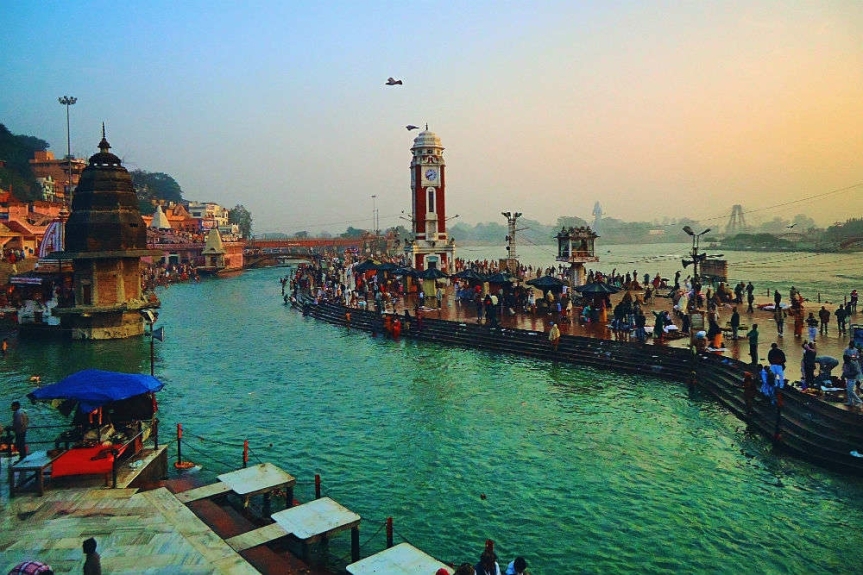
River ganga – the goddess of India

Emerging from the pure hairs of the lord Shiva, the river Ganga, is considered the holiest and the purest of all, which is said to heal up all the pains and grievings of those who worship it with a pure heart. Despite being worshipped for centuries, its condition is has been worsened over the past few years. Continuous growth of the human civilization and performing the rituals at the same time has become a bane for the river that is worshipped with love and respect.Originating from the lap of Himalayas, it has made its way through most of the states in India. Right from Gangotri, to West Bengal it sheds its water and provides livelihood to million and thousands of humans as well as animals.

Ganga – the holy river

The Ganges, it is the sacred river to Hindus along every fragment of its length. Every year millions of people come and pay homage to the holy river and bring back with them the pure water of this river, along with performing lots and lots of rituals, such as paying homage to their ancestors, offering flowers. And its historic significance is worth noting that makes it the most beautiful and sacred rivers in the history of Indian culture.

The story begins with a sage, Kapila, whose intense meditation has been disturbed by the sixty thousand sons of King Sagara. Livid at being disturbed, Kapila sears them with his angry gaze, reduces them to ashes, and dispatches them to the netherworld. Only water of Ganges, then in heaven, can bring the dead sons their salvation. A descendant of these sons, king, Bhagirath, anxious to restore his ancestors, undertakes rigorous penance and is eventually granted the prize of Ganges’s descent from heaven. However, her turbulent force could also have shattered the earth, Bhagirath persuades Shiva in his abode on Mount Kailash to receive Ganges in the coils of his tangled hair & break her fall. Ganges descends, and arrives in the Himalayas.

It’s history and religious significance is far from what we hear and believe today. The river that has been given the status of “mother”, it has been seen from time to time in different contexts and religious books. Yet, one or the other story is left behind which seems to be there in Puranas and books.

Ganga – geology and humans

Made with the confluence of Bhagirathi and Alaknanda rivers, the length of the river is frequently said to be slightly over 2,600 km long. The discharge of of the Ganges also differs by source, and it has changed its course a different periods of time.Human development, mostly agriculture, has replaced nearly all of the original natural vegetation of the Ganges basin. More than 95% of the upper Gangetic Plain has been degraded. The river suffers from severe pollution, caused due to dwelling of millions of people close to the river, industrial waste, sewerage disposal and mining, etc.

World Bank estimates that the health costs of water pollution in India equals 3% of India’s GDP.

Adding a huge amount of pollution to the river the cities of Varanasi, Kolkata, Patna, Kanpur produces the most waste that eventually results in conditions such as –

  • Shortage of water for basic requisites
  • Killing of large and rare fauna species
  • Degradation of quality of water
  • High risk of water borne diseases

Economy, environment and mission –

The river Ganga is not only a river, but attracts a large number of tourists every year because of its long history and religious beliefs associated with it. The Kumbh Mela, is one such example that attracts millions of “Bhakts” and tourists from every corner of the world. Adding to the country’s economy and providing a fair amount of money in terms of tourism. But, it is an unfortunate circumstances for the country that the holiest river is constantly loosing its beauty and religious belief due to increased risk of pollution and water degradation. Due to which the government is constrained to take stricter actions.Several projects, such as Namami Gange programme, NMCG (National Mission for Clean Ganga), Rejuvenation Protection and Management. The government has also made tireless efforts to maintain a ministry for Water Resources, River Development and Ganga Rejuvenation. A total budgetary outlay of Rs. 20,000 crores for 5 years period till dec. 2020 has been provided to accomplish the twin objective of effective abatement of pollution, conservation and rejuvenation of National River Ganga.It’s never too late to start off with a good deed and protect our national wealth, and its the right time to prevent our sacred river Ganga from getting degraded and providing it a new life, so that not only us, humans could be benefited, but can provide a home to rare and endangered species of flora and fauna. Be it government, or the common country man, the joint effort of both can bring unbelievable results and preserve its historicity, economy as well as the geology of the country.

Google removed these 30 apps from Play Store, delete them from your phone now!

These apps have the ability to bombard users with unwanted ads

Google has removed over 30 popular apps, including the ones that add beauty filters to your photos, from the Play Store after these were discovered to have malicious malware. These apps will not be available for download from the Play Store for new users, but the 20 million users who have already downloaded them need to make sure they uninstall the apps from their phones to avoid security mishaps. Among the 30+ apps, it’s the third-party selfie apps that have found to be most fraudulent. As per security researchers WhiteOps, the apps have the ability to bombard users with unwanted ads and redirect them to websites without ever clicking on a link. It should also be noted that in some cases, it was nearly “impossible” for users to delete these apps once downloaded.

Here are the apps, published by WhiteOps, that have been removed from Google Play Store. If you have them installed, get rid of them as soon as possible.

The aforementioned apps have collectively amassed more than 20 million downloads. WhiteOps explained in its websites that these apps render fraudulent advertising in users’ devices. “What these apps all have in common – besides their fraudulent tactics – is their focus on beauty. Most purport to be selfie apps that add beauty filters to users’ pictures, while at the same time showing ads out of context and making it nearly impossible to remove the apps themselves.”

In the time since that first app was published, the fraudsters published a new app every 11 days on average. Notably, most of these apps were available for a duration of around 17 days each before they were pulled down. “But even with an average of less than three weeks of time on the Play Store, the apps found an audience: the average number of installs for the apps we analysed was 565,833,” the research reads.

If you’re wondering how these apps avoid detection in the first place? Well, the White Ops paper notes that most of these apps use “packers” that are hidden in the APK in the form of extra DEX files. “Historically, packing binaries is a common technique malware developers use to avoid being detected by security software like antivirus. Packed files in Android are not new and can’t be assumed to be malicious, as some developers use packing to protect their intellectual property and try to avoid piracy,” the research paper added.

Apart from this, the developers also use Arabic characters, reducing readability for people, in various places of the apps’ source code to avoid detection. “These numbers tell a story of a cat and mouse game, in which the Play Store hunts down the fraudster and keeps them in check by removing fraudulent apps as quickly as they’re discovered. The fraudster likely developed a more robust mechanism to avoid detection and removal. A batch of 15 apps, all published after September 2019, had a much slower removal rate using those new techniques.”

@martin_christopher

Quwwat Ul Islam mosque – place that reveals a great dynasty

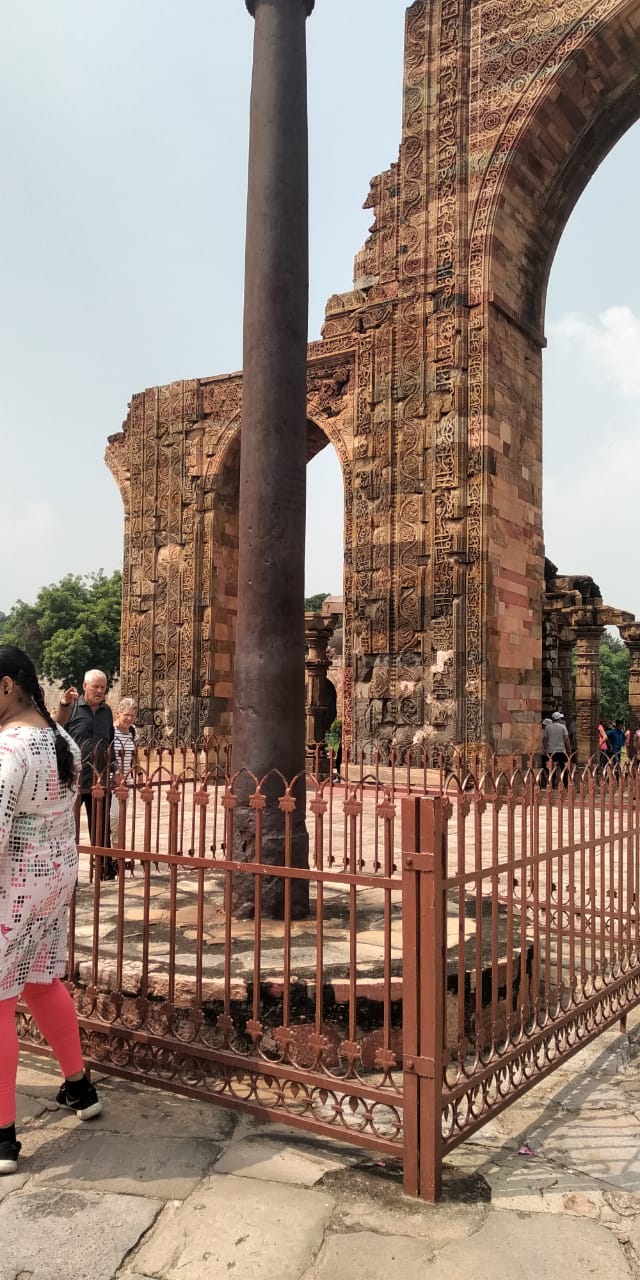
Situated at the center of the Qutub Minar complex in the city of Mehrauli,the Quwwat Ul Islam Mosque is the first ever mosque made in India, during the sultanate period. Today, stand by only it’s walls which represents extravagant yet very minute architecture of the Slave dynasty. It’s marvelous architecture and design makes it an attraction point of the Qutub complex, against which stands the Mehrauli iron pillar. And is added up as UNESCO‘s World Heritage Site. The history of this site is both so interesting and large that makes a huge amount of visitors to pay a visit to this place every year.

The history –

It was in the year 1193 AD, when Qutub ud – din Aibak, founder of The Slave dynasty conquered the Quila Rai Pithora of the Chauhans and was eager to leave the imprints of his religion to the new territory. He commissioned the mosque using the ruins of 27 Hindu and Jaina temples. And was built over the site of a large temple located at the center of the citadel.
Quwwat ul Islam mosque, also known as Jami masjid or the Friday mosque  then came to be used for performing the adhan and became one of the best architectures of the sultanate period, that also made a benchmark for the coming sultans to think upon.

Architecture and design –

Archaeological Survey of India states that the mosque was raised over the remains of a temple, and in additio, it was also constructed from materials taken from other demolished temples. Historical records compiled by a Muslim historian Maulana Hakim Saiyid Abdul Hai corroborate to the use of iconoclasm by Qutub ud din Aibak, which was common during his reign.
The mosque was further extended by Sultan Iltutamish (1296), who gave a more complexity to its design.
The iron pillar of Mehrauli, located on the stone pavement in front of it adds to its beauty and history.
The complexity of its design and architecture is what intrigues most of the visitors paying visit to the place. The central arch of the mosque is ogee in shape and the screen is sculpted with religious texts and floral patterns. One of the historians believe that it was not constructed on scientific approach, but in Corbel style as indicated by the variations in the patterns of the arches. The front wall that we see standing still today came to be known as the Western Wall. Though it was a magnificent monument, built with an entrance to the courtyard, and grey colonnades made of greystone.

Quwwat Ul Islam mosque today –

It is a great example of Muslim architecture and establishes a prominent role of the sultans in portraying their power and rule over the city of Delhi. But today it stands in ruins with only it’s front wall remaining with indigenous corbelled arches, floral morifs and geometric patterns, along with other Islamic structures. As per the government data reviewed by ET, Qutub minar complex is the second most visited monument in the country in 2018-19. It is estimated that 2.9 million people visited the place in 2018-19.It’s really a place worth appreciating, and attracts the visitors due to its everlasting beauty. The place is a true example of establishment of the power of Slave dynasty in Delhi and India.

Chennai Super Kings suspend team doctor over insensitive tweet on Indian martyrs in Galwan Valley

Chennai Super Kings on Wednesday said it has suspended the service of team doctor, Dr. Madhu Thottappillil over his remarks on the death of Indian soldiers in Galwan Valley, Ladakh.

20 Indian Army personnel, including a Commanding Officer, lost their lives in what is termed as one of the worst clashes between the Indian Army and Chinese troops in over 5 decades. Government sources said the Chinese side too suffered ‘proportionate casualties’ but chose not to speculate on the number.

Reacting to the news of the violent scuffle, CSK’s team doctor, Madhu Thottappil had put out a ‘distasteful’ tweet that received quite a bit of flak on social media on Tuesday.

“Just curious if the Coffins will come back with a “PM CARES” sticker on them?” Madhu had said.

Chennai Super Kings said the Indian Premier League franchise regrets the tweet after swiftly taking action over the controversial tweet.

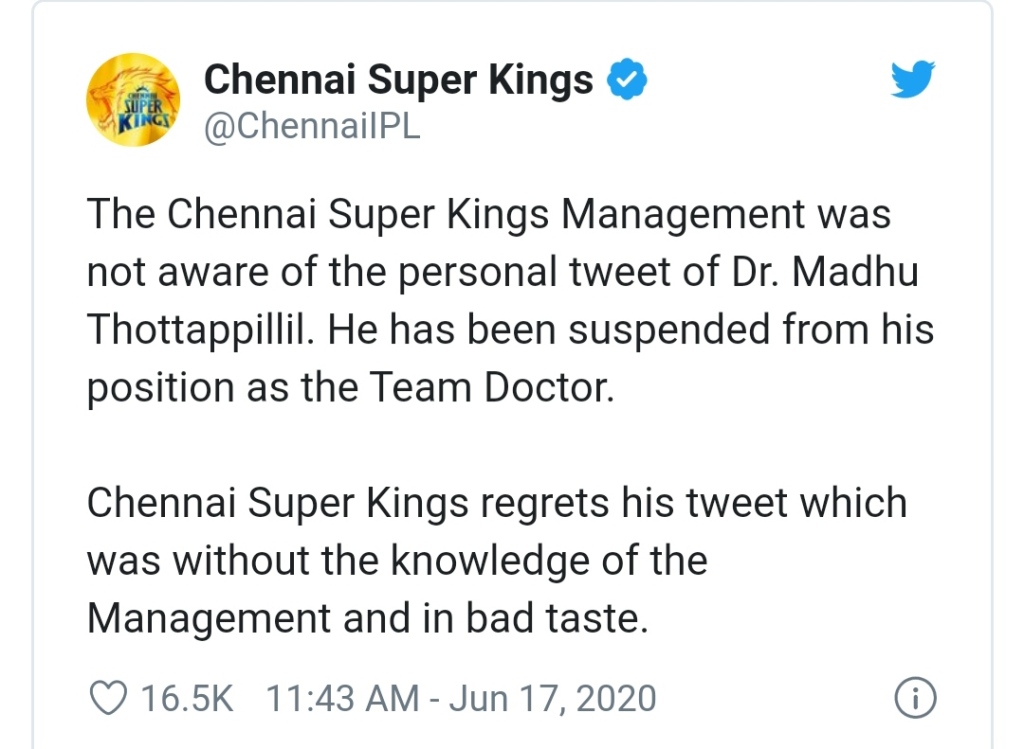
“The Chennai Super Kings Management was not aware of the personal tweet of Dr. Madhu Thottappillil. He has been suspended from his position as the Team Doctor,” the IPL franchise said in a social media post.

“Chennai Super Kings regrets his tweet which was without the knowledge of the Management and in bad taste.”

Earlier in the day, several India cricketers, including captain Virat Kohli, mourned the death of the Indian Army personnel in the bloody lash which has soared the ongoing tension between India and China.

Reactions started pouring in on social media as news of the violent scuffle, that resulted in the deaths of 20 Indian soldiers, broke. The bloody clash which has soared the ongoing tension between India and China has left many in shock.

“Salute and deepest respect to the soldiers who sacrificed their lives to protect our country in the Galwan Valley. NO one is more selfless and brave than a soldier. Sincere condolences to the families. I hope they find peace through our prayers at this difficult time,” Virat Kohli tweeted.

Yuvraj Singh also took to social media to salute the brave Indian soldiers.

“I salute the courage of our Indian soldiers who have been martyred at #GalwanValley. All these atrocities must stop and hope we can have a peaceful world where human life is valued. My thoughts are with the bereaved families, I pray for their strength,” Yuvraj tweeted.

@Martin_Christopher

Over population: an everytime issue

The beginning of human civilization has marked a devastating change over this planet. Everything, in terms of land, natural resources, animals, water bodies were occupied by the humans at once without any apologies. The breeding and interbreeding resulted in the blast of human population over this earth. Although the spread of this deleterious wasn’t a great deal for our mother earth to handle until it became an obligation and started pulling out every single bit of it’s own resources.

The people of a country are it’s real wealth. It is they who make use of the country’s resources and decide its policies. But what could be done when the real wealth of the country becomes a real burden and starts exploiting it’s own resources?

According to researchers, the world population at the beginning of 21st century recorded the presence of over 6 billion people. But within a very few years it marked 7 billion, as compared to 1930s when it took 30 years to reach 3 billion mark.

Patterns of population distribution in the world –

There is a drastic difference in the way the world’s population is distributed on the land mass. Broadly,90 per cent of the world population lives in about 10 percent of its land area, which is in itself a big reason to worry. The 10 most populous countries of the world contribute about 60 percent of the world’s population. Namely –

  • China
  • India
  • USA
  • Indonesia
  • Brazil
  • Pakistan
  • CIS
  • Bangladesh
  • Japan
  • Nigeria

Density of population –

Each land has a limited capacity to hold a certain number of people living on it. Hence, it is necessary to understand the ratio between the number of people to the size of land.

The areas with more than 200 persons on every sq. Km. are densely populated areas (North -Eastern part of USA, North – Western part of Europe,South, South east and East Asia) as compared to those with 11-50 persons per sq. Km., these are the countries that are either developed or scarcely support human conditions, such as Western China, Southern India in Asia, Norway, Sweden. Other areas like those near North and South Poles, the hot and the cold deserts and high rainfall zones near the equator have very low density of population regions of the world with less than 01 person per sq. Km.

Though there is an availability of such a great land mass,the world’s population is congested in such a small portion of land, rather a great sign to think upon,since it not only grapples up the natural resources of a particular niche,but also creates a chaos in terms of the survival of every individual. Neglecting the fact that certain factors affect the distribution of population over the earth – geographical, economic, social and cultural – the trend in which population grows is also a large factor that has contribute towards the overburdening of the earth.

Trends in population growth –

Since the beginning of human civilization, the population change also have seen different patterns in it’s doubling time, there is a great variation among regions in doubling their population. While the population doubling time in the developed countries is more, whereas we see that the time taken by the developing countries to double their population is less, i. e. there is a negative correlation between the economic growth and population growth.

8,000 -12,000 years back the world population then was nearly 8 million. In first century A. D. it crossed over 300 million mark. Around 1750s , at the dawn of industrial revolution, the world population exploded to 550 million. It took more than a million years for the human civilization to attain 1 billion mark. But it took only 12 years for it to rise from 5 billion to 6 billion between the years 1987 and 1999.

Impact of population change –

A small increase in population is desirable in a growing economy.

However,surpassing the limits of population spurt can lead to severe problems –

  • Continuous depletion of resources
  • Increased hatred among people
  • Extinction in large number of flora and fauna
  • Increase in global warming and degradation of environment
  • Disturbed food chain

Apart from over population being an everytime issue,decline in the population is also a major headache for the developing human community. It’s never too late to hold on the dreadful explosion of human bombs and it could only be done with the ” Human” efforts so as to maintain a balance over the earth, otherwise the earth will take the revenge in it’s own way and would leave no stones unturned to destroy this human population from the earth.

SUMMER SEASON IN INDIA

@martin_photography

Among the four seasons of India, the one that shows signs of sweltering heat is the Summer Season. Summer Season in India falls between the months of March till May. During this season, most parts of the country face hot winds and beating heat from the Sun. Many parts of the country face Water Scarcity during this season. The temperature easily varies between 35°C to 45°C. The best way to keep ourselves feel better is to keep drinking water frequently throughout the day. Taking fruits like Watermelon, eating light food and drinking tender coconut are effective ways to protect ourselves from getting dehydrated easily.

Summer Season in India starts in the month of March and ends in the month of May. Sometimes, the season prevails till the second week of June before Rainy Season in India. Summer Season in India is tolerable during the month of March. But slowly, as the season continues till the month of May and June, we can experience the roasting sun hitting our places every day from 8 am or 10 am. We can hardly experience a pleasant environment around us.

It is important to keep ourselves from dehydration. Best suggestions to follow during summer season are:

  • Drinking lots of water everyday minimum 3 liter
  • Eating lots of fruits with water content (Eg Water Melon)
  • Drinking Tender Coconut frequently
  • Avoiding going out unless and until it is very important (to keep yourself from prickly heat and sunburns)
  • Wearing light clothes to avoid sweating easily and to feel better

Many parts of India suffer due to water scarcity during this season. The temperature shoots up to 45°C which cannot be tolerated by many people. People in many states even die because of the burning summer season. We cannot control nature and its adverse effects, but we can right actions to meet them and keep ourselves safe. We should take initiatives to save water throughout the year for use during times of scarcity in Summer Season. Generally, tourists from other countries do not visit India during Summer Season; it is not advisable too.

LAC- India v/s China

Amid the going tensions of the world crisis, Indian and Chinese armies are again and again clashing at various points along the Line of Actual Control (LAC). Although, there were many times in the past when the two armies clashed with each other since there has not been a proper demarcation of the border lines between the two large economies. Also, incidents as these are uncommon along the LAC as both sides have differing perceptions of the alignment of boundaries. But what has caused a sudden attack on the Line of Actual Control?

Reasons for the current standoff-

Recently the standoff at LAC occurred at four places- Pangong Tso, Galwan Nalah, Demchock in Ladakh and Naku La in Sikkim, though the specific reasons for these clashes remain unclear. However, co-ordinated nature of Chinese intrusions at different points along LAC have raised concerns about Beijing’s intentions. At times it’s been noted that China’s reaction to Indian efforts over the last few years to build border infrastructure has been ultrasensitive and it fears that activities such as-
  • Construction of a feeder road near Galwan river connecting with the DS-DBO road.
  • Building a road in Pangong lake area.
Although both the new roads lie on the Indian side of LAC, their purpose is to strengthen further the Indian position along the LAC which might have irritated China which feared it and might have threatened it’s occupation of Aksai Chin and Lhasa-Kashgar highway. Also, China remains much more concerned about the newly constructed Dharchula to Lipulekh and believes that this newly inaugurated road has affected China’s border security in Tibet. While India decided to split Ladakh from Jammu and Kashmir last year, a that unsettled Pakistan. Many experts believe India’s aggressive position on the issue of Ladakh and PoK is the real reason behind current standoff.

What is China trying to signal?

This time, the scope, scale and posture of China’s moves were unprecedented. Against the backdrop of dramatically slowing economy, criticism for the handling of the outbreak of the Coronavirus and worsening ties with many countries, Chinese leaders may have felt the need to show strength, especially over questions of national sovereignty. This can be seen, not only regarding the border with India, but also regarding Taiwan, Hong Kong and the South China Sea. Considering the United States as it’s main “rival”, and not India, it generally seeks to maintain stability in the border dispute with India.

Current status-

After a tough tug and war between the two countries along their security lines, both the sides are currently engaged in the dialogue process at an appropriate level to avoid every kind of tensions between the two.Senior military commanders of India and China were scheduled to meet on 6th June to find a solution, and as a result, both sides have slightly retreated from their current positions. While Chinese Army had reportedly retreated by 2kms, the Indian Army has stepped back by one kilometres.

History of LAC-

In 1993, after years of territorial standoffs and negotiations, China and India finally signed an agreement which attempted to mark out a long stretch of border between the two countries. This came to be known as the Line of Actual Control, but it’s precise location can be blurry, and there is still dispute between both of the world’s leading powers.
So far, this LAC has served as the de facto border between these two countries. Since, India is close to complete a major upgrade of border roads, including a strategic military-use road that connects an airfield at Dalut Beg Oldie in northern tip of the Western section with the villages of Shyok and Darbuk towards the South, also India reactivated and rebuilt airfields along the border. It has also raised two mountain divisions and is creating a mountain strike corps to conduct offensive operations against China along the border.
Thus, the increased frequency of standoffs between the two are major cause of worry. If these standoffs drags on, nationalistic fervour is bound to kick in. The resultant public groundswell would restrict the options available to political leaders of both sides to resolve the issue.

“Safe blood Saves LIVES”: world blood donor day 2020

Be a blood donor, be a Hero – A real one.

14 JUNE: WORLD BLOOD DONOR DAY is celebrated every year on this day to raise awareness about safe blood donations and to thank those who donate blood voluntary and save the lives of others.

On June 14, Nobel prize winner and scientist Karl Landsteiner was born. He has got the credit for finding the ABO blood group system. World Blood Donor Day is celebrated on the birthday of Karl Landsteiner,who discovered various blood groups.Before Carl detected blood groups, blood transfusions used to happen without knowing the various blood groups. This discovery made Karl Landsteiner win the Nobel Prize in the year 1930.

The theme for this year’s World Blood Donor Day is “Safe blood saves lives”with the slogan “Give blood and make the world a healthier place”. Every year, a host country is chosen to celebrate the National Blood Donation Day. Due to the Coronavirus outbreak, the WHO will conduct a global virtual campaign this year. The idea is to focus on the contribution an individual giver can make to improve health for others in the community.

Blood donation is voluntary, a noble deed and a great service which we can do for our fellow human beings. One donation of blood can save up to 5 lives. Blood transfusion helps patients in recovery and surgery, those who have platelet requirement, who have Hemophilia and ones undergoing organ transplantation or chemotherapy.

Benefits of donating blood:

  • Helps in controlling weight.
  • It keeps your liver healthy.
  • Keeps cancer away.
  • Helps in smooth blood circulation.
  • Helps in burning calories.

Blood donation has been compounded severely by the Covid-19 pandemic and lockdown.In early April, the Indian Red Cross Society had raised an alarm that voluntary donation had fallen by almost 100%.This isn’t surprising, given that the number of Covid cases is rising, making infected people and those who come into contact with them ineligible to donate.

The Ministry of Health and Family Welfare has now issued guidelines for safe donation of blood during the ongoing pandemic. Go through the guidelines on this website to know safe blood donation during covid pandemic-https://www.mohfw.gov.in › …PDF
Web results
Advisory for Voluntary Blood Donation during COVID – MoHFW

The objectives of this year’s campaign are to:

  • celebrate and thank individuals who donate blood and encourage more people to start donating.
  • raise wider awareness of the urgent need to increase the availability of safe blood for use wherever and whenever it is needed to save life.
  • demonstrate the need for universal access to safe blood transfusion.
  • mobilize support at national, regional and global levels among governments and development partners to invest in.

For information on blood donation,visit-nbtc.naco.gov.in › faq
FAQs on Blood Donation – National Blood Transfusion Council (NBTC) – MoHFW …

The event serves to thank voluntary, unpaid blood donors for their life-saving gift of blood and also to raise awareness of the need for regular blood donations to ensure that all individuals and communities have access to affordable and timely supplies of safe and quality-assured blood and blood products, as an integral part of universal health coverage and a key component of effective health systems,” the WHO states.

All blood types can donate blood and they can do it whenever required.“Spare only 15 minutes and save one life”.