My last blog for WordPress

Hello my dear reader friends.

One months have passed since I started my content writing intersnship with WordPress under Hariyali NGO .

Shared 30 content here and got 125+ star likes on the post in this month and this internship helped me a lot to see if I am meant to be a content writer or not . This was a great start for me as a content writer eduindex platform has given a fresher a chance that’s pretty great of them.

Words can’t describe my feelings right now when I am confessing.

Last word I want to say is

THANKYOU💙

ABORTION IN INDIA

In India, The Medical termination of pregnancy Act was passed almost five decades ago. But, Abortion is still considered a taboo and debatable topic for many. According to National study of the incidence of abortion and unattended pregnancies, Almost 15.6 million abortion was performed in 2015.

Currently, one out of four abortions are terminated in health facilities (Public sector) which is the main source of health care for paupers & almost 3 out of 4 abortions are careered by using MMA drugs from chemists and local vendors. After fifty years of legal legislation, most the women in India are still deprived of safe abortion care due to multiple reasons like lack of proper information, the difference in socio-cultural beliefs in different rural-urban areas. This article critically reviews the history of abortion law and highlights policies for Medical Termination of Pregnancy Act.

Life began from the womb of the mother and abortion is the destruction of life. Many people also raise questions on social, moral and legal aspects of abortion and according to them, women have a moral duty to give birth to a child and protect the fetus also. From this view, the obvious question arises whether the women have the right to abortion or not?

Abortion as a human right
Human rights are those rights which are available to all the human beings irrespective of caste, colour, creed, religion and nationality etc. Right to life is the most important human right. Article 6(1) of the International Covenant on Political and Civil rights prohibits the arbitrary deprivation of human rights.

Many controversies are related to this right and right to abortion is one of them. Every mother has a right to abortion but this right has to balance with the right of the unborn child. Earlier, abortion was opposed by society and considered as a murder of the embryo. In recent years, formal policies and laws are indicating the intent of government for promoting the reproductive rights and every woman has a complete right over her body

However, the validity of abortion laws has been questioned on the basis of the constitutionality of Right to life of an unborn child. This issue becomes a debatable topic in many countries especially The United States and Northern Ireland.

In the Leading Case: Roe v. Wade[1]
: Jane Roe challenged the constitutionality of Texas Criminal Abortion laws in the Supreme Court of The United States. The petitioner pleaded that these laws were vague, unconstitutional and encroaching her right to privacy. On the other hand, The The state of Texas argued that fetus is a Person within the meaning of the Due process clause of the fourteenth Amendment of the United States Constitution.

The Court held that the State cannot restrict the women’s right to abortion during the first trimester which try to balance the State’s interest with the individual’s interest. The State can regulate the procedure during the second trimester in a reasonable way related to maternal health and in third trimester, the State can restrict abortion in a way as it thinks fit.

Indian perspective on abortion

Abortion is strictly prohibited by the Smirtis, Vedas and Upanishads. But, it was still practised clandestinely because it was illegal. But, in 1971, after passing of the Medical termination of pregnancy Act, medical termination of pregnancy by registered medical practitioners becomes legal. The object of the Act was to eliminate the high incidence of illegal abortions and confer Right to Privacy to women which includes right to space and to limit pregnancy and the right to decide about her own body.

In the leading case of Suchita Srivastava v. Chandigarh Administration[2], The Supreme Court affirmed the women’s right to choose in respect of continuing pregnancy. The Supreme Court held that the state has an obligation to protect the reproductive rights of women as a part of Article 21 of the Indian constitution.

Section 3 of the MTP Act, 1971 Act lays down condition under which pregnancy can be terminated.
It can be terminated:

  1. Where the length of the pregnancy doesn’t exceed 12 weeks and medical practitioner is of opinion that,
  2. And if the length of pregnancy exceeds 12 weeks but doesn’t exceed 20 weeks and at least two registered medical practitioner has opinion that:
    1. Continuance of pregnancy involves a risk to life or grave injury to physical or mental the health of the women.
    2. There is a substantial risk involved that child would suffer from physical or mental abnormalities as to be seriously handicapped.
  3. If pregnancy is caused by rape.
  4. Failure of any device or method which is used by the married couple to limit the number of children.

Latest amendment in MTP act, 2020

  1. On 2nd March 2020, The MTP (Amendment) Bill was introduced by the Minister of Health and Family Welfare. The bill adds the definition of the termination of pregnancy to mean procedure to terminate by surgical methods.
     
  2. The bill amends the section 3 of the Act also. The termination of pregnancies up to 24 weeks only apply to the categories of women which may be prescribed by the central government. The central government also notify norms for the medical practitioners whose opinion are required for termination of pregnancies.
     
  3. Earlier, if the pregnancy occur as a result of the failure of any method or device used by married women or her husband to limit the number of children, it amounts to grave injury to the mental health of women. The Bill replace the married woman or her husband with women or her partner.
     
  4. The Bill also lays down the establishment of the Medical board for every state. The board will consist of the following members: 1. a gynaecologist, 2. a paediatrician, 3. a radiologist or sinologist and 4. Any other member who may be notified by the state government.
     
  5. The bill also promotes the Right to Privacy and states that no medical practitioner will reveal the name and other details of women whose pregnancy has been terminated, except to the person authorized by the law. Whoever violates this the rule shall be punishable with imprisonment which may extend to one year or fine or both.
     
  6. The Central Government will also notify the norms for a medical practitioner whose opinion is required for abortion.

Punishment for illegal abortion

Section 312 to 316 of the IPC deals with the penal abortion. It is covered under the offences against the human body.

  1. According to Section 312, Whoever voluntarily causes a woman with child to miscarry, shall, if such miscarriage be not caused in good faith for the purpose of saving the life of the woman, be punished with imprisonment of either description for a term which may extend to three years, or with fine, or with both; and, if the woman be quick with child, shall be punished with imprison­ment of either description for a term which may extend to seven years, and shall also be liable to fine. A woman who causes herself to miscarry, is within the meaning of this section.
     
  2. According to Section 313, Whoever com­mits the offence defined in the last preceding section without the consent of the woman, whether the woman is quick with child or not, shall be punished with 1[imprisonment for life], or with imprisonment of either description for a term which may extend to ten years, and shall also be liable to fine.
     
  3. According to Section 314, Whoever, with intent to cause the miscarriage of a woman with child, does any act which causes the death of such woman shall be punished with imprisonment of either description for a term which may extend to ten years, and shall also be liable to fine; If an act is done without woman’s consent.—And if the act is done without the consent of the woman shall be punished either with 1[imprisonment for life], or with the pun­ishment above mentioned.

View of supreme court on termination of pregnancy

  1. Case: Mrs X v. Union of India[3]: The Court held that women’s right to reproductive choice is also a dimension of her personal liberty under Article 21 of the Constitution and right to bodily integrity allows her to terminate her pregnancy and allowed the termination of 22 weeks old pregnancy.
     
  2. Case: Nikhil D. Dattar v. Union of India[4]: In this case, the validity of section 3 and 5 of MTP was challenged on the ground of non-inclusion of eventualities vires of the Act. The foetus was diagnosed with complete heart blockage. The petitioner sought to terminate the pregnancy after 26 weeks. The Petitioner also contended that section 5 should be read down to include eventualities In section 3 and directions should be issued to respondent to allow the petitioner to abort the child. The Court rejected the petition and held that since the period of 26 weeks has already passed, the court cannot pass any direction for exercise of any right under section 3nof MTP Act.
     
  3. Case: D. Rajeshwari v. State of Tamil Nadu & Ors[5]: In this case, The 18 years old unmarried girl prayed to terminate the pregnancy of child in her womb on the ground that bearing of the child for three months made her mentally ill and the continuance of pregnancy will cause a grave injury to her mental health. The Court granted the termination of pregnancy as it was a result of rape.
     
  4. Case: Murugan Nayakar vs. Union of India[6], The apex allowed the termination of pregnancy of 32 weeks old pregnancy of 13 years old victim after considering the age of victim, trauma she suffered due to sexual abuse and the report of the Medical board. The Court held that it is appropriate to allow the termination of pregnancy.

Conclusion
An evil practice can be curbed not by cutting the stems growing on the trunk above the ground, but by eliminating the roots standing beneath. Social awakening, equality, vigorous campaigning against female foeticide, honest and full enforcement of dowry prohibition, sexual harassment laws are the steps towards uprooting the practice of female foeticide[7]

The objective behind legislating the termination of pregnancy is to provide quality abortion care to all women by increasing accessibility and affordability to safe abortion. There is also a need to bring awareness regarding abortion and contraceptive methods among the youth especially. This requires political will, adequate facilities, infrastructure and training.

CANCER

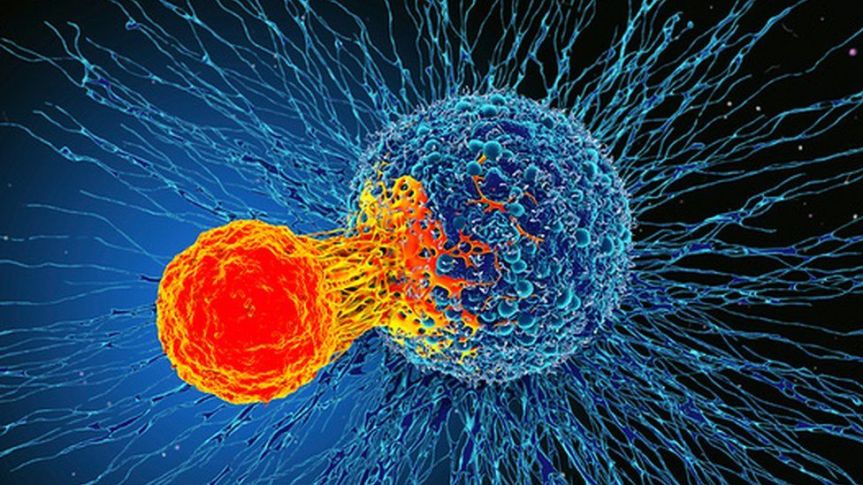
Cancer is the uncontrolled growth of abnormal cells anywhere in a body. These abnormal cells are termed cancer cells, malignant cells, or tumor cells. These cells can infiltrate normal body tissues.

SYMPTOMS AND SIGNS

  • Change in bowel or bladder habits
  • sore throat that does not heal
  • Unusual bleeding or discharge (for example, nipple secretions or a “sore” that will not heal that oozes material)
  • Thickening or lump in the breast, testicles, or elsewhere
  • Indigestion (usually chronic) or difficulty swallowing
  • Obvious change in the size, color, shape, or thickness of a wart or mole
  • Nagging cough or hoarseness
  • Unexplained loss of weight or loss of appetite
  • A new type of pain in the bones or other parts of the body that may be steadily worsening, or come and go, but is unlike previous pains one has had before
  • Persistent fatiguenausea, or vomiting
  • Unexplained low-grade fevers with may be either persistent or come and go
  • Recurring infections which will not clear with usual treatment

TYPES OF CANCER

  • Carcinoma: Cancer that begins in the skin or in tissues that line or cover internal organs — “skin, lung, colon, pancreatic, ovarian cancers,” epithelial, squamous and basal cell carcinomas, melanomas, papillomas, and adenomas
  • Sarcoma: Cancer that begins in bone, cartilage, fat, muscle, blood vessels, or other connective or supportive tissue — “bone, soft tissue cancers,” osteosarcoma, synovial sarcoma, liposarcoma, angiosarcoma, rhabdosarcoma, and fibrosarcoma
  • Leukemia: Cancer that starts in blood-forming tissue such as the bone marrow and causes large numbers of abnormal blood cells to be produced and enter the blood — “leukemia,” lymphoblastic leukemias (ALL and CLL), myelogenous leukemias (AML and CML), T-cell leukemia, and hairy-cell leukemia
  • Lymphoma and myeloma: Cancers that begin in the cells of the immune system — “lymphoma,” T-cell lymphomas, B-cell lymphomas, Hodgkin lymphomas, non-Hodgkin lymphoma, and lymphoproliferative lymphomas
  • Central nervous system cancers: Cancers that begin in the tissues of the brain and spinal cord — “brain and spinal cord tumors,” gliomas, meningiomas, pituitary adenomas, vestibular schwannomas, primary CNS lymphomas, and primitive neuroectodermal tumors

CANCER STAGING

  • Site of the primary tumor
  • Tumor size and number of tumors
  • Lymph node involvement (spread of cancer into lymph nodes)
  • Cell type and tumor grade (how closely the cancer cells resemble normal tissue cells)
  • The presence or absence of metastasis

CANCER PREVENTION

Cancer prevention, by avoiding its potential causes, is the simplest method. First on most clinicians and researchers list is to stop (or better, never start) smoking tobacco. Avoiding excess sunlight (by decreasing exposure or applying sunscreen) and many of the chemicals and toxins are excellent ways to avoid cancers. Avoiding contact with certain viruses and other pathogens also are likely to prevent some cancers. People who have to work close to cancer-causing agents (chemical workers, X-ray technicians, ionizing radiation researchers, asbestos workers) should follow all safety precautions and minimize any exposure to such compounds. Although the FDA and the CDC suggests that there is no scientific evidence that definitively says cell phones cause cancer, other agencies call for more research or indicate the risk is very low. Individuals who are concerned can limit exposure to cell phones by using an earpiece and simply make as few cell phone calls as possible.

dravidian language

Dravidian languages, family of some 70 languages spoken primarily in South Asia. The Dravidian languages are spoken by more than 215 million people in India, Pakistan, and Sri Lanka.

The Dravidian languages are divided into South, South-Central, Central, and North groups; these groups are further organized into 24 subgroups. The four major literary languages—Telugu, Tamil, Malayalam, and Kannada—are recognized by the constitution of India. They are also the official languages of the states of Andhra Pradesh, Tamil Nadu, Kerala, and Karnataka (formerly Mysore), respectively.
There is considerable literature on the theory that India is a linguistic area where different language families have developed convergent structures through extensive regional and societal bilingualism. It is now well established that the Indo-Aryan and Dravidian language families developed convergent structures in sound system (phonology) and grammar owing to contact going back to the 2nd millennium BCE. The earliest varieties of Indo-Aryan are forms of Sanskrit. More than a dozen Dravidian loanwords can be detected in the Sanskrit text of the Rigveda (1500 BCE), including ulūkhala- ‘mortar,’ kuṇḍa ‘pit,’ khála– ‘threshing floor,’ kāṇá– ‘one-eyed,’ and mayūra ‘peacock.’ The introduction of retroflex consonants (those produced by the tongue tip raised against the middle of the hard palate) has also been credited to contact between speakers of Sanskrit and those of the Dravidian languages.
so this is about DRAVIDIAN LANGUAGE

The Mughal Empire

Indian history and culture are rich and dynamic. The country has been home to some of the worlds greatest empires, including the legendary Mughal Empire. Today let’s take a trip to the past, about 500 years ago, when the founder of the empire came to India and defeated Ibrahim Lodi to form the legendary Mughal Empire.

In 1524 the descendant of Genghis Khan and Timur, Babur came to India on the invitation of Daulat Khan, a rebel of the Lodhi dynasty, to overthrow the king of the dynasty, Ibrahim Lodhi. Many thought that he would leave the country after defeating Lodhi. Little did they know that he had no intention of doing so. Babur defeated Lodhi at the famous First Battle of Panipat in 1526 and established the Mughal Empire. He was opposed by Rana Sanga of Mewar, but the Rana was defeated in the Battle of Khanwa. Thus began the rule of the empire. 

Babur died in 1530 in Agra, where he was buried. Later, his remains were moved to Kabul as per his wishes. He was succeeded by his eldest son, Humayun. Babur had decided to divide the territories his empire between his sons, with Humayun succeeding his father to the throne of Delhi, and his half-brother Kamran Mirza inheriting the northernmost parts of his father’s empire. This was not a common practice in India at the time, but was a common Central Asian practice from the time of Genghis Khan. Many believed that Humayun was an unqualified king as he was only 22, and several of his brothers revolted against him when he came to the throne. 

In 1539, Humayun faced the founder of the Suri empire in India, Sher Shah Suri at the battle of Chausa. Humayun had to escape the battlefield to save his own life, and Suri was crowned the winner.He fled to the refuge of the Safavid Empire in Persia, and with their aid successfully won back his empire. The death of Sher Shah Suri and his successor Islam Shah rendered the Suri empire weak, and Humayun defeated the armies of Sikandar Shah Suri in 1555, re-establishing the Mughal Empire in India. Unfortunately, Humayun died due to an unfortunate accident. During his short time as a ruler, he managed to further expand the empire and was succeeded by his son Akbar.

Akbar was popularly known as Akbar The Great because of the many accomplishments he achieved during his successful rule. He defeated the Hindu king Hemu at the Second Battle of Panipat, which wasn’t far from the site where his grandfather had defeated the Lodhi’s, and occupied Delhi and Agra. After conquering most of Northern India, he sought to take over the Rajputana, and did so by defeating Pratap Singh who was the descendant of Rana Sanga at the legendary battle of Haldighati in 1576. Akbar introduced many social reforms during his time as ruler. He left a rich legacy for the Mughal empire was praised by many. He died in 1605, and was succeeded by his son Jahangir, a lover of literature, architecture and the fine arts. His successor, Shah Jahan is considered one of the greatest Mughal Emperors, and many believe that under his reign, the Mughal Empire reached its peak.Shah Jahan was imprisoned by his son Aurangzeb, who is considered one of India’s most controversial king. After his son Bahadur Shah Zafar died, the Mughal Empire declined significantly. The last ruler of the empire was exiled by the British East India Company in 1868.

The Mughals made several contributions to the culture of India, including the development of the Mughlai cuisine, large scale urbanisation, and the magnificent Taj Mahal. The Empire is considered to be one of the greatest ones in India

POTHOLES-crib dam instance

here you see what may be the remains of an old crib dam.   A crib dam is a man made structure of interlocking timbers (much like a log home) which is laid across a creek bed and filled with stones.  The intention of this crib dam may have been to regulate water flow and redirect water to a trench for use elsewhere.  As you can see, the crib dam continues to sufficiently regulate water flow.  But when water levels are high, the excess water begins to spill over the edges and create new pathways. 

The spillage on each side of the crib dam exhibits much more force on the underlying rock than the water that flows as intended through the dam.  Evidence for the amount of energy created by the water is found at the bottom tier, on the left side.  Looking closely, you may see a portion of a pothole.   A pothole is a circular or cylindrical hole in the riverbed which is produced by force of water and abrasion.  A pothole is formed when a circular current of water carrying small pebbles and sediment begins to wear away a rock surface. The force of water and the sediment it carries is greater than the resistance of the rock. Once the process has begun, it continues and the rock in that location continues to erode away.

Geologists associate potholes with large volumes of very turbulent water.  Most often they are thought to be associated with the melt water of a glacier.   This is likely the case here at Hungarian Falls, as we can point to additional evidence to demonstrate that glacial activity in this area was prominent in the last 1-2 million years.  As glaciers advanced, they scoured out the softer sediment, essentially wiping this area clean of any loose rock, and carrying it along.  The sediment being moved by the glacier, along with the structure of the underlying bedrock, together created the potential for potholes.  As glaciers retreated, and melting waters turned to phenomenal rivers, the sediment that they carried along with them did the work of carving out the hole in the creek bed.

Vacation

Holidays provide a great change to students. They have a great significance for students. During the holidays, students are free from the burden of books. Students can devote time to their favorite pursuits.

Holidays are fun. These are the days of feasting and merry-making. Some teachers burden the students with holiday homework. This is not good. Students can be encouraged to do some kind of social work during holidays.

All work and no holiday make a student’s life dull and boring. For some students, holidays mean more work. They overburden themselves with work. This is not a good idea of spending holidays. A holiday is a free time and it should be spent in this spirit only. A holiday can bring great joy, if it is spent as a holiday.

ARTIFICIAL INTELLIGENCE

Artificial intelligence (AI) makes it possible for machines to learn from experience, adjust to new inputs and perform human-like tasks. Most AI examples that you hear about today – from chess-playing computers to self-driving cars – rely heavily on deep learning and natural language processing. Using these technologies, computers can be trained to accomplish specific tasks by processing large amounts of data and recognizing patterns in the data.

HISTORY

The term artificial intelligence was coined in 1956, but AI has become more popular today thanks to increased data volumes, advanced algorithms, and improvements in computing power and storage. Early AI research in the 1950s explored topics like problem solving and symbolic methods. In the 1960s, the US Department of Defense took interest in this type of work and began training computers to mimic basic human reasoning. For example, the Defense Advanced Research Projects Agency (DARPA) completed street mapping projects in the 1970s. And DARPA produced intelligent personal assistants in 2003, long before Siri, Alexa or Cortana were household names. This early work paved the way for the automation and formal reasoning that we see in computers today, including decision support systems and smart search systems that can be designed to complement and augment human abilities.

I MPORTANCE

  • AI automates repetitive learning and discovery through data. But AI is different from hardware-driven, robotic automation. Instead of automating manual tasks, AI performs frequent, high-volume, computerized tasks reliably and without fatigue. For this type of automation, human inquiry is still essential to set up the system and ask the right questions.
  • AI adds intelligence to existing products. In most cases, AI will not be sold as an individual application. Rather, products you already use will be improved with AI capabilities, much like Siri was added as a feature to a new generation of Apple products. Automation, conversational platforms, bots and smart machines can be combined with large amounts of data to improve many technologies at home and in the workplace, from security intelligence to investment analysis.
  • AI adapts through progressive learning algorithms to let the data do the programming. AI finds structure and regularities in data so that the algorithm acquires a skill: The algorithm becomes a classifier or a predictor. So, just as the algorithm can teach itself how to play chess, it can teach itself what product to recommend next online. And the models adapt when given new data. Back propagation is an AI technique that allows the model to adjust, through training and added data, when the first answer is not quite right.
  • AI analyzes more and deeper data using neural networks that have many hidden layers. Building a fraud detection system with five hidden layers was almost impossible a few years ago. All that has changed with incredible computer power and big data. You need lots of data to train deep learning models because they learn directly from the data. The more data you can feed them, the more accurate they become.
  • AI achieves incredible accuracy through deep neural networks – which was previously impossible. For example, your interactions with Alexa, Google Search and Google Photos are all based on deep learning – and they keep getting more accurate the more we use them. In the medical field, AI techniques from deep learning, image classification and object recognition can now be used to find cancer on MRIs with the same accuracy as highly trained radiologists.
  • AI gets the most out of data. When algorithms are self-learning, the data itself can become intellectual property. The answers are in the data; you just have to apply AI to get them out. Since the role of the data is now more important than ever before, it can create a competitive advantage. If you have the best data in a competitive industry, even if everyone is applying similar techniques, the best data will win.

CHALLENGES

Artificial intelligence is going to change every industry, but we have to understand its limits. The principle limitation of AI is that it learns from the data. There is no other way in which knowledge can be incorporated. That means any inaccuracies in the data will be reflected in the results. And any additional layers of prediction or analysis have to be added separately. Today’s AI systems are trained to do a clearly defined task. The system that plays poker cannot play solitaire or chess. The system that detects fraud cannot drive a car or give you legal advice. In fact, an AI system that detects health care fraud cannot accurately detect tax fraud or warranty claims fraud. In other words, these systems are very, very specialized. They are focused on a single task and are far from behaving like humans.

Let us learn about uipath vs microsoft power automate. Microsoft Power Automate is a powerful automation tool best used by those with technical experience (such as developers). Like UIPath it is Windows only, offering no support for Mac or Linux automation. Training is geared towards technically proficient users and does not cater to end business users. Depending on the users, this tool can work well. However, the use case should be flushed out before choosing Microsoft Power Automate. Additionally, the pricing is very competitive, making this a strong option in the business automation world.

LAW OF RAPE IN INDIA

As we all know rape is considered as a heinous crime in our society. Section 375 of Indian Penal Code defines the offence of rape and its essentials, while section 376 prescribes punishment with death or life imprisonment.

Under section 375 a man commits rape upon a woman under following circumstances:

  1. Against her will
  2. Without her consent
  3. When her consent is obtained by threat or fear of injury to person she is interested in.
  4. When consent is obtained by fraud or misconception of fact person representing to her as husband.
  5. With her consent when obtained by reason of unsoundness of mind or state of intoxication
  6. With or without consent when the age of woman is under 18.
  7. When she is not able to communicate her interest

After the Nirbhaya Gang Rape case: there have been demand from jurists, social workers to amend the existing laws the old laws did not provide any stringent punishment to the rapist. So the law commission decided to amend existing procedural and substantive rape laws of the country.

Section 376A was added and onus to prove innocence was shifted on the accused and identity of the victim was said to be kept confidential by the courts. Custodial and rape during the judicial separation were also included in the other words the whole rape law was changed.

The Supreme Court in many cases interpreted the section 375 one of the landmark case Dileep Kumar v/s.; State Of Bihar demarcated Against her will means sexual intercourse despite resistance whereas Without her consent means absence of proper deliberation and intelligent case.

The court also held that a false promise to rape does not amount to work if the accused is able to show that his intention was not dishonest from the beginning. Also section 90 cannot be clothed in language to convict the accused section 90 deals with consent given under misconception.

Uday vs. State of Karnataka:

It was the first time Supreme Court held that consent given on false promise to marry cannot come under section 375. It would depend on facts and circumstances of each case like the age, social and educational background of that victim, her status in the society would also be taken in to consideration.

Whereas in State of Uttar Pradesh vs. Naushad held that from the beginning accused did not have intention to marry the victim so the prima facie evidence is against the accused. In my opinion there is a difference between mere breach of promise and false promise to marry the intention will be inferred from the conduct of accused
 
In Gurmit Singh vs. State of Punjab while holding the accused liable under section 376 consent and submission are not of same meaning. A consent given under force or duress vitiate a valid consent.

It should be noted that penetration is sufficient to constitute the offence of rape
Some landmark cases are Raghubir Singh vs. State of Himachal Pradesh, Mohan Singh vs. National territory of Delhi

Conclusion
After reviewing the landmark cases I have reached the conclusion that sections 375 is a complete rode and section 90 holds no application in the offence of rape. Therefore the law makers have rightly amended the existing rape laws which were repugnant with the social conditions. There have been major developments in the field of law like the minimum punishment for the rape is not less than 7 years. We can only hope from the society that they will be bound by the rules .

little women

“I’ve got the key to my castle in the air, but whether I can unlock the door remains to be seen.” 

-Louisa May Alcott, Little Women

In 1868, Louisa May Alcott was asked by her publisher to write a novel about girls that would be appealing to the masses. This was something new and challenging to her as she had spent all her life writing short stories. Also, she didn’t want to write a story from the female perspective as the only story she knew of was of her sisters. She was initially hesitant but chose to write the novel. Little did she know that her book would be an instant success and would still be read and admired by people centuries after her death.

Little Women was published in 1868 and recounts the story of four sisters: Meg, Jo, Beth, and Amy March. The book is loosely based off of Alcott’s own life, and many believe that she is the Jo March of her family. It is set in Massachusetts at the time of the American Civil War. On their first Christmas without their father, the March sisters and their mother, Marmee March, decided to give their Christmas breakfast away to an impoverished and starving family. When they returned, they found out that their neighbour, Mr Laurence had sent over a surprise breakfast. This leads to the two families getting closer to each other, and the March Sisters getting acquainted with Theodore “Laurie” Laurence, Mr Laurence’s nephew. 

One of the reasons why Little Women was an immediate success and remains relevant years after the author’s death is because of its realism and a perfect portrayal of sisterhood. The sisters are not particularly glamorous characters and lead ordinary lives, yet one likes them as they can relate to them. For example, when Jo refused to take young Amy to the theatre with Meg and Laurie, Amy burned down Jo’s manuscript, on which she had been working for ages. While this is not pretty to read, it is accurate as Amy was 12, and this is an accurate response from someone of her age. Her burning down of the manuscript led to Jo being extremely angry at her, and she vowed never to talk to her again. Yet, when Amy chased after Jo after feeling remorse, and almost died by falling through the thin ice at the river, Jo saved her and even made up with her. This shows that no matter how angry one is with their sibling, they still love them and would do anything for them.

Alcott also manages to perfectly capture the feeling of growing up and leaving your childhood innocence behind. Meg gets married and moves out, Jo rejects Laurie’s proposal and moves to New York to write, Beth becomes sick and eventually passes away, and Amy goes to Europe with her aunt where Laurie proposes to her after being rejected by Jo. Slowly they all leave their comfort zone behind and face the tribulations one faces when they become distant from family as they grow up. Yet, all the sisters reunite and show that their bond is stronger than ever.

Alcott gave her characters distinct and bold personalities and the women who read it at that time related to the March Sisters and felt the need to have more “public” identities and follow their ambitions. Alcott even planned to let Jo remain unmarried, but she eventually decided to get her married which lead to Jo abandoning her writing career, though Alcott remained unmarried all her life. This book has stayed relevant to date and is still beloved by the people. Generations of readers have fallen in love with this masterpiece. It is an extremely captivating story, one you won’t be able to put down.