
Defence Minister Rajnath Singh will release the first batch of Anti Covid drug 2DG through video conferencing this morning. The drug has been developed by DRDO’s Institute of Nuclear Medicine and Allied Sciences (INMAS) in collaboration with Dr Reddy’s Laboratories. AIR correspondent reports that clinical trial results have shown that this molecule helps in faster recovery of hospitalised patients and reduces supplemental oxygen dependence. Higher proportion of patients treated with 2-DG showed RT-PCR negative conversion in COVID patients. The drug will be of immense benefit to the people suffering from COVID-19.
Pursuing Prime Minister Narendra Modi’s call for preparedness against the pandemic, DRDO took the initiative of developing anti-COVID therapeutic application of 2-DG. Being a generic molecule and analogue of glucose, it can be easily produced and made available in plenty in the country.
The drug comes in powder form in sachet, which is taken orally by dissolving it in water. It accumulates in the virus infected cells and prevents virus growth by stopping viral synthesis and energy production. Its selective accumulation in virally infected cells makes this drug unique. The drug is expected to save precious lives due to the mechanism of operation of the drug in infected cells. It also reduces the hospital stay of COVID-19 patients.

Centre issues guidelines to contain spread of COVID-19 in rural areas
Union Health Secretary Rajesh Bhushan along with Member (Health), NITI Aayog Dr VK Paul chaired a high-level video conference meeting yesterday with all the States and Union Territories. The focus of the meet was on COVID-19 Containment and Management in Peri-urban, Rural and Tribal areas along with the Effective Clinical Management of COVID, including the black Mucor-mycosis fungi which is being recorded in growing number of states. The meeting assumes importance in the context of the rural hinterland of the country recording a very high number of cases with increasing fatality and positivity rate, combined with low reported levels of testing.
Both urged states to ensure community-based and primary health centre services to manage the situation and stressed on sensitisation of ground workers particularly medical officers and block level nodal officers on containment, surveillance and use of Rapid Antigen Test RAT for screening, use of RT-PCR and tele-consultation.
The state health secretaries were asked to hold daily regular review meetings starting today with medical officers and block levels nodal officers to ensure that the SOPs and the advisories percolate to the grassroots level.
States were urged to organise a series of meetings or interactions for sensitization of the ASHAs, ANMs, Panchayati Raj Institutions along with the Community Health Officers. States were advised to train them to identify the early signs of SARI/ILI and COVID symptoms. States were also advised to use the services of village-level health and sanitation committee and gram sabha as first responders.
Mechanism for surveillance, screening, isolation and referral of cases from such areas, monitoring of home isolation cases and providing them with information pamphlets, ramping up of facilities in all the three subsequent levels of COVID-19 Healthcare, COVID Care Centres, Dedicated COVID Health Centres and Dedicated COVID Hospitals was discussed at length.
The states were exhorted to share their best practices and leverage their existing capacity in tele-consultation. The need to ensure continuity of non-COVID essential healthcare delivery systems, communications and behavioural change, and renewed parallel focus on mental health support were also highlighted.
Secretary urged the states to break the myth that CoWIN platform is biased to those abled by technology and requested them to make good use of facilitated cohort registration.
DG ICMR Dr. Balram Bhargava, Director, AIIMS Dr Randeep Guleria, MD of NHM Vandana Gurnani, Director of NCDC Dr Sujeet K. Singh, were present along with Principal Secretary (Health), Mission Director (NHM), and State Surveillance Officer of the states.
Public
Very severe cyclonic storm ‘Tauktae’ to further intensify during next 24 hours
Very severe cyclonic storm ‘Tauktae’ is likely to intensify further during the next 24 hours and cross Gujarat coast between Porbandar and Mahuva during wee hours tomorrow. India Meteorological Department DG Mrutyunjay Mohapatra said, at the time of landfall, winds speed is expected to be 155-165 kmph. With the Cyclone Tauktae moving northwards towards Gujarat, state government has evacuated 1.5 lakh people from low-lying coastal areas in the state. IMD has predicted heavy to very heavy rainfall in coastal areas of Gujarat today and tomorrow.
Met department has also predicted heavy to very heavy rain at isolated places in Maharashtra’s north Konkan region, Mumbai, Thane, and Palghar and extremely heavy rainfall in Raigad today.
Union Home Minister Amit Shah yesterday chaired a meeting with the Chief Ministers of Gujarat and Maharashtra, and the Administrator of Daman and Diu and Dadra Nagar Haveli to review their preparedness to tackle the situation.
NDRF has deployed more than 50 teams in Gujarat ahead of the landfall. Indian Air Force has stationed 16 transport aircraft and 18 helicopters on standby.
Indian Coast Guard Disaster Relief Teams with inflatable boats and lifejackets are on standby all along the western coast for undertaking disaster response operations. Coast Guard has also kept its medical teams and ambulances in stand-by for swift mobilization.
Vaccination drives against Covid-19 will remain suspended across Gujarat and parts of Maharashtra today in view of Tauktae.
In Kerala, the water level in many dams increased after heavy rainfall in some areas.
Power supply in many areas of Goa was disrupted as hundreds of electric poles were uprooted due to the high-speed winds.
AIR correspondent reports that Additional Chief Secretary of State Revenue department Pankaj Kumar said that the state administration is fully prepared to minimize the impact of Very Severe Cyclonic Storm Tauktae. He said that more than 1 lakh 50 thousand people have been shifted to the safer places with Covid protocols.
44 teams of National Disaster Relief Force have been allotted to Gujarat and deployed in coastal districts likely to be hit by the very severe cyclonic storm. 6 teams of the state disaster relief force have also been deployed for rescue and relief works. Fishermen have been asked not to venture the sea for the next five days. Marine Police and Coast Guard are helping fishermen stuck in the sea for their safe return to the coast. Special arrangements have been made for the safety of Covid patients in all government and private Covid hospitals.
In Ratnagiri and Sindhudurg districts of Maharashtra, people living near the coastline have been shifted to safer places. The disaster management authority said that in Ratnagiri more than 3800 people, Sindhudurg around 144 people and in Raigad 2500 people have been shifted to safer locations.
In Palghar, the impact of very severe cyclonic storm Tauktae is being felt. According to the Palghar district collector an urgent meeting of the disaster management was convened late last night. Due to the strong winds, there was no power supply in the region since early morning. In Ratnagiri too, the impact of very severe cyclonic storm Tauktae was felt in Rajapur and nearby villages along the coastline of Ratnagiri taluka. Incidences of tree felling, disruption in power supply due to snapping of electric wires are also being reported. However, there are no reports of any loss of life in any of these places.
Public
Call for papers May 2021


Laxmi Vilas Palace: A Beauty to Behold
–By Shivam Pathak
Laxmi Vilas Palace was built by Maharaja Sayajirao III of the Gaekwad family (who ruled the Baroda State).
Maharaja Sayajirao summoned a British architect, named Charles Mant, in his court in order design the Palace.
The palace was built in the year of 1890. The construction of the palae took a long time of twelve years. The palace was
named after the beloved third wife of Maharaja Sayaji Rao III. The total cost of the construction of the palace was twenty-seven lakh rupees, which was a handsome amount at that time.
The size of the Laxmi Vilas palace is expected to be the four times bigger than the size of Buckingham Palace, England. The architecture of the place outlines the
elements of Indo-Saracenic Revival architecture. The palace covers in total 500 acres and entails several establishments within the palace complex some of them are LVP Banquets & Conventions, Moti Bagh Palace and the
Maharaja Fateh Singh Museum building.
It also contains a number of modern amenities like elevators, and more. The
interior of the palace has a very close resemblance to a European Country House. It is believe that the Lakshmi
Vilas Palace has more number of stained glasses comparing with any other palace in the world. Today it stands tall in Vadodara, Gujarat. Many tourists, throughout the world, pay their visit to this palace to admire its beauty and grandeur.
Public
The History Of Urban Planning

Humankind has been on the constant journey of uplifting their standards of living. This species is known to carefully analyze its surroundings and bring about the required changes for maximum betterment.
For an improved strategy that helps lead lifestyles, it is essential to pay extra attention to crucial aspects. One such significant section is urban planning. It is a process that requires examining and strategizing the proper use of elements like water, land, resources, and so forth.
In simple terms, it is related to curating an infrastructure that is best suitable for a sustainable lifestyle. In this article, we will learn about urban planning and some of the essential segments of its history.
What Do You Understand By Urban Planning?
As mentioned above, urban planning is related to curating a fruitful infrastructure that clearly defines the vital resources available to humankind. Urban planning is both a technical as well as a political process that requires ample amounts of knowledge.
The history of urban planning stretches to that of human existence. To carry out excellent urban planning, one requires appropriate information regarding engineering and architecture. Moreover, this field also needs adequate audience participation. Thus, it is essential to instill utmost discipline while dealing with urban planning.
Pre-Classical Era
The pre-classical era witnessed several cities being laid down according to a strategic plan. Many of these cities tended to develop organically over time. Some of the most prominent cities designed in this period were Harappan, Minoan, and Egyptian civilization. If we talk about the first recorded urban planning description, it goes back to The Epic of Gilgamesh.
The streets of many cities known to humankind were built and laid out in the forms of rigid right angles and grid patterns. Some archaeological evidence also suggests that many houses were designed to shield from the noise and improve the standard of living. Additionally, most of the homes have their very own water well. This suggested the remains for sanitary purposes. Furthermore, some archaeologists also interpret that these cities had well-organized drainage systems as well as agricultural land.
Medieval Europe
The disintegration of the west Roman empire dates back to the 5th century. Since then, the general improvement is noted to have appeared in the 10th and 11 centuries. This time was interpreted as politically stable and economically beneficial. It was then when trade and craft flourished, and monetary benefits were revived in the economy. During this era, hundreds of towns were built. Moreover, many of the pre-existing towns were expanded. Without a doubt, these new towns have played a significant role in maintaining the geographical structures of Europe.
The Era Of Industrialization
The late 19th century saw a boost in the industrial sector. This was a result of the rapid population growth, business enterprises, frequent profits, and so forth. Giant cities developed during this era, and a subtle exhibition of luxury as well as poverty was observed. The growing status difference led to the rise of corruption as well as the poor sections of society like the slums, etc., saw a rise.
The poor standards of living resulted in poverty, and that posed a threat to society. Since then, individuals have started to focus on the betterment of public health. This was followed by the creation of better and strategic plans for water supplies, sewage, and so forth.
Soon, the first housing reform was enacted in the late century. However, the implementation was slow and steady as the government provided funding after a long gap. With housing improvement, new and erect structures were observed in the economy. These were more stable and improved standard of living.
Progressive Era
The progressive era saw the need for urban recreational planning. It was during the early 20th century structures like parks were built. These places were created with the motive of providing relief and peaceful places for relaxation. A little time later, numerous playgrounds started to emerge that facilitated a dedicated area for children as well as adults. Soon the separation of roads was also witnessed. There was a specific section for all the pedestrians as well as the vehicular traffic. This provided more structure as well as rigidity to the society.
Benefits Of Urban Planning
Urban planning plays a major role in the social-economic level as a political connection of the society. This type of planning requires the proper utilization of resources in order to extract maximum benefit from them. Below, we have mentioned a few benefits of urban planning, depicting its importance in today’s society.
1. Connectivity
Urban planning resulted in better connectivity of towns, cities, neighborhoods, and so forth. This resulted in enhanced land values of the well-connected cities. Furthermore, it also resulted in enhancing people’s safety as well as security. This is so because urban planning facilitated better surveillance and prominent health benefits.
2. Adaptability
The proper use of urban planning increased the capacity of buildings as well as neighborhoods and thus led to an adequate use of spaces. This, in turn, increased the adaptability of land resources. Therefore, urban planning resulted in more fruitful use of economic spaces like buildings. It promoted the diverse use of public spaces and encouraged individuals to utilize non-renewable resources for better living standards properly.
3. User participation
Improved urban planning boosted the public consultation process. It encouraged individuals to participate in urban design projects and give their opinions through numerous surveys and design workshops. Therefore, planning promoted user participation. This, in turn, boosted a proper fit between users as well as the urban design. The participants were encouraged to come out and give their opinion about the effective use of resources. This boosted the decision-making process and provided a sense of participants to the individuals.
4. Better standards of living
Urban planning directly affected the standards of living. Increased use of urban planning emphasized a more realistic approach in society. This led to the enhancement of economic spaces. Therefore, urban planning encouraged more audience participation in cultural as well as community activities. Better standards of living also meant several health benefits along with strategic use of the public space. Furthermore, urban planning also resulted in the enhanced personal safety of individuals.
Conclusion
Urban planning has played a significant role in the betterment of the standards of living. Additionally, urban planning has been a part of society for a very long time now.
After carefully examining the various aspects of urban planning, we have briefly summarised the entire information in the above-mentioned article. We have talked about urban planning, its various elements, along some benefits. We trust that this article would be beneficial and provide you with adequate information related to urban planning.
Public

Eiffel Tower: La Dame de Fer
-By Shivam Pathak
The Eiffel tower is an epitome of Paris, France. Its main focus is its height, which is 984ft. Gustave A. Eiffel commissioned the construction of the tower to enter it in the world’s fair, being held that year in Paris. The construction began in the year of 1889 and completed in the year of 1910.
It exemplifies the early wrought-iron
construction on an enormous scale. Almost 7000 tons of iron was used in the construction of this gigantic structure. Before working on Eiffel tower Gustave had also contributed in the construction of the great Statue of Liberty. It is believed that Eiffel Tower is twice as high as the dome of St. Peter’s in Rome or the Great Pyramid of Giza.
The architecture of the tower also sets a best example of civil engineering. The principal feature of the structure is the glass-cage machines made by the Otis
Elevator Company of the United States The tower also entails a restaurant, radio and television transmitter.
The Eiffel Tower was the tallest structure in the world before the topping off of the Chrysler Building in New York City in 1929. Today if an individual visits France for a tour and mistakenly doesn’t visit Eiffel Tower then it is believed that his or her visit to France is incomplete. Today billions of tourists throughout the world come to behold its majesty look and structure.
Public
Forbidden City: The Emblem of China’s Bygone Monarchy
-By Shivam Pathak
In the heart of China lies a palace, which astounds every person who sees it for once. To Chinese it is known as Zijin Cheng and to others it is known as The Forbidden City. The Forbidden City stands in the capital of China, Beijing,
enchanting its onlookers with its great ad majestic look. It served as the royal residence of twenty-four great emperors
of China from both Ming and Qing Dynasty.
For over five hundred years it was a ceremonial and political centre of the Chinese Government. It entails nine hundred and eighty buildings in total, each with a distinctive and magnificent
appearance. The foundation of a transcendental palace like this, which gives stiff competition to the great palaces of Europe, was set by the third emperor of the Ming Dynasty in the year of 1420.
The construction of the palace took
fourteen years and was finally completed in 1420. The Forbidden City witnessed almost every major historic event of China be it World War first, World War Second, Civil war in China, and Cultural Revolution in China etc. In 1860 during the second Opium War (war of the British Empire and the French Empire against the Qing Dynasty of China) Anglo-French forces took the Command of the
Palace and occupied it till the end of the war (which was ended in the favor of the British and the French Empire.
In 1912 The Forbidden City was ceased being the political seat of China following the abdication of the last Emperor of China, Puyi. Later in the year of 1949 with the establishment of the People’s Republic of China , the Forbidden City faced several damages as the country was in revolutionary zeal. After this in the year of 1925, the Forbidden City came under the supervision of the Palace
Museum.
Apart from all this, if we peruse the palace’s architecture we will find that the palace outlines philosophical and religious elements through traditional
Chinese architecture and above all symbolizes the grandeur of the bygone monarchy of China. The Forbidden was
listed as the World Heritage Site in 1987. Today it receives visitors from different nations and islands across the world.
Public
The Term Yoga
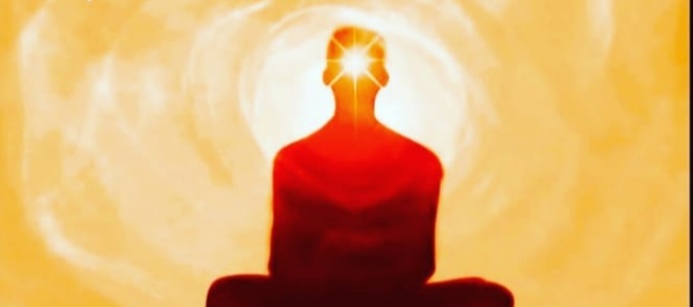
Yoga is something we be in and not something we do. This is because the word yoga comes from the Sanskrit term ‘yog’ which means union. Yoga is a word for the mind.
In fact, our intellect is constantly in union with something or someone. So if we are thinking about someone our intellect is in yoga with them for that time.
The ones we remember the most, our state of mind gets connected to them.
Where is the wire of our thoughts connected majority times? Or a simple question would be what or who am I remembering the most throughout the day?
Thoughts decide feelings. To maintain a constant state of lightness the intellect should not go towards energy depleting things.
In a way, yoga is all about asking the self “what is my mind in union with right now?” and “if it is any good?”.
While doing asanas or any other physical exercise,
simply creating thoughts of peace
will give complete benefit to the body and the mind.
Source
https://himalayanvoicesblog.wordpress.com
Public

The Dubdin Monastery: An Enchanting Place
-By Shivam Pathak
The Dubdi Monastery is situated on a hill top surrounded by a green forest. It is an ideal place for lamas to seek meditation in seclusion. In the year of 1701 the Chogyar Namgyal established this monastery of Dubdi, at Yuksom, Sikkim. Dubdi is an important part of of Buddhist religious pilgrimage circuit, which also entails Norbugang Chorten, Pemayangtse Monastery, Rabdentse ruins, Sanga Choeling Monastery, Khecheopalri Lake and Tashiding Monastery.
The monastery was also known as the Hermit’s Cell. The founder of the Monestry was Lhatsun Namkha Jigme, who came a long way from Tibet along with two other. Who in the year of 1642 crowned the first King, named Phuntsog
Namgyal,of Sikkim at Norbugang Yuksom.
In short we can say that the Dubdin Monastery played a pivotal role in the
founding of the State of Sikkim. The aesthetic outlook and quietness of the monastery adds a distinct setting. Its
beauty has a certain attraction in it. It has also been observed as the first and oldest monastery of Sikkim. The statues of three lamas who were the founders of Yuksom are also an integral part of the monastery.
Apart from this, the Monastery has a sophisticated painted interior along with visuals of divinities, saints, and other pious symbols. The monastery also involves a collection of rare manuscripts and ritual texts. Today many Buddhist
pilgrims visit this monastery in order to meditate and achieve nirvana in its quiet surroundings.
 International Journal of Research (IJR)