Gamifying Education: Not Just Playing Video Games

The observed motivators which engage children in free play are tantamount to the key elements found in games (1). Further, it is no question that video games are a dominant entertainment form in the twenty-first century and have the capabilities to engage users (2). Such game mechanics are beginning to be applied outside the immersive environments of games themselves, to create engaging experiences for participants in the real world. Gamification is the concept of applying game-design thinking and game elements to engage users in solving problems and increase users’ self contributions (3).

The gamification of education is NOT just playing video games in the classroom – sometimes it doesn’t involve digital technologies at all.

Research reveals that the longer students stayed in school, the less likely they are to attend and feel engaged in their classes (4). Yet, game players regularly exhibit persistence, risk-taking, attention to detail and problem solving skills – all behaviors that would be ideal for students to possess in the classroom. Games are important as they embody four elements associated with how people learn; games are “immersive, they require players to have goals and make frequent decisions, they adapt to each player, and they unfold within the context of a community that supports the social dimension of learning” (5). Through the new media literacies of play and performance, players of games have the capacity to experiment with their surrounding as a form of problem solving, and can practice improvisation from varying perspectives (6). Guiding learners through the curriculum by encouraging thought and action is the foundation of intellectual engagement and aids students in the development of original work, collaboration, and confidence as knowledge-builders (4).

I synthesized my understanding of academic literature to create this visualization of the key elements of gamification:

Special thanks to @TyRiddick for his input.

The gamification of education supports the constructivist theory where knowledge is not simply transmitted from teacher to student, but actively constructed by the mind of the learner (7). Games allow for role play and the immersion in experience through situated practice (8). Well-designed games allow for players to “construct understanding actively, and at individual paces, and. . . enable players to advance on different paths at different rates in response to each player’s interests and abilities, while also fostering collaboration and just-in-time learning” (1). Since the cycle between choice and result is much shorter in games than in life, hypotheses are regularly tested and refined, lowering the emotional stake of failing and encouraging risk taking (6). With this increased willingness to experiment, players continue to make choices, contextualizing facts and information as tools for problem solving (9). The intrinsic motivations instilled in players of games is only increased through extrinsic positive or negative reinforcements such as awards, achievements, or loss of power often found in games. This sort of operant conditioning affects the users’ choices if faced with a similar scenario later in the game (10). Students are forced to use their power of reasoning to construct knowledge for themselves when immersed in a game, no matter their age. The relevance of these capacities beyond a games context, form the basis of a modern literacy that should be developed by all young people.

See my (first) stop-motion video explaining the four principle elements in game that make them engaging to users:

James Paul Gee is a psycholinguistics researcher who has crossed over into literacy and learning. His book “What Video Games Have to Teach Us About Learning and Literacy” is an excellent account of gaming principles and discuses how these elements can be applied to the k-12 classroom.

Again, gamification is not playing video games – it in the idea that the elements of video games can be applied in other areas.

See the video below for an overview of his work:

  1. Klopfer, E., Osterweil, S. and Salen, K. (2009). Moving learning games forward: Obstacles, opportunities & openness. The Education Arcade. Cambridge, MA: MIT Press.
    2.Prensky, M. (2001). Chapter 5: Fun, play and games: What makes games engaging. Digital Game-Based Learning. New York: McGraw-Hill.
  2. Deterding, S., Sicart, M., Nacke, L., O’Hara, K. & Dixon, D. (2009). Gamification: Using game design elements in non-gaming contexts. Vancouver: CHI.
  3. Willms, J. D., S. Friesen, & P. Milton (2009). What did you do in school today? Transforming classrooms through social, academic and intellectual engagement — First national report. Toronto, ON: Canadian Education Association.
  4. Mouza, C. and Lavigne, N. (eds). 2013. Chapter 1: Emerging technologies for the classroom. Explorations in the Learning Sciences, Instructional Systems, and Performance Technologies. New York: Springer Science and Business Media.
  5. Jenkins, H. (2009). Confronting the challenges of participatory culture: Media Education for the 21st century. Cambridge, MA: MIT Press.
  6. Piaget, J. & B. Inhelder (1967). A child’s concept of space (F. J. Langdon & J. L. Lunzer, Trans.) New York: Norton (Original work published 1948).
  7. New London Group. (1996). A pedagogy of multiliteracies: Designing social futures. Harvard Educational Review. 66(1), 60-92.
  8. Gee, J.P. (2003). What video games can teach us about literacy and learning. New York: Palgrave-Macmillan.
  9. Skinner, B. F. (1953). Science and human behavior. New York: Macmillan

Finding Free-to-Use Content for Multimedia Projects

I once tried what I thought was a fantastic idea as an English teacher: have students create a movie trailer for a book they had read to present to their classmates. Students did an excellent job carefully piecing together images, footage and background music using a variety of editing software. When they presented in front of their peers, we filmed their presentations and posted them privately on YouTube.


Then YouTube took down the majority of my students’ videos 
for copyright infringement. Oops.

I had to backtrack and learn more about copyright laws and teach this information to my digital citizens:
I also created a student-friendly printable “cheat sheets” to help students find content for their multimedia projects:
Please feel free to copy these materials and use them for educational purposes.

Copyright: The War against Piracy is Stifling Creativity

As an educator who utilizes technology in her teaching, I had so many questions about copyright that no one seemed to be able to answer:
What does copyright mean?
Where can I find free-to-use content?
Do Fair Use principles cover me as an educator?
My pursuit of answers that led me down a rabbit hole of information, contradictions, and legal jargon. Unfortunately contemporary copyright laws are convoluted and full of “grey areas”. The hypocrisy of how most laws have been established (through large corporations looking to cash-in) has stunted culture and put limits on creativity in the digital world. While I do believe direct copy and paste piracy should be illegal, today’s restrictions may be crippling today’s Creative Class of learners.

Information Processing Theory and Impact on Learning

The Information Processing Theory is an approach to cognitive development that suggests a way in which humans process the information they receive. This theory contrasts a behaviourist that humans simply respond to stimuli. This theory suggests that information is processed in stages, much like the way in which a computer processes data (Orey 2002). Information enters the brain (or computer) through our senses (mouse/keyboard). Next, the information is processed in our working memory (processor/ram), where it is stored and recalled from specific areas of our long-term memory (hard drive). This recalled information can lead to an output response to the stimuli (monitor).
Turple, C. (2016).
Our sensory memory intakes information through seeing, hearing, smelling, tasting and touching. If we decide to pay attention to certain stimuli, it moves into our short-term memory, also known as our working memory as it is the place where we process information. In order for information to be stored in our long-term memory and formally learned, the information must be elaborated on through rehearsal to consolidate the new data.

Turple, C. (2016). Adapted from: Lutz, S. & Huitt, W. (2003).
We can then organize new information into existing knowledge sets (if information is similar to prior information) or create a completely new knowledge structure if the new information is unlike anything we have experienced before. Once information is stored in our long-term memory, we can later recall this knowledge back into our working memory to compare to incoming information or help elaborate on our knowledge experiences.
Many of these operations involve executive function to pay attention to new information, attend to rehearsal practices in the working memory and help consolidate information into our long-term memory. Unfortunately, new information can be lost at all stages of information processing.  If incoming stimulus is not paid attention to in our sensory memory, our brain does not notice the information. In our short-term memory, only a maximum of five stimulus can be used at once – if this information is not encoded within 15-30 seconds it will be lost altogether. In long-term memory retrieval, there are also chances of encoding failure during information consolidation if elaboration does not occur or the information cannot be properly organized in existing knowledge structures. Finally, information in long-term memory could be lost through a retrieval failure or “overridden” if new information contradicts something previously learned.
Watch my visual breakdown of the stages of the theory and applications to classroom practice:
When considering the stages of the Information Processing Theory, there are 5 easy steps teachers can take to support students in the acquisition of new information.
RECEPTION to ensure teachers gain students’ attention using an abrupt stimulus change to focus students’ sensory memory on the lesson. 
I like to use music or short video clips to gain students’ attention. Catchy songs such as this Information Literacy Song or the Literary Devices Rap work well.
RETRIEVAL educators should stimulate recall of prior learning and skills from students’ long-term memory into their working memory.
I like to use kinesthetic warmups that gets the students moving around and talking to peers other than their elbow partner. Simple activities work great such as having the students move around the room and when the music stops (often I use the songs above), I yell out a number. Students must form a group with that many people and answer a question about the content from the previous lesson. Scholastics’s Mind Up Curriculum books are full of such activities.
RECEIVE information transmitted by the teacher that should have distinctive features and suggest a meaningful organization of ideas for students. 
I started “branding” my lessons by using the same template and colour scheme for all lesson within a unit. For other skills such as the MYP Approaches to Learning, I always use the same cover slide. I have also started using less unconnected slides and utilising animations to put together the “pieces” of a slide. Finally, acronyms and step-by-step procedures have become the focus of my lessons. For example, when I was teaching my students about how to find reliable online sources, I began the lesson by playing the research song, played the kinesthetics warmup game, then introduce an acronym to help them remember the criteria for reliable websites:
RESPOND or experience the information for themselves to absorb knowledge into their preexisting knowledge sets by eliciting performance from students. 
Arguably the most important step in student learning! Students need to immediately do something with their new knowledge. When introducing the CRAP acronym for determining reliable resources, I had students decide whether example websites are reliable or not. One issue I often run into for this stage is running out of time when I have 30 minute class time blocks. What I have come to learn is it is better to break up the learning into smaller pieces where students have the opportunity to immediately respond to new knowledge, rather than using a whole block to introduce content and the following block as a work period.
REINFORCE by providing ongoing feedback to students and especially give them additional performance opportunities to apply the feedback. 
Encouraging students to make mistakes and learn from those “failures” is key. I try to give as many opportunities for students to experiment with new ideas by offering several chances to practice new skills. I aim to give my students individual verbal feedback once a week and written feedback every other week. Since I utilise Google for Education Apps Suite in my teaching, this is often done through the comments function. I have learned to create one ongoing template my students work in throughout a unit so all of my comments and their work is in one place. This way, it is easy for both myself and students to see their ongoing progress.
Turple, C. (2016).

More than anything, learning about the Information Processing Theory reminded me of the importance of lesson warm-ups and “hooking” students into a learning activity. The theory also offers a simple explanation of how memory may work and is something I have even taught my students to make them more away of their own learning behaviours.

References
Lutz, S., & Huitt, W. (2003). Information processing and memory: Theory and applications. Educational Psychology Interactive. Valdosta, GA: Valdosta State University. Retrieved from http://www.edpsycinteractive.org/papers/infoproc.pdf
Orey, M. (2002). Information Processing. In M. Orey (Ed.), Emerging perspectives on learning, teaching, and technology. Retrieved from http://projects.coe.uga.edu/epltt/index.php?title=Information_processing

The Changing Spaces of Reading and Writing

Innovations in technology have changed the way in which society acts. As classical scholar and university librarian James O’Donnell points out in the 1999 radio broadcast “From Papyrus to Cyberspace,” one generation’s frontier becomes the next generation’s reality. One can assume that with each new frontier there are gains and losses. For example, the invention of the automobile sparked a transportation revolution, but with this improved accessibility we also implicitly accept thousands of car-related deaths each year. Advancements in writing technologies have unpredictable changes in human roles and geography. Printing presses led to the spread of unorthodox ideas across the world and new forms of democratization, while the shift from a primarily oral to literate society brought with it new lines of exclusion between those who could read and those who could not.

James Engell, Professor of English and Comparative Literature at Harvard, highlights the point that such revolutions of technology do not occur suddenly but are instead a gradual shift within societies. Just as manuscripts continued to be produced well after the invention of the printing press, it is common for information from the internet to be written down on paper. Thus the challenge with emerging digital technologies is not that such societal shifts are occurring, but finding the most effective way new technologies can be integrated with the way things are currently functioning. Learn more about the impact of the typewriter on literacy in my short documentary The Shift from Handwriting to Typewriting:

Full List of References and Media Content Sources

The shift from handwriting to digital text and their associated issues continue to plague educators as one-to-one devices become the norm in schools. My English Department meetings often consist of heated debates concerning whether students should complete their coursework on paper or digitally. The topic seems to polarise the teachers within the department and we cannot collectively decide on the “correct” answer.
“students who write out their notes on paper may actually learn more” (Mueller & Oppenheiner, 2014).
In 2012, scientists find that the brains of preliterate kids respond like a reader’s brain when they write their ABCs, but not when they type or trace the letters (Pauly, 2016). Another research team reports that college students who transcribed lectures on their laptops recalled more information than those who took notes by hand because the use of laptops results in shallower processing (Mueller & Oppenheimer, 2014). Across three experiments, researchers had students take notes in a classroom setting and then tested students on their memory for factual detail, their conceptual understanding of the material, and their ability to synthesize and generalize the information. The two types of note-takers performed equally well on questions that involved recalling facts, laptop note-takers performed significantly worse on the conceptual questions (Mueller & Oppenheimer, 2014). This research suggests that perhaps completing tasks on paper may be more beneficial for students.
However, sometimes the purpose of note taking is simply to collect information. During novel studies I often have my students take notes to record key quotations or details from the book we are reading under the categories of the elements of fiction (e.g. setting, characters, style, theme). When forced to write on paper, I find students’ notes quickly become disorganised and chaotic. Factor in that a novel study last several weeks – sometimes months – I find students’ paper notes become more of a hassle than helpful.
Instead of making the paper-or-digital choice for my high school students, I share research findings and we collaboratively discuss the benefits and advantages of each format. I then prompt them to make the choice for themselves and give them the opportunity to change formats if they feel they made the wrong choice. In Benedict Carey’s book “How We Learn: The Surprising Truth About When, Where and Why It Happens” he refocusses attention away from a mono-solution to the learning conundrum, by prompting learners to consider the task at hand:
“It’s not that there is a right and wrong way to learn. It’s that there are different strategies, each uniquely suited to capturing a particular type of information. A good hunter tailors the trap to the prey” (Carey, 2014, p. 44).
My vision for my students is for them to discover for themselves how they work best in a time where they are living and learning during this technological revolution. The following is a lesson to prompt a discussion surrounding the ambiguity of the paper of digital argument:
While reading and writing remains at the heart of education, emerging technologies will continue to alter the concept of literacy itself. As we continue to move from written text to digitized information, educators must adapt their didactic methods to coincide with modern technologies. The technologies of handwriting and typewriting need not exist in a binary relationship in our postmodernist culture. They can co-exist, offering us a multiplicity of ways to communicate where each is geared for its own different purpose.
References
Mueller, P. A. & Oppenheimer, D. M. (2014). The Pen Is Mightier Than the Keyboard: Advantages of Longhand Over Laptop Note Taking. Psychological Science, 25(6).
O’Donnell, J. & Engell, J. (1999). “From papyrus to cyberspace” [radio broadcasts]. Cambridge Forum.
Ong, W. J. (1982). Orality and literacy: The technologizing of the word. London: Methuen.
Pauly, M. (2016). A Brief History of Handwriting. Mother Jones, 41(5), 60.

What is a VPN, and why you need it?

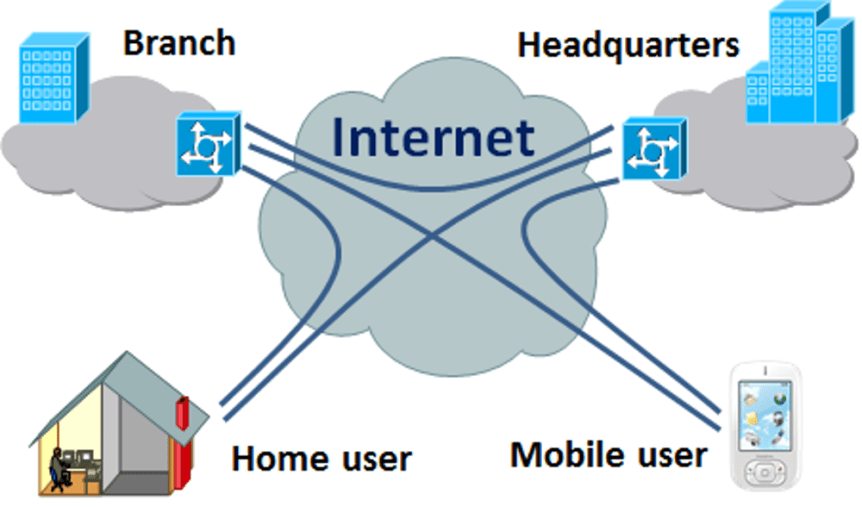
VPN stands for Virtual Private Network. It is a network that enables you to establish an authentic connection with another system utilizing the internet. People use VPN to get access to those websites that are restricted based on regions. It gives you privacy in browsing in case you are operating on a public internet connection.Internet-Protocol-Virtual-Private-Networks1

VPN networks have become widely famous for all convenient reasons; however, the original purpose of creating a VPN network was to build connections for business-related work securely on the internet. VPN was designed for the convenience of people who access a business network by sitting at their homes.VPNs allow you to use the local area network and even those sites that are banned as per censorship safely and securely by transferring all your networking traffic to the leading internet network.

 In simpler terms, VPN helps to connect your device (PC, Mobile, smartphone) to another device (called the server), which has an internet connection. It enables you to access all the content which you usually cannot do by disguising your identity. You can also search for the list of recommended VPN providers here. Let us look at the top 4 reasons for why you must have a VPN network which is discussed below:

1.      It helps in keeping your identity secure in public

You must have become tempted at getting access to free Wifi while going out for a coffee or if you have checked in to a hotel. However, there are specific problems associated with using public Wifi. First is that your data is unencrypted. Anyone can access that. Secondly, with the help of the router, any malware can enter your device. Thirdly, it can be a trap for phishing where you must have come across a fake internet connection.  

But if you have installed have come a VPN, then you can overcome all the problems mentioned above. In short, it allows you to access the internet freely in a secure way.

2.      It helps in saving money while shopping online

Have you ever come across different prices for the same commodity while shopping online using various online shopping sites? Well, you must have experienced this for so many products such as shoes, cars, or any other merchandise. The prices may vary as per countries also.

Not surprisingly, it must be very irritating for a potential customer. Hence, one can switch to VPN servers for every chance until one come across the lowest price for an item. It can be a difficult task for some people but then if it saving you some amount of money, perhaps it’s worth the effort.

3.      It enhances the gaming speed while playing online

Generally, the rate of the internet while playing games online using Internet Service Provider becomes slow due to choking of gaming data. But you can tackle this issue using a VPN by disguising the truth that you are playing online games.

However, you have to be sure that the VPN service which you are utilizing is present in a remote area and can handle the internet load. Or else, you may get into problems related to speed issues and bandwidth of the internet.

4.      It enables you to perform research on sensitive topics without any intrusion

There are various types of studies going on, but some of them are considered to be “sensitive.” It can be streaming online censored movies or video clips or any other content which can catch people’s attention.

Also, if you are doing online business and want to have a fair idea about the activities of your rivals, then you can use VPN to keep all your events private, which will prevent your competitors from identifying you.

Therefore, a VPN helps to protect you from being under observation. We always recommend you to select a server that is present at a safe and distant location.

Conclusion

These are merely some of the benefits that you can avail of using the VPN network, but the list doesn’t end here. There are a plethora of advantages such as secure voice chat online, proper encryption of your data, saving money while booking flights, and many more. So, if you are worried about getting tracked online, then you must think of opting for a VPN as soon as possible.

Types Of Sunglass Lenses, The Full Explanation

rBVaVVy0JFSARdjfAAE0STwBu0E363

When you are choosing a pair of sunglasses, what is the one thing that you consider most important? Does it the love of fashion? Then you must be aware of the fact that you are putting your eye protection taken for granted. A pair of sunglasses is not just a fashionable accessory, it will protect your eyes from harmful UV(Ultra Violet) rays. Because of this reason while picking the right sunglasses for you, choosing the right type of lenses is as vital as our priority to look fashionable and appealing. Choose a sunglass that will suit your personality as well as protect your Eyes. here you will find the guidance, to remove the confusion of which lenses are actually good for your eyes.

There are some good reasons why you should consider the types of lenses next time you are buying sunglasses

  • Whether the climate is too sunny or cloudy the right sunglass lenses can make all the perfect changes for your eyes. The harmful UV rays are affecting your eyesight in three different types, UVA, UVB, and UVC rays. These rays can increase severe eye issues sometimes it can cause serious eye damage. The perfect lens will prevent your eyes from all sorts of harmful rays.


  • If you are recovering from any eye surgeries like LASIK, Cataract then it is important for you to protect your eyes by wearing sunglasses. This will help your eyes to heal smoothly as quickly as possible.
  • You’ll be able to say goodbye to the migraines with a pair of sunglasses. Bright sunlight can trigger headaches and migraines wearing a good lens will soak up all the light.
  • Cutting down the reflection and improving the color contrast of lights sunglasses helps you to enjoy the view more clear. And better.

Let’s Discuss About The Various Types of Lenses Here

The Polarized Lenses: 

To reduce glare Polarized lenses are here for the rescue! This lenses completely eliminate the reflection of light, as an outcome, the user of the Polarized Lenses can visible all colors clearly without any interruption of glare. These lenses can be used indoors and worn by the people who are light-sensitive. Polarized lenses are easily available for oversized prescription glasses and non-prescription glasses. If you constantly expose yourself to the bright scorching sunlight, then this lens is the best option for your eyes. The Goodr sunglasses provide you with the best Polarized lenses, which are commonly effective for preventing UV rays.

The Photochromic Lenses:

These types of lenses help to adjust the level of darkness when they get exposed to the ultraviolet rays.  To protect the eye these lenses grow darker in the bright light and bright and clear in the low light. Because of this feature, the Photochromic lenses are comfortable to use. there is no need for you to change glasses or sunglasses indoors and outdoors.

The Gradient Lenses:

Shaded from the top, the Gradient Lenses are darkest from the top. So this lens will help you while driving by shielding your eyes from sunlight coming from overhead. And will allow the passing of more light through the bottom half. A wide range of stylish Gradient Glasses is available at Goodr Sunglasses, where you can choose according to your preferences.

The Blue Lenses:

Battling with the digital eye stresses, the Blue Lens is also known as the next-generation lens. This lens can reduce the exposure to the blue light, which comes from smartphones, computer monitors, televisions and other gadgets. This also increases visual comfort and performance. In addition, these lenses are attractive too!

Anti-reflective Lenses:

The eye strains caused by the reflection of lights are reduced by these particular lenses. They protect your eyes from the reflection of UV(Ultra Violet) rays.

A good lens has different layers of anti-scratch, anti-fog, and hydrophobic coatings to repel water and dust. Some coatings for the lenses are:

  • UV(Ultra Violet) coating
  • Mirror or glass coating
  • Anti-Scratch coating
  • Reflection-resistant coating

Just like coating colors are also a vital part of lenses. The colors will affect the visibility of lights and contrasts. And it will consider how well you can see other colors. Dark colors like Brown, Gray, Green is ideal for outdoors and day time use. On the contrary the Light colors like Yellow, Gold, Rose are ideal for indoor use in low light. 

Sunglasses are not only for good appeal and style statements. They keep you safer from preventing your eyes from all the harmful materials of nature. So you should always invest in good quality sunglasses, considering all the mentioned points here.


HTML Assignment Help from Real Professionals

image1-2

Who can do my homework instead of me? This is one of the most typical online requests left by students. Many of them struggle with certain academic assignments, as well as disciplines. Thus, computer science is a pretty complex field. Many students require HTML assignment help. Fortunately, there is a good solution. You may use the assistance of AssignCode.com.

It’s a professional and officially confirmed assignment writing company. It helps students to cope with different assignments related to computer science. One of them is the HTML assignment. However, you may likewise count on support with math, finance, and similar disciplines. Moreover, the company provides many other benefits and important guarantees. Visit  assigncode.com/html-homework-help.html to learn the necessary details. Therefore, it makes sense to make a brief overview of its major possibilities.

High Academic Standards

AssignCode.com pays great attention to the matter of quality. It trains its specialists on a regular basis. Thus, they match the top academic standards. Once you hire a personal helper, your success is guaranteed.

When you request HTML homework help here, you enjoy multiple academic services. Amongst such are:

  • Writing;
  • Editing;
  • Researching;
  • Calculating;
  • Analyzing;
  • Coding;
  • Programming, etc.

They can fulfill everything you need. These services are applicable to any piece of writing. Order an essay, laboratory report, coursework or even a dissertation. Your assignment will meet every demand of your supervisor and you’ll receive the highest grads.

Its customers are welcome to order papers out of various disciplines. Certificated specialists are able to write in:

  • IT/WEB;
  • Mathematics;
  • Finance;
  • Statistics;
  • Accounting;
  • Engineering.

Affordable Prices

One of the most important conditions offered by the company is its fair price policy. Compared to other similar platforms, its customers save more. You’ll never overpay because every order is customizable. Set your own preferences and see how much must be paid.

Fill out the application form and specify the following points:

  • Quality level;
  • Assignment kind;
  • Personal solver;
  • Kind of academic support;
  • Deadline;
  • A number of pages;
  • Writing format;
  • Some other peculiarities.

Use an online calculator to determine how much money to pay. If the price is satisfactory, confirm the order. It’ll be quite cheap. Under the condition, you want to make it cheaper, change the demands of your order. For example, writing help is more expensive than rewriting. The longer your deadline is the fewer you’ll pay, etc. Every demand is adjustable. Regulate the price until it suits your budget.

The website likewise offers a flexible system of discounts. The more orders you place the more you save and the larger discount you get. Become a return-customer and save more of your earnings.

Other Essential Dividends

AssignCode.com likewise proposes many other important conditions. Among them are:

  • Authentic orders. All the papers are written from scratch and controlled by experienced editors.
  • On-time deliveries. More than 98% of all orders were delivered on time and 70% were accomplished ahead of the deadline.
  • Full privacy. The company uses dependable software. It protects its databases from any cyber threat.
  • A cash-back guarantee. Once you place an order and your solver agrees with the conditions, he/she must fulfill them as promised. Otherwise, your money will be returned.

In case you have any questions about its policies, prices, and guarantees, turn to the team of support. The company functions 24 hours round the clock and there is always someone to provide you with the necessary answers. Competent consultants are available in the chat room.

We’re quite confident that this academic paper writing service is able to suit the needs of every student. Its specialists are approved professionals and easily tackle any task. Therefore, place an order and solve your academic complications.

What Is It to Be a Student?

The period of studying in university is rightly considered one of the most important in our life. No matter which educational institution you attend, it can be a college or university. We must appreciate this time. Spend these years usefully. It’s a new experience, helping you to become an individual. Most of the students need to shift their location and adjust to living in new conditions. It’s a great way to create life from scratch. New city and new people who don’t know you. What can be better?

students

The first thing you do is to put the groups of close people. Further, they’ll become your friends. Experience has shown that university friends stay with you for life. You spend the time together, help each other, and learn how to deal with various life situations. One of the main purposes of education is to make you a part of society. Don’t stay all day long in your residence. Attend clubs, activities, and surround yourself with people. Find someone who shares your worldviews, passions, and hobbies. Diversify your grey weekdays.

Moreover, in most of the universities, participation in clubs and sports gives benefits in studying. And as we know, obtaining a new profession is that’s you’ve come for. The student’s life is the golden time. You don’t need to work; you have no serious responsibilities and duties. Your only worry is to pass exams and become the pride of your parents. However, many people successfully combine work with studying. But it requires a lot of effort. Sooner or later, you’ll need to sacrifice something.

University gives you the possibility to try something you wanted. The people don’t know you and your previous experience in any activity. The students’ initiative is always encouraged. Don’t be shy; maybe your new friends will appreciate and recognize your talents. There’s also the thing you should value at the university. It’s time. You won’t have such amount of time anymore as you have in university, even taking into account the workload and time for rest. Make good use of it.
The Hardships of Being a Student

Anything in our life has a flip side of the coin. This pattern is true for studying time. Each student has to experience numerous challenges to become a member of society. If something in our life would be full only of positive moments, the people won’t be ready to face the real world.

The most common problem is that the students begin to miss their home and family. It becomes a cornerstone for arising negative effects. The students lose the motivation to study, became unhappy, and acquire health problems. Worst of all, weak personalities get addicted to alcohol and drugs.

Many others don’t feel the part of the studentship. The expectations don’t coincide with reality. Anxiety becomes the satellite of each student, especially prior to the exams. The constant anxiety and stress lead to depressions. The statistics show that the instances of psychological problems among the students are growing. All these challenges aren’t random. Any student needs to overcome them. It’s a kind of school of life.

The immense workload is hateful to many students. Time management skill is a matter of time. The numerous assignments, labs, and essays can put you into despair. But there’s a way out. The team of professionals provides cheap essay writing for such students. Besides, many working students use similar services to be successful in university or college. You don’t need to search and choose the best among the numerous list of companies.

Cheapessay.net is your chance to enjoy the joys of student life. The team of writers is ready to help you with the most complicated tasks. All papers are written by professionals with long experience and scientific degrees. We hire only those who are able to perform top-notch essays and assignments. The company was launched in 2008 as a small agency. Now we’re a famous service with a huge client base.

Our customers live in different parts of the world. It relates to our team also. The occupying the same space doesn’t guarantee the quality of work. The pricing policy is one of our advantages. The average price for the page is one of the lowest among competitors. So, collaborating with us helps you to save both money and time. To write perfect essays is a talent. Some people can’t do it at all. As a result, the increasing stress level and nervousness, which negatively affect health. Our service aims at saving your mental health and helping you to be a straight-A student.

Despite all hardships and challenges, student time is one of the best periods. Learn how to deal with them. Live it to the fullest. Write your own story, and Cheapessay.net will write high-quality papers for you.

Thematics journal of geography

Geography is the study of lands, characteristics and features of earth and their phenomena. It is divided into two main branches: Physical geography and Human geography. The sub-branches of human geography are: behavioral geography, feminist geography, culture theory and geosophy. arts and humanitiesThematics Journal of Geography is journal is a periodical publication intended to further progress of science, usually by reporting new research. Most journals are highly specialized, although some of the oldest journals publish articles, reviews, editorials, short communications, letters, and scientific papers across a wide range of scientific fields. Journals contain articles that peer reviewed, in an attempt to ensure that articles meet the journal’s standards of quality, and scientific validity. Each such journal article becomes part of the permanent scientific record. High-impact journals are those considered to be highly influential in their respective fields. The impact factor of journal provides quantitative assessment tool for grading, evaluating, sorting and comparing journals of similar kind. It reflects the average number of citations to recent articles published in science and social science journals in a particular year or period, and is frequently used as a proxy for the relative importance of a journal within its field. It is first devised by Eugene Garfield, the founder of the Institute for Scientific Information. The impact factor of a journal is evaluated by dividing the number of current year citations to the source items published in that journal during the previous two years.

Send papers for publication to editor@thematicsjournals.org