Exploring Culture, Identity, and Representation through Art Education

ploration of culture, identity, and representation. This realization was particularly important to explore on a more meaningful level in the multicultural learning environment of my school.


How are educators to challenge the assumptions surrounding culture?

How will we decide whose voices will be heard?

One approach to facilitate learning surrounding culture and identity is through art education. Art can provide us with a tangible object to discuss intangible concepts of identity, and help bring words and understanding to such abstruse constructs. Art is experienced through the senses and acts as a window into cultural representation. The representational power of art is intertwined with the interpretation of symbols used to communicate cognitive processes that are unique to each person. The creation of art can also be used to help students construct meaning surrounding culture and identity.

As an art educator, Stacy Friedman explores issues of racism through puppetry. She has students design, create and script puppets with a commentary on conflicts surrounding identity representations. She notes that the puppets “serve as sort of metaphorical Trojan horses helping us to enter into uncomfortable discourse through a seemingly benign medium” (2). Friedman’s intent is that the puppets open up a door to higher critical thinking and have the potential to become a mechanism for exploring the thoughts and voices of others. Art is an individual encounter based on the mental filters and prior experiences of a specific person.


French artist JR’s street art toys with identity by challenging preconceptions and reductive images propagated by advertising and the media. He work can be found in war-torn and conflict ridden areas of developing countries. JR snaps black and white portraits of local people and literally pastes blown up paper photocopies of these images in the streets. Powerful images of women were pasted around a slum in Kenya, Israeli and Palestinian portraits were placed next to one another in the Middle East, and portraits lined the streets of poor areas of India. JR does not explicitly explain the meaning of his art but instead allows the audience to interpret the art themselves by collecting the stories of those featured in his portraits. He also notes that his projects aid in the construction of his own mindset regarding culture and identity.


Shouldn’t students become producers of art as an alternative to the traditional 

consumption-centred model to emancipate students from media bias 

and offer a different perspective of how meaning is created?

Authorship of media texts and tangible art can be applied to forms of critical analysis that “open up alternative positions from which students can think, debate, act” (3). Not only can art serve as a surrogate of abstract ideas surrounding culture, but the “truths” about identity and culture can be interrogated and constructed through the production of artifacts.

  1. Banks, J.A., Banks, & McGee, C. A. (1989). Multicultural education. Needham Heights, MA: Allyn & Bacon.
  2. Friedman, S. (2004). Responsibility and re/presentation: Reflection on digital video and puppet-based inquiry.
  3. Goldfarb, B. (2002). Students as producers. Visual pedagogy: Media cultures in and beyond the classroom (pp. 57-83). Durham: Duke University Press.

Using the Power of the Internet to Connect People

Online performance artist Ze Frank’s discusses his “web playroom” in the video below. Traditionally, art endevours have been transmissive and do not involve the audience, whereas Ze Frank utilizes technology to connect humans to one another. What resonated with me was his pursuit “to feel and be felt.” This is not a new idea, but rather a long time need for humans which has been augmented by the development of new technologies. It is a concept I think our Generation Z students struggle with on a daily basis.

I find the idea of interactive art is very common in Asia. Around the city there are frequently art exihibtions which encourage interaction from the audience. Holiday decorations are even built as small cities meant to be walked through and experienced. Last November, there was a participatory show in Hong Kong called MURS described as an immersive, interactive outdoor Smart show.

This show really hit home with me because it brought a crowd of complete strangers together in an engaging manner. In a city like Hong Kong, with one of the highest population densities in the world, a place where you are NEVER alone (quite literally unless you are in your home) there is an overwhelming sense of disconnect among the people. I still cannot believe how lonely it can feel standing in a large crowd of people. Hong Kong is a city always on the go: people are in a rush to commute, aggressive to close a business deal, storefronts and buildings are in a constant renovation cycle, and the workforce is transient. All these factors contribute to a place where no one feels grounded and are aching to connect. I think this is one of the reasons an interactive show like this was so popular, and why art which brings people together goes viral.

In my eyes this is one of the greatest capabilities of new technologies for educational purposes. Teachers can transcend the walls of their classrooms to reach audiences around the globe. I have long been a fan of Dr. Ruben Puentedura’s SAMR Model which helps educators to think about HOW they are using technology.

Is a technology just a different way of doing the same old task or it is adding something and transforming the learning experience? 

I often refer back to this model when working with teachers to help them move up the ladder. Technology seems a bit less daunting when there are clear goals laid out to assist tech integration.

Email ThisBlogThis!Share to TwitterShare to FacebookShare to Pinterest

Gamifying Education: Not Just Playing Video Games

The observed motivators which engage children in free play are tantamount to the key elements found in games (1). Further, it is no question that video games are a dominant entertainment form in the twenty-first century and have the capabilities to engage users (2). Such game mechanics are beginning to be applied outside the immersive environments of games themselves, to create engaging experiences for participants in the real world. Gamification is the concept of applying game-design thinking and game elements to engage users in solving problems and increase users’ self contributions (3).

The gamification of education is NOT just playing video games in the classroom – sometimes it doesn’t involve digital technologies at all.

Research reveals that the longer students stayed in school, the less likely they are to attend and feel engaged in their classes (4). Yet, game players regularly exhibit persistence, risk-taking, attention to detail and problem solving skills – all behaviors that would be ideal for students to possess in the classroom. Games are important as they embody four elements associated with how people learn; games are “immersive, they require players to have goals and make frequent decisions, they adapt to each player, and they unfold within the context of a community that supports the social dimension of learning” (5). Through the new media literacies of play and performance, players of games have the capacity to experiment with their surrounding as a form of problem solving, and can practice improvisation from varying perspectives (6). Guiding learners through the curriculum by encouraging thought and action is the foundation of intellectual engagement and aids students in the development of original work, collaboration, and confidence as knowledge-builders (4).

I synthesized my understanding of academic literature to create this visualization of the key elements of gamification:

Special thanks to @TyRiddick for his input.

The gamification of education supports the constructivist theory where knowledge is not simply transmitted from teacher to student, but actively constructed by the mind of the learner (7). Games allow for role play and the immersion in experience through situated practice (8). Well-designed games allow for players to “construct understanding actively, and at individual paces, and. . . enable players to advance on different paths at different rates in response to each player’s interests and abilities, while also fostering collaboration and just-in-time learning” (1). Since the cycle between choice and result is much shorter in games than in life, hypotheses are regularly tested and refined, lowering the emotional stake of failing and encouraging risk taking (6). With this increased willingness to experiment, players continue to make choices, contextualizing facts and information as tools for problem solving (9). The intrinsic motivations instilled in players of games is only increased through extrinsic positive or negative reinforcements such as awards, achievements, or loss of power often found in games. This sort of operant conditioning affects the users’ choices if faced with a similar scenario later in the game (10). Students are forced to use their power of reasoning to construct knowledge for themselves when immersed in a game, no matter their age. The relevance of these capacities beyond a games context, form the basis of a modern literacy that should be developed by all young people.

See my (first) stop-motion video explaining the four principle elements in game that make them engaging to users:

James Paul Gee is a psycholinguistics researcher who has crossed over into literacy and learning. His book “What Video Games Have to Teach Us About Learning and Literacy” is an excellent account of gaming principles and discuses how these elements can be applied to the k-12 classroom.

Again, gamification is not playing video games – it in the idea that the elements of video games can be applied in other areas.

See the video below for an overview of his work:

  1. Klopfer, E., Osterweil, S. and Salen, K. (2009). Moving learning games forward: Obstacles, opportunities & openness. The Education Arcade. Cambridge, MA: MIT Press.
    2.Prensky, M. (2001). Chapter 5: Fun, play and games: What makes games engaging. Digital Game-Based Learning. New York: McGraw-Hill.
  2. Deterding, S., Sicart, M., Nacke, L., O’Hara, K. & Dixon, D. (2009). Gamification: Using game design elements in non-gaming contexts. Vancouver: CHI.
  3. Willms, J. D., S. Friesen, & P. Milton (2009). What did you do in school today? Transforming classrooms through social, academic and intellectual engagement — First national report. Toronto, ON: Canadian Education Association.
  4. Mouza, C. and Lavigne, N. (eds). 2013. Chapter 1: Emerging technologies for the classroom. Explorations in the Learning Sciences, Instructional Systems, and Performance Technologies. New York: Springer Science and Business Media.
  5. Jenkins, H. (2009). Confronting the challenges of participatory culture: Media Education for the 21st century. Cambridge, MA: MIT Press.
  6. Piaget, J. & B. Inhelder (1967). A child’s concept of space (F. J. Langdon & J. L. Lunzer, Trans.) New York: Norton (Original work published 1948).
  7. New London Group. (1996). A pedagogy of multiliteracies: Designing social futures. Harvard Educational Review. 66(1), 60-92.
  8. Gee, J.P. (2003). What video games can teach us about literacy and learning. New York: Palgrave-Macmillan.
  9. Skinner, B. F. (1953). Science and human behavior. New York: Macmillan

Finding Free-to-Use Content for Multimedia Projects

I once tried what I thought was a fantastic idea as an English teacher: have students create a movie trailer for a book they had read to present to their classmates. Students did an excellent job carefully piecing together images, footage and background music using a variety of editing software. When they presented in front of their peers, we filmed their presentations and posted them privately on YouTube.


Then YouTube took down the majority of my students’ videos 
for copyright infringement. Oops.

I had to backtrack and learn more about copyright laws and teach this information to my digital citizens:
I also created a student-friendly printable “cheat sheets” to help students find content for their multimedia projects:
Please feel free to copy these materials and use them for educational purposes.

Copyright: The War against Piracy is Stifling Creativity

As an educator who utilizes technology in her teaching, I had so many questions about copyright that no one seemed to be able to answer:
What does copyright mean?
Where can I find free-to-use content?
Do Fair Use principles cover me as an educator?
My pursuit of answers that led me down a rabbit hole of information, contradictions, and legal jargon. Unfortunately contemporary copyright laws are convoluted and full of “grey areas”. The hypocrisy of how most laws have been established (through large corporations looking to cash-in) has stunted culture and put limits on creativity in the digital world. While I do believe direct copy and paste piracy should be illegal, today’s restrictions may be crippling today’s Creative Class of learners.

Information Processing Theory and Impact on Learning

The Information Processing Theory is an approach to cognitive development that suggests a way in which humans process the information they receive. This theory contrasts a behaviourist that humans simply respond to stimuli. This theory suggests that information is processed in stages, much like the way in which a computer processes data (Orey 2002). Information enters the brain (or computer) through our senses (mouse/keyboard). Next, the information is processed in our working memory (processor/ram), where it is stored and recalled from specific areas of our long-term memory (hard drive). This recalled information can lead to an output response to the stimuli (monitor).
Turple, C. (2016).
Our sensory memory intakes information through seeing, hearing, smelling, tasting and touching. If we decide to pay attention to certain stimuli, it moves into our short-term memory, also known as our working memory as it is the place where we process information. In order for information to be stored in our long-term memory and formally learned, the information must be elaborated on through rehearsal to consolidate the new data.

Turple, C. (2016). Adapted from: Lutz, S. & Huitt, W. (2003).
We can then organize new information into existing knowledge sets (if information is similar to prior information) or create a completely new knowledge structure if the new information is unlike anything we have experienced before. Once information is stored in our long-term memory, we can later recall this knowledge back into our working memory to compare to incoming information or help elaborate on our knowledge experiences.
Many of these operations involve executive function to pay attention to new information, attend to rehearsal practices in the working memory and help consolidate information into our long-term memory. Unfortunately, new information can be lost at all stages of information processing.  If incoming stimulus is not paid attention to in our sensory memory, our brain does not notice the information. In our short-term memory, only a maximum of five stimulus can be used at once – if this information is not encoded within 15-30 seconds it will be lost altogether. In long-term memory retrieval, there are also chances of encoding failure during information consolidation if elaboration does not occur or the information cannot be properly organized in existing knowledge structures. Finally, information in long-term memory could be lost through a retrieval failure or “overridden” if new information contradicts something previously learned.
Watch my visual breakdown of the stages of the theory and applications to classroom practice:
When considering the stages of the Information Processing Theory, there are 5 easy steps teachers can take to support students in the acquisition of new information.
RECEPTION to ensure teachers gain students’ attention using an abrupt stimulus change to focus students’ sensory memory on the lesson. 
I like to use music or short video clips to gain students’ attention. Catchy songs such as this Information Literacy Song or the Literary Devices Rap work well.
RETRIEVAL educators should stimulate recall of prior learning and skills from students’ long-term memory into their working memory.
I like to use kinesthetic warmups that gets the students moving around and talking to peers other than their elbow partner. Simple activities work great such as having the students move around the room and when the music stops (often I use the songs above), I yell out a number. Students must form a group with that many people and answer a question about the content from the previous lesson. Scholastics’s Mind Up Curriculum books are full of such activities.
RECEIVE information transmitted by the teacher that should have distinctive features and suggest a meaningful organization of ideas for students. 
I started “branding” my lessons by using the same template and colour scheme for all lesson within a unit. For other skills such as the MYP Approaches to Learning, I always use the same cover slide. I have also started using less unconnected slides and utilising animations to put together the “pieces” of a slide. Finally, acronyms and step-by-step procedures have become the focus of my lessons. For example, when I was teaching my students about how to find reliable online sources, I began the lesson by playing the research song, played the kinesthetics warmup game, then introduce an acronym to help them remember the criteria for reliable websites:
RESPOND or experience the information for themselves to absorb knowledge into their preexisting knowledge sets by eliciting performance from students. 
Arguably the most important step in student learning! Students need to immediately do something with their new knowledge. When introducing the CRAP acronym for determining reliable resources, I had students decide whether example websites are reliable or not. One issue I often run into for this stage is running out of time when I have 30 minute class time blocks. What I have come to learn is it is better to break up the learning into smaller pieces where students have the opportunity to immediately respond to new knowledge, rather than using a whole block to introduce content and the following block as a work period.
REINFORCE by providing ongoing feedback to students and especially give them additional performance opportunities to apply the feedback. 
Encouraging students to make mistakes and learn from those “failures” is key. I try to give as many opportunities for students to experiment with new ideas by offering several chances to practice new skills. I aim to give my students individual verbal feedback once a week and written feedback every other week. Since I utilise Google for Education Apps Suite in my teaching, this is often done through the comments function. I have learned to create one ongoing template my students work in throughout a unit so all of my comments and their work is in one place. This way, it is easy for both myself and students to see their ongoing progress.
Turple, C. (2016).

More than anything, learning about the Information Processing Theory reminded me of the importance of lesson warm-ups and “hooking” students into a learning activity. The theory also offers a simple explanation of how memory may work and is something I have even taught my students to make them more away of their own learning behaviours.

References
Lutz, S., & Huitt, W. (2003). Information processing and memory: Theory and applications. Educational Psychology Interactive. Valdosta, GA: Valdosta State University. Retrieved from http://www.edpsycinteractive.org/papers/infoproc.pdf
Orey, M. (2002). Information Processing. In M. Orey (Ed.), Emerging perspectives on learning, teaching, and technology. Retrieved from http://projects.coe.uga.edu/epltt/index.php?title=Information_processing

The Changing Spaces of Reading and Writing

Innovations in technology have changed the way in which society acts. As classical scholar and university librarian James O’Donnell points out in the 1999 radio broadcast “From Papyrus to Cyberspace,” one generation’s frontier becomes the next generation’s reality. One can assume that with each new frontier there are gains and losses. For example, the invention of the automobile sparked a transportation revolution, but with this improved accessibility we also implicitly accept thousands of car-related deaths each year. Advancements in writing technologies have unpredictable changes in human roles and geography. Printing presses led to the spread of unorthodox ideas across the world and new forms of democratization, while the shift from a primarily oral to literate society brought with it new lines of exclusion between those who could read and those who could not.

James Engell, Professor of English and Comparative Literature at Harvard, highlights the point that such revolutions of technology do not occur suddenly but are instead a gradual shift within societies. Just as manuscripts continued to be produced well after the invention of the printing press, it is common for information from the internet to be written down on paper. Thus the challenge with emerging digital technologies is not that such societal shifts are occurring, but finding the most effective way new technologies can be integrated with the way things are currently functioning. Learn more about the impact of the typewriter on literacy in my short documentary The Shift from Handwriting to Typewriting:

Full List of References and Media Content Sources

The shift from handwriting to digital text and their associated issues continue to plague educators as one-to-one devices become the norm in schools. My English Department meetings often consist of heated debates concerning whether students should complete their coursework on paper or digitally. The topic seems to polarise the teachers within the department and we cannot collectively decide on the “correct” answer.
“students who write out their notes on paper may actually learn more” (Mueller & Oppenheiner, 2014).
In 2012, scientists find that the brains of preliterate kids respond like a reader’s brain when they write their ABCs, but not when they type or trace the letters (Pauly, 2016). Another research team reports that college students who transcribed lectures on their laptops recalled more information than those who took notes by hand because the use of laptops results in shallower processing (Mueller & Oppenheimer, 2014). Across three experiments, researchers had students take notes in a classroom setting and then tested students on their memory for factual detail, their conceptual understanding of the material, and their ability to synthesize and generalize the information. The two types of note-takers performed equally well on questions that involved recalling facts, laptop note-takers performed significantly worse on the conceptual questions (Mueller & Oppenheimer, 2014). This research suggests that perhaps completing tasks on paper may be more beneficial for students.
However, sometimes the purpose of note taking is simply to collect information. During novel studies I often have my students take notes to record key quotations or details from the book we are reading under the categories of the elements of fiction (e.g. setting, characters, style, theme). When forced to write on paper, I find students’ notes quickly become disorganised and chaotic. Factor in that a novel study last several weeks – sometimes months – I find students’ paper notes become more of a hassle than helpful.
Instead of making the paper-or-digital choice for my high school students, I share research findings and we collaboratively discuss the benefits and advantages of each format. I then prompt them to make the choice for themselves and give them the opportunity to change formats if they feel they made the wrong choice. In Benedict Carey’s book “How We Learn: The Surprising Truth About When, Where and Why It Happens” he refocusses attention away from a mono-solution to the learning conundrum, by prompting learners to consider the task at hand:
“It’s not that there is a right and wrong way to learn. It’s that there are different strategies, each uniquely suited to capturing a particular type of information. A good hunter tailors the trap to the prey” (Carey, 2014, p. 44).
My vision for my students is for them to discover for themselves how they work best in a time where they are living and learning during this technological revolution. The following is a lesson to prompt a discussion surrounding the ambiguity of the paper of digital argument:
While reading and writing remains at the heart of education, emerging technologies will continue to alter the concept of literacy itself. As we continue to move from written text to digitized information, educators must adapt their didactic methods to coincide with modern technologies. The technologies of handwriting and typewriting need not exist in a binary relationship in our postmodernist culture. They can co-exist, offering us a multiplicity of ways to communicate where each is geared for its own different purpose.
References
Mueller, P. A. & Oppenheimer, D. M. (2014). The Pen Is Mightier Than the Keyboard: Advantages of Longhand Over Laptop Note Taking. Psychological Science, 25(6).
O’Donnell, J. & Engell, J. (1999). “From papyrus to cyberspace” [radio broadcasts]. Cambridge Forum.
Ong, W. J. (1982). Orality and literacy: The technologizing of the word. London: Methuen.
Pauly, M. (2016). A Brief History of Handwriting. Mother Jones, 41(5), 60.

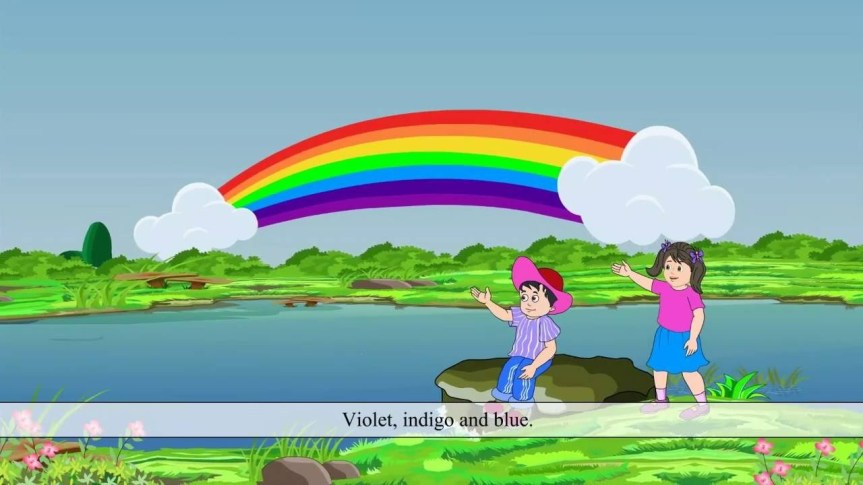
Poem on Rainbow with Colours Name in it

Rainbows in a sky of blue
with clouds of grey beyond,
Ripples lapping lilypads,
upon the ground black,
Just above me and you
Rainbow is necklace of sky

maxresdefault
Shining sun is red
Blushing flowers are yellow
In the field so green
Lilies are violet
Falling leaves are orange
Kids are playing on carpet
Colourful and violet
Sing a song, don’t be shy

How to choose research problems without losing your common sense

It’s time to choose a good research problem for your study. You may have found a theme that interests you and you are already thinking of resolving the concrete problems that arise in it. If you still don’t know which field you like best, I suggest you carefully read the previous article in this series: Find the topic of your scientific research once and for all, which will allow you to quickly identify the most relevant topics and sub-themes for you when conducting a scientific investigation. In this article, you will learn to produce research problems and questions and filter them based on several factors to choose questions that will lay the foundation of good scientific work.

download (12)

Choosing a research topic or problem

Choose the theme.

This is the first step. It is very important because the success and value of the work to be done depends to a great extent on it. In that case, how to proceed?

We suggest several paths to follow.

– Examine personal experiences. For example, if the monograph is about pastoral, we may be interested in knowing how to advise marriages with problems. If it were in the field of teaching practice, we would be interested to find out why the teaching practice is defined in such a way, which theories have worked with this topic.

– Find out what topics have been recently investigated about the assigned field. For this we can resort to specialized magazines on the mission or on teaching work.

– Think about the needs of the teaching practice. What are the current problems that affect it? On what topics is there a marked deficit in terms of knowledge?

– Discuss with teachers or specialists in the field to investigate: teaching practice, among others.

To choose the theme, we must take into account several factors: the personal and general interest in it, the usefulness of the work to be done and the sources of information that are at our disposal. It is not advisable that we embark on an investigation for which we do not have sources of information or for which we do not find sufficient bibliography.

Produce problems and research questions

First of all, I want to briefly remember what we did in the previous article in this series: Find the topic of your scientific research once and for all. I think what I haven’t read can have problems understanding what we do and why we do it. Today’s post is a very important entry for anyone who wants to start a research project but doesn’t know how to deal with the first obstacle. I don’t want to make articles without legs or heads, in short, we remember:

– You find out what process to produce the right questions for your research.

– You know the importance of not being afraid to make mistakes and you end up with a fear that attacks you when you take the first step in the world of scientific research.

– You learn that desire is the most important factor in doing good scientific work.

– You find your passions by analyzing hobbies and interests.

– You explore your vital desires expressed in the previous points of your research area framework.

– You begin to make a store of ideas to become more creative scientists.

– You find various subtopics of research that might be based on your tendencies and knowledge.

In the last point of the previous article, we have produced a subtopic where it might be interesting to learn from the perspective of your research area. In my case, I like neuroscience and technology (among others). Combining these two big fields we can find subtopics such as cognitive neuroscience computing, cognitive modeling, artificial intelligence … Now, they are a very broad field and you need to limit your interest and ability to solve problems in a very specific niche.

How can you find an appropriate need to be resolved or investigated? Unfortunately there is no concrete method; 90% of your results depend on your ability to observe and creativity. The best I can offer you to overcome this resistance are some tricks that will allow you to speed up the process. Choosing a research problem basically must be done carefully and with several considerations. This is the same as when we are faced with a situation where we have to choose between the longines master collection or rolex collection. Hopefully this article is usefu