World Hepatitis Day

On World Hepatitis Day, let us put an end to all forms of discrimination that is meted out to people suffering from hepatitis.

World Hepatitis Day, observed on July 28 every year, aims to raise global awareness of hepatitis — a group of infectious diseases known as Hepatitis A, B, C, D, and E — and encourage prevention, diagnosis, and treatment. Hepatitis affects hundreds of millions of people worldwide, causing acute and chronic disease and killing close to 1.34 million people every year. Hepatitis causes liver diseases and can also kill a person. World Hepatitis Day is one of eight official global public health campaigns marked by the World Health Organization (WHO).

WHO keeps this year’s theme is “Hepatitis-free future,” with a strong focus on preventing hepatitis B among mothers and newborns. On 28 July, WHO will publish new recommendations on the prevention of mother-to-child transmission of the virus. HBV can be prevented among newborns through the use of a safe and effective vaccine. WHO is calling on all countries to work together to eliminate viral hepatitis as a public health threat by 2030.

Significance of the theme

WHO says, “A hepatitis-free future is achievable with a united effort.”

With 2020’s theme for World Hepatitis Day being “Hepatitis-free future”, it becomes all the more crucial to know about the nature, prevention, and treatment of these viral illnesses. Hepatitis A and E are usually self-limited infections and comparatively not as severe as the other types. Hepatitis B and C are the leading causes of hepatitis-related deaths and can lead to serious conditions and cause long-term liver damage like liver cirrhosis, acute on chronic liver failure, liver cancer, or even death. Hepatitis D usually occurs in conjunction with Hepatitis B. Hepatitis B and C especially pose a serious threat to India as suggested by the numbers.

Once diagnosed, the course of treatment is based on whether the infection is acute or chronic. In the current scenario, it is vital to get a test and have the medications started, as those with pre-existing health conditions are at a higher risk of contracting the COVID-19 virus. Increased awareness through campaigns, initiatives, and discussions will help spread information as well as reduce the stigma about the disease. Awareness will also enable access to testing, ultimately resulting in early diagnosis.

WHO mentions the following points in dealing with the situation:

  1. PREVENT infection among newborns.  All newborns should be vaccinated against hepatitis B at birth, followed by at least 2 additional doses.
  2. STOP TRANSMISSION from MOTHER to CHILD. All pregnant women should be routinely tested for hepatitis B, HIV, and syphilis and receive treatment if needed.
  3. LEAVE NO ONE BEHIND. Everyone should have access to hepatitis prevention, testing, and treatment services, including people who inject drugs, people in prisons, migrants, and other highly-affected populations.
  4. EXPAND access to testing and treatment. Timely testing and treatment of viral hepatitis can prevent liver cancer and other severe liver diseases.
  5. MAINTAIN essential hepatitis services during COVID-19. Prevention and care services for hepatitis – such as infant immunization, harm reduction services, and continuous treatment of chronic hepatitis B – are essential even during the pandemic.

Education of the masses is the way forward to find these missing millions and ensuring that they receive proper treatment and care. Only then, it is possible to drastically reduce the number of patients who would suffer from these diseases and eliminate the risk of the virus and achieve the dream of “Hepatitis-free” India.
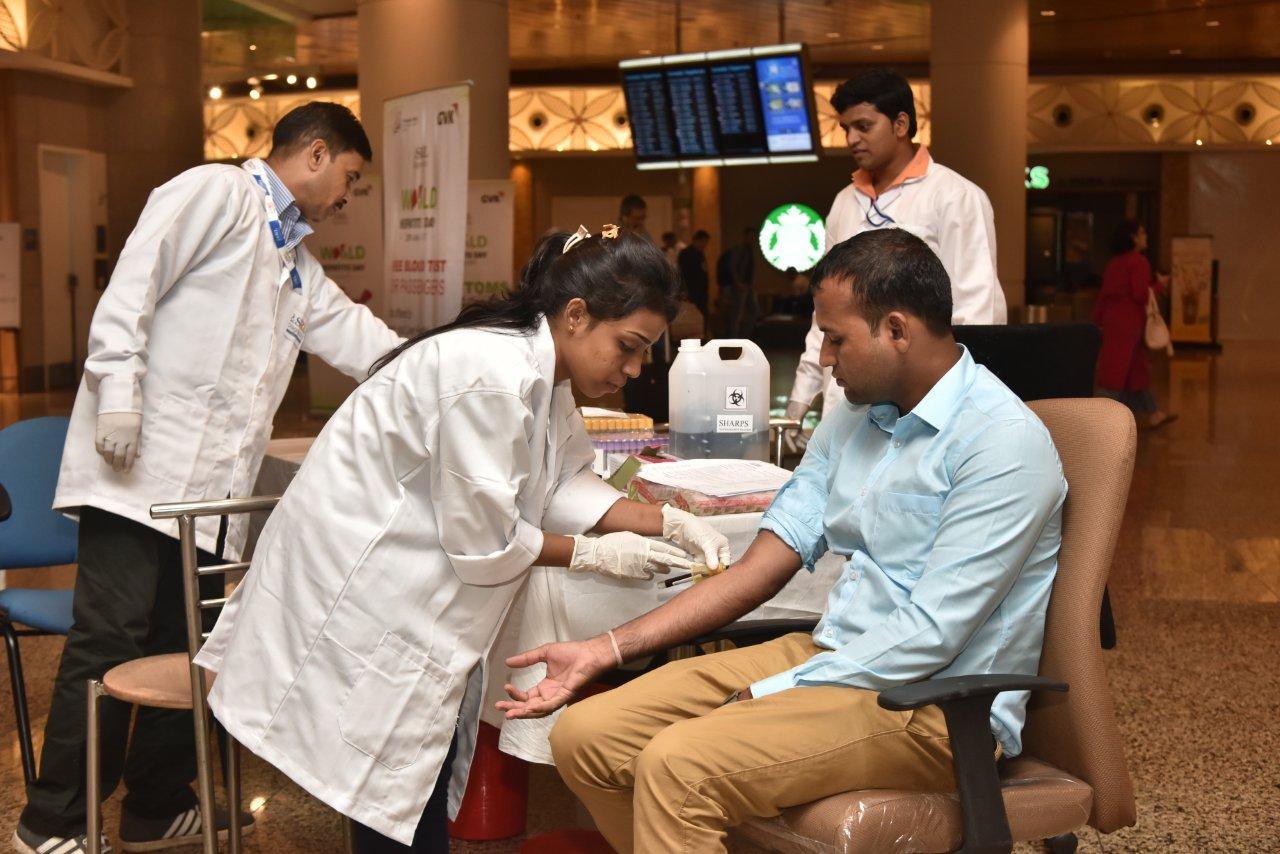
Let us learn to protect ourselves from Hepatitis diseases on World Hepatitis Day.

Rafael aircraft coming to India from France

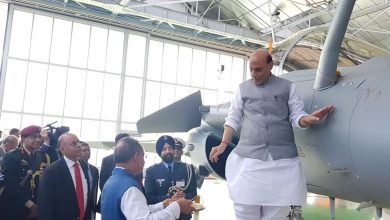
The Dassault Rafale is a French twin-engine, canard delta wing, multirole fighter aircraft designed and built by Dassault Aviation. Equipped with a wide range of weapons, the Rafale is intended to perform air supremacy, interdiction, aerial reconnaissance, ground support, in-depth strike, anti-ship strike, and nuclear deterrence missions. Many of the aircraft’s avionics and features, such as direct voice input, the RBE2 AA active electronically scanned array (AESA) radar, were domestically developed and produced for the Rafale program. Originally scheduled to enter service in 1996, the Rafale suffered significant delays due to post-Cold War budget cuts and changes in priorities. The aircraft is available in three main variants: Rafale C single-seat land-based version, Rafale B twin-seat land-based version, and Rafale M single-seat carrier-based version.

The Rafale is being produced for both the French Air Force and for carrier-based operations in the French Navy. The Rafale has been marketed for export to several countries and was selected for purchase by the Indian Air Force, the Egyptian Air Force, and the Qatar Air Force.  Due to its great capabilities, the first batch of 5 raflaes arrives in India in two days.

On the one hand, when there are neighbors like China and on the other hand, when there are neighboring countries like Pakistan, India needs to work on both its army and the Indian Air Force. In such a situation, 5 Rafale aircraft was given to the Indian Army yesterday. These Rafale aircraft flew from France yesterday and reached the UAE airbase Al Dhafra today. Here their maintenance and refueling work will be done. After this, these fighter aircraft will fly and arrive at Ambala Air Force Base tomorrow. With this aircraft joining the Indian Air Force, the morale of the Indian Army will be greatly elevated. However, the condition of the Airforce is not good right now because there is a shortage of squadron. This thing has been told in many reports. But with Rafael joining the Indian Army, it can play a decisive role in winning a war.

“You can call them (Rafale) both beauty and the beast,” said Indian Ambassador to France Jawed Ashraf after interacting with the IAF pilots at the airbase before they set off for India. “Delivery of 10 aircraft has been completed on schedule. Five will stay back in France for a training mission. The delivery of all 36 aircraft will be completed on schedule by the end of 2021,” the Indian embassy in Paris said in a statement. India and France signed a Euro 7.87-billion ( ₹59,000 crores approximately) deal on September 23, 2016, for 36 Rafale jets. The IAF official said the air-to-air refueling of the aircraft will be undertaken with dedicated tanker support from the French Air Force. “Our air force pilots tell us that these are extremely swift, nimble, versatile, and very deadly aircraft,” said Ashraf while congratulating the IAF pilots on becoming the first ones to fly one of the world’s most advanced fighter aircraft. The envoy thanked Dassault Aviation, the manufacturer of the aircraft, for delivering the fleet on time, the French government and the French Air Force for extending all required support.

online classes AMID Pandemic

COVID-19 began in the month of December in 2019 and soon it grew into a pandemic, leading to several losses of lives and locking down of many cities. Social distancing became the key to escape out of this problem. But, with this solution came other problems. We are able to follow social distancing by keeping us locked in our houses but this stopped students’ education too. But we can’t just stop everything due to this COVID thing. We need to find an effective solution to continue the education of students. We need to continue the functioning of schools and colleges.

Online Classes

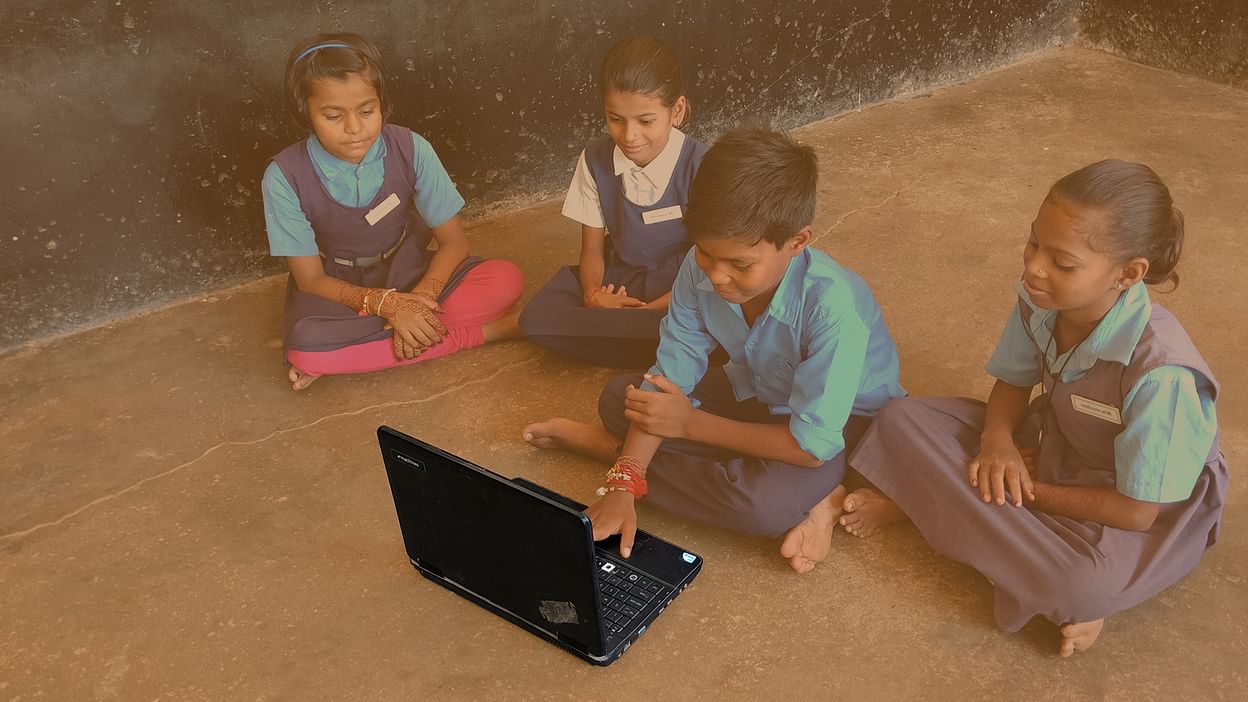
In the times of the internet, the one and the only solution are online classes. The online way to share knowledge and information now is the internet. It has proved to be a real miracle these days, connecting millions and making information access fast and easy. Be it school, college, tuition, or coaching classes, knowledge is now being delivered to students who are sitting at their home and can learn things sitting there only. Students now need a mobile or desktop and fast internet connection to attend their online classes and learn things. It is not possible for a pandemic to stop students from learning.

How it is a different experience?

This way of learning is totally new to everyone, be it students, be it teachers or be it parents. We were already involved in some small ways of e-learning but a complete shift towards this type of mode is  something new and challenging to everyone. Teachers are continuously involved in finding new ways to make e-learning more interactive and interesting for students. They are continuously evolving their way of teaching and trying to give them a class-type of feeling. Teachers are also learning to adapt with new softwares and explore things. Students are learning how to deal with online homework submissions, doubt-sessions and examinations. But, the problem is that the medium of interaction is always an electronic device. Hence, students are subjected to fatigue and mental stress. They seem irritated and develop body pain sitting still at a particular position holding their phones or laptops. Students are also developing stress on eyes. It is quite difficult for them to adjust with all of these. It seems that this way of teaching costs their health, both mental and physical. Besides this, internet is not available to all the areas of the country and to all the students. Poor students can’t afford high speed data. This method of teaching, is thus, a barrier between poor students and education. It is a harsh truth that they are left behind. We need to work together towards this to make education available to these students also.

Neuralink brain chip

Elon Musk‘s mysterious Neuralink startup is working on a brain-computer interface that will allow wearers to stream music directly to their brain, the technology entrepreneur has claimed. Mr. Musk, who also heads SpaceX and Tesla, is set to reveal new information about the mysterious startup next month but has been slowly releasing details over Twitter in recent days. The device that allows the human brain to connect to a computer could be implanted in a person for the first time later this year, announced the founder of Neuralink neurotechnology company, the tycoon Elon Musk. This crazy project of Elon Musk and his startup seems to be going well. Elon Musk said on Twitter that the Neuralink is working on an “awesome” new version of the company’s signature device. “Clearly better than Utah Array,” he said contentedly.

Neuralink’s ambitions are really great! The main purpose of the device is to compensate for entire sections of the brain lost due to a stroke, accident, or congenital disease. The billionaire businessman said that people would soon be able to use the brain chip technology of Neuralink to stream music into their brains without any special efforts. According to Musk, Neuralink chip would also be able to control hormone levels and help with anxiety relief and some other mental issues.  The Tesla CEO noted that those who are willing to get Neuralink chip into their brains would go through a process similar to laser eye surgery. 

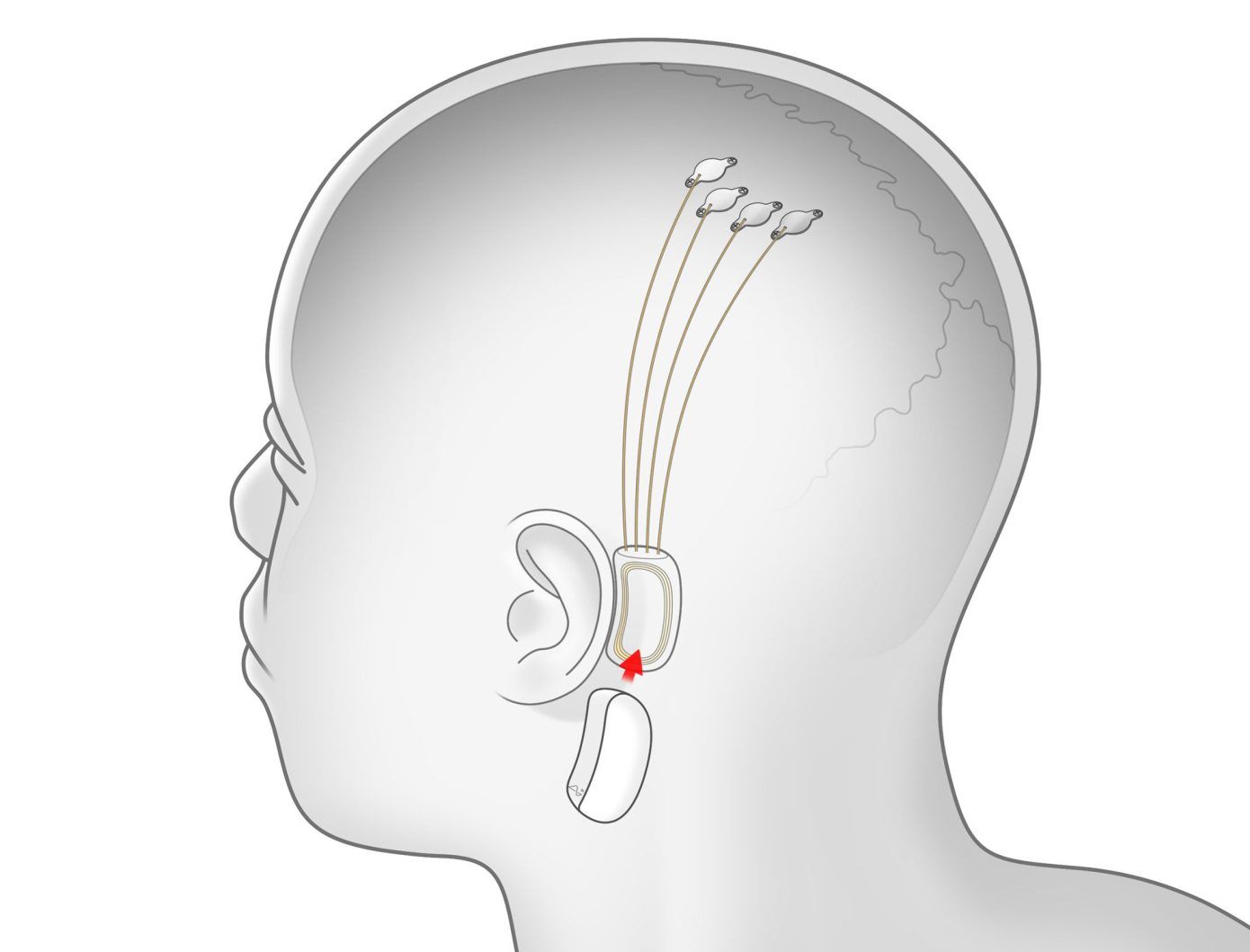
One part of it will involve a neurosurgical robot, which fits flexible “threads” into the brain connected to a tiny implantable computer chip. A research paper detailing the device claims that a single USB-C cable will provide “full-bandwidth data streaming” to the brain. Neuralink has 11 job postings listed on its website, offering roles for a mechanical engineer, a robotics software engineer, and a “histology technician”. Over the weekend, Mr. Musk made a request for people with specific expertise in wearables. Earlier this month, Mr. Musk hinted that Neuralink’s chip will be able to cure depression and addiction by “retraining” the parts of the brain responsible for these afflictions.

Of course, it is not yet clear what the updated concept looks like and whether it will work at all. SpaceX and Tesla chief, however, is full of optimism and enthusiasm. “The potential is truly transformational for restoring brain & motor functions,” he said in his tweet on Monday. If the arrival of the first tests on the human brain is encouraging, the road is long until the actual implantation of Neuralink. In another tweet, he says: “First, we need to make it super safe & easy to use, then determine the greatest utility vs. risk. From initially working to volume production & implantation is a long road.” Though the company is yet to make an announcement over its official plans, Musk recently said that there will be a progress update on August 28.

Neuralink was founded in 2016 and since then the company has only held one public presentation about how the technology will work. In 2019, Musk had said that Neuralink was developing a “sewing machine-like” device that would provide a direct connection between a computer and a chip inserted inside the brain.

AstraZeneca COVID-19 vaccine

The initial trial data for the COVID-19 vaccine that has been developed in a joint collaboration between Oxford University and AstraZeneca. The data has been widely awaited as the world looks forward to some good news on the front of a vaccine that could shield people from the deadly coronavirus outbreak that has already infected over 14 million people worldwide and killed over 6 lakh. 

The potential vaccine is already in large-scale Phase III human trials to assess whether it can protect against COVID-19, but its developers have yet to report Phase I results which would show whether it is safe and whether or not it induces an immune response. The developers of the vaccine said this month they were encouraged by the immune response they had seen in trials so far and were expecting to publish Phase 1 data by the end of July.

How does the Oxford-AstraZeneca vaccine candidate work?

When someone is infected with the Covid-19 virus (SARS-CoV-2), the reason it spreads in the body easily is because of the spikes on its surface. These spikes, known as the ‘spike protein’, allow the virus to penetrate cells and, thereafter, multiply. The vaccine developed by Oxford and AstraZeneca, which belongs to a category called non-replicating viral vector vaccines, tries to build the body’s immunity against this spike protein. The idea is to create antibodies to fight this spiked surface so that the virus does not even have the chance to penetrate the cells. The vaccine uses a different virus — in this case, a weakened version of a common cold virus (adenovirus) that infects chimpanzees — to carry just the code to make the spike protein, like a Trojan horse. The adenovirus, genetically modified so that it cannot replicate in humans, will enter the cell and release the code to make only the spike protein. The body’s immune system is expected to recognize the spike protein as a potentially harmful foreign substance and starts building antibodies against it. Once immunity is built, the antibodies will attack the real virus if it tries to infect the body.

Since the Covid-19 vaccine has been developed by a United Kingdom-funded university, UK will have intellectual property rights. Other countries such as India will need to enter into commercial deals or understanding via foundations such as Coalition for Epidemic Preparedness Innovations (CEPI) and Global Alliance for Vaccines and Immunization (GAVI). AstraZeneca also entered a deal with the Pune-based Serum Institute of India to supply one billion doses for low-and-middle-Income countries, with the first 400 million nicely before the end of 2020. It is not yet clear how many doses India will be able to land at first since the rollout of the vaccine will be subject to considerations that are commercial as well as that of equity. The World Health Organization’s chief scientist has described the Oxford vaccine as the leading candidate in a global race to halt the coronavirus pandemic that has killed more than 600,000 people. More than 100 vaccines are being developed and tested around the world to try to stop the coronavirus pandemic, which has killed more than 600,000 people and ravaged the global economy.

BLUIS (Bhubaneswar Land Use Intelligence System)

The Bhubaneswar Land Use Intelligence System is a geo-tagged repository that would monitor and detect all government lands in Bhubaneswar. This will be done by using high-resolution satellite imagery. For safeguarding government lands from encroachments by land grabbers- the launch of BLUIS makes Odisha the first state in the country to use satellite technology and artificial intelligence. Any attempt to change the use of government land in Bhubaneswar, BLUIS will raise alarm and guide the enforcement staff to the exact location of encroachment. ‘BLUIS’ and ‘Litigation Management System’ are among the 8 Technology-driven Solutions that were launched under the 5T initiatives by the Chief Minister.

Chief Minister Naveen Patnaik on 8 July 2020 unveiled BLUIS which would monitor changes in all government lands in Bhubaneswar by leveraging high-resolution satellite imagery. Along with that, he launched 8 technology-driven solutions under 5T initiatives for Home and GA & PG Departments through video conferencing. Along with BLUIS, the chief minister launched applications like e-Pravesh, e-Bhawan, e-Atithi, HRMS 2.0, HRMS mobile app, LMS 2.0, ORTPSA to improve public services. The 5T Initiative (Technology, Transparency, Teamwork, and Time Leading to Transformation) model of governance, launched in August 2019, requires each department of the State Government to draw up an annual work-plan for faster, better public service delivery systems leading to achieve transformational goals. Launching the services, Patnaik said that the 5T model of governance along with Mo Sarkar has brought about a perceptible improvement in the quality of governance and has eased the delivery of public services.

Encroachment of government land in the capital city of Bhubaneswar will no more be easy for land grabbers as the Bhubaneswar Land Use Intelligence System (BLUIS), a web and mobile-based solution, launched by Odisha government would raise alarm over attempts to change the land use. According to the government, BLUIS is a geo-tagged repository of all the government lands in Bhubaneswar, created through high-resolution satellite imagery to detect all changes taking place on government lands.

Odisha becomes the first state in India to use high-resolution satellite imagery utilizing space technology and artificial intelligence to monitor government lands. The lack of transparency and accountability of the enforcement in the current mechanisms and the increasing encroachment of government lands in Bhubaneswar resulted in the development of BLUIS.

“Bhubaneswar is one of the fastest-growing cities in India witnessing land-use changes on a daily basis. In the process, precious public land is prone to encroachment. The present mechanism of detection and enforcement lacks adequate transparency and accountability,” a senior officer said emphasizing real-time monitoring. A mobile application would alert the enforcement authorities of any new construction on government lands. The GPS on the application guides the enforcement staff to the exact location. Evidence of enforcement is uploaded on the application as geo-tagged images and videos,” he said. As per follow-up action, a case will be filed for removing encroachment. The Litigation Management System, an online application to record information on legal cases and enable end-to-end communication between government officials and advocates during different stages of a case, was also launched. It provides a smart technology solution to monitor court cases from initiation, online appointment scheduling, and allotment of the case to government advocate for preparation and submission of counter-affidavit.

Biggest twitter hack In US

Some of the hackers, who cheat people and earn money always try to find ways to use the internet and social media platforms for their benefit. The earlier such hacks have been through online games, phishing, malware, smishing, insecure networks, physical security threats, etc. We all are aware of the very famous Ransom virus which affected a very large population. Over time, hackers change their ways to attack people and steal money.

The recent news is the twitter hack in the US of some billionaires. The Twitter accounts of Joe Biden, Elon Musk, Jeff Bezos, Kanye West were among the tens of high-profile accounts that were hijacked last night. These accounts were then used to spread bitcoin scams and fool people into donating money through a link. Billionaires Elon Musk, Jeff Bezos and Bill Gates are among many prominent US figures targeted by hackers on Twitter in an apparent Bitcoin scam. The official accounts of Barack Obama, Joe Biden, and Kanye West also requested donations in the cryptocurrency. “Everyone is asking me to give back,” a tweet from Mr. Gates’ account said. “You send $1,000, I send you back $2,000.”

“We’re looking into what other malicious activity they may have conducted or information they may have accessed and will share more here as we have it,” the company tweeted. Twitter said that once they became aware of what happened, they “immediately locked down” hacked accounts and removed the tweets sent on their behalf. Twitter also limited functionality for all verified accounts, including those that showed no evidence of being compromised, while they investigated the issue. “We have locked accounts that were compromised and will restore access to the original account owner only when we are certain we can do so securely,” Twitter said. “Internally, we’ve taken significant steps to limit access to internal systems and tools while our investigation is ongoing. More updates to come as our investigation continues.”

Twitter also acknowledged that the hacks were a coordinated social engineering attack by people who successfully “targeted some of our employees with access to internal systems and tools.” Screenshots of the panel being posted by users are being taken down as a violation of Twitter policies. “As per our rules, we’re taking action on any private, personal information shared in Tweets,” said a Twitter spokesperson.

Some leading cryptocurrency sites were also compromised on Wednesday. Cryptocurrency platforms like Coinbase and Gemini falsely “announced” they had partnered up with an organization called CryptoForHealth, through their Twitter accounts. They claimed that the organization was going to provide people with bitcoin as long as they sent some to an address first. Other prominent Twitter accounts that were hacked were that of President Barack Obama, Kim Kardashian West, Warren Buffett, Jeff Bezos, and Mike Bloomberg. Official accounts of Uber and Apple tweeted out a post that was a spam message. The spam message directed readers to invest bitcoin in the wallet address that was provided in the tweets and claimed that they would get double the money they spend.

Is Nepal the origin of Lord Rama?

On July 14, Nepal PM triggers a debate: “Where is Ayodhya, the origin of Lord Rama?”. The real Ayodhya lies at Thori in the west of Birgunj. India has claimed the Indian site as the birthplace of Lord Ram,” said Nepal’s Prime Minister KP Sharma Oli on Monday while rejecting the traditional “belief” that Nepali daughter Sita was married to an Indian Prince Ram.

Oli was speaking at an event to commemorate the birth anniversary of poet Bhanubhakta, credited with the first authentic translation of Valmiki’s Ramayan into the Nepali language. “The place called Thori, near Birgunj is the real Ayodhya, where Lord Ram was born. In India, there is a great dispute on Ayodhya. But, there is no dispute in our Ayodhya,” Prime Minister Oli was quoted as saying by his press advisor Surya Thapa. Politically, Oli’s comment comes as a refutation of India’s Defence Minister Rajnath Singh’s comment made last month when he had said India and Nepal have a “roti-beti” relation referring to cross-border marriages. However, Oli’s remarks have sparked off a debate on the “real” location of Ayodhya, the birthplace of Lord Ram and the capital of his kingdom as mentioned in ancient texts.

Condemning Mr. Oli for his remarks, BJP national spokesperson Bizay Sonkar Shastri said that the Communists in Nepal will be rejected by the masses in the same way they have been in India, even as Left parties in India played with people’s faith. “Lord Ram is a matter of faith for us, and people will not allow anybody, be it Prime Minister of Nepal or anyone, to play with this,” he said in New Delhi.

Oral history, as compiled into the Ramayan by Valkimi, places Ayodhya in modern Uttar Pradesh. Ramayan tradition identifies Ayodhya as the birthplace of Ram for around 3,000 years, based on literary evidence. Lack of archaeological evidence has kept the debate raging for years. The statement, however, was not only opposed by Indian citizens but by Nepali citizens as well. Nepal PM has been taking many controversial decisions and  making controversial statements in the recent days, one of which was releasing of Nepal’s map with Indian city. While Oli’s unexpected territorial claim followed by allegations that India was behind moves to have him dethroned have been rejected by New Delhi, some have looked at it with suspicion even in Nepal, accusing Oli of playing the India card to hide his own government’s alleged failures. Oli’s recent claim about Lord Rama, too, has drawn sharp reactions from both inside India and Nepal.

However, clarification on the statement of Nepal PM has been given now. The Nepal Ministry of Foreign Affairs sought to shield Prime Minister K P Sharma Oli’s comments on Lord Ram from criticism by clarifying that he did not mean to debase the significance of Ayodhya and the cultural value it bears. The MFA said the remarks were not linked to any political subject and were not intended to hurt the feelings and sentiment of anyone. It added that as there have been several myths and references about Lord Ram and the places associated with him, the PM was “simply highlighting the importance of further studies and research of the vast cultural geography the Ramayana represents to obtain facts about Shri Ram, Ramayana and the various places linked to this rich civilization.” “As there have been several myths and references about Shri Ram and the places associated with him, the Prime Minister was simply highlighting the importance of further studies and research of the vast cultural geography the Ramayana represents to obtain facts about Shri Ram, Ramayana and the various places linked to this rich civilization,” it added. The ministry further said, “It may be underlined that the tradition of celebrating Bibaha Panchami where a marriage procession coming from Ayodhya, India to Janakpur, Nepal takes place every year. The Prime Ministers of Nepal and India launched the Ramayana Circuit in May 2018, of which Janakpur-Ayodhya Passenger Bus Service is an important component. These facts signify the bond of time-honored cultural affinity between our two countries and peoples.”

CBSE result declared -what are the positives & negatives?

13th, july, 2020, the day CBSE declared the result of class 12th board examination, which were held haphazardly, only due to the ongoing series of a pandemic called the Novel Coronavirus. Students gave their sweat and hearts to perform gloriously in the examinations, some passed away with flying colors, but unfortunately some were unable to stand up to their own and the family’s expectations.

The total passing percentage of students has been recorded an incredible increase of 5.38% compared to 2019, and it touched the parameter of 88.78%. Where girls outshine the boys.

But, it was not the end of the session, as CBSE decided not to announce the merit list, which is a great step indeed. People were still worried and dumbstruck listening about a girl getting 100% pass percentage.

Consequently, every body have their opinion about the results declared. While some applaud the efforts made by students,as well as CBSE for declaring such positive results, some other group of people reckon that, it is an unfair decision or way to promote the students, i.e. without taking any examination.

The positives –

Amid the pandemic, when everyone panicked about the completion of the remaining examinations. The Central Board of Secondary Education, decided not to mention the names of the meritorious students, in order to lower the burden of competition among students, and more importantly the parents.

Also, it has miraculously swept away the mental pressure that earlier alarmed as a bell in the students’ ears. Along with lowered burden of competition, the news have not been exposed by the media like a wild fire, consequently avoiding all the stuff that was heard from the neighbors, relatives, family members, friends, and the teachers. Let’s take in other way, the pandemic proved to them, a saviour, a Messiah, the escape from all the problems that could have possibly bumped into them, then.

The negatives –

While there were many things that made everyone very happy and light headed. The other flip of the coin has to reveal something else;since teachers were the unable to gather at the centers to check out the copies,due to the norms set up by the government, the sheets were directly sent to them at their respective homes to fulfill the same,without any eye keeping a check on them, leniency was at its best. Therefore making it easy for the students to score more than what they really deserved.

It is clear that, the earlier batches who gave their sweat and heart to achieve the highest score, but, instead, the present batch was passed without any pressure among them,doing injustice to the previous ones. Ease in the checking criteria, will definitely result in an increase in cut off in many of the top universities of the country,making it difficult for them to nail the admission criteria in the top universities of the country.

Despite there being so much hubbub about the examinations and the consequences of those, the pandemic has proven the humans that, conducting the exams, along with classes, and many other things online is a new way to live our lives.

Mobile App ‘eBloodServices’

These days when all of us are dealing with pandemic COVID-19, it has been a very hard time for all of us and we all are contributing our parts to come out of this difficult situation. All of us are doing great as fighters. With the coming of problems, we all are thinking innovative and creative to come up with solution to it. One such step was to launch mobile app ‘eBloodServices’.Union Health Minister Dr Harsh Vardhan on launched the eBlood Services Mobile Application, in partnership with the New Delhi based Indian Red Cross Society (IRCS), on 25 June 2020 for easy access to blood to fight with the critical time of coronavirus pandemic.

This application is developed by the E-Raktkosh team of Centre for Development of Advanced Computing under the Digital India scheme launched by Prime Minister Narendra Modi in 2015. The application will bring transparency and facilitate single-window access to blood services of the Indian Red Cross Society, officials said. This initiative would help the people to get the blood on time just by registering on the application. Also, people can demand up to four units of blood. Blood-related services are required by many people in the country as they face certain medical conditions in their families. With the help of eBlood Services App, four units of blood can be requisitioned at a time. Blood Bank will wait for as long as 12 hours for the person to collect it. The app will make it easy for those in need to request for blood units at IRCS NHQ.

Speaking on the occasion, the Minister said, “People who need blood can get registered on this app and know from where they will get blood.” Vardhan said, “In the last few months, I received several complaints from people facing difficulties in accessing safe blood. Many people require blood-related services regularly because of certain medical conditions in their families. Through this app, four units of blood can be requisitioned at a time and the blood bank will wait for 12 hours for the person to collect it.” At a time when the country is going through a pandemic, the mobile app will provide succour to all those who are in dire need of blood,” the health minister said. Users with this app can know the live status of blood availability at the national headquarters of the Indian Red Cross Society (IRCS) blood bank in Delhi. He appealed to people to come forward to donate blood as their contribution is required more than ever now.

All 89 IRCS blood banks and 1,100 branches across the country have collected more than 1,00,000 units of blood through in-house donations and from around 2,000 donation camps organized during the lockdown. Also, more than 38,000 blood donors registered with NHQ Blood Bank have been contacted and motivated to donate blood. The NHQ Blood Bank conducted 55 blood donation camps collecting 2,896 units of blood. Blood has been issued to 7,113 patients which include 2,923 thalassaemic patients as well as to the government hospitals like Lady Hardinge (624 units) and AIIMS, Delhi (378 Units).The IRCS has served more than 3,00,00,000 cooked meals and provided ration to more than 11,00,000 families.