No Men Are Foreign

Remember, no men are strange, no countries foreign
Beneath all uniforms, a single body breathes
Like ours: the land our brothers walk upon
Is earth like this, in which we all shall lie.
They, too, aware of sun and air and water,
Are fed by peaceful harvests, by war’s long winter starv’d.

James Kirrup starts off his poem by advising the readers to remember that no men are strange for we are all one. No matter what our skin colour, no countries are foreign for we are all inhabitants of the planet. Beneath all uniforms, all dress, we are a single body that breathes equally the same. All of us from all the countries walk on the land of the same planet and in the same land where we shall be laid to rest once we die. The people from other countries are aware of the Sun, air and water just like us. We are all fed by peaceful harvests and all of us starve due to wars which are like a long winter with no food.

Their hands are ours, and in their lines we read
A labour not different from our own.
Remember they have eyes like ours that wake
Or sleep, and strength that can be won
By love. In every land is common life
That all can recognise and understand.

The poet says that all of our hands, even those in different countries have hands like ours. They also work like us to earn their bread. Their labour and work are not that different from ours. They have eyes like ours that wake up and sleep just like we do. They have the strength that can be won and conquered by love. Every land has a common life that people from any corner of the Earth can recognise and understand.

Let us remember, whenever we are told
To hate our brothers, it is ourselves
That we shall dispossess, betray, condemn.
Remember, we who take arms against each other

The poet asks us to remember that whenever we are told to hate our brothers from different lands, it is ourselves we shall dispossess for we are all members of the big family that is planet Earth. We will betray and condemn ourselves if we take up arms against each other. The poet asks us to stay in harmony and peace so that we can all prosper together.

It is the human earth that we defile.
Our hells of fire and dust outrage the innocence
Of air that is everywhere our own,
Remember, no men are foreign, and no countries strange.

The poet makes us aware that it is our own Earth that we defile and destroy when we wage wars. When we fight against other countries, the destruction caused by our weapons rage hell on Earth and kill the innocent. It destroys the air of our Earth that is our own. We must remember that we are all the same in the end and all the countries are members of the same family of the planet Earth. Thus we must live in peace and prosper together.

The Ballad Of Father Gilligan

The old priest Peter Gilligan
Was weary night and day
For half his flock were in their beds
Or under green sods lay.
Once, while he nodded in a chair
At the moth-hour of the eve
Another poor man sent for him,
And he began to grieve.

William Butler Yeats talks about an old priest who was extremely tired all day and night. Half of his flock was dead and he was depressed. One day while he was nodding in a chair another poor man sent for him as he was about to die and needed the priest’s blessings. Having being extremely tired and not getting a chance to rest, he began to weep out of frustration. God’s work was tiring and starting to take a toll on his humanly old body.

‘I have no rest, nor joy, nor peace,
For people die and die;
And after cried he, ‘God forgive!
My body spake not I!’
He knelt, and leaning on the chair
He prayed and fell asleep;
And the moth-hour went from the fields,
And stars began to peep.

He cried that he got no chance to rest and had no joy or peace in his life for people only died. He only had so much work to do and got no time for relaxation. He cried to God to forgive him and that his body was speaking and not him. He meant that although he wanted to do God’s work, his ageing body was failing to keep up. He knelt and leaning on the chair He prayed and fell asleep. The night came and so did the stars but Father Gilligan kept sleeping unaware.

They slowly into millions grew,
And leaves shook in the wind
And God covered the world with shade
And whispered to mankind.
Upon the time of sparrow chirp
When the moths came once more,
The old priest Peter Gilligan
Stood upright on the floor.

The stars filled the sky and the leaves shook in the wind. God covered the world with shade and whispered to mankind. During the time of sparrow chirps, the moths came once more, the old priest Peter Gilligan awoke on the floor. He had slept throughout the night.


‘Mavrone, mavrone! The man has died
While I slept in the chair.’
He roused his horse out of its sleep
And rode with little care.
He rode now as he never rode,
By rocky lane and fen;
The sick man’s wife opened the door,
‘Father! you come again!’

The priest expressed his grief by crying mavrone for he knew that man had died while he had slept in the chair. He woke up his horse from its sleep and rode in a rash manner by rocky lanes and fen. He reached the sick man’s home and the wife opened the door and exclaimed her surprise on seeing him again.

‘And is the poor man dead?’ he cried
‘He died an hour ago.’
The old priest Peter Gilligan
In grief swayed to and fro.
‘When you were gone, he turned and died,
As merry as a bird.’
The old priest Peter Gilligan
He knelt him at that word.

Father Gillian cried in desperation and asked if the man had died. The wife affirmed that her husband had indeed died an hour ago. Remorse and grief gripped Father Gillian. The wife said that when father Gilligan had gone, he had died as merry as a bird. The priest knelt and realised what had happened.

‘He Who hath made the night of stars
For souls who tire and bleed,
Sent one of this great angels down,
To help me in my need.
‘He Who is wrapped in purple robes,
With planets in His care
Had pity on the least of things
Asleep upon a chair.’

The Priest cried and understood that God who had made the starry night skies for souls who are tired and bleed had given him rest. God had sent one of his angels to help the Priest get his much-needed rest by doing his work. God had taken pity on him and had his work done by sending an Angel to emulate him and bless and take care of the sick and dying man.

Philosophical meaning of “LOVE”

Love is the most powerful emotion a human being can experience. The strange thing is, almost nobody knows what love is. Why is it so difficult to find love? That is easy to understand, if you know that the word “love” is not the same as one’s feeling of love.

“The best and most beautiful things in this world cannot be seen or even heard,but must be felt with the heart” – Hellen Keller

What great Philosophers say about Love?

Aristotle : Of the classic ideas on love, for Aristotle , none of this love and friendship is attainable without first achieving self-love. The good person must be a self-lover, for he himself will profit from doing fine things, and he will benefit the others.

Sadhguru :
When you talk about love, it has to be unconditional. There is really no such thing as conditional love and unconditional love. It is just that there are conditions and there is love. The moment there is a condition, it just amounts to a transaction. Maybe a convenient transaction, maybe a good arrangement – maybe many people made excellent arrangements in life – but that will not fulfill you; that will not transport you to another dimension. It is just convenient.
When you say “love,” it need not necessarily be convenient; most of the time it is not. It takes life. Love is not a great thing to do, because it eats you up. If you have to be in love, you should not be. You as a person must be willing to fall, only then it can happen. If your personality is kept strong in the process, it is just a convenient situation, that’s all. We need to recognize what is a transaction and what is truly a love affair. A love affair need not be with any particular person; you could be having a great love affair, not with anybody in particular, but with life.

Simpne de Beauvoir : “The reciprocal recognition of two freedoms” Beauvoir’s thought on love is between authentic and inauthentic love. For her, loving inauthentically is an existential threat. When we believe that love will complete us, or when we lose ourselves in our beloved, we erase ourselves as independent beings. This is what de Beauvoir called loving in bad faith. In her society, men were encouraged much more than women to have interests and ambitions outside of their relationships, with the result that women were especially vulnerable to the dangers of inauthentic love.
Authentic love, on the other hand, involves partnerships in which both parties recognize each others’ independence, and pursue aims and interests outside of their relationship. Authentic love must be based on “reciprocal recognition of two freedoms”. This means that neither partner is subordinate to the other, nor takes all of their meaning from their love for that partner. Instead, each is an independent whole who freely chooses the other anew with every day without trying to possess them entirely.

Bell Hooks :
In All About Love: New Visions (2000) , she argues that our modern definition of love is too watered down by overuse of the word. Working from the idea that love is a verb, she then suggests ways to improve our modern concept of love and prevent what hinders it. She notes with a fervor that power discrepancies and the differences in how men and women are expected to approach love are a particular problem.

“The fear of being alone, or of being unloved, had caused women of all races to passively accept sexism and sexist oppression.” — Ain’t I a Woman? (1981)

Jean – Paul Sartre :
Sartre and Simone De Beauvoir had, quite possibly, the most famous open relationship of all time. Sartre first proposed the idea in a letter: “What we have is an essential love; but it is a good idea for us also to experience contingent love affairs.”
Sartre wrote extensively on love, especially in terms of the tension between freedom and objectivity, and seemed to struggle with the idea throughout his entire relationship. True love, Sartre felt, can come to fruition when both partners have a deep, mutual respect for the other’s freedom and resist the desire to “possess” each other as objects. For him, if all romantic relationships centered on the idea of ownership, there would be little room for introspection. Wrapped up in the pursuit of love is the idea that we are not only seeking a partner, but deeper insight into ourselves. Put more plainly: We’re looking for the “other half,” the “being” to our “nothingness.” Either way, Sartre got a whole lot of insight, especially for a guy with an oddly shaped head and a lazy eye.

Love asks me no questions, and gives me endless support – William Shakespeare

Night Of The Scorpion

I remember the night my mother
was stung by a scorpion. Ten hours
of steady rain had driven him
to crawl beneath a sack of rice.
Parting with his poison – flash
of diabolic tail in the dark room –
he risked the rain again.

The speaker starts off by telling that he remembers the night his mother was stung by a scorpion. Continuous rain for 10 hours had driven him to crawl and hide behind a sack of rice. The scorpion stung the speaker’s mother with its tail in the darkroom and went out in the rain again.

The peasants came like swarms of flies
and buzzed the name of God a hundred times
to paralyse the Evil One.
With candles and with lanterns
throwing giant scorpion shadows
on the mud-baked walls
they searched for him: he was not found.
They clicked their tongues.
With every movement that the scorpion made his poison moved in Mother’s blood, they said.

The poet then points out that a lot of peasants hearing the victim’s wails came swarming like flies. They started chanting the name of God a hundred times to paralyse the scorpion. They searched for the scorpion with candles and with lanterns everywhere. Yet they couldn’t find the scorpion. They said that with every movement the scorpion made, the poison moved inside the speaker’s mother’s blood. The ancient rural superstition is quite evident from the lines.

May he sit still, they said
May the sins of your previous birth
be burned away tonight, they said.
May your suffering decrease
the misfortunes of your next birth, they said.
May the sum of all evil
balanced in this unreal world
against the sum of good
become diminished by your pain.
May the poison purify your flesh
of desire, and your spirit of ambition,
they said, and they sat around
on the floor with my mother in the centre,
the peace of understanding on each face.

They prayed that may the scorpion sit still at someplace. They wished that the mother’s sins of her previous birth be purified by her suffering. They hoped that her suffering may decrease in her next birth due to her ordeal in this birth. They wished that may all the evil in this world decrease in the world as a result of her pain and may her flesh be purified of desire and the spirit of ambition by the poison. They surrounded his mother on the floor with her in the centre with the peace of understanding on each face.

More candles, more lanterns, more neighbours,
more insects, and the endless rain.
My mother twisted through and through,
groaning on a mat.
My father, sceptic, rationalist,
trying every curse and blessing,
powder, mixture, herb and hybrid.
He even poured a little paraffin
upon the bitten toe and put a match to it.
I watched the flame feeding on my mother.
I watched the holy man perform his rites to tame the poison with an incantation.
After twenty hours
it lost its sting.
My mother only said
Thank God the scorpion picked on me
And spared my children.

More people came with candles and lanterns. There was more neighbours, more insects and endless rain. The speaker’s mother twisted with pain, groaning on the mat. His father who was a sceptic, rationalist being helpless tried every blessing and cure, powder, mixture, herb and hybrid to try to cure her. He poured even paraffin on the bitten toe and set it on fire. The poet saw the flame feeding his mother. Like funeral rites, he saw his father as a holy man trying to tame the poison with incantations. After twenty hours the poison lost its sting. The poet’s mother breathed a sigh of relief and said she was glad that the scorpion spared her children and bit her instead.


A River

In Madurai,
city of temples and poets,
who sang of cities and temples,
every summer
a river dries to a trickle
in the sand,
baring the sand ribs,
straw and women’s hair
clogging the watergates
at the rusty bars
under the bridges with patches
of repair all over them
the wet stones glistening like sleepy
crocodiles, the dry ones
shaven water-buffaloes lounging in the sun
The poets only sang of the floods.

A.K.Ramanujan takes a jibe at poets of Madurai or those poets who visited Madurai and were limited in their thinking and imaginative capacity. The poet starts off by saying Madurai is a city of temples and poets who sang only of cities and temples. The poets missed the river which dried to a trickle in the sand and bare sand ribs, straw and women’s hair. These clogged the watergates at the rusty bars under the bridges with patches of repair marks all over them.  The poet uses two metaphors to describe the wet stones like sleepy crocodiles and the dry ones like shaven water buffaloes lounging in the Sun. Yet all the poets sang only of floods missing out on so many details.


He was there for a day
when they had the floods.
People everywhere talked
of the inches rising,
of the precise number of cobbled steps
run over by the water, rising
on the bathing places,
and the way it carried off three village houses,
one pregnant woman
and a couple of cows
named Gopi and Brinda as usual.

The poet was there for just a day and noticed so many things that all poets generally miss out on. He was there the day the floods took place and people everywhere only spoke of the rising flood and the precise number of cobbled steps run over by water. The water rose to the bathing places and disaster struck. The flood carried off three village houses, one pregnant woman, a couple of cows named Gopi and Brinda as usual. The use of the phrase, “as usual” suggests that it was a regular and helpless occurrence for the people.

The new poets still quoted
the old poets, but no one spoke
in verse
of the pregnant woman
drowned, with perhaps twins in her,
kicking at blank walls
even before birth.

The poet says that the new poets still quoted what the old poets had said but everyone failed to express or talk about the pregnant woman who had drowned and maybe with twins still inside her, kicking at blank walls. The cruel reality is vividly painted by the poet in the description of the unborn babies still kicking their mother’s walls while she had drowned.

He said:
the river has water enough
to be poetic
about only once a year
and then
it carries away
in the first half-hour
three village houses,
a couple of cows
named Gopi and Brinda
and one pregnant woman
expecting identical twins
with no moles on their bodies,
with different coloured diapers
to tell them apart.

The poet says ironically and sarcastically taking a dig at the other poets that the water has enough water to be poetic just once a year when the flood occurs. In the first hour of the flood itself, tragedy strikes when every year a couple of cows, a pregnant woman expecting twins died. The poet imagines the unborn twins to be so identical that they have no moles on their bodies to tell them apart and only different coloured diapers tell one from the other. Here the drowned cows, pregnant woman are symbolic of the lives lost to the fury of nature which is often ignored by other poets who glorify and talk only about the flood.

Top 5 books to read

There are times when you need an escape from your life and your time frame. Books are the best escape, the best time travel and the best indulgence. The world right now is going through a lot, and it wouldn’t be wrong to say that it is the toughest time for the humanity. From being on the verge of several wars, burning forests and an almost wrecking virus, there are times when you need to get away. 

Here’s a list of top 5 books you should read—

  1. The Bell Jar

One of the most beautifully written novels, The Bell Jar by Sylvia Plath emerges as an absolute get-lost-into novel. The stories about confinement and trauma are shocking, the narrative of this book is so indulging that you fall for it being real and forget what’s outside.

2. Looking for Alaska

A young adult fiction, John Green’s books never disappoint you. The descriptive nature of the book portrays a real film in your mind. The book is hard to leave and harder to get over with. You just keep falling in love with it every day.

3. Mrs. Dalloway

Considered as one of the best works of Virginia Woolf, Mrs. Dalloway is a book about a woman in the post-war days in Britain. It covers the day-long schedule in the life of a woman. The realisation of time and society that the book leaves you with is incredible. 

4. War and Peace

Another classic novel by Leo Tolstoy, covers the Russia’s days with Napoleon. It is amazing to read how ordinary people deal with the extraordinary conditions they encounter in their daily lives due to the war. It is worth reading as it teaches how people dealt during a wartime, when the the society was rapidly changing. The book is a thick-read but it is worth the time.

5. The Kite-Runner

The kite-runner by Khaled is a story about a young boy Amir and his friend Hassan. 

The story is based in Afghanistan, a war-torn and landlocked country in Asia. The kite-fight tournaments, the friendship and the betrayal will have all of your heart.

Reach out to me on instagram @ekanika_shah

India and Knowledge Society

Let knowledge come from all sides. (RIG VEDA):

Knowledge has always been an essential and distinguishing characteristic of human society, for human beings are unique among all species in their extended capacity to formulate, systematize, preserve and consciously transmit organized bodies of knowledge from one individual, community, generation and location to another. That is the essence of all that is known as education.

There is almost universal recognition that knowledge as a product and as an instrument will be the basic foundation for competitiveness of individual business and of nations in the 21st century. Robust research findings suggest that knowledge as a factor of production explains a substantial proportion of economic growth internationally.

 Historically, Indian society is a hierarchical society and its knowledge base has always been elitist. Whether it is the caste based system or the colonial education system, access to knowledge has primarily been the privilege of the few. But such a system can never lay the foundation for a holistic development strategy. Therefore, all socio-economic and political
ideas have to be focused on inclusive growth and socio-economic equality in the real sense

The recent focus of good governance is to enable inclusive growth and development. India has come a long way from the hierarchical society and its exclusive educational system which we imbibed from our cultural and social heritage, as well as our colonial past. The thrust of the envisaged changes in the society calls for knowledge for all and a shift towards an inclusive
knowledge based society.

“If we value the pursuit of knowledge, we must be free to follow wherever that search may lead us” said Adlai E. Stevenson. This is the idea behind the concept of an inclusive society based on free and easy access to knowledge for all.

Knowledge Society consists of practices and policies for using intellectual assets to support key economic objectives and to reduce vulnerability gaps, and in the process of social transformation strengthening national security .Knowledge management deals with the knowledge as a corporate resource. Knowledge culture is necessary for survival and success in the modern world of business.

Knowledge is only one input to the development process, but it is an absolutely essential one. Without adequate knowledge all the other essential inputs-land, infrastructure, factories, capital, technology, administrative and social organization-cannot yield full results. Enhancing knowledge generation, dissemination and application is the fastest, most cost-effective means of increasing the productivity of all these other resources and accelerating national development.
Development depends on four knowledge processes:

  • Knowledge generation and acquisition through scientific discovery, R&D and transfer of technology.
  • Knowledge adaptation through innovation to particular fields, needs and operating environments.
  • Knowledge dissemination through formal and informal channels from knowledge developers and adapters to those responsible for applying the knowledge in society.
  • Knowledge application through skilled action in fields, factories, classrooms, hospitals and every other field of activity to achieve practical results.

The competencies that would count in the emerging Knowledge Age are intelligence, knowledge, good formal educational qualifications and skills in communicative English-we are abundant in it.

Knowledge is important not only for the rich but also for the poor. This is all the more relevant in a country such as India where the gap between the rich and the poor is enormous. Thus India has to closely link economic development with social development .Technology can assist in the development of the social sector. The anytime-anywhere and death-of-distance paradigms of technology enable better leveraging of scarce resources. Computerized learning aids, cyber classes and e-education are instances of use of technology in education. Knowledge is the key driver in the race for economic leadership. A key imperative today is for the government to collaborate with the private sector and industry in building knowledge infrastructure. This includes partnership for developing talent, formulating conducive regulatory framework, creating bandwidth and providing affordable computing power.

It is suggested that Indian policy makers and organisations consider focusing on the following areas to prepare for a knowledge-based economy and society.

First, good quality institutions, a reasonable degree of contestability in the economy and in polity, and an outward-orientation are essential for creating, diffusing and adapting knowledge in India; efforts should be made to deepen and institutionalise economic and governance reforms.

Second, strong education and training in technology and science are essential as knowledge cannot be absorbed unless some basic knowledge is already possessed. Reforming education policies and regulations, particularly those designed to increase supply and quality, should be an urgent priority. India must preserve traditional knowledge and subject it to scientific enquiry and application.

Third, capabilities to take advantage of international conventions such as converting product and process knowledge into patents and intellectual property rights must be developed. Commoditisation of traditional knowledge by more resourceful countries needs to be addressed through cooperation among developing countries, which have similar interests.

Fourth, private and public sector firms and organisations of developing countries must be open to new ideas. There is no more insidious colonisation than colonisation of the mind. In most Indian organisations, the desire to reform traditional methods of administration and delivery of government services is essential if the efficiencies arising from the knowledge-economy are to be realised.

Fifth, multiple sources of new ideas and experiments, including rural technology innovations, need to be cultivated. If such sources of ideas are combined with encouraging social entrepreneurship, i.e. meeting social needs with capitalist means, and with effective public private partnerships, application of knowledge-economy to diverse areas can be facilitated.

Sixth, a great deal of knowledge is organisation, context or location-specific. The challenge is to use it to address specific economic and social needs. India’s heterogeneity can be used to great advantage in discovering and diffusing location specific knowledge to develop more sustainable, relatively less elaborate, production and supply chains.

These, in turn, may help increase resilience of local economies to external shocks.

The National Knowledge Commission (NKC), an advisory body set up in 2005, has five focus areas, namely easy access to knowledge, emphasis on education at all levels, creation of knowledge, application of knowledge to all sectors, and better delivery of services in all sectors. The NKC however has not received strong political support. Its recommendations have been blocked by petty political and bureaucratic rivalries. Unwillingness or inability to assert strong political leadership by the Prime Minister in this area has contributed to the erosion of his authority, while constraining India’s future options and prospects.

Many believe that those representing Indian institutions will have the capacity to push for a level playing field on the world scene as far as access to technology and the relevant knowledge bases are concerned at the same time as they foster the development of local knowledge and ICT applications. However, this will depend on other factors such as international trade relations and whether the government and other stakeholders can avoid becoming victims of the ICT fetish. India’s resilient features and strengths in terms of its social organisation, its cultural resources and its vast reservoir of knowledge workers should not be frittered away as a result of greater than necessary participation in the global knowledge society.

India was a knowledge force in the ancient days. Let us again restore this status to Bharat again. Let us draw inspiration from our great wise men of the past and the intellectual leadership of the present and make the world exclaim, “The Wonder That Is India.”

India of the ages is not dead nor has she spoken her last word, she lives and has still something to do for herself and the humankind. (AURBINDO GHOSH)

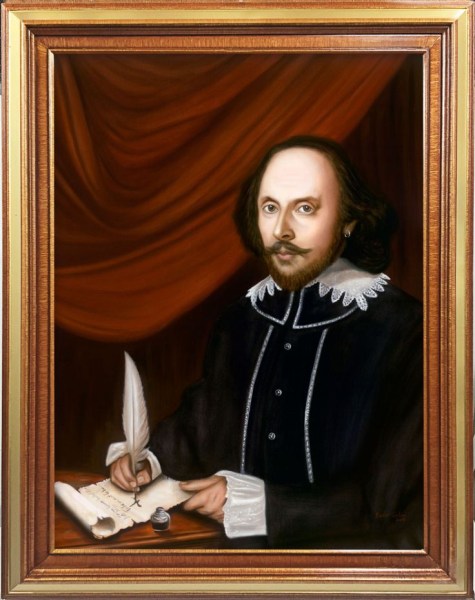
“THE BARD OF AVON” : WILLIAM SHAKESPEARE

  • Introduction and birth
  • Shakespeare’s Lost years
  • Career and his works
  • Writing style
  • His famous quotes

“All the world’s a stage, and all the men and women merely players. They have their exits and their entrances, and the one man in his time plays many parts.”

William Shakespeare was an English poet mystery, playwright and actor of the Renaissance era who is considered one of the greatest writers to ever use the English language. He was an important member of the King’s Men company of theatrical players from roughly 1594 onward. He is also the most famous playwright in the world, with his plays being translated in over 50 languages and performed across the globe for audiences of all ages known colloquially as“The Bard” or “The Bard of Avon,” Shakespeare was also an actor and the creator of the Globe Theatre, a historical theatre, and company that is visited by hundreds of thousands of tourists every year. Shakespeare’s writings capture the range of human emotion and conflict and have been celebrated for more than 400 years.

His birth records does not exist, but an old church record indicates that a William Shakespeare was baptized at Holy Trinity Church in Stratford-upon-Avon on April 26, 1564. Shakespeare was educated at the King’s New School, a free chartered grammar school that was located in Stratford. There he studied the basic Latin text and grammar, much of which was standardized across the country by Royal decree. He was also known to partake in the theatre while at the school . As a commoner, Shakespeare’s education was thought to finish at the grammar school level as there is no record of him attending university, which was a luxury reserved for upper-class families.

Shakespeare’s Lost years –
In 1582, an 18-year-old Shakespeare married Anne Hathaway. After the birth of his twins in 1585, Shakespeare disappeared from public record until 1592, when his works began appearing on the London stage. These seven years are known as “Shakespeare’s Lost Years,” and have been the source of various stories that remain unverified, including a salacious story involving Shakespeare escaping Stratford prosecution for deer poaching.

Career –
William Shakespeare first made his appearance on the London stage, where his plays would be written and performed, around 1592. He was, however, well known enough to be attacked by critics in newspapers, and thus was considered to be already an established playwright.

After the year 1594, Shakespeare’s plays were solely performed by a company owned by a group of actors known as the Lord Chamberlain’s Men, which became London’s leading company.
Between about 1590 and 1613, Shakespeare wrote at least 37 plays and collaborated on several more. His 17 comedies include The Merchant of Venice and Much Ado About Nothing. The most famous among his tragedies are Hamlet, Othello, King Lear and Macbeth. Shakespeare also wrote 4 poems, and a famous collection of Sonnets which was first published in 1609.

Early Works and after 1600: Histories and Comedies

  • Henry VI (Parts I, II and III), Richard II and Henry V – Shakespeare’s first plays were mostly histories.
  • Tragic love story Romeo and Juliet.
  • Julius Caesar portrays upheaval in Roman politics that may have resonated with viewers at a time when England’s aging monarch, Queen Elizabeth I, had no legitimate heir.
  • Comedies – the whimsical A Midsummer Night’s Dream, the romantic Merchant of Venice,the wit and wordplay of Much Ado About Nothing and the charming As You Like It and Twelfth Night.
  • Other plays before 1600 include Titus Andronicus, The Comedy of Errors, The Two Gentlemen of Verona, The Taming of the Shrew, Love’s Labour’s Lost, King John, The Merry Wives of Windsor and Henry V.
  • After 1600: Tragedies and Tragicomedies- Hamlet, Othello, King Lear and Macbeth. In these, Shakespeare’s characters present vivid impressions of human temperament that are timeless and universal.
  • In Shakespeare’s final period, he wrote several tragicomedies – Cymbeline, The Winter’s Tale and The Tempest.
  • Other plays written during this period include All’s Well That Ends Well, Measure for Measure, Timon of Athens, Coriolanus, Pericles and Henry VIII.

Writing Styles –
Shakespeare’s early plays were written in the conventional style of the day, with elaborate metaphors and rhetorical phrases that didn’t always align naturally with the story’s plot or characters.
However, Shakespeare was very innovative, adapting the traditional style to his own purposes and creating a free flow of words.
With only small degrees of variation, Shakespeare primarily used a metrical pattern consisting of lines of unrhymed or blank verse, to compose his plays. At the same time, there are passages in all the plays that deviate from this and use forms of poetry or simple prose.
While it’s difficult to determine the exact chronology of Shakespeare’s plays, over the course of two decades, from about 1590 to 1613, he wrote a total of 37 plays revolving around several main themes: histories, tragedies, comedies and tragicomedies.

Today, his plays are highly popular and constantly studied and reinterpreted in performances with diverse cultural and political contexts. The genius of Shakespeare’s characters and plots are that they present real human beings in a wide range of emotions and conflicts that transcend their origins in Elizabethan England.

Various famous quotes of william Shakespeare

“Love all, trust a few, do wrong to none.”

“A fool thinks himself to be wise, but a wise man knows himself to be a fool”.

“The empty vessel makes the loudest sound”.

“We are time’s subjects, and time bids be gone”.

No Time

What is this life if, full of care,
We have no time to stand and stare.

W.H.Davies’s poem “Leisure” is a very important poem that talks about the pertinent issue of lack of time the common man has in this fast-paced world. The world where anyone barely gets any time to sit back and cherish nature and the beauty the world has to offer. The poet asks what is this life where we don’t have any time to stand and observe. Observe anything the world has to offer to delight our visual senses.

No time to stand beneath the boughs
And stare as long as sheep or cows.

The poet says that we don’t have any time to stand beneath boughs and be lazy and just stare about blankly as sheep and cows do. This is to indicate that we don’t have any free time to about idly as cattle do.

No time to see, when woods we pass,
Where squirrels hide their nuts in grass.

We don’t have any time to observe the woods that we pass. The woods where squirrels hide their nuts in the grass. The poet says that we fail to enjoy the little but important things in life. The things that nature has presented us to cherish and bask in.

No time to see, in broad daylight,
Streams full of stars, like skies at night.

The poet says that we have no time to see in broad daylight the streams that are on offer that glisten and twinkle like stars at night. The poet points out the bountiful nature that we fail to cherish.

No time to turn at Beauty’s glance,
And watch her feet, how they can dance.

We don’t have any time to turn and look at beautiful things in life and the gracefulness that they possess. This could range from flowers swaying to the breeze to beautiful maidens dancing to a song.

No time to wait till her mouth can
Enrich that smile her eyes began.

Alas! The poet laments that we have no time to watch a beautiful smile. A pretty smile should be cherished but we fail to do so when we are running helter-skelter, hustling to stay in the race with the rest of the world.

A poor life this is if, full of care,
We have no time to stand and stare.

The poet says that it is indeed a poor life, full of care because we barely have any time to cherish the nature gifted to mankind. The poet hints to us that we should take time to cherish the small things in life that often go unnoticed and we miss out on the wondrous creation of God. Although hustling and our daily busy lives are important, we should take out some to cherish nature in its true magnificence. A pretty dance or a beautiful smile is fulfilling to our eyes and should be appreciated for its true worth instead of being ignored or missed. The poet admits the paucity of time Man has yet he tells us of the various wonderful things we would be missing out on.

Labourers and lockdown

Stained by hunger,

The splash of virus dried out to an insignificant dot on their white khadi

They can’t have more, their stomach is full— full of hunger

Their bodies are not driven by food,

Their legs tread hearing stomach’s rumble

The people crossed gutters, jumped over broken roads

The pits in the broken road are now cemented, 

Cemented by starvation,

Cemented by hopes,

Cemented by slippers that have lost the feet on which they were worn.

They who went out in the search of bread have lost their breaths

Their breathless bodies demand an answer,

An answer for their hunger

An answer for their treads,

And answer for which they had lost their breaths.

Reach out to me on instagram @ekanika_shah