Anybody Can Speak Fluent English

Speaking fluent English is everyone’s dream. In present times, fluent spoken English capability is associated with smartness. More your fluency, greater is your smartness. Although I personally don’t feel so, but there is no harm in learning and mastering a new language, right? The task may feel intimidating at first; but believe me, 8 simple tips can sail you through this language ocean.

  1. Don’t be afraid to make mistakes: You may fumble in your initial stages of English speaking; may use wrong tense, use two comparatives together (such as, This burger is more bigger than that one) etc. Don’t panic. It is absolutely fine to make mistakes. Don’t be ashamed. Learn from your mistakes. Get the courage to speak up. Accept criticisms sportingly.
  2. Hear English conversations: The easiest way to improve your speaking skills is to listen to English content as much as you can. Turn to English news channels like CNN –News 18, ET Now, India Today, Bloomberg Quint or any other channel that is provided by your cable operator. Listen to them carefully. Pay attention to their choice of words and how they are expressing themselves. Listen to English YouTube content. Watch more English movies; use subtitles.
  3. Use technology: In this technology driven world, you can always make the most out of it. There are many apps that can help you to improve your spoken English. Apps like Duolingo, Cambly, BBC Learning English, ECL Learning English are available in Google play store. You can use them anywhere, anytime in your mobile phone and practice your vocabulary, grammar and pronunciation.
  4. Read a lot: Reading is the key. It is not a mandate to read big novels or complex books like Finnegans Wake or Infinite Jest. Just grab a simple story book or a novella, sip on your favorite coffee and enjoy. Switch to English newspaper. Learn and understand the new words. Note their usage in a sentence. Bear in mind that your reading should be pleasurable; else soon you will lose interest.
  5. Use English every single day: Even if you aren’t studying or speaking English actively, increase your daily English interaction to the hilt. Start by simple things like changing your mobile phone settings to English and listening to English songs.
  6. Think English: One of the most common mistakes that we all tend to do is while speaking, we arrange our thoughts in our native language. Then we translate it to English. This is the biggest blockade in your fluency.  You must arrange your thoughts in English.  This will reduce your fumbling.
  7. Don’t stress on grammar: Do you know that the native speakers often break grammar rules? It is important to have grammatical knowledge to have a strong grasp on the language, but when it comes to speaking, grammar should be the least concern in your list. Your aim is to make yourself intelligible. Gradually you will start to catch on to the grammar rules.
  8. Increase your vocabulary: Try to learn at least 3-4 new words every day. Make weekly goals and try to achieve them. Learn new phrases, jargons and terminologies. This will help you to express your thinking in fewer words.

Learning a new language is always fun. It is not a rocket science. Catching up with fluent speaking skills just requires the right attitude and mindset. Be confident and remember that you are not the only one who faces hesitation. If it is taking time, don’t stress yourself. Gaining fluency is a process. Make this journey pleasurable and interesting and soon you will see the results.

Ahilya Bai Holkar – One of The Least Known Indian Social Reformer

A visit to India’s past will reveal numerous examples of women who influenced the world through their benignity, far-sightedness, aura, courage, and their character. But Ahilyabai Holkar (31 May 1725 – 13 August 1795) is regarded as one of the greatest queens of Malwa in terms of fame and respect. One of the least known social reformers of India, Ahilya Bai Holkar fought for the rights of women till her last breath. She is a respected Maharani (queen) and will remain to be so in all times to come.

“In latter days from Brahma came,
To rule our land, a noble dame,
Kind was her heart and bright her fame,
Ahilya was her honoured name,”

Joanna Baillie

Marriage

In 1733, she married Khande Rao Holkar. He was the son of Malhar Rao Holkar, a commander in the service of the Maratha Peshwa Baji Rao I and lord of the Malwa territory. Thus, her marriage to Khande Rao, which happened in a sort of accident, served as a stepping stone towards her rise to prominence.

She gave birth to their son Male Rao  and daughter Muktabai in 1745 and 1748 respectively.

Ahilya Bai never believed in traditions. She married her daughter to a poor brave man, Yashwant Rao, after he had beaten a band of dacoits.

Rise to position

In 1754, the young Ahilya lost her husband Khande Rao, her biggest support, to the battle of Kumbher. She was devastated. After 12 years of this incident, she lost her second biggest support, her father-in-law in 1766. As per the tradition, Male Rao succeeded the throne, but unfortunately, he also died after a short span of time in April 1767.

After so many tragic losses, she remained undismayed. She asked the Peshwa Madhav Rao I to take over the administration on her own and soon assumed the throne of Indore in December 1767.

The queen’s glory

Inspite of facing initial objections from a segment of her kingdom, the Holkar sect of Maratha army supported her. She ruled the kingdom for the next 30 years gracefully. She was a compassionate ruler and always remained accessible to her subjects. She always paid attention to their concerns.

She, along with subhedar Tukoji Rao Holkar, her military head, gloriously protected her kingdom from invaders and despoilers.

Under her years of reign, Indore achieved its utmost glorious peak. From a small village, she transformed Indore to a beautiful and prosperous city.

She undertook several infrastructural projects in Malwa and  frequently sponsored festivals. She regularly gave donations to Hindu temples.

The queen never used public cash to meet her family or personal expenditures. She contributed money from her personal funds to charity. She pursued literary, musical, artistic, and industrial endeavours in her capital Maheshwar. She even established a textile industry in Maheshwar.

Ahilya Bai had a great taste in literature and she herself was well read. As a result, her capital became home to a number of eminent citizens, including poet Moropant, Shahir Anantaphandi, and Sanskrit scholar Khushali Ram. Ahilya Bai was very fond of her craftsmen, sculptors and artists who were well paid for their work and held in high regard by her.

Accomplishments

The great queen adorned various cities with beautiful temples, wells, dharmashalas and ghats..

  • Bhusawal – Changadeva temple
  • Gaya – Vishnupada temple
  • Sinhpur – Shiva temple and ghat
  • Ujjain – temples of Ganapati, Janardana, Shri Lila Purushottama, Balaji Tilakeshwar, Ramjanaki Ras Mandal, Gopala, Balaji, and many other temples, 13 ghats on the Shipra river and many dharmashalas
  • Puri – Shri Ramachandra temple, dharmashala and garden
  • Dwarka – Mohatajkhana and Pooja House
  • Ayodhya – Temp[les of Shri Rama, Shri Treta Rama, Shri Bhairava, Nageshwar/Siddhnath, Sarayu Ghat, well, Swargadwari Mohatajkhana and dharamshalas

Other site names include Alampur, Amarkantak, Ambergaon, Bhimsankar, Burhanpur, Chandwad, Ellora, Gangotri, Haridwar, Jalgaon, Nathdwar, Prayagraj,Mathura, Sultanpur etc.

“Ahilyabai had one of the most stable reigns of the 18th century.”

Gordon

She also arranged for water supply form Ganga river to be received by temples like

  • Rameshwara Jyotirlinga, Tamil Nadu
  • Mallikarjunaswamy Jyotirlinga, Andhra Pradesh
  • Janardanaswamy temple, Kerala
  • Padmanabhaswamy temple, Kerala
  • Venkateshwara (Tirupati Balaji) temple, Andhra Pradesh
  • Mahabaleshwara temple, Karnataka
  • Subrahmanyeshwara temple, Andhra Pradesh
  • Pasupateshwara temple, Tamil Nadu
  • Dwarkadhish temple, Gujarat
  • Ranchhorji temple, Gujarat
  • Utkanteshwara temple, Gujarat
  • Vaijanath temple, Maharashtra
  • Tryambakeshwara Jyotirling, Maharashtra
  • Panchavati temple, Maharashtra

There are several other temples, the names of which have not been included here.

Legacy – After her death in 13th August 1795, she was succeeded by her commander-in-chief, Tukoji Rao Holkar (who was also the adopted son of Malhar Rao). He then abdicated the throne in favour of his son Kashi Rao Holkar in 1797.

Ahilya Bai Holkar was a woman ahead of her time. As a tribute to the great Indian queen, Government of India issued a commemorative stamp on 25th August 1996. Moreover, Indore International airport has been renamed to Devi Ahilyabai Holkar Airport and Indore University has been renamed to Devi Ahilya Vishwavidyalaya.

Such was the great queen’s valor and legacy that even after 40 years after her death, Sir John Malcom wrote,

“Her first principle of government appears to have been moderate assessment,

 and an almost sacred respect for the native rights of village officers and proprietors of   land.

She heard every complaint in person; and although she continually referred cases to

courts of equity and arbitration, and to her ministers for settlement, she was always accessible.

So strong was her sense of duty on all points connected with the distribution of justice, that

she is represented as not only patient but unwearied in the investigation of the most insignificant cases,

when appeals were made to her decision.”

Purple Day of Epilepsy

Purple Day is the international day of Epilepsy Awareness. It is observed on 26th March of every year. Purple Day is a grassroots initiative dedicated to raising awareness about epilepsy worldwide. It aims at creating awareness among the masses about epilepsy and bust the myths and stigma associated with it. The purpose of Purple Day is to educate the people who are not familiar with epilepsy, and to let those who suffer from this condition realize that they are not alone.

History of Purple Day

This concept was instituted by a 9 year old girl, Cassidy Megan of Nova Scotia, Canada in 2008. Epilepsy Association of Nova Scotia joined hands with her in this initiative. The first Purple Day event was held on 26th March 2008. At present we call it as the Purple Day for Epilepsy Campaign.

In 2009, Anita Kaufmann Foundation of New York and Nova Scotia based Epilepsy Association allied to launch Purple Day internationally. Their object was to involve organizations, schools, colleges and eminent personalities. The Purple Day campaign received Royal Assent in March 2012 and is now an official Canadian awareness day.

Canada is the only country in the world whose government officially recognizes March 26th as Purple Day through the Purple Day Act implemented on June 28, 2012.

Today as many as 100 countries globally celebrate this day.

How to celebrate this day?

There are several ways by which you can honour this day.

  • Easiest way is to wear purple clothes and tell your friends why you are wearing this colour on that particular day.
  • You can help the local bodies in organizing events.
  • Help the NGOs, launch campaigns, spread epilepsy awareness as much as you can.
  • You may also apply to the Anita Kaufmann Foundation and become a Purple Day ambassador

Apart from these things, you can always make people realize that Epilepsy awareness is not just a one day affair. People can make small contributions (not necessarily financial) throughout the year.

What is Epilepsy?

You may have a vague idea about this disease. Let’s have a clear understanding of what this thing really is.

Epilepsy is one of the most common neurological diseases in the world. WHO states that there are about 50 million people worldwide who suffer from epilepsy. It is a neurological disorder in which nerve cell activity in the brain is disturbed, causing seizures, periods of unusual behavior, abnormal sensations or sometimes loss of consciousness. Epilepsy is self-diagnosable. The severity and duration of seizures can vary from the briefest lapse of attention to severe convulsions.

“It is characterized by recurrent seizures, which are brief episodes of involuntary movement that may involve a part of the body (partial) or the entire body (generalized) and are sometimes accompanied by loss of consciousness and control of bowel or bladder function.

Seizure episodes are a result of excessive electrical discharges in a group of brain cells. Different parts of the brain can be the site of such discharges. Seizures can vary from the briefest lapses of attention or muscle jerks to severe and prolonged convulsions. Seizures can also vary in frequency, from less than one per year to several per day.”

World Health Organization (WHO)

Symptoms

  • Stiffness of muscles
  • Loss of consciousness
  • Uncontrollable jerking movements of arms and legs, or sometimes whole body
  • Blank staring
  • Unresponsiveness

There are 2 types of seizures.

  • Simple Partial seizures  – The person remains conscious but there can be dizziness, disturbance in sensations of sight, smell, taste, hear or touch and jerking of limbs.
  • Complex partial seizures – The person becomes unconscious. Other symptoms are blank gazing, unresponsiveness and performing repetitive movements.
  • Generalized seizures – Includes Absence seizures, Tonic seizures, Atonic seizures, Clonic seizures, Myoclonic seizures, Tonic-clonic seizures.

Causes

The causes are still unknown. However some reasons have been identified.

  • Brain tumor
  • Stroke
  • Severe head injury
  • Brain infections
  • Lack of oxygen during birth
  • Genetic influence
  • Developmental disorders

Do You Know?

As one of the original supporters of the day, Anita Kauffman initiated the setting of a Guinness World Record for the largest ever epilepsy training session in 2017. This event was held at Mall of America, Bloomington, Minnesota, in alignment with Purple Day Walk.

Prevention

It is not evident that this condition can be prevented. But some studies have shown that about 25% cases can be prevented.

  • Sufficient pre-natal care can prevent head injury during birth
  • Lower the chances of stroke and heart disease – exercise, adopt a healthy lifestyle, avoid tobacco and alcohol
  • Get vaccinations. Jabs can protect you from infections that may sometimes lead to epilepsy
  • Stay healthy during pregnancy
  • Avoid head injuries

Early and timely detection can cure epilepsy.

Myths

Let us go through some myths that are associated with this condition

  • Persons with epilepsy are mentally unstable
  • They are not smart as other people
  • Epilepsy is contagious
  • It cannot be treated
  • Such persons cannot lead a normal life

These are not true. Persons with epilepsy can absolutely have a normal life, are as smart as their peers and are NOT MENTALLY UNSTABLE. This condition is completely non-contagious. In about two-thirds of patients treated with anti-seizure medication, epilepsy no longer occurs. Patients who are unresponsive to medications receive surgery.

Conlusion – Let us take initiations from our end by doing whatever we can. Let us not discriminate the persons who are going through this condition. Our small contributions can make a huge difference to the lives of people who are living with epilepsy.

Flexitarian Diet – What the fuss is all about

Photo by KoolShooters on Pexels.com

Do you want to lose weight? But you dread about all the rules and restrictions that come with it? Do you want to rope in the benefits of vegetarian diet? But cannot even imagine about going meat –free. Don’t worry. Stay put and read on.

Flexitarian – a term coined by Dawn Jackson Blatner in 2008 in her book “The Flexitarian Diet”, simply means combining plant based diet and animal diet in a holistic manner.

As the name suggests it comes from flexible + vegetarian. It encourages plant based foods without letting off your favorite chicken burger. So you need not follow a strict regime. But let me aware you of the fact that this diet system decreases the frequency and quantity of your meat intake.

How much meat should I consume if I follow this diet regime?

You should be consuming 9 to 28 ounces of meat per week depending upon your allegiance.

How to begin with?

There are 3 stages by which you can gradually decrease your meat count.

  1. Beginner: Do not consume more than 28 ounces per week. You can go meat-free for 2 days a week.
  2. Intermediate:  Increase your intake of fruits and veggies. Have a full vegetarian diet for  3-4 days a week. Reduce your meat intake to 18 ounces for the rest of the days of the week.
  3.  Expert: Opt for complete vegetarian diet for 5 days a week. For the remaining 2 days, go for 9 ounces of meat. But mind it NOT MORE THAN THAT!

Can I consume dairy products?

YES. Since its flexible dieting, you can have dairy products (thanks to its nutritional values) but in moderation.

What benefits shall I reap?

  • Reduced risk of heart disease : Veggies are high in fiber and have antioxidants. Since meat have saturated fats, non veg foods buoy up cholesterol levels. This increases fat deposits in blood vessels, thereby making it difficult for sufficient blood to flow through the arteries. On the other hand, fiber rich diet and healthy fats reduce blood pressure and increase good cholesterol.

Flexitarian diet is not completely but mostly plant based, hence it shall give you the benefits of a veg diet.

  • Weight management :  Veggies are fiber rich, they keep your tummy full for longer hours, thereby reducing your hunger pangs. And being lower in calories, they help you to keep your weight under control.
  • Prevents diabetes :  Vegetarian diets are many times better for reducing the risk of Type-2 diabetes due to their weight management capability (thereby making your body more insulin responsive) and high fiber.  This benefit will incorporate in flexitarian diet to some extent.
  • Preventing cancer : There have been many debates over this topic. Evidences are limited, but some researchers believe that plant based foods have an added advantage over meat regarding this issue. Since vegetables and fruits have much lower calorie-count, they control your weight. Weight gain is one of the factors of some type of cancers.
  • Flexible : As the name suggests, you don’t need to forgo your favourite hamburger or your favourite juicy steak. Invite your friends at your place, cook them a delicious non veg meal and enjoy it with them. Wink!
  • Eco friendly :  Even after reading so many benefits, you are heavyhearted about having to let go off your fried chicken for most days of the week, let me tell you that not only you are improving your health but also the health of mother nature. YES… YOU READ THAT RIGHT. Farming livestock contributes a lot to greenhouse gas emissions. By reducing your intake of meat, you are stepping into the shoes of an environment warrior.

“Following a flexitarian lifestyle not only has a smaller environmental footprint, but patients often experience weight loss, have lower rates of heart disease, diabetes, and cancer, and live 3.6 years longer”

Blatner

Great! So it’s completely healthy, right?

Actually not. Flexitarian comes with its cons.

  • Nutrition deficiency: Plant based diets may lack in some nutrition that meat meals provide such as omega-3 fatty acids, calcium, zinc. In order to get the best of both worlds, plan your diet accordingly.
  • Difficult for regular meat eaters: This regime might become difficult for those who cannot even imagine one meat-free meal. In such case, I would suggest to gradually reduce your meat intake. Start with one day, then go on increasing to 3 or 4 days. In this way your body will get accustomed to vegetarian food and you will not indulge in unhealthy eating habits.
  • Lack of awareness: People are not well aware of flexitarian diet. Reducing meat intake and increasing veggies consumption does not mean that you can have added sugar and carbohydrates as this will lead you to nowhere.

Conclusion – Like all other things in the world, Fkexitarian diet comes with its own set of advantages and disadvantages. But with proper plan and tenacity, you can make the most out of it.

What are you waiting for? Go ahead and let me know your comments in the comment section below.

International Day of The Unborn Child

International Day Of the Unborn Child is a feast day celebrated on 25th March of every year. This day is celebrated in remembrance of unborn foetuses. This day is observed as a day of opposition to abortion. In 1993, El Salvador, the first country to celebrate this day, observed Day of the Right to Be Born. After this, many countries began to observe their own remembrances of the unborn child.

What’s the significance?

This day celebrates thousands of unborn children whose lives have been sacrificed due to the savagery of abortion. This day is a reminder that all human lives are special. Each and every human life is precious and has dignity since the day of its conception. The countries observe this day as their protest against abortion.  International Day of The Unborn Child reminds us that human life at any stage should be respected.

History

Pope John Paul II established this day to coincide with the Feast of Annunciation. Following the footsteps of El Salvador, several other countries started observing this day.

Argentina – Day of The Unborn – 1998

Chile – Day of the Conceived and Unborn – 1998

Guatemala – National Day of the Unborn – 1999

Costa Rica – National Day of Life Before Birth – 1999

Nicaragua – Day of the Unborn Child – 2000

Other countries such as Peru, the Philippines, the Dominican Republic and Paraguay are also observing this day.

Abortion and its effects

The decision to end a pregnancy is quite a difficult one and often requires a lot of reflection. There are variety of reasons to undergo an abortion – unplanned pregnancy, financial crisis, health issues, socioeconomic reasons and many other such factors.

Abortion is a loss and different individuals deal with it differently. The range of emotions varies from grief, regret, depression to happiness or sense of relief. This is a very crucial stage and requires support from family and friends.

Abortion can cause irregular menstrual cycles and sudden hormonal changes that require a longer recovery time. A constant state of negative emotions can lead to anxiety and depression.

Legality of abortion

There have been many debates regarding the abortion laws. Different laws prevail in different countries. There has been a constant wrangling between “pro-life” and “pro-choice”. In light of religious beliefs, human rights issues, women’s rights, as well as ethical issues, the entire matter is very debatable as both sides strongly believe they have logical reasoning and moral rights to support their claims.

There are 67 countries in the world that allow women to undergo abortion upon their request (with limiting gestational period). On the other hand, there are 26 countries in the world that forbid abortion altogether.

Some countries with liberal abortion laws offer legislations to safeguard the abortion clinics against vandalism, demonstrations, threats and harassment to both patients and staff. While some other countries create “buffer zones” around the clinics so that the protestors cannot have an access to the facility.

The Medical Termination of Pregnancy (MTP) Act of 1971 provided for the legalization of abortion in India under various circumstances for the past 50 years.

Now let us go through some facts and figures:

  • According to a report, in 2019, there were approximately 630,000 legal abortions reported in the United States.
  • According to WHO, 22% of all pregnancies in the USA (excluding miscarriages) end in abortion.
  • WHO noted that every year there are an estimated 40-50 million abortions in the world. This corresponds to approximately 125,000 abortions per day.

World Tuberculosis Day – Things You Need To Know

Photo by Edward Jenner on Pexels.com

Today is World Tuberculosis (TB) Day. Every year 24th March is observed as World TB Day. This day is celebrated to build public awareness and eradicate this disease. It was on this date in 1882 that Dr Robert Koch announced that he had discovered the bacteria Mycobacterium Tuberculosis that causes tuberculosis, which opened the door to diagnosing and curing this deadly infectious disease.  The theme of World TB Day 2022 is “Invest To End TB, Save Lives”. As per a report stated by WHO, 15,00,000 people died of TB in 2020. As a result of COVID-19, years of progress made to end TB have been reversed. The number of TB deaths increased in 2020 for the first time in more than a decade.

Let’s have a look at the causes and symptoms of TB.

Causes

TB is a contagious infection that usually affects lungs but can also spread to other parts of the body such as brain and spine. It is an air borne disease. When a person inhales air particles, droplet nuclei, containing Mycobacterium Tubeculosis, it infects the person. It is curable but the medications need to be taken for a long period of time, usually 6 to 9 months.

There are 2 types of TB-

  • Latent TB – The person neither shows any symptoms nor is he contagious. But there are chances that the bacteria will become active.
  • Active TB – The person is contagious and can spread the disease by coughing or sneezing.

Symptoms

  • Cough that persists more than 3 weeks
  • Chest pain
  • Fatigue
  • Blood in the cough
  • Night sweat
  • Fever
  • Chills
  • Weight loss
  • Loss of appetite

Prevention

  • Proper ventilation – Since TB is an air-borne disease, poor ventilation elevates the disease.
  • UV Light – UV light can kill TB bacteria
  • Hygiene – Covering mouth and nose is important while coughing or sneezing to prevent the spread of TB
  • Vaccination – BCG (Bacille Calmette-Guérin) is the only vaccine against TB and has been in use since  1921. A strain of weakened bovine tuberculosis bacillus, Mycobacterium bovis, is used in this vaccine. It is administered only to infants and is not given once the infant becomes 12 months of age.

Organisations

Many organisations such as World Health Organisation (WHO), National Tuberculosis Controllers Association (NTCA), TB Elimination Alliance, Stop TB Partnership, Atlanta Tuberculosis Prevention Coalition (ATPC) are working to build public consciousness and eliminate this disease. By joining hands with local administration bodies, they arrange for public training and campaigns.

U.S National Institutes of Health, Bill and Melinda Gates Foundation, German Federal Ministry of Education and Research, UK Medical Research Council are some of the major organisations that provide funds for TB research and development.

Now when you are well aware of the causes and symptoms of TB, let us go through some statistics.

Statistics

  • According to some reports, as of 2019, it was estimated that TB was responsible for around 1.2 million deaths a year worldwide, with most TB cases and deaths occurring in developing countries, particularly in Africa and Southeast Asia.
  • India has the highest number of deaths from TB worldwide, with around 436,000 deaths from the disease reported in 2019. The three countries with the highest death rates from TB in 2019 were all found in Africa.
  • Cases of TB in developed countries have decreased steadily over the past few decades, dropping to a rate of 2.76 per 100,000 populations in 2018.
  • The report also states that there has been a success rate in treatment for all new and relapse TB cases in WHO world regions. In 2018, Africa reported a treatment success rate for new and relapse cases of about 82 percent.     

Shaheed Diwas 2022

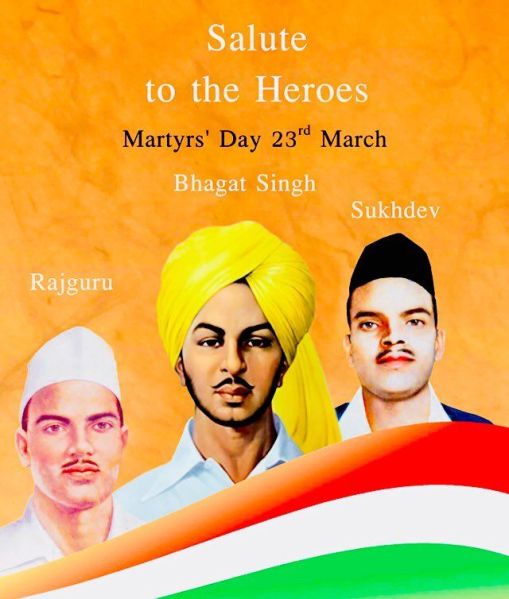
23rd March of every year is marked as Shaheed Diwas or Martyr’s Day. This day commemorates the sacrifices made by freedom fighters Bhagat Singh, Rajguru and Sukhdev for India’s independence. This day marks the death anniversary of these 3 valiant freedom fighters.

Pinterest.com

History of Shaheed Diwas

Lala Lajpat Rai was a pivot figure in Indian Independence Movement. In 1928, Simon Commission, headed by Sir John Simon, was set up to report on the political situation of India.  Indian political parties boycotted the commission because it did not include any Indian member. When the commission visited Lahore on 30th October 1928, Lala Lajpat Rai led a non violent protest and gave the slogan  “Simon Go Back”. Protestors held black flags and chanted the slogan.

Inspite of the peaceful protest, the superintendent of Lahore police, James Scott ordered the police to lathi charge the protestors. He fatally wounded Lala Lajpat Rai. Lajpat Rai succumbed to his wounds on 17th November 1928.

Aftermath

The British government denied any role in Lajpat Rai’s death. Revolutionary Freedom fighter Bhagat Singh witnessed the horrific incident. He joined hands with Rajguru, Sukhdev and Chandra Shekhar Azad and vowed to avenge the death of Lajpat Rai.

On 17th December 1928, owing to mistaken identity, Rajguru and Bhagat Singh shot the assistant superintendent of Lahore police, John P. Saunders.

In April 1929, in the Central Legislative Assembly in Delhi, Singh and Batukeshwar Dutt blowed two bombs and allowed the authorities to arrest them.

The trial led to the hanging of the trio in 23rd March 1931.

“Bhagat Singh did not become popular because of his act of terrorism but because he seemed to vindicate, for the moment, the honour of Lala Lajpat Rai, and through him of the nation. He became a symbol; the act was forgotten, the symbol remained, and within a few months each town and village of the Punjab, and to a lesser extent in the rest of northern India, resounded with his name.”

Jawaharlal Nehru

Conclusion

The sacrifices made by our national heroes should be remembered at all times. Shaheed Diwas reminds us that we must not forget the martyrs of our great leaders and uphold the dignity and valour of our motherland.

Origin Of Theatre In India

Theatre is defined as a form of performing art in which live performers present real events or fictional events before a live audience in a specific place, often a stage.

“I regard the theatre as the greatest of all art forms, the most immediate way in which a human being can share with another the sense of what it is to be a human being.” 

Oscar Wilde

The origin of Indian theatre dates back to 2nd century BC. The earliest form was Sanskrit theatre. Indian theatre was heavily based upon Natyashastra authored by Bharata. It eventually modernized with the advent of British rule.

Photo by cottonbro on Pexels.com

Indian Theatre can be classified into 3 parts – classical, traditional and modern.

Classical – Some notable playwrights of this era are Kalidasa, Bhasa, Harsha, Shudraka, Vishakhadatta and Bhavabhuti. Classical era plays were based on stories that were already known to the audience such as folk tales, history or epic. This era lasted upto 1000CE.

Traditional –  Traditional era mainly consisted of different Hindu religious cult and divinities. It dealt with vice and virtue and thereby was larger than life. This era witnessed the introduction of monologue and soliloquy. Different types of traditional theatres performed throughout the country are Jatra, Rasleela, Bhavai etc.

Modern – Contemporary Indian theatre is rooted in the British era. It was heavily influenced from western dramas. In contrast with the stylized techniques used in traditional Indian theatre, the acting became melodramatic and naturalistic. Not just historical and religious themes, but for the first time social and political themes were enacted. Playwrights like Shambhu Mitra, Vijay Tendulkar, Ibrahim Alkazi, Girish Karnad and Utpal Dutt etc. made new experiments and contributed in developing the theatre form to reach where it is today.

Indian theatre and society

The theatre and society in India have always been interconnected. Even during the colonial era, the plays were heavily based on nationalism and patriotism. The first famous play of this kind, Nil Darpan,  was written by Dinabandhu Mitra in Bengali. This play was based on the theme of forced cultivation of indigo inflicted on the native planters by British rulers. Plays like Khadrin Verdri, Desheeya Koti, Bharat Durdasha, Andher Nagri also reflected the plight of then India.

19th century plays condemned the social evils and superstitions like caste system, untouchability, dowry, child marriage, to name a few.

Indians were now introduced to plays of foreign languages. Many plays of Shakespeare were adapted in India.

Indian theatre witnessed many changes in the post-independence era. Cinema posed a challenge to the entertainment theatre and thus, amateur theatre flourished. While entertainment theatre thrilled masses, it was often criticized, particularly by educated people. This opened the door for literary drama and amateur drama. One such notable playwright of literary drama was Rabindranath Tagore.

Conclusion

Indian theatre has played a significant role in spreading awareness among the masses. Street theatre deals with various daily life issues like corruption, domestic violence, child labour, women empowerment etc.  In collaboration with various NGOs, theatres also conduct plays in rural areas to spread awareness.

Korean Pop Culture And Drama

Why K-Pop And K-Drama Are Getting Prominence These Days?

The world is going crazy over the Korean dramas and music. What’s the reason for this sudden upsurge in popularity of K-pop and K-drama?

Hanryu or Hallyu – meaning Korean wave, is evident from the fact that Oxford Dictionary has added 26 Korean words in its vocabulary. Korean boy band BTS’s presence in United Nation’s 76th General Assembly in 2021 has further showed how pre-eminent this wave is.

History of Korean Popular music (K-Pop) and Korean Drama (K-Drama)

Seo Taiji and Boys, the first K-Pop band, debuted in 1992. The band saw huge success and was the groundbreaker in introducing the rap genre in Korean music industry. By integrating dance routine in their performance, it pioneered breakdancing.  Seo Taiji and Boys disbanded in 1996 but left behind a legacy which was followed by many upcoming bands.

BTS, EXO, Blackpink, Twice are some of the names that have upheld the Korean popular music and are still spreading their wings internationally.

The first Korean drama was Death Row Prisoner that released in 1956. But Jewel in the Palace (2003) gained massive international recognition. Since then, Korean drama industry never looked back and churned out global hits like:

  • Guardian: The Lonely And The Great God (2016)
  • Mr. Sunshine (2018)
  • Sky Castle (2018)
  • Crash Landing On You (2020)
  • Squid Game (2021)
  • All Of Us Are Dead (2022)

Phew, the list will be endless.

What makes them so popular?

Now coming to this part, let us see why Korean entertainment industry is getting bigger with each passing day.

  • Catch up a K-drama, watch even a single episode, you will be in awe with its high production value.
  • Though they have predictable storylines, like rich guy falls for poor girl, teenage romance, college romcom, etc.; the episodes will keep you hooked from beginning till end.
  • The series have finite episodes, usually 10-16 episodes making it crisp and engaging.
  • No loud makeup and cheesy lines
  • Eye pleasing actors.
  • Korean dramas provide a good glimpse of their food, culture, lifestyle and scenic beauty.

Now let’s see the reasons for popularity of K-Pop :

  • Just look at the K-Pop idols. They are so charismatic. Isn’t? They present themselves so well.
  • Their humbleness makes them approachable to their fans. They enjoy a good loyalty from their fans. Take BTS as an example. Their fans call themselves “army”.
  • They are incredible dancers. They have some spectacular choreography. Years of hard work and training enables them to deliver synchronized performances.
  • With catchy music and relatable lyrics, K-Pop is gaining massive loyalty from their fans. Have you heard “Even though it’s pitch black in front, run forward” from “Can’t Nobody” song of the girl band 2NE1? The lyrics relate to our daily life.

“You gave me the best of me

So you’ll give you the best of you”

Magic Shop from boyband BTS

Heart touching. Isn’t?

  • Korean musical bands consistently deliver top notch performances.

Role of OTT platforms

The recent covid pandemic that made people stuck in their homes has increased the viewership of k-dramas. With the OTT platforms offering a plethora of international content, the lockdown period saw a boom in interest in such content, including Korean. Korean content gained popularity as people sought a mental diversion from the stressful times they were living through. As per a report in Hindustan Times, “The viewing for K-dramas on Netflix in India increased more than 370% in 2020 over 2019”. Netflix is already 2X its investment in Korean content. We can hope to see more incredible K-dramas in the future.

Economic impact

The Hallyu wave improved the economy of South Korea.  Until 1960s, the country’s GDP primarily depended on its agriculture. According to World Bank, it had a GDP of only $3.985 billion in 1960. Whereas in 2021, the country ranks 11th globally in terms of GDP at a whopping $107.4 trillion. According to HRI’s report published in 2018, BTS accounted for an estimated $3.54 billion of the South Korean GDP. This figure is growing. In 2019, the export value of K-dramas broadcast on program provider channels reached around 159.55 million U.S. dollars.  According to a report, three concerts held by the boy group BTS in Seoul in 2019 had a total direct and indirect impact of around 923 billion South Korean won.

Conclusion

During the past 2 decades, the Korean Wave has grown exponentially, and it continues to do so. Korea will have to innovate and harness the massive potential and popularity of the Korean Wave to sustain its global appeal.

We have finally begun exploring the other side of the world.