SOCIAL MEDIA

Advancement in technology led to the emergence of social media platforms. It has facilitated sharing of information, ideas, career interests and other forms of expression. Communication can be done at a faster pace as people living far away are linked to each other through social media platforms and it takes hardly a few seconds to connect to anyone around the globe.

SOCIAL MEDIA CONTRIBUTION TO SOCIETY:

  1. A boon in crisis
  2. Aid for solving crimes
  3. Form of political influence
  4. Revolution in brand making
  5. Curbs distance

SOCIAL IMPACTS:

  1. Disparity
  2. Political polarization
  3. Physical and mental health
  4. Stereotyping
  5. Sleep disturbances
  6. Adolescents
  7. Effects on youth communication
  8. Changes in mood

POSITIVE SIDES OF SOCIAL MEDIA

  1. We can keep in touch with friends in today’s busy world.
  2. We can improve ourselves by sharing our ideas, information and knowledge with those, who have same interests, even if they are so many miles away from us.
  3. Teachers and professors are making groups on SNS to extend classroom discussion, to post assignments, tests & quizzes and to assist students with homework.
  4. Many companies are developing interactive communities that connect individuals to share business needs & experiences.
  5. Students are connecting with employers via LinkedIn kind of SNS for job opportunities and internships.
  6. We can find our friends easily, if we lost contact.
  7. Generally social networking sites have a positive atmosphere. For example, Facebook doesn’t send notification, if someone is removed as a friend. So there is a least chance for the person to know that.

NEGATIVE SIDES:

  1. People are increasingly comparing their lives with others that are projecting their life as perfect. This decreases happiness levels and also can lead to self-esteem issues.
  2. Privacy is a big drawback of SMS. Some people are using other person’s personal information for malicious intentions.
  3. Addiction is another big drawback of SMS.
  4. Lot of SMS users are preferring online conversation rather than face-to-face. It’ll effect communication skills, relationships and even mental health.
  5. There is a high risk for children and teenagers from cyber stalking.
  6. Gossips and rumors spread soon.
  7. Spending in front of computer for long hours creates many health problems.

Advantages for Teenagers:

a)      Comfortable way of communication for shy teens. This can boost their self-esteem and confidence.

b)      Social media gives teens with unusual interest and hobbies a place to share information and enthusiasm.

c)      Social media helps them to enrich and manage their social lives.

d)      Teens who are differently able and have other challenges can communicate with other teens with similar problems.

 Disadvantages for Teenagers:

a)      Online bullying and harassment which is also known as Cyber-bullying may be the biggest danger for teens.

b)      Online predators, it is basically an online sex crime against minors.

c)      Less interaction with friends and family.

Advantages for students:

a)      Students can produce and retain information.

b)      Social media offers lots of opportunities for learning and interaction.

c)      Students are getting to explore and experience the world not only by books and assignments; but also by adapting social media.

d)      In today’s world; contacts, networks and communications are very important; students who are accessing Facebook, twitter and other such social networking site to connect and share information have good contacts.

        Disadvantages for students:

a)      Social media can be a very distracting and harmful for students.

b)      Students share personal information, comment on someone’s post which may be harmful for them.

c)      Always glued with their mobiles, tablets, computer which is a wastage of time and may spoil their performance.


MARITAL RAPE

Indulging in sexual intercourse with one’s spouse without consent is marital rape. The essential element to constitute marital rape is lack of consent. It does not need to involve physical violence. It is a form of sexual abuse and domestic violence. Initially it was regarded as the right of spouses to have sexual intercourse within marriage but indulging in such act without consent, now is termed as rape. Marital rape is experienced widely by women.

HISTORY

It was believed that if a girl marries a boy, she has given consent to have sexual intercourse and also that a husband cannot rape his wife. Rape was considered as a crime and theft of man’s property. It was not recognized as damage to woman but instead to her father or husband. A legal doctrine stated, upon marriage, a woman’s legal rights were subsumed by those of her husband. The property to be withheld in a woman was her virginity. A woman was considered as the property oh her father and after marriage the property of her husband. And thus it was assumed that a man cannot rape his own wife as she is his own possession. Marital rape cases are seen highly in forced marriages.

Rape laws was created to protect the property interests men had in their women and not to protect women themselves.

MARRIAGE AFTER RAPE

Many a times the victim of rape is forced to marry her rapist, as a resolution to rape. These kinds of marriages are known as reparatory marriages. As a result of which many victims remain in violent relationships and experience marital rape. Even after marital rape victims continue to remain in such relationships because they think that divorce may be hard to obtain. Another reason being they feel shame and guilt.

PSYCHOLOGICAL AND PHYSICAL DAMAGE

  • Spread of sexually transmitted diseases and HIV
  • Affects the victim’s reactions
  • Emotional trauma

RELIGION

In many religions it is said that after marriage husband and wife are no longer two, but one flesh. It is explicated in the writing of Apostle Paul as:

“The wife does not have authority over her own body, but the husband does. And likewise the husband does not have authority over his own body, but the wife does. Do not deprive one another except with consent for a time that you may give yourselves to fasting and prayer; and come together again.

Sex within marriage is even considered as duty and some religious figures even consider marital rape as impossibility.

GENDER EXPECTATIONS

After marriage some obligatory roles are placed on wives which is considered as their duty. They are expected to sacrifice their happiness and everything for their family, fulfilling the sexual demands of their husbands.

Husbands are influenced by the expectations of their masculinity. Husband is the head of the family and is expected to provide food, cloth and shelter. Along with this comes the privilege and authority of patriarchy. And if the wife denies the husband thinks that he is being challenges. And then violence comes into play.

SECTION 375 OF IPC

It states: “Sexual intercourse or sexual acts by a man with his own wife, the wife not being under fifteen years of age, is not rape”.

Recent change to this is: “Sexual intercourse or sexual acts by a man with his own wife, the wife not being 18 years, is not rape”.

Section 375 discriminates between two groups of the same sex; married women and unmarried women. Right to life under Article 21 of the Constitution includes right to privacy, sanctity of female and to make choices relating to sexual activity. Section 375 Exception 2 stands against these very basic human rights and is contradictory in nature to the Protection of Women from Domestic Violence Act, 2005. Exception 2 to Section 375 exempts unwilling sexual intercourse between a husband and a wife over fifteen years of age. India remains one of 36 countries where it is not a crime for a man to rape a woman.

Arguments given against criminalizing marital rape:

  •  Argument 1: It’s against Indian culture
  • Argument 2: Once married, women’s perpetual consent is implied
  • Argument 3: Women will misuse any law against marital rape

PROBLEMS IN PROSECUTING MARITAL RAPE

  • The criminalization of marital rape does not necessary mean that these laws are enforced in practice.
  • Lack of public awareness
  • Refusal

HOMOSEXUALITY

Besides the two sexes: male and female that you all are aware of, there exists many more. One amongst the many is “homosexuality”.

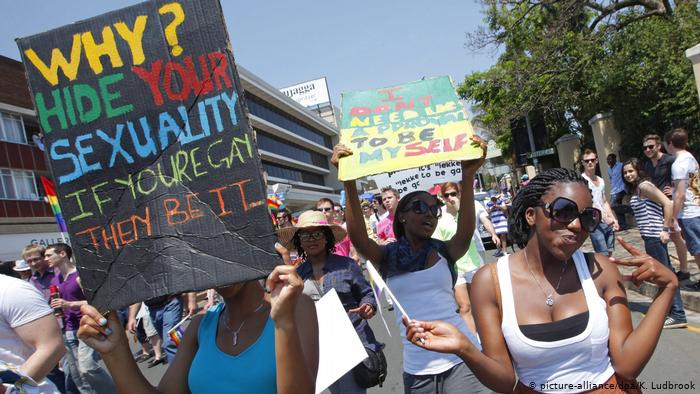
Attraction to the members of the same gender or sex romantically is referred to as homosexuality. Lesbians for females and gay for males are the most common names for people who are homosexual. The exact cause is still not known for such sexual traits. People still consider it as unnatural. Earlier homosexuality was banned and even punished sometimes. It was even considered to be mental illness.

IDENTITY AND SEXUALITY OF AN INDIVIDUAL

The need of love, attachment and intimacy is fulfilled through sexual orientation. Expressing of gestures with another person leads to the distinction of ones sexuality as heterosexual, homosexual or bisexual. Throughout a person’s life sexual identity can be changed. Homosexuals express their sexuality in a variety of ways, some of them being: having relationships with the people of same sex or that of opposite sex (bisexuality).

A person should come out and accept his sexuality.

At first they must have inner realization of his identity.

 Secondly, they should open up and talk about their sexuality with friends, family etc.

Thirdly, they must live openly as an LGBT person.

ANTI GAY MYTHS PREVAILING IN SOCIETY

– Gay men molest children at far higher rates than heterosexuals.

– Same-sex parents harm children.

– People become homosexual because they were sexually abused as children or   there was a deficiency in sex-role modeling by their parents.

– LGBT people don’t live nearly as long as heterosexuals.

– Gay men controlled the Nazi Party and helped to orchestrate the Holocaust.

– Gay people are more prone to be mentally ill and to abuse drugs and alcohol.

– No one is born gay.

– Gay people can choose to leave homosexuality.

HOMOSEXUAL YOUTH

Families even today are not ready to accept their sexuality other than male and female. They face rejection from their family, isolation, hostile environment, verbal and physical abuse, sexual abuse, discrimination etc. They become victims of such ill practices. As a result of victimization they run away from their homes or even commit suicide.

HOMOSEXUALITY- A CHOICE

A person’s sexuality is not their choice. Sexuality is biologically determined. It is an unalterable aspect of a person’s life and thus a person should not be discriminated on the basis of their sexuality. Sexual preference is also influenced by the structure of brain.

As long as a person’s actions are not harming others they must have the right to engage themselves in sexual acts as per their preferences.

INDIA AND HOMOSEXUALITY

Homosexuality was earlier considered as sin and crime in India. It is now considered as a human sexuality. Such issues and concerns are still sensitive here. A positive and a non-judgmental attitude will go a long way in relieving distress. There is still a need to raise awareness, transfer knowledge, and provide opportunities on these issues amongst everyone. Education needs to be imparted on human rights and abuses. Attitude of the people must change to develop a better society for homosexuals.

SECTION 377 OF IPC

Section 377 of the Indian Penal Code states- “Unnatural offences: Whoever voluntarily has carnal intercourse against the order of nature with any man, woman or animal shall be punished with imprisonment for life, or with imprisonment of either description for a term which may extend to ten years, and shall also be liable to fine.” On 6 September 2018, the Supreme Court of India ruled that the application of section 377 to consensual homosexual sex between adults was unconstitutional. This section was violating article 14, 15, 19 and 21 of the Constitution. The abolition of this section lead to- recognition of  the identity of individuals belonging to the LGBT community and also confers upon  global acceptance by the society.

We need to focus on people’s humanity rather than on their sexual orientation.

RACISM

Differentiation of human beings on the basis of physical appearance is what racism is about. It gives birth to prejudice and discrimination against people because of their skin color. Racism ignites the feeling of hatred in the heart of every being against these people.

Nobody chooses a certain color of their skin to be born with. An individual’s skin pigmentation is the result of genetics. Different races amongst people lead to their superiority and inferiority in the society accordingly. Abuse, harassment, name-calling, exclusion from groups and preventing people from enjoying dignity and equality are acts arising out of racism.

Racism is found everywhere- around you and me in some or the other form. In our neighborhoods, shops, workplace, schools, public transport etc. These days racism is also seen online in the form of offensive comments, hateful videos and memes.

SYSTEMATIC RACISM

System and institutions tend to render advantage to white people and cause widespread harm and disadvantage in terms of opportunities to people referred to as black. Systematic racism has its roots into the laws and institutions which were created on the foundation of white supremacy. Color based oppression of people based on a socially constructed racial hierarchy and giving privilege to people who are identified as white is “white supremacy”. Systematic racism is also initiated in inter personal conversations and behavior that include bullying and offensive language.

RACISM – A PROBLEM

Racism causes harm to the ones against whom it is practiced. It hurts individuals, communities and our society at large. It has profound effects on the mental health and welfare of the people on whom it is inflected. This includes feelings of sadness, anger. anxiety and even depression. Diminishing quality of life and people attempting suicide are another consequences of racism.

Racism is confined to effecting individuals but also has the potential of affecting the whole society. It leads to the creation of a society with lack of trust and respect amongst the people. It also challenges fairness and equality.

BLACK LIVES MATTER

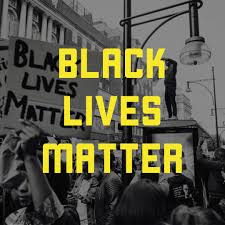
Black lives matter was founded in 2013. It is a global organization in the US, UK, and Canada, whose mission is to eradicate white supremacy and build local power to intervene in violence inflicted on Black communities by the state and vigilantes. The recent Black Lives Matter protests arose on June 6, when half a million people turned out in nearly 550 places across the United States.

This victory for Black Lives Matter demonstrates the effectiveness of the organization to fight for justice and create societal change. Black lives matter is working to improve the lives of African Americans in America. It has been able to initiate a unified voice against the racial inequality.

ANTI RACISM

In order to oppose racism some beliefs, actions, policies and movements are adopted, this is known as anti racism. It aims at creating a society where people are not discriminated on the basis of their race. Movements against racism : civil rights movement and anti-apartheid movement.

ANTI RACIST ORGANIZATIONS AND INSTITUTIONS

Aktion Courage (Germany)

Anti-Nazi League (United Kingdom)

Les Indivisibles (France)

SOS Racisme (France)

Rock Against Racism (United Kingdom)

Aktion Kinder des Holocaust (Switzerland)

Anti-Fascist Action (United Kingdom)

Campaign Against Racism and Fascism (United Kingdom)

Anti-Racism and Hate (United States)

By Any Means Necessary (BAMN) (United States)

Anti-Racist Action (North America)

One People’s Project (United States)

Roots of Resistance (Canada)

WAYS TO TACKLE RACISM

  • Walk away
  • Tell someone about what is happening with you.
  • Inform the police
  • Stay safe online
  • Find someone for help
  • Ignore
  • Keep a record
  • Take action
  • Initiate anti-racism movement