Benchmarking in the Healthcare System

The right to health has so far not been accorded the status of a Fundamental Right to the Indian citizens. It is not even a statutory right, unlike education.
Moreover, health is a subject which is assigned to State Governments as per our Constitution. This is reflected in the way we finance it, with about two-thirds of the total governmental expenditure on health coming from the State Governments and the balance one-third being provided by the Government of India. Despite this, it is also a reality that the Government of India has significant influence in the policy space with pathbreaking schemes such as the National Health Mission (NHM) and Ayushman Bharat, with its twin prongs of the Health and Wellness Centres to deliver comprehensive primary health care and Pradhan Mantri Jan Arogya Yojana (PMJAY).

India is also a signatory to the 2030 Agenda for Sustainable Development, whereby it has committed as a nation to “ensure healthy lives and promote well-being for all”. In the last decade, millions of Indians have escaped from extreme poverty because of rapid economic growth. As would be expected of a rapidly growing economy, the health system and population-level health outcomes have also improved significantly albeit at a much more gradual pace. Despite notable gains in improving life expectancy, reducing maternal and child mortality, and addressing other health priorities, our health system needs a lot of improvement judged by the rather modest benchmark of countries with similar levels of economic development. Furthermore, there are huge variations across States in their health outcomes and health systems’ performance. It is unfortunate that by and large, health has not received the kind of political and administrative salience that this vital sector deserves. With the federal compact among the Central and the State Governments having been clearly defined in the Constitution, the key questions that motivated the team involved in the design of Health Index were as
follows:

a. Can we develop a tool to bring health into greater political focus to ensure that what gets measured gets done?

b. Can we benchmark the performance of the health system of various States which can be put forth in the public domain promptly? Is it possible to capture the diversity and yet ensure that high performing states do not get complacent and the low performing States are not discouraged?

c. Can appropriate instrument or incentives be put in place that can nudge the States to try and radically improve their health system performance? Can this be done in a manner that respects the federal compact and allows autonomy to individual State Governments to make policy choices to achieve the specified benchmarks?

d. What are the parameters that could credibly capture the complex story of health system performance? Can those parameters capture outcomes at the system level rather than merely tracking inputs such as budget, number of facilities or outputs such as number of OPDs/IPDs? Is data relating to those parameters available from the third-party source? Is the data of reasonable quality and available at least annually? What is the emphasis (weights) to be provided on each of the individual parameters? The answer to these questions– admittedly imperfect-was to craft a Health Index – a journey which NITI Aayog embarked upon in 2017 in collaboration with the Ministry of Health and Family Welfare (MoHFW) and the World Bank. It is the first-ever systematic exercise for tracking the progress on health outcomes and health systems’ performance across all the States and Union Territories (UTs) in India on an annual basis. The Health Index is a weighted-composite
Index based on select indicators in three domains:

(a) Health Outcomes;
(b) Governance and Information; and
(c) Key Inputs and Processes, with the health outcomes carrying the most weight across the different category of

States/UTs. For the generation of ranks, the States are classified into three categories (Larger States, Smaller States and UTs) to ensure comparability among similar entities.

A range of indicators such as the neonatal mortality rate (deaths occurring in the first 28 days of life), full immunisation coverage, treatment success rate of confirmed tuberculosis cases, stability of tenure of key administrators, vacancy of doctors and specialists in health facilities, and functionality of primary health centres, first referral units and cardiac care units, are included in the Index. In February 2018, the first round of the Health Index report on ranks and scores was released which measured the annual and incremental performance of the States and UTs throughout 2014-15 (base year) to 2015-16 (reference year). This was followed by the second round of Health Index that tracked performance for the period 2015-16 (base year) and 2017-18 (reference year). The same set of indicators and weights were used for the first two rounds.

The Health Index is a useful tool to measure and compare the overall performance and incremental performance across States and UTs over time. It is an important instrument in understanding the variations and complexity of the nation’s performance in health. The critical factors that contributed to the success of the Health Index include a) Timelines of the report so that it stimulates action and not merely academic discussions; b) Provision of financial incentives based on the annual incremental performance of states under the National Health Mission; and; c) Verification of self-reported data by states by a third party, independent verification agency to enhance credibility. However, there are limitations to the Index as no single index can purport to comprehensively capture the complex story of the evolution of the health system. Also, due to constraints of availability of quality data critical areas such as non-communicable diseases, mental health, and private sector service utilisation could not be captured. Thus, the Health Index is a work in progress and continuous refinements will be made as additional quality data becomes available and data systems improve.

ROLE OF ASHAs IN KEEPING INDIA’S VILLAGES PROTECTED FROM CORONAVIRUS

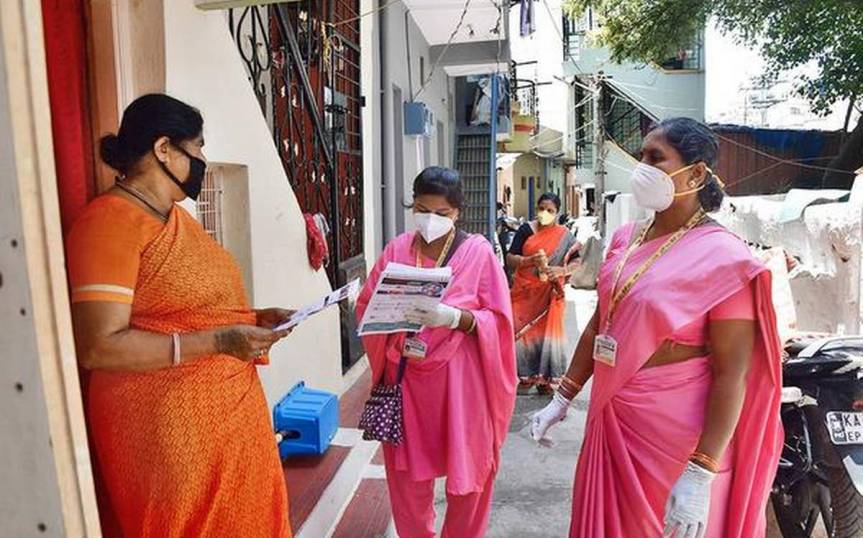
Accredited Social Health Activists, ASHAs, are playing an indispensable role in rural outreach by educating village people on arresting the spread of the much-dreaded Coronavirus. Field reports from Prime Minister Narendra Modi’s constituency, Varanasi indicate that ASHAs credited with juggling multiple roles have been deputed to spread awareness on prevention of Coronavirus in their areas. They are after all the backbone of primary healthcare in more than seven lakh villages of India.

On April 14, the day Prime Minister Narendra Modi announced an extension of the 21-day lockdown till May 3, the Ministry of Health and Family Welfare, advised in a COVID-19 related tweet that persons having symptoms may approach national/ state helpline centres or frontline workers such as ASHA workers and field workers. The tweet said that these workers have been oriented about the process to be followed and can help in early detection and facilitate proper treatment in hospitals.

Rekha Sharma, a forty-year-old ASHA worker says that ASHA workers in Varanasi have been asked to cover 25 to 30 houses a day in the assigned villages till the end of May. After lockdown, some workers working in Bengaluru, Delhi, Pune and other cities have come back to the villages because they did not have any work in lockdown. They have been asked to undergo tests for COVID- 19.”

The ASHAs are given performance-based incentives for promoting universal immunisation, referral and escort services for reproductive and child health and other healthcare programmes and construction of household toilets. They counsel women on birth preparedness, the importance of safe delivery, breast-feeding and complementary feeding, immunisation, contraception and prevention of common infections including Reproductive Tract Infections/ Sexually Transmitted Infections (RTIs and STIs) and care of the young child. From time to time, the ASHA workers have been deservingly honoured as well. In December 2019, Balvinder Kaur, an ASHA worker from Khosi Kalan village of sub-centre Koomkala of Ludhiana, Punjab was honoured with the National Universal Health Coverage Award by Union Minister for Health and Family Welfare, Dr Harsh Wardhan. She was honoured for her contribution to promoting facilities of Health and Wellness Centres in her block, Likewise, Jamuna Mani Singh was also felicitated by the Odisha government. “From the time we came to know that COVID-19 is going to pose a big threat to India, we took it upon ourselves to strengthen our rural outreach. Since we have been working in several states of India with special focus on many districts of Uttar Pradesh for a long time, we offered our services to government departments like education, health, women and child welfare departments.

We have made sure that all facts on COVID-19 that are being put out by the World Health Organisation and the Ministry of Health, are disseminated to the villages daily. As and when required, we are seeking the help of community-based organisations and other voluntary organisations.” Mr Pradhan explained that MAMTA is using the existing WhatsApp groups through which they normally function with senior government officers on several social welfare and development-oriented schemes, to spread awareness on COVID-19 as well. We are working in all eight blocks in the Prime Minister’s constituency. We have also asked ASHAs, frontline workers, Nehru Yuvak Kendra, NSS (National Service Scheme) and NCC (National Cadet Corps) volunteers to ask villagers to download Arogya Setu App (a mobile app developed by the Ministry of IT and Electronics to help citizens identify the risk of contracting COVID-19 infection). All government departments of Varanasi are already actively promoting Arogya Setu. To make it easy, we have shared the Arogya Setu link with all volunteers and social workers. Surely, the army of dedicated and friendly health activists in India’s villages is taking on the COVID- 19 challenge by empowering people with knowledge.

We, The People

“We, The People”

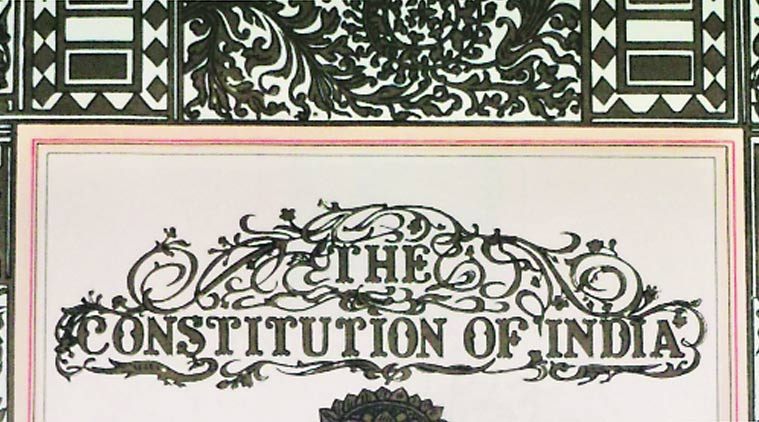
It was in 2015, the 125th birth anniversary year of Baba Bharat Ratna Saheb Dr Bhimrao Ambedkar that the Government of India decided to celebrate 26th November, as ‘Constitution Day’ every year. The year 2019 marked the 70th year of the adoption of the Constitution. To reiterate our gratitude to the chief architect of our Constitution, and publicise the glorious and rich composite culture and diversity of our nation, the Government is celebrating the spirit of Constitution through a series of initiatives and activities till 26th November 2020. It is a tribute to the legacy of this great man and the greatness of the Constitution. The document written over 70 years ago is the most relevant at these times for the government, judiciary and citizens alike. Withstanding its core principles of justice, liberty and equality, reminding the citizens of their fundamental duties to uphold unity and integrity, and the Directive Principles for the government, our Constitution is the guiding light for the Indian society as a whole. The Constitution of India is a result of exhaustive research and deliberations of a body of experts. These makers of our Constitution, with their foresight and wisdom, prepared a futuristic and vibrant document that reflects our ideals and aspirations on the one hand and protects the future of all Indians on the other. They are credited to bring in the best features of all the hitherto existing related documents and making it the most lengthy and detailed constitutional document in the world.
The document in itself is well equipped for future amendment provisions. It was made sure that the Constitution should neither be too rigid nor too flexible. The hundred-plus amendments over the seven decades have strengthened it further and made the constitution even more relevant in the present times.
The Preamble to the Constitution declares India to be a sovereign, socialist, secular democratic republic and a welfare state committed to secure justice, liberty and equality for the people and for promoting fraternity, the dignity of the individual and unity and integrity of the nation. These Rights go hand-in-hand with the Fundamental Duties.
Every citizen must abide by the Constitution and respect its ideals and institutions; to cherish and follow the noble ideals of our freedom struggle; to renounce practices derogatory to the dignity of women, and to value and preserve the rich heritage of our culture. The Rule of Law has been a core civilisational value of Indian society since ages. India has been cherishing values of trust and faith towards justice that inspire our Constitution. About 1500 archaic laws have been repealed. And speed has been demonstrated not only in doing away with irrelevant laws but also in enacting new legislation aimed at strengthening the social fabric.
The architect of our Constitution, Dr B. R. Ambedkar had said: “Constitution is not a mere lawyer’s document, it is a vehicle of life, and its spirit is always a spirit of the age.” In legislating the rights for transgender, the law against the practice of Triple Talaq, expanding the rights of Persons with Disabilities, the government has worked with complete sensitivity and responsiveness to the needs of modern society.
The ‘Constitution of India’ lies at the foundation of the world’s largest democracy. This is the supreme document in the country’s democratic framework and it continuously guides us in our endeavours.

Sources and Causes of Air Pollution

When we try to steady the sources/causes of air pollution, we usually enlist a series of activities and interactions that create these pollutants. There are two types of sources that causes Air Pollution.

  1. Natural Resources: Natural Sources of pollution includes dust carried by the wind from a location with very little or no green cover, gases released from the body processes of living beings (Carbon Dioxide from a human during respiration methane from cattle during digestion, Oxygen from plants during Photosynthesis). Smoke from the combustion of various inflammable objects, Volcanic eruption etc., along with the emission of polluted gases also makes it to the list of natural sources of pollution.
  2. Man-Made Sources: While looking at Man – Made contribution to air pollution, it can be further divided into two parts. a) Outdoor Pollution Sources- The major outdoor pollution sources include power generation, vehicles agriculture/waste incineration, industry and building heating systems. Smoke feature as a prominent component. The Smoke emitted forms of combustion like in biomass, factories, vehicle furnaces etc., Waste dumped in landfill generates methane, which is harmful in several ways. The reactions of certain gases and chemicals also from harmful fumes that can be dangerous to the well-being of a living creature. b) Indoor Pollution Sources- In low and middle- income countries, mostly burning fuels such as dung, coal and wood in inefficient stoves or open hearths produces a variety of health-damaging pollutants. These include carbon monoxide, methane, PM, PAH, VOC etc., Expresses to smoke from cooking fire causes 3.8 million premature death each year.

Some more various causes of Air Pollution

  1. The Burning of fossil fuels: SO2 emitted from the combustion of fossils fuels like coal, petroleum for energy in power plants, and other factory combustibles is one of the major causes of air pollution. Billions of vehicles run on roads are powered by gasoline and diesel engines that burn petroleum is made up of hydrocarbons and engines don’t burn them.
  2. Agricultural Activities: Ammonia is a very common by-product of agricultural- related activities and is one of the most hazardous gases in the atmosphere. The use of insecticides, pesticides, and fertilizers in agricultural activities has grown quite a lot. They emit harmful air into air pollution. Famers also set the fields and old crops on fire to keep them clean for the next round of swing. The burning to clean fields causes pollution by releasing harmful gases in the air.
  3. Waste in Landfills: Landfills are land areas in which waste is deposited or buried. These deposited is a major greenhouse gas that is highly flammable and very hazardous. E-waste is another grave concern involving a lot of unscientific dismantling such as chemical leaching burning wires & others.
  4. Exhaust from Factories & Industries: Manufacturing industries release a large amount of carbon monoxide, hydrocarbons, organic compounds and chemical into the air, thereby depleting the quality of air. Manufacturing Industries can be found at every corner of the Earth, and area has not been affected by it. Petroleum refineries also release hydrocarbons & other chemicals that pollute the air and cause air pollution.
  5. Mining Operation: It is a process wherein minerals below earth are extracted using large equipment. During the process dust and chemical release in the air and cause air pollution. This is the reason, responsible for a worker’s health condition.
  6. Domestic Activity: Household cleaning products painting supplies emit toxic chemical in the air and cause air pollution, Suspended particular matter(SPM) is another cause of air pollution. Referring to the particles afloat in the air. SPM is usually caused by dust, combustion etc., According to WHO, around 7 million premature death cause every year due to the combined effects of ambient (outdoor) and household air pollution.
  7. Natural Events: There are certain natural events such as volcano eruptions, forest fires, and dust- storms which are nature- born and cause air pollution.

Barriers to communication

Communication is a two-way process, it is a method through which we transmit desire information ideas, knowledge, emotions and feelings from one to another. But sometimes, due to some reason, we fail to send desire data to another person i.e., receiver these reasons are called Barrier to communication.

For examples: When we are communicating in a crowded area; it is difficult to transfer our data due to interference of noise. So the environment is not suitable for communication hence, it is a barrier to communication.

Types of Barrier to communication

It can be of two kinds

  1. Channel Noise
  2. Semantic Noise

The difference between them is that Channel Noise develop externally (that is, external to the message) whereas the semantic Noise is internal to the message.

  1. Channel Noise: When there is any unwanted interference or snag in the medium of the communication process, called Channel Noise. For example: Noise market place or illegible handwriting can be called as Channel noise, both factors that create communication failure. In some case it is medium and in other is the environment. Noisy environment and illegible handwriting, a worse medium, creating a barrier. Below are some causes.
  • Physical Noise in the Channel
  • Use of Inappropriate Media
  • Information Overload]
  • Fear of Superior
  • Negative Presupposition
  • Communication Selectivity
  • Poor Listening

Semantic Noise: It can be defined as noise or barrier that is generated from within a message. As language is connotative, that is, the meaning of a word is not always stated directly and can also be implied hence, it may cause a communication failure. For example: If someone says that ‘ the bark is strong ‘ then the meaning of the sentence will depend on the context in which it is spoken, ’bark’ can be used for two things one is for dog’s barking and another one is for tree’s bark. It depends on the context. Therefore it may create communication barriers. There are numerous examples of Semantic Noise. Following are the causes of Semantic Noise

  • Limited Vocabulary
  • Incompatibility between Verbal & Non-Verbal language
  • Varied Perception due to different background such as cultural.
  • Wrong Assumption & Interference
  • Blocked categories/categorical Thinking
  • Emotional, psycho-social Unsettled State

Strategies to overcome the Barrier to Communication 

If an individual wants to be an effective Communication then he needs to learn methods to avoid Barriers. An Individual can overcome Barrier to communication

  1. Identify the Problem
  2. Find the cause
  3. Work on an alternative solution
  4. Opt for the best sol
  5. Follow up rigorously

We can avoid the Barrier by using effective communication. It can be done through following FCs. These norms apply in both oral and written communication. It is a thought that adopting FCs, shoot up our communication level from low to high.

  1. Completeness: Any communication must be complete, in the sense that message should convey all required facts, info for comprehension of the message.
  2. Conciseness: It refers to the facts that while communication process one should try to make the message as short as possible to make it effective it saves times, reduce cast.
  3. Consideration: Consideration communication implies that the sender of message sites into the shoes of the audience /reader in terms of their viewpoints, background etc., to ensure that complete message received by the receiver.
  4. Clarity: Clarity is communication implies that message should be as culture-free as possible and that it is easily understandable.
  5. Concreteness: Concreteness is communication implies that being particular and clear rather than frizzy &general. By using facts, figure or quote make communication more effective.
  6. Courtesy: Courtesy in communication implies that the sender should respect the receiver in terms of polite, judicious & enthusiastic.
  7. Correctness: Correctness means there should be grammatical errors, no dubiousness in facts & figure.

We can also follow some more measures to overcome the barriers of communication.

  • Clarify ideas before communication.
  • The communication process should according to the need of the receiver.
  • Consulting other before communication.
  • Awareness of language, tone & content of the message.
  • Ensure proper feedback.
  • Follow up communication.
  • Be a good listener.

By avoiding barriers, overcoming to the barrier if any, and following 7Cs help to communicate effectively.

Reading and its Techniques

There are four skills usually used to master a language. Listening, Speaking, Reading, and Writing. A good reader becomes good listeners, speakers and writers. Nonetheless, the fact remains that no one skill learned alone, mostly the combination of all skills. Reading is preferred for Pleasure, examination, general information, specific knowledge, problem-solving, draw logic etc.

Types of Reading

1. Scanning

2. Skimming

3. Intensive Reading

4. Extensive Reading 

Above are the four types of readings. Usually, we call them as reading techniques.

In the age of internet and information overload what to read and what not to read is extremely crucial. Reading techniques help in dealing with such a situation. 

Detail Explanation of types of reading

Scanning

Scanning is reading with a specific purpose in mind for specific information. When one reads an entire text/ document quickly while looking for specific information, it is known as scanning. 

For examples:- Going through an entire newspaper and looking for specific news like try to get specific information about Delhi University admission, on Election- Poll etc.

Skimming

Skimming is speed reading for an overview of general information. Going through an entire newspaper quickly through the headlines is an example of skimming. Going through Data- table quickly to elicit to an overall idea of the topic on which data is presented is an example of skimming techniques of reading. Do not expect or deep comprehension of the written text after skimming. Reading only the headings of the chapter is skimming.

“A.K Pugh in his book “Silent Reading – An Introduction to its Study and Teaching suggested that since scanning is a less complex style of reading it can be introduced first. Skimming requires fluency and more practice required, it should be introduced later.”

Intensive Reading

It is a specific written piece for a specific purpose. It is going into minutest details of a particular word/phrase/line/paragraph.

For example:- 

“The woods are lovely dark & deep

But I have promises to keep

And miles to go before I sleep”

Refer: “Stopping by Woods on a Snowy Evening” by “Robert Frost”

To answer a question like,’ what is the meaning of ‘woods’ in the poem, one will adopt intensive reading techniques. This Skill is very crucial for language learners, as they pick up vocabulary focus on structure& syntax while following these techniques.

Scrivener in his book ‘Learning Teaching’ Published in 1994, described that the readers carefully and closely read a short text to gain as an understanding of as much as detail as possible.

Extensive Reading

It is a kind of general reading for general information. Generally, this technique is used for pleasure reading, like reading a novel for pleasures.

For Example:- If one is asked to read to a chapter before discussing it in class, one goes for extensive reading to get the general idea of the piece. While reading unseen passage, both extensive & intensive both is required. For dealing with specific questions intensive reading is required, but for initial reading is for the general idea of the passage.

Skimming and Scanning Together

  • Both are referred to as types of reading & other times as skills. 
  • By practising skimming & scanning, the individual learns to read and select specific information without focusing on information that is not important or meaning. 
  • Skimming involves a thorough overview of a text and implies limited activity, only retrieving information relevant to a purpose.

Intensive and Extensive Reading Together

  • It is common for both approaches to reading to be used in the same class. For example, where extensive reading is encouraged, the teacher may have the student read together or learn a specific skill such as writing an outline.
  • In the class where intensive reading is mostly used, the student may be asked to read texts of their choosing to report back on, in either an oral or written format.
  • In both approaches, it is not the nature of the skills that are of most interest but rather, results.

Water Conservation and Minimizing Wastage

Like in many philosophical traditions of the world, the Indian tradition puts great emphasis on the importance of water in life. In the ancient Indian tradition, ap or water is one of the five panchmahabhutas or great elements of life. Early Indian literature belonging to Hinduism, Buddhism, Jainism and other traditions had highlighted the importance of water and its conservation. The rich Ayurvedic literature of the subcontinent has countless treaties on water. It goes to the extent of defining it as jiva or life. However, this elixir of life is becoming increasingly scarce due to challenges of rising population, rapid urbanisation, industrial growth and increasing water pollution. Since the second half of the previous century, the world has been urbanizing rapidly. According to the Population Division of the UN Department of Economic and Social Affairs (UNDESA), a division established in 1946 to study “population dynamics and monitoring demographic trends and policies worldwide”, in 1950, only 30 per cent of the world’s population lived in urban areas, whereas by 2018 the world population living in the urban setting had grown to 55 per cent. The urban population of the world has grown rapidly from 751 million in 1950 to 4.2 billion in 2018.

The rapid urbanization has led to a severe crisis of useable water in the world, particularly in developing countries such as ours. In India, per capita availability of water has decreased from 2209 m3/year in 1991 to 1545 m3/year in 2011 and it is estimated to decline further up to 1140m3/ year in the year 2050. Furthermore, demand for water from various sectors viz. irrigation, drinking water, industry, energy and others are expected to rise from 710 billion cubic metres (BCM) in the year 2010 to 843 BCM in the year 2025 and further to 1180 BCM in the year 2050.

 According to a 2018 NITI Aayog report, currently, 600 million Indians face high to extreme water stress and about two lakh people die every year due to inadequate access to safe water. By 2030, the country’s water demand is projected to be twice the available supply, implying severe water scarcity for hundreds of millions of people and an eventual six per cent loss in the country’s GDP. When we speak of water, we generally mean freshwater because even when 70 per cent of our planet is covered with water, only 2.5 per cent of it is consumable. 

According to the UN Environment’s document ‘Freshwater Strategy 2017-2021’, freshwater plays a fundamental role in support of the environment, society and the economy. Since water is a natural resource and it cannot be created in factories or laboratories, the only solution to our looming water crisis is conserving water. 

In seven out of India’s 10 most populous cities, the depth to groundwater has increased significantly over the last two decades. This is an alarming situation because India is the biggest user of groundwater. According to a report India extracts more groundwater than China and the US the next two biggest pullers of groundwater combined. Half of the total clean water needed in our country is met from groundwater. 

The 2014 report o the parliamentary standing committee on water resources constituted on August 5, 2004, found that the groundwater forms the largest share of India’s agriculture and drinking water supply. About 89 per cent of groundwater extracted in India is used for irrigation making it the highest category with 9 per cent share of the extracted groundwater followed by the industry that uses only 2 per cent of it. Similarly, the Central Ground Water Board (CGWB) has stated in Lok Sabha that 50 per cent of urban water requirement and 85 per cent of rural domestic water needs are fulfilled by groundwater. This kind of use has caused a reduction in groundwater levels in India by 61 per cent between 2007 and 2017.

The present government has shown unprecedented interest in water conservation, minimising wastage and ensuring equitable distribution. In his first Mann Ki Baat programme in the second term as the Prime Minister of India, Shri Narendra Modi described the water crisis as on one of the biggest challenges facing India today. Apart from this, to encourage stakeholders like water user associations, institutions, corporate sector, individuals, Non-Governmental Organisations (NGOs), gram panchayats, urban local bodies to adopt innovative practices of groundwater augmentation like creating awareness through people’s participation, rainwater harvesting and artificial recharge, promoting water use efficiency, recycling and reuse of water, the government in 2007 launched the Groundwater Augmentation Awards and National Water Award.

Women and Agriculture

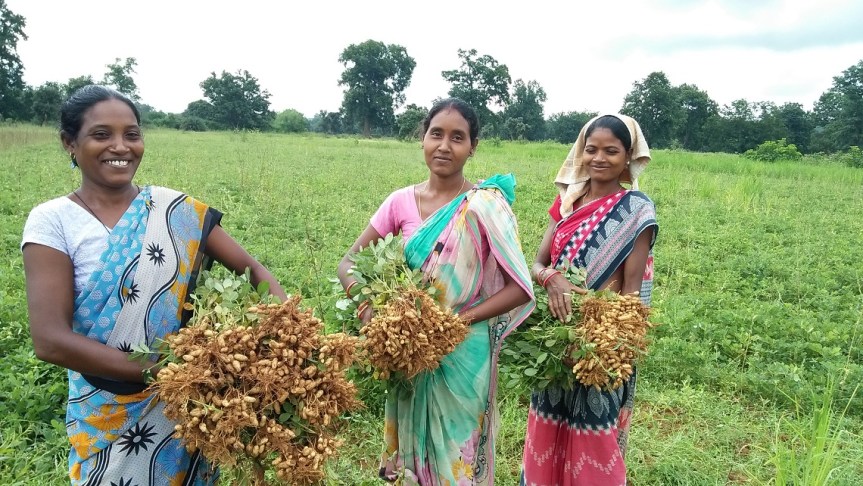
Agriculture in India, contributing about 15.5 per cent of GDP, is a female intensive activity. In a typical rural-agro household, women pursue multiple livelihood strategies often managing complex issues. Her activities vary from performing multiple farm operations for producing the crops, rearing animals, and preparing food to work for wages in agricultural or other rural enterprises, collecting fuel and water, engaging in trade and marketing, caring for family members and maintaining their homes. Though national account does not classify many of this economically active employment they are vital and essential to the well-being of rural households.
The Agriculture Census, 2015–16 has revealed a very promising trend. The census established that the share of female operational holders has increased from 12.79 per cent in 2010–11 to 13.87 per cent in 2015–16. In terms of the operated area, the share of women increased from 10.36 per cent to 11.57 per cent. This signifies that more and more females are participating in the management and operation of agricultural lands.

Agriculture and Female Employment

The central role in all operations of agriculture and even rural household management is played by women. They are involved in all aspects of agriculture, from crop and seed selection to harvest and post-harvest management, marketing, and processing. According to estimates, the agricultural sector employs about 4/5th of all economically active women. Women have a clear edge in dairying and animal husbandry also.
Close to 75 million women are engaged in dairying and 20 million in animal husbandry against 15 million men in dairying and 1.5 million in animal husbandry. Nevertheless, the percentage of female engaged in agriculture has been sizeable at 54.6percent in 2019 against 39.5 per cent of male. The contribution of female workers and farmers has been much larger in agriculture and allied activities than men. The withdrawal of women and men workforce from agriculture is a welcome move due to the empowerment of women through better education, alternative employment opportunities and access to rights and resources, etc.
In a developing nation like ours where urbanization is becoming a social development order, the large number of women needs to move out from agriculture to join services and industrial sector. When examining that of the participation of men, the decline is comparatively lower to that of women.
Women have been instrumental in agricultural development and rural prosperity.
Rural women play a vital role not only in crop planning and cultivation but also in high-value activities like horticulture, primary food processing, livestock rearing, fisheries and cottage industries.
Although women have been contributing dominantly in the rural labour force, they are marginalised and disadvantaged in wages, land rights and representation in group activities. Women have very limited access to productive resources which consequently limits their productivity. Somehow, the needs and aspirations of the women labour force could not get true focus in the rural development initiatives in the past.

Summing Up

Several out of box initiatives of the Government for skills development, subsidised loans for businesses led by women, recent legislation doubling maternity leave, and childcare facilities in companies that employ more than 50 people will have the far-reaching impact on women empowerment and give a boost to India’s economy. The number of women in the total workforce in India is only 27 per cent, and more seriously, almost 20 million women had withdrawn from the workforce during 2005 and 2012. On a global landscape, India ranked 120th among 131 countries so far as women workforce participation is concerned. Adding to woe is the worsening state of gender-based violence in India.

Balancing Fundamental Rights and Duties

The longest written Constitution in the world, lays down the basic structure and the framework of India’s polity. It is built on the foundations of certain fundamental values that have been embedded in it by the makers of the

Constitution to ensure that there should be fairness and justice for every citizen of India.

However, it has been made very clear that:

  •  lot of restraint is required while exercising this freedom.
  •  the absolute freedom is an illusion and cannot survive alone.
  • the fundamental rights need to be paired with fundamental duties.

 To offset the increasing tendencies of indifference towards the business of the government amongst its citizens and to check fissiparous growth, the Constitution

(Forty-Second) Amendment Act, 1976 introduced the concept of fundamental duties by adding Part

IV-A, consisting of the sole Article 51A.That the Constitution ought to be amenable to change to allow for emerging needs was always recognised.

This year the government is laying more emphasis on creating awareness on eleven fundamental duties as part of celebration of 70th year of adoption of the Constitution through its various initiatives. The underlying idea is that these precepts should become a part and parcel of every Indian’s thoughts and actions. The balancing of fundamental rights is a constitutional necessity as every right gives rise to a corresponding duty

The fundamental duties are the mechanism that aims at striking a balance between individual freedom and social interests. These duties do not cast any public duties but are applicable only to individual citizens. However, in  a judgment, the Supreme Court held that the Fundamental Duties are as important as Fundamental Rights and that though Article 51A does not expressly cast any fundamental duty on the State, the duty of every citizen of India is the collective duty of the state- its de facto enforceability in the sense that Article 51A is a yardstick against which the action of the State may be assessed.6In Union of India v Naveen Jindal7, the Supreme Court observed that fundamental duties are implicit in the concept of fundamental duties, the former providing certain restrictions on the exercise of the latter.

Article 51A (k) was introduced as a fundamental duty in 2002, along with Article 21A as a fundamental right. Through Article 51A (k) read with Article 21A, the State and the parents are made to share obligation with regard to education of the children in the following manner:

  • the State with free education
  • the parents with compulsory education.

The State has been entrusted with the responsibility to ensure compulsory education while at the same time Article 51A (k) does not penalise parents or guardians for not being able to send their wards to school.10 In similar manner, right to hoist the national flag has been granted to the citizens subject to the restrictions specified in the Article 51A (c).

Thus, it may be observed that, in umpteen number of cases, the various contours of Article 51A have been interpreted and applied by the Apex Court. The unenforceable duties have got a booster dose of contents as well as some sort of enforceability through increased references in various judicial pronouncements. Various current crises related to environment, mob-violence and terrorism etc. could have been regulated to a large extent if the human values could be inculcated right from the formative period of life so as to lay a strong foundation for effectuation of Fundamental Duties along with the strong desire to avail the rights. Thus, there is a strong necessity to maintain a strong balance between the rights and the duties. One does not have existence as well as the meaning without the other.

Self-Reliant India

The Prime Minister in his address on 12th May 2020 gave a call for self-reliant India. The definition of self-reliance has changed in the globalised world and he clarified that when the country talks about self-reliance, it is different from being self-centred. He said that India’s culture considers the world as one family, and progress in India is part of, and also contributes to, progress in the whole world. He noted that the world trusts that India has a lot to contribute towards the development of the entire humanity.

Five pillars of self-reliant India

Self-Reliant India will stand on five pillars viz. 

  1. Economy: which brings in quantum jump and not incremental change; 
  2. Infrastructure: which should become the identity of India; 
  3. System: based on 21st-century technology-driven arrangements; 
  4. Vibrant Demography: which is our source of energy for a self-reliant India; and 
  5. Demand: whereby the strength of our demand and supply chain should be utilised to full capacity. He underlined the importance of strengthening all stakeholders in the supply chain to increase, as well as fulfil, the demand.

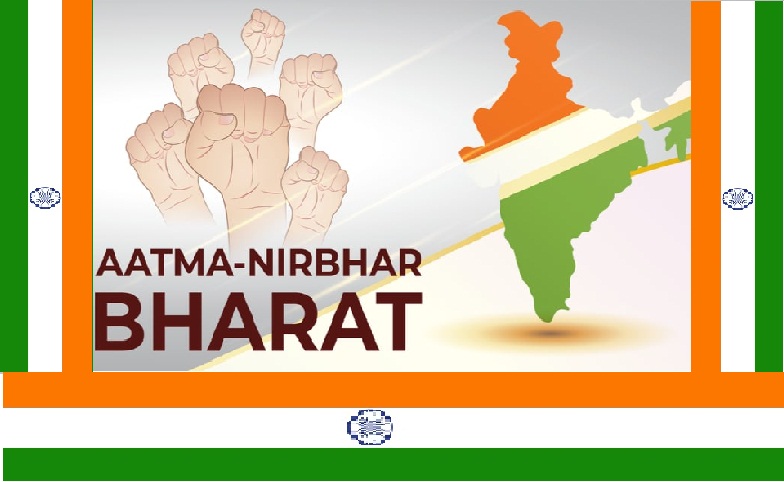
Atmanirbhar Bharat Abhiyan

The Prime Minister announced a special economic package and gave a clarion call for Atmanirbhar Bharat. He noted that this package, taken together with earlier announcements by the government during COVID-19 crisis and decisions taken by RBI, is to the tune of Rs. 20 lakh crore, which is equivalent to almost 10% of India’s GDP. He said that the package will provide a much-needed boost towards achieving ‘Atmanirbhar Bharat’. He observed that the package will also focus on land, labour, liquidity and laws. It will cater to various sections including cottage industry, MSMEs, labourers, middle class, industries, among others.

Talking about the positive impact of reforms like JAM trinity and others, brought about in the last six years, Prime Minister said that several bold reforms are needed to make the country self-reliant so that the impact of crisis such as COVID-19 can be negated in future. These reforms include supply chain reforms for agriculture, rational tax system, simple and clear laws, capable human resource and a strong financial system. These reforms will promote business, attract investment, and further strengthen Make in India. Self-reliance will prepare the country for tough competition in the global supply chain, and the country must win this competition. The same has been kept in mind while preparing the package. It will not only increase efficiency in various sectors but also ensure quality. Highlighting their contribution to the country, Prime Minister said that the package will also focus on empowering the poor, labourers, migrants, etc., both from organized and unorganized sectors. He observed that the crisis has taught us the importance of local manufacturing, the local market and local supply chains.

Bold Reform-Need of the Hour

  1. Supply chain Reform for Agriculture
  2. Rational Tax System
  3. Simple and Clear Laws 
  4. Capable Human Resource 
  5. Strong Financial System

Self Reliant is the imperishable call from the side of PMO. It is the time in which India should stand on his own feet. The time has come to prove himself as a ‘teacher of the world’ as it was in the past.