
The Do’s and DONT’s To become an “IAS OFFICER”
Union public service commission India’s central agency , abbreviated as UPSC ,conducts civil services examination annually and recruits selected candidates for as much as 24 posts .Getting into the Indian civil services is a major hallucination for lakhs of aspirants .Those already on the expedition along with them who choose to be an IAS officer some day are all in the same boat .
Upsc preparation is a well structured combination of hard work in the right direction and a tackling strategy contemporaneously. However, great deal of doubts along with girdled exaggerating myths can leave you enervated and astray.

Strategy Is Figuring out what not to do
The right kind of strategy is all you need to witness your aspirations .Let’s have a look into the do’s and don’t you need to follow if you are a serious aspiration. By the end of the article you will be able to take an analysis on your overall preparation additional to the road map directed !
SAY YES TO THESE DO’S TODAY
1) Syllabus , Question paper and mock test is must

Your syllabus is the basis of your entire preparation make sure to by heart it .Start by simply jotting down the entire syllabus into points and divide them into sections according to your strengths and weaknesses, and then proceed with designing a study plan.Stop looking at the IAS curriculum as a whole – Divide and Conquer.Adding to this go through previous year question paper to get an idea about the kind and pattern of questions asked in the examination.Make sure you solve enough number of mock papers for both Prelims and Mains; this is a must before you step into the UPSC exam for your first attempt. Regular evaluations will help you keep a track of your weakness and progress at the same time .Indulge in quality discussions.
In an exam like the civil service mains, studying the syllabus is not the only important thing to do, How you write the exam is what counts the most. No matter how much you study prior to the exam, how skilfully you are writing the answers within three hours is what makes one topper and another failure. Hence having regular practice of essay/answer writing is highly necessary. Evaluate yourself before UPSC evaluates.
https://www.upsc.gov.in/examinations/previous-question-papers
2) Prepare A Schedule / effective plan
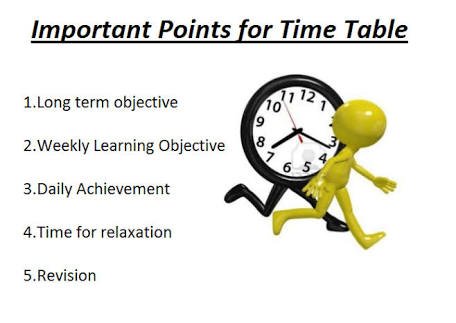
Draw out a timetable for yourself, and the time table should be a realistic one.Do not make a timetable which needs more than 8 -10 hours of your day to dedicate to your IAS preparations depending on your capacity. Once you have decided on the amount of time you will put in everyday and what topics you will cover when, make sure you follow it everyday.
3) Consistency is the key
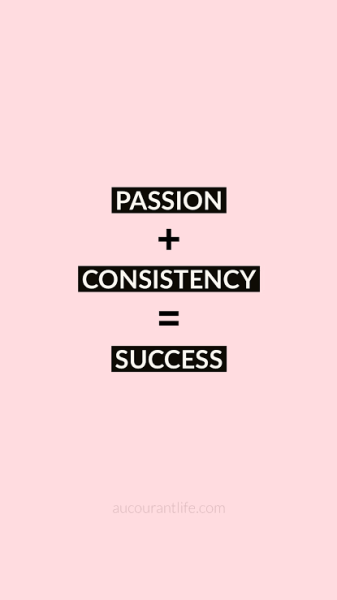
No matter how much talented you are, how much hard working you are, how much smart you are – if there is no consistency in your preparation for this exam (UPSC civil services), you will either fail or unnecessarily prolong this journey making it stressful, burdensome and frustrating.
Being consistent i.e. being regular and steadfast in what you are doing – either making notes from newspapers or from books, writing answers daily, writing essays weekly, solving test papers from test series once in a week or ten days – is the ONLY solution to all your problems.
4) Revise more than you learn
Be wise ! Revise
When you plan your studies, make sure you have enough time on your agenda for a minimum of two revisions. Both general studies, as well as CSAT syllabus, should be reviewed twice – a week before the examination.Without revision,you cannot succeed in this exam.
DONT’ S ARE MORE IMPORTANT
1) Limit your Resources

Aspirants must not deviate from the UPSC syllabus as questions asked in the exam are on based on the given syllabus.
They should not ignore the basics and NCERT books, as some questions are based on fundamentals too.
One must avoid buying too many books or collecting too much material to study for the UPSC exam as it would be a waste of time.
One of the common mistakes UPSC aspirants make is ignoring the basics and NCERT books, which are important for IAS preparation as questions based on NCERT books and fundamentals may be asked in the exam.
Not solving sufficient practice papers and previous papers could affect their performance, too.Also, lack of consistent preparation, regular practice, and revision may impact their preparation process adversely.Spending time reading too many books may lead to confusionThough UPSC aspirants tend to consult various study material and books to prepare for different topics, going through too many books may create confusion and should be avoided.
UPSC syllabus is vast and candidates may need to refer multiple sources to cover it.
However, consulting too many books could be a waste of time. Instead, they should choose the right material/books and revise well.
https://www.google.com/amp/s/m.jagranjosh.com/articles/amp/upsc-iasprelims-subjectwise-study-material-important-resources-for-complete-preparation-1585745500-1
2) Don’t make lengthy notes

Avoid making lengthy notes as it will consume your time as well as distract you at the time of examination .
Too much of content in notes is unnecessary .Notes should be kept precise and intact .
Do multiple readings and then make notes of the most important topic out of the whole just to get to know the whole idea at the time of need.
3) Do Not Ever Skip Newspapers
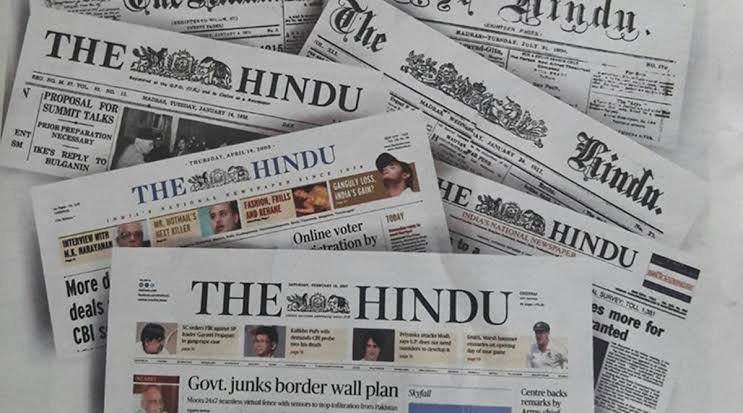
If there’s a bible that can guide you towards success, it’s the ;Newspaper Readings’ that acts as an integral whole in your entire preparation process. Many questions that are asked in the examinations come directly from the newspapers. Therefore, it becomes prudent on your part to know ‘How to read a newspaper’, ‘what to read and what not to read’.
https://www.insightsonindia.com/the-hindu-news-analysis-videos/
Hard work + strategy = Success !
” Rowing harder doesn’t help if the boat is headed in the wrong direction .”-kenichi
#International Journal Of Research(Follow Eduindex news for more )

 But, but, but, again they seem to ruin everything, as we have seen from the past- there was nothing to do with Dharmasutras, every single dharma was being ruled out a some point or the other. -So is the idea and the motive of “women being equal to men” seems to detoriate; for instance, if a feminist found a old man sitting on the seat reserved for ‘ladies’ the first word the utter is “why are you sitting on this seat”? Regardless of the age of the man! Though the idea of feminism provide them to speak up for the right they’re hindered from, but it is merely a cryptic and forge idea of what they call being ‘feminism’. Isn’t it? But then they again evacuate that it is their ‘right’ which the Constitution of India has provided them. The recent incident of the ‘bois locker room’ which flooded all over the internet is one such ironic picture of the so called ‘feminism’.
  Yet, we have reached at such a point in the society where fake is real sometimes and the real picture of equality and empowerment remains hidden behind scenes which the makeup of “false feminism” fails to bring up. And the society becomes the victim of such faces whose beauty might blind them forever.



 International Journal of Research (IJR)