
Introduction
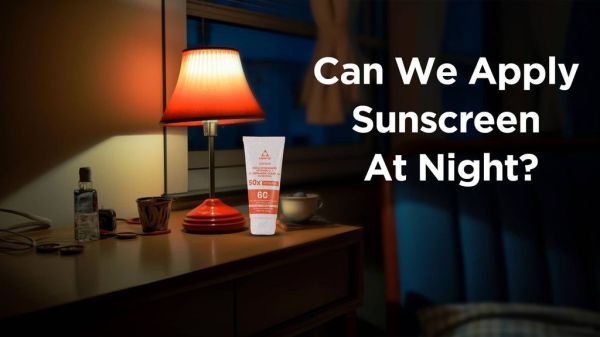
A few weeks ago, during a late clinic discussion, someone asked me something I honestly didn’t expect: Can we use sunscreen at night and would it give “extra protection” or maybe even repair the skin? It sounds harmless, almost logical. If sunscreen protects during the day, maybe using it before bed adds another layer of defense?
Core idea explained
What it means in simple words
Sunscreen is designed to protect your skin from ultraviolet radiation, specifically UVA and UVB rays from the sun. At night, there is no sunlight exposure. That’s the simple biological truth. So applying a product whose primary function is UV filtering does not serve its main purpose in darkness.
Most sunscreens contain active ingredients such as zinc oxide, titanium dioxide, or chemical filters like avobenzone. These ingredients work by reflecting or absorbing UV radiation. Without UV radiation, they don’t have a “job” to do. It’s a bit like wearing a raincoat indoors. Not harmful by default, but not particularly useful either.
Why people search for this topic
Many patients search this because they are worried about hyperpigmentation, melasma, acne scars, or premature aging. Others think that indoor light, phone screens, or moonlight may damage their skin at night. Social media sometimes exaggerates blue light risks, and that fuels confusion.
There’s also the belief that “more protection is always better.” In medicine though, more is not always better. It has to be appropriate and necessary.
Evidence-based medicine perspective
Scientific principles involved
From a dermatological standpoint, UV radiation is the primary environmental factor that sunscreen is meant to counter. The sun emits UVA and UVB rays during daylight hours. At night, UV radiation from natural sunlight is essentially absent.
Visible light from indoor bulbs and screens does not contain significant UVB. Some high-energy visible light, often called blue light, may contribute to pigmentation in certain individuals, especially those with darker skin types. But sunscreen is not universally recommended at night for this. Instead, dermatologists may suggest antioxidants or barrier-repair moisturizers.
Clinical guidelines from major dermatology associations emphasize daily morning application of broad-spectrum SPF. They do not recommend routine nighttime use. In fact, unnecessarily layering sunscreen overnight may increase the risk of clogged pores, particularly in oily or acne-prone skin.
Typical patterns people notice in real life
In practice, I’ve seen a few patterns. People who use sunscreen overnight sometimes report heaviness, breakouts, or mild irritation. Especially if they don’t cleanse properly before bed. Sunscreen formulations are designed to sit on the surface and resist sweat or water. That durability is helpful during the day, but overnight it can feel occlusive.
On the other hand, if someone mistakenly uses a product labeled “day cream with SPF” at night once or twice, it’s usually not dangerous. It’s just unnecessary.
Practical guidance
Daily routine tips
A simple, evidence-based skincare routine works best. In the morning: cleanse, moisturize if needed, and apply a broad-spectrum SPF 30 or higher. Reapply during prolonged sun exposure. That’s it.
At night: cleanse thoroughly to remove sunscreen, pollutants, and makeup. Then use a gentle moisturizer or treatment tailored to your skin type. If you have acne, a dermatologist might suggest topical retinoids or benzoyl peroxide. If you struggle with pigmentation, ingredients like niacinamide or azelaic acid may help.
You don’t need SPF in the dark. Your skin actually benefits from focusing on repair at night, not UV defense.
Food and lifestyle suggestions
Skin health isn’t only about creams. Adequate hydration, a balanced diet rich in fruits, vegetables, and omega-3 fatty acids, and proper sleep all support the skin barrier. Stress management matters too. I’ve noticed that patients who sleep poorly often see more inflammation or dullness.
Avoid smoking. Limit excessive alcohol. And please don’t over-layer products just because a trend says so. Sometimes less really is more, even if that sounds boring.
What to avoid
Avoid skipping cleansing at night, especially if you wore sunscreen during the day. Residue buildup can lead to clogged pores.
Avoid assuming that more SPF equals better long-term skin health when it’s not needed. Using sunscreen at night won’t prevent aging in a meaningful way because there’s no UV exposure to block.
And don’t rely solely on influencers for medical advice. Some advice sounds convincing but lacks scientific backing.
Safety and when to seek medical help
If you notice persistent redness, itching, swelling, or worsening acne after changing your skincare routine, it’s wise to consult a qualified medical professional. Severe reactions such as hives or facial swelling require prompt evaluation.
People with conditions like rosacea, melasma, or severe acne should ideally discuss product choices with a dermatologist. There is no one-size-fits-all routine. What works for one person may not work for another, and that’s normal.
Importantly, sunscreen is essential during the day to reduce the risk of photoaging and skin cancer. But at night, your focus should shift toward gentle care and skin repair.
Conclusion
So, is applying SPF before bed a good idea? In most cases, no. It doesn’t add meaningful protection and may even irritate sensitive or acne-prone skin. Evidence-based medicine supports targeted use: sunscreen during the day, restorative care at night.
Stick to simple, science-backed habits. Share this article with someone who might be confused about skincare myths, and explore more practical, trustworthy guidance on AskDocDoc. Small informed choices today can protect your skin long term.
FAQs
Can sunscreen damage my skin if I wear it overnight once?
Wearing it once overnight is unlikely to cause serious harm. Some people may experience mild breakouts or irritation, but for most it’s just unnecessary rather than dangerous.
Does indoor light at night require sunscreen?
Standard indoor lighting does not emit significant UV radiation. Sunscreen is generally not required at night for indoor exposure.
Is blue light from phones a reason to use SPF at bedtime?
Current evidence does not support routine nighttime sunscreen for phone exposure. Antioxidants may be more relevant if pigmentation is a concern.
What should I apply on my face before sleeping instead?
A gentle cleanser followed by a moisturizer suited to your skin type is usually enough. Depending on your concerns, a dermatologist might suggest retinoids or other active treatments.
Can skipping sunscreen at night make pigmentation worse?
Pigmentation is mainly triggered by UV exposure during the day. Protecting your skin in daylight hours is far more important than applying SPF in the dark.null

 International Journal of Research (IJR)