


By Shashikant Nishant Sharma
Social Constructivism is a theory of learning and knowledge that emphasizes the social aspects of learning and the construction of knowledge through interactions within a social context. Unlike traditional theories that focus on individual cognitive processes, social constructivism asserts that learning is not an isolated, internal activity but rather a collective process shaped by social interactions, cultural practices, and the language people use to communicate with one another.
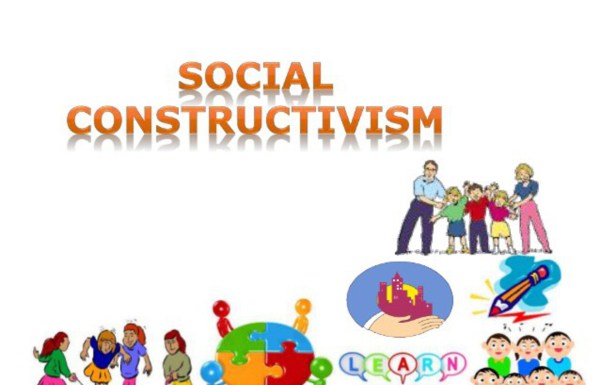
The theory is largely based on the work of prominent theorists like Lev Vygotsky, Jerome Bruner, and Jean Piaget, although it also draws from sociological and philosophical ideas. The primary idea behind social constructivism is that knowledge is socially constructed through collaboration, dialogue, and the sharing of experiences. It suggests that reality is not something that exists independent of our understanding but rather something that is constructed through our social interactions and the contexts we live in.
Key Concepts of Social Constructivism
1. The Social Nature of Knowledge Construction
Social constructivism holds that knowledge is constructed through social interactions. In contrast to earlier models of learning, where learners were seen as passive recipients of knowledge (e.g., behaviorism), social constructivists emphasize the active role that learners play in constructing their own understanding through collaborative learning and interaction with others.
Learning is seen as a shared activity where students co-construct meaning and understanding with teachers, peers, and other members of their community. Through dialogue, argumentation, and negotiation, individuals build upon each other’s knowledge, creating a more complex and nuanced understanding of the world.
2. The Zone of Proximal Development (ZPD)
One of the key concepts in social constructivism comes from Lev Vygotsky, who introduced the idea of the Zone of Proximal Development (ZPD). The ZPD refers to the gap between what a learner can do independently and what they can achieve with the help of a more knowledgeable person (e.g., a teacher, peer, or mentor). According to Vygotsky, learning occurs most effectively in this zone—when students are challenged just beyond their current capabilities but not to the point of frustration.
Through scaffolding, a form of guided support from a more experienced individual, learners can complete tasks they would not be able to do alone. Over time, as learners gain confidence and skill, the scaffolding can be gradually removed, allowing them to perform the task independently.
3. Cultural and Contextual Factors
Social constructivism emphasizes the role of culture and context in shaping how individuals understand the world. Cultural tools, including language, symbols, and artifacts, play a crucial role in shaping cognitive development. For instance, the language we use influences our thought processes, and different cultures may have different ways of approaching knowledge, learning, and problem-solving.
This contextual perspective also extends to situated learning, a concept that suggests learning occurs most effectively when it takes place in the context in which it will be used. Authentic, real-world tasks are viewed as more meaningful and engaging than abstract or decontextualized ones, as they allow learners to relate their knowledge to practical applications.
4. Active Learning and Problem-Solving
In the social constructivist model, learning is seen as an active process of problem-solving and inquiry. Rather than simply absorbing information, students are encouraged to ask questions, explore concepts, experiment with ideas, and collaborate with others to find solutions. Learning is often situated in real-world problems or complex scenarios that encourage learners to apply their knowledge in practical ways.
This active approach contrasts with traditional education models where the teacher is the primary authority figure, often delivering content through lectures and examinations. In a social constructivist environment, the teacher’s role shifts to that of a facilitator or guide, supporting the learners as they engage in hands-on, problem-based learning experiences.
Influential Theorists in Social Constructivism
1. Lev Vygotsky (1896-1934)
Lev Vygotsky, a Russian psychologist, is perhaps the most influential figure in the development of social constructivist theory. Vygotsky believed that social interaction was central to cognitive development. He argued that higher mental functions (such as thinking, reasoning, and problem-solving) arise through social interactions and that language is the primary tool through which these functions are developed.
Vygotsky’s ideas about the Zone of Proximal Development (ZPD) and scaffolding have had a profound impact on education, emphasizing the need for learners to receive support from more knowledgeable others (teachers, peers) in order to reach their potential. His work also highlighted the importance of language and dialogue in shaping thought, suggesting that cognitive development is deeply intertwined with social interaction.
2. Jean Piaget (1896-1980)
Jean Piaget, a Swiss developmental psychologist, is often associated with constructivism, but his focus was more on individual cognitive development. Piaget’s theory emphasizes the role of active learning in constructing knowledge. He posited that children construct their understanding of the world through interactions with their environment, and their cognitive abilities develop through a series of stages.
Piaget’s work laid the foundation for understanding how individuals build knowledge independently, while Vygotsky’s work complemented this by highlighting the importance of social interaction in the construction of knowledge. Piaget’s emphasis on the construction of knowledge through hands-on experience aligns well with the social constructivist approach to learning.
3. Jerome Bruner (1915-2016)
Jerome Bruner, an American psychologist, expanded on Piaget’s ideas and played a significant role in developing the concept of social constructivism. He argued that learners do not simply absorb knowledge passively but actively construct it through their experiences and interactions with others. Bruner also emphasized the importance of discovery learning, where students learn through exploration, trial and error, and problem-solving.
Bruner’s concept of the scaffolded approach to teaching suggests that learners benefit from guidance and support that is gradually withdrawn as they gain mastery over the subject matter. His work also emphasized the importance of cultural tools, such as language, in shaping cognitive development.
Social Constructivism in Education
In educational contexts, social constructivism advocates for a learner-centered approach, where students are seen as active participants in their own learning rather than passive recipients of knowledge. This approach encourages collaboration, dialogue, and shared meaning-making.
Some key principles of social constructivism in education include:
- Collaborative Learning: Students often work together in groups to solve problems, exchange ideas, and co-construct knowledge. Group discussions, peer teaching, and cooperative learning tasks are all central to this approach.
- Teacher as Facilitator: In a social constructivist classroom, the teacher’s role is not to dictate knowledge but to guide and support students as they explore ideas. The teacher provides scaffolding when necessary but allows students to take ownership of their learning.
- Active Learning: Teachers design activities that require students to actively engage with the material, such as through hands-on experiments, role-playing, case studies, and projects. These activities encourage critical thinking and help students apply their learning to real-world situations.
- Authentic Assessment: Instead of relying solely on traditional tests or exams, social constructivism encourages authentic assessments that evaluate students based on their ability to apply knowledge in meaningful contexts. Examples include presentations, projects, peer evaluations, and self-assessments.
- Cultural Context: Teachers are encouraged to consider the cultural backgrounds of their students and incorporate culturally relevant materials into their teaching. This approach recognizes that knowledge is shaped by social and cultural contexts, and learning can be enhanced when it connects to students’ lived experiences.
Benefits of Social Constructivism
- Promotes Critical Thinking: By engaging in discussions and collaborative problem-solving, students develop critical thinking skills and learn to evaluate ideas from different perspectives.
- Fosters Collaboration: Social constructivism encourages teamwork, helping students learn how to work with others, communicate effectively, and resolve conflicts. These skills are essential for success in the real world.
- Enhances Motivation and Engagement: Active learning and the relevance of real-world tasks make learning more engaging and enjoyable. Students are more likely to be motivated when they can see the direct application of their learning.
- Encourages Deep Learning: Through social interactions and active participation, students are more likely to develop a deep understanding of the material. They can make connections between different concepts and apply their knowledge in various contexts.
Criticisms and Challenges
While social constructivism has been widely praised, it is not without its criticisms:
- Time-Consuming: Social constructivist approaches often require more time for planning, collaboration, and reflection than traditional teaching methods. This can be challenging in fast-paced educational environments.
- Overemphasis on Social Interaction: Some critics argue that social constructivism places too much emphasis on collaboration and not enough on individual cognitive development. Students who prefer independent learning might not thrive in highly collaborative environments.
- Varying Levels of Support: The effectiveness of scaffolding and support can vary depending on the teacher’s skill level and the students’ needs. Inadequate support can lead to frustration and hinder learning.
- Not Always Feasible in Large Classrooms: In large classes, providing individualized support and facilitating meaningful social interactions can be difficult. Teachers may struggle to create the conditions for effective collaborative learning.
Conclusion
Social constructivism offers a rich and dynamic view of learning as a process that is inherently social, interactive, and context-dependent. By emphasizing the role of social interaction, cultural context, and active engagement in the learning process, it provides a framework for fostering deeper understanding and critical thinking.
References
Adams, P. (2006). Exploring social constructivism: Theories and practicalities. Education, 34(3), 243-257.
Dehalwar, K., & Sharma, S. N. (2024). Social Injustice Inflicted by Spatial Changes in Vernacular Settings: An Analysis of Published Literature.
Demeritt, D. (2005). Science, social constructivism and nature. In Remaking reality (pp. 184-204). Routledge.
Hay, C. (2015). Social constructivism. In Routledge handbook of interpretive political science (pp. 99-112). Routledge.
Lombardo, E., & Kantola, J. (2021). Social constructivism. In The Routledge handbook of gender and EU politics (pp. 43-55). Routledge.
Kukla, A. (2013). Social constructivism and the philosophy of science. Routledge.
Sharma, S. N. Grounded Theory Research: Unveiling the Underlying Structures of Human Experience.
Sharma, S. N. (2017). Geopolitics and Terrorism in Asia-Pacific Region vis-a-vis India.

 International Journal of Research (IJR)