From Quills to Clicks: Navigating the Role of Digital Communication in Modern Epistolary Narratives

Daily writing prompt
What could you do more of?

Komal Ashok Raisinghani [1] & Bhupendra Nandlal Kesur [2],*

Abstract

This research investigates the evolution of the epistolary form in the digital age, using Alena Graedon’s The Word Exchange (2014) and Dave Eggers’ The Circle (2015) as primary texts. These novels exemplify how contemporary narratives integrate digital communication methods—such as emails, text messages, and social media—to reflect and critique modern societal changes. In The Word Exchange, Graedon presents a dystopian future where the overreliance on digital devices, like the Meme, leads to cognitive decline and societal fragmentation. Characters struggle with memory and language, illustrating the dangers of losing intellectual autonomy in a digitally dependent world. This aligns with theoretical perspectives on narrative immersion and cognitive effects, emphasizing the balance between connectivity and cognitive health. Conversely, The Circle critiques the pervasive surveillance and erosion of privacy in a hyper-connected society. The comparative analysis of these texts demonstrates the continuity and innovation within the epistolary tradition. Traditional epistolary narratives created intimacy and realism through letters, while modern digital epistolary forms maintain immediacy but reflect the fragmented nature of contemporary communication. The digital format’s impact on cognitive functions, social interactions, and personal identity is critically examined through thematic analysis. This study contributes to understanding the evolving nature of epistolary narratives, offering insights into how contemporary authors use digital communication to explore and critique the complexities of modern human interaction. The findings underscore the significance of technological advances in reshaping literary forms and their reflection of broader cultural and cognitive shifts. The study ultimately contributes to the broader discourse on the future of storytelling and the dynamic ways in which literature adapts to the digital landscape.

Keywords: Digital Epistolary Form, Modern Epistolary Narratives, Cognitive Impact, Technological Dependency, The Word Exchange, The Circle

In the realm of literary studies, the epistolary form has long held a unique place, offering readers an intimate glimpse into characters’ lives through their letters and personal writings. Traditionally, these narratives relied on handwritten letters to convey the depth and nuance of human relationships. The physical act of writing and the tangible nature of letters added layers of meaning and emotion, allowing readers to feel connected to the characters and their experiences. The epistolary novel, a genre that began in the early 18th century, involves storytelling through letters, diary entries, and other documents. Samuel Richardson’s Pamela (1740) and Clarissa (1748) are among the earliest examples of this form in English literature. These novels captivated readers by offering intimate glimpses into the characters’ thoughts and emotions, creating a sense of immediacy and personal connection that was unprecedented at the time. Although historically speaking the epistolary genre peaked in eighteenth-century Europe, producing such classics as Montesquieu’s Lettres persanes, Richardson’s Pamela and Clarissa, Rousseau’s La Nouvelle Héloïse, Smollett’s Humphry Clinker, Goethe’s Werther, and Laclos’s Les Liaisons dangereuses, the letter’s potential as artistic form and narrative vehicle has been explored by writers of many nationalities and periods—from Ovid in the Epistulae Heroidum to Saul Bellow in Herzog (Prince and Altman, 1983). These novels offered unprecedented intimacy, allowing readers to delve into characters’ thoughts and emotions through their personal correspondence. This format facilitated multiple perspectives, enriching the narrative complexity and engaging readers on a deeper emotional level. Moreover, Terry Castle, in Clarissa’s Ciphers: Meaning and Disruption in Richardson’s Clarissa (2016), elaborates on how Samuel Richardson’s use of letters in Clarissa adds layers of meaning and complexity, highlighting the act of communication as both a narrative device and a thematic focus.

“Clarissa’s remarkable form-the intricate, clumsy, strangely beautiful “Epistolary Manner of Writing”-allows for such movement between inner and outer dimensions of the text. It invites a jump between levels” (Castle, 2016, p.16). This form not only provides a unique narrative structure but also reflects the multifaceted nature of human experience.

Richardson’s reasons for choosing the epistolary “Manner,” its literary provenance and prototypes, the relation between the strategies and ideology of fictional correspondence and those of actual correspondence in the eighteenth century, or (as in Ian Watt’s classic discussion in The Rise of the Novel) on those more intangible cultural and intellectual changes that made the letter form seem to contemporary readers an eminently plausible and indeed preferred mode of narrative art (Castle, 2016, p.17).

The use of letters in Clarissa bridges personal introspection and social interaction, creating a narrative that resonates with the cultural context of its time.

The epistolary format allowed authors to explore multiple perspectives and develop complex, layered narratives that engaged readers deeply (Prince and Altman, 1983). As communication technologies evolved, so did the mediums through which epistolary narratives were conveyed. The advent of the telephone, followed by email and text messaging, transformed personal correspondence, influencing how stories could be told. The digital age has introduced new modes of communication that are immediate, interactive, and far-reaching. Unlike traditional letters, which required time to compose and deliver, digital messages can be sent and received instantly, altering the pace and nature of communication. These digital forms not only change how stories are told but also impact the development of characters and the portrayal of their relationships. In the digital age, the evolution of communication technologies has profoundly impacted narrative forms and character development in literature.

As society transitioned into the digital age, the medium of storytelling evolved, incorporating emails, text messages, and social media updates into the narrative fabric. This shift reflects contemporary modes of interaction and communication, offering new possibilities for narrative structure and character development. Digital narratives not only enhance immediacy and engagement but also introduce fragmentation and hypertextuality, challenging traditional linear storytelling. Marie-Laure Ryan’s (2001, p.15-20) Narrative as Virtual Reality emphasizes how digital tools facilitate immersive and interactive narrative experiences, transforming conventional forms. This evolution reflects broader cultural shifts, as digital communication redefines not only the form but also the essence of personal narratives. Increasingly, these narratives capture the fleeting, fragmented nature of communication in the digital age, emphasizing post-modern themes such as “fragmentation and the disappearance of the grand narrative” (Whitting, 2009). The integration of social media and instant messaging into narrative storytelling brings forth new dynamics of connection and isolation, thus inviting readers to engage with characters in novel ways while challenging traditional notions of authorship and voice. “Authors and filmmakers are expanding upon the epistolary narrative to include modern-day correspondences such as emails, text messages, and even social media posts. This blend of tradition with innovation provides a broad canvas for creativity and pushes the boundaries of storytelling” (Falmouth University)​​.

This research situates The Word Exchange (2014) and The Circle (2015) within the broader context of digital narrative analysis, utilizing these theoretical insights to explore how digital communication forms influence narrative techniques and character development. These narratives showcase the complexity of maintaining relationships in an age defined by transient connections, blurring the distinctions between private thoughts and public personas. As literature continues to adapt to technological advancements, the epistolary novel remains a vital arena for examining the intersections of technology, identity, and human interaction. By examining the specific instances of digital communication in these novels, this study aims to illuminate the evolving role of digital media in contemporary literature and its implications for the future of narrative forms. In Alena Graedon’s The Word Exchange and Dave Eggers’ The Circle, the incorporation of digital communication forms such as emails, text messages, and social media is pivotal in constructing the narrative, shaping character development, and highlighting thematic concerns. Both novels use these modern modes of communication to explore the implications of technological advancements on language, identity, and social interactions. In both the novels, one can witness the seamless fusion of traditional and digital epistolary elements. Graedon’s novel explores a dystopian future where language itself is at risk, using digital forms of communication to build suspense and develop characters. Eggers’ The Circle delves into the pervasive impact of social media and surveillance, employing emails and instant messages to reveal the inner workings of a powerful tech company and its effects on personal identity and privacy.

The contemporary relevance of the epistolary form is underscored by its ability to engage readers with the immediacy of digital communication while maintaining the intimate, reflective quality that has always defined the genre. This duality is explored in various studies, highlighting the epistolary novel’s enduring appeal and its capacity to adapt to new media. “Through the exchange of letters, diary entries, or even digital messages, we witness a dynamic interaction between characters that often acts as a catalyst for the plot, building suspense and climax in an organic way” (Crawford)​. The shift from handwritten letters to digital messages represents not only a change in medium but also a transformation in how narratives are constructed and experienced, offering new avenues for character development and plot progression. Through a detailed analysis of The Word Exchange and The Circle, this research paper will investigate how digital communication forms are incorporated into contemporary epistolary narratives and their impact on storytelling and character development. By examining these modern texts, we aim to understand how the epistolary form continues to evolve, reflecting and shaping our digital identities and connections in the literary landscape.

The Word Exchange is set in a near-future dystopia where a digital device called the Meme has become ubiquitous, altering how people communicate. The story revolves around the disappearance of a lexicographer, Doug Johnson, and his daughter Anana’s quest to find him. The novel uses various digital forms to unravel the mystery, showcasing the profound impact of technology on language and cognition. Anana’s character is deeply influenced by her interactions with digital communication, particularly through her reliance on the Meme device and her receipt of cryptic emails from her father. These digital interactions reveal her growing anxiety and determination as she navigates a world where language and cognition are under threat. The emails from her father were filled with jumbled letters and symbols, such as “Stop u hui dome tode”, showcase Anana’s desperation and her father’s deteriorating state, highlighting her emotional journey (Graedon, 2014). Doug’s disappearance and his fragmented digital messages serve as a catalyst for the plot, propelling Anana into a dangerous quest. His reliance on digital communication to warn his daughter underscores his awareness of the digital threat and his helplessness as language disintegrates. Doug’s final messages, sent via the Meme, reflect his frantic attempts to communicate and his awareness of the impending linguistic collapse.

In The Word Exchange, Alena Graedon explores the profound consequences of digital dependency on cognitive functions and societal coherence. The disease “word flu” manifests as a progressive loss of language and cognitive abilities among the populace, symbolizing the detrimental effects of excessive reliance on technology. The Meme, originally designed to enhance communication and access to information, becomes a tool of cognitive degradation as people start to rely on it for even the most basic linguistic tasks. This dependency illustrates the broader theme of technology’s potential to undermine human intellect and autonomy. Graedon’s narrative critiques the commodification of language, where words and meanings are bought and sold, emphasizing the fragility of human cognition in a technology-driven society. The novel warns of the dangers inherent in allowing technology to supplant fundamental human skills, highlighting the need for a balanced and mindful approach to technological integration.

In The Circle, Dave Eggers delves into the theme of surveillance and the erosion of privacy in the digital age. The novel presents a near-future scenario where a powerful tech company, The Circle, advocates for complete transparency and total connectivity. Through the protagonist Mae Holland’s journey, Eggers critiques the pervasive nature of social media and the corporate push for absolute transparency, which ultimately leads to the erosion of individual privacy and identity. The Circle’s technologies, designed to monitor and share every aspect of an individual’s life, create a society where privacy is deemed obsolete. This hyper-connectivity fosters an environment where constant public scrutiny becomes the norm, leading to profound psychological and societal costs. The novel explores the seductive allure of technological utopianism, where the promise of a perfectly connected society masks the insidious loss of personal freedom and autonomy. Eggers highlights the dangerous implications of living under constant digital surveillance, urging a reevaluation of the values of privacy and individualism in the face of advancing technology.

The plot of The Word Exchange follows Anana Johnson as she navigates a world unraveling due to the catastrophic effects of the Meme. Anana works at the North American Dictionary of the English Language (NADEL), a bastion of traditional lexicography. The sudden disappearance of her father, Doug Johnson, the chief editor at NADEL, propels Anana into a quest to uncover the truth behind the Meme and the origins of the “word flu.” As she delves deeper into the conspiracy, Anana discovers that the Meme’s developers have unleashed a linguistic virus that spreads through digital communication, corrupting the cognitive faculties of its users. The narrative structure interweaves Anana’s personal struggles with a broader societal collapse, illustrating the profound impacts of technological overdependence. Her journey is marked by efforts to rescue her father, decipher the origins of the linguistic epidemic, and ultimately, fight against the dehumanizing forces of unchecked technological advancement. The plot’s tension builds around the conflict between human intellect and technological control, culminating in a climactic struggle to preserve linguistic and cognitive integrity.

In The Circle, the plot centers on Mae Holland’s rapid ascent within The Circle, a tech giant that dominates the digital landscape. Mae, initially an enthusiastic and idealistic newcomer, quickly becomes engrossed in the company’s mission to achieve total transparency and connectivity. As she rises through the ranks, Mae becomes a fervent advocate for the Circle’s initiatives, including ubiquitous surveillance and data-sharing policies. The narrative follows her transformation as she succumbs to the power of the Circle’s technology, sacrificing her privacy and personal relationships in the process. Mae’s journey reflects the broader societal shift towards a culture of constant surveillance and digital conformity. The plot exposes the psychological manipulation employed by the Circle to maintain control over its employees and the public. Mae’s increasing immersion into the Circle’s ethos reveals the dangerous allure of technological utopianism, where the promise of a perfectly connected society masks the insidious loss of personal freedom and autonomy. The narrative reaches its zenith as Mae fully embraces the Circle’s vision, highlighting the profound ethical and personal costs of living in a digitally monitored world. The assertion, “Secrets are lies. Sharing is caring. Privacy is theft,” serves as a critical commentary on the societal expectations enforced by digital culture (Eggers, 2015). Here, the characters are pressured to conform to a collective identity, drastically reshaping personal relationships and self-representation. Through this lens, the novel critiques the kind of transparency demanded in modern communication and its implications for individual identity.

In The Word Exchange, Anana Johnson’s character embodies resilience and the fight to retain human agency in a digitally dominated world. Anana’s initial reliance on the Meme device mirrors the societal trend towards technological dependence. However, as the narrative progresses, her character evolves from passive acceptance to active resistance. Anana’s journey is marked by her determination to uncover the truth behind her father’s disappearance and the origins of the “word flu.” Her evolving relationship with technology, from reliance to rebellion, mirrors the novel’s critique of technological overreach. A poignant line states, “Words are the currency of my life, and yet they are becoming worthless” (Graedon, 2014). This reflects how digital communication reduces the depth and significance of language, leading to a sense of disconnection. Secondary characters, such as Bart, Anana’s colleague and confidant, serve as foils to her, showcasing varying degrees of resistance and submission to digital dependence. Bart’s own struggle with the effects of the Meme device underscores the pervasive impact of technology on individual cognition and agency. Anana’s character arc highlights the theme of human resilience and the importance of safeguarding cognitive autonomy in the face of technological encroachment. Moreover, the line, “In this world, meaning is fluid, slipping through our fingers like sand,” resonates with the theme of lost identity in an era dominated by digital formats (Graedon, 2014). The fluidity of meaning indicates a broader existential dilemma, where the protagonist and, by extension, the readers must grapple with what authenticity and connection mean in a rapidly changing digital landscape.

In The Circle, Mae Holland’s character arc serves as a cautionary tale of the power of technology and the erosion of personal identity. Initially portrayed as an idealistic and ambitious young woman, Mae eagerly embraces the Circle’s mission to achieve total transparency. Her character’s transformation is driven by the company’s manipulative tactics, which exploit her desire for acceptance and success. As Mae becomes more enmeshed in the Circle’s surveillance culture, she gradually loses her individuality and critical thinking. Her increasing immersion in the company’s ethos leads to the deterioration of her personal relationships and ethical boundaries. Mae’s transformation from a private individual to a public figure illustrates the psychological impact of constant surveillance and the loss of personal autonomy. Her character’s journey serves as a critique of the pervasive influence of social media and the dangers of prioritizing connectivity and transparency over privacy and individualism. Eggers uses Mae’s character to highlight the broader societal implications of living in a digitally monitored world, urging a re-evaluation of the values of privacy and personal freedom in the face of advancing technology. Additionally, the line “We are defined by the connections we make, and the data we generate” illustrates the profound impact of technology on the characters’ identities (Eggers, 2015). Their self-worth becomes tied to their online interactions, further emphasizing how deeply modern epistolary forms intertwine with personal identity construction. This perspective challenges traditional notions of selfhood that are more static and less reliant on external validation.

The exploration of digital communication’s impact on storytelling and character development in The Word Exchange and The Circle reveals profound shifts in narrative techniques. In The Word Exchange, Graedon’s portrayal of a linguistic epidemic highlights the cognitive risks of technological dependency. The novel’s critique of language commodification emphasizes the necessity of maintaining cognitive integrity in a digital world. In contrast, The Circle by Eggers delves into the consequences of surveillance and privacy erosion, showing how constant digital scrutiny transforms individual identities and societal norms. Through Mae Holland’s experience, the narrative illustrates the seductive yet dangerous allure of technological utopianism. These contemporary works demonstrate how modern communication methods like emails, text messages, and social media reshape narrative structures and influence character development. Both novels highlight the significant impact of digital communication on contemporary narratives, urging a critical examination of how technology influences storytelling, character development, and broader societal dynamics.

Together, these works underscore the ongoing evolution of the epistolary form, adapting to contemporary digital realities. They highlight critical issues such as privacy, autonomy, and cognitive resilience, urging a re-evaluation of the relationship with technology. By juxtaposing these narratives, this paper emphasizes the dynamic nature of epistolary storytelling and its relevance in addressing modern technological challenges. This analysis enriches our understanding of how digital communication shapes literature and society, offering valuable insights into the future trajectory of narrative forms.

References

The contemporary role of the epistolary novel — Falmouth University English & Creative Writing. Falmouth University English & Creative Writing. https://falwriting.com/new-blog/2019/9/30/the-contemporary-role-of-the-epistolary-genre

Castle, T. (2016). Clarissa’s Ciphers: Meaning and Disruption in Richardson’s Clarissa.

Crawford, M. (2024). What are Epistolary Novels: A Guide to Letter-Based Stories. Filmmaking Lifestyle. https://filmlifestyle.com/what-are-epistolary-novels/

Eggers, D. (2015). The Circle. Large Print Press.

Graedon, A. (2014). The Word Exchange: A Novel. Doubleday Books.

Prince, G., & Altman, J. G. (1983). Epistolarity. Approaches to a Form. Poetics Today4(1), 199. www.academia.edu/78662315/Epistolarity_Approaches_to_a_Form.

Ryan, M. L. (2001). Narrative as Virtual Reality: Immersion and Interactivity in Literature and Electronic Media. Baltimore: Johns Hopkins University Press.

Whitting, G. J. (2009). Whitting Epistolary Writing by Contemporary Women.

www.semanticscholar.org/paper/Whitting-Epistolary-Writing-by-Contemporary-Women-hitting/5c50b610457fbb81d4bf8087bf075be300330d5a#:~:text=Contemporary%20epistolary%20novels%20are%20experiments%20in%20style%20and%20form.%20Unlike%20the%20nineteenth%2Dcentury%20sentimental. ‌


[1] Research Scholar, KCE Society’s M. J. College, Jalgaon, Maharashtra, India. Email: raikomal2109@gmail.com                         https://orcid.org/0009-0004-3717-1070

[2] * Corresponding author: Professor and Head, P. G. Department of English, KCE Society’s M. J. College, Jalgaon, Maharashtra, India.    Email: bnkesur@gmail.com https://orcid.org/0000-0002-5613-2198      

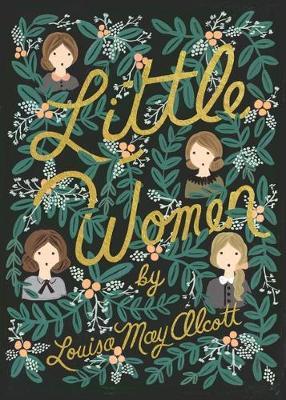
little women

“I’ve got the key to my castle in the air, but whether I can unlock the door remains to be seen.” 

-Louisa May Alcott, Little Women

In 1868, Louisa May Alcott was asked by her publisher to write a novel about girls that would be appealing to the masses. This was something new and challenging to her as she had spent all her life writing short stories. Also, she didn’t want to write a story from the female perspective as the only story she knew of was of her sisters. She was initially hesitant but chose to write the novel. Little did she know that her book would be an instant success and would still be read and admired by people centuries after her death.

Little Women was published in 1868 and recounts the story of four sisters: Meg, Jo, Beth, and Amy March. The book is loosely based off of Alcott’s own life, and many believe that she is the Jo March of her family. It is set in Massachusetts at the time of the American Civil War. On their first Christmas without their father, the March sisters and their mother, Marmee March, decided to give their Christmas breakfast away to an impoverished and starving family. When they returned, they found out that their neighbour, Mr Laurence had sent over a surprise breakfast. This leads to the two families getting closer to each other, and the March Sisters getting acquainted with Theodore “Laurie” Laurence, Mr Laurence’s nephew. 

One of the reasons why Little Women was an immediate success and remains relevant years after the author’s death is because of its realism and a perfect portrayal of sisterhood. The sisters are not particularly glamorous characters and lead ordinary lives, yet one likes them as they can relate to them. For example, when Jo refused to take young Amy to the theatre with Meg and Laurie, Amy burned down Jo’s manuscript, on which she had been working for ages. While this is not pretty to read, it is accurate as Amy was 12, and this is an accurate response from someone of her age. Her burning down of the manuscript led to Jo being extremely angry at her, and she vowed never to talk to her again. Yet, when Amy chased after Jo after feeling remorse, and almost died by falling through the thin ice at the river, Jo saved her and even made up with her. This shows that no matter how angry one is with their sibling, they still love them and would do anything for them.

Alcott also manages to perfectly capture the feeling of growing up and leaving your childhood innocence behind. Meg gets married and moves out, Jo rejects Laurie’s proposal and moves to New York to write, Beth becomes sick and eventually passes away, and Amy goes to Europe with her aunt where Laurie proposes to her after being rejected by Jo. Slowly they all leave their comfort zone behind and face the tribulations one faces when they become distant from family as they grow up. Yet, all the sisters reunite and show that their bond is stronger than ever.

Alcott gave her characters distinct and bold personalities and the women who read it at that time related to the March Sisters and felt the need to have more “public” identities and follow their ambitions. Alcott even planned to let Jo remain unmarried, but she eventually decided to get her married which lead to Jo abandoning her writing career, though Alcott remained unmarried all her life. This book has stayed relevant to date and is still beloved by the people. Generations of readers have fallen in love with this masterpiece. It is an extremely captivating story, one you won’t be able to put down.

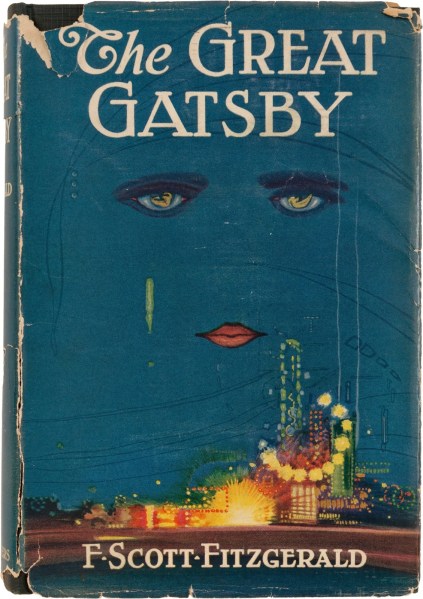
The unattainable American Dream: The great gatsby

“He who is not contented with what he has, would not be contented with what he would like to have.”

-Socrates

The American dream, a term coined by James Truslow Adams in his 1931 bestseller “Epic of America”, is the belief that anyone can achieve success if they work hard enough, regardless of their class or status. The dream of a land where life is better for everyone, with opportunity for each according to ability or achievement. However, as the years have passed the American dream has become more and more materialistic. Nowadays, people have impulsive and reckless habits, and they are never satisfied. No matter how much they have, they just keep aiming for more. This critique of the American dream was provided in F Scott Fitzgerald’s 1925 classic, “The Great Gatsby”.

Set in the Roaring Twenties, a few years after the first World War, the book begins with the narrator, Nick Carraway, a Yale alumnus and a war veteran, arriving in New York City, and renting a bungalow in the West Egg. This bungalow was next to the luxurious estate of Jay Gatsby, a mysterious multimillionaire and war veteran. The 20s were an interesting time for America. The young were rebellious, jazz was gaining popularity and the economy was prospering. The way society was living was reckless, and Fitzgerald foreshadowed that disaster was bound to happen. Sure enough, in 1929 the infamous Wall Street Crash put a stop to the economic prosperity of America.

Getting back to the novel, Nick observed that Gatsby had stretched out his arm in the direction of a mysterious green light coming from the end of a dock, reaching for something far off. This conveys the idea that no matter how much people possess, they always want more. Gatsby was the personification of the unattainable American Dream. He came from nothing and built his way up into the high society, earning his wealth through crime. Yet, he was never satisfied with what he had and failed to realise how hollow and empty his dream had become. When his ex-lover Daisy, who had gotten married to Tom Buchanan when Gatsby was deployed overseas, told him that she loved him, Gatsby wasn’t satisfied. He still wanted her to say that she never loved her husband. He always desired more and projected his version of the perfect American dream onto Daisy. When Daisy couldn’t bear the weight of his never-ending desires, she chose to stay with Tom, and his inability to win her love shattered his dream. This moment also set the stage for the novel’s tragic ending.

In the book, Gatsby was known for throwing glamorous parties at his lavish mansion which everyone attended, regardless of whether they were invited or not. Each week he had thousands of guests over, but he never formed a bond with anyone of them. His only companion throughout the book was Nick, although it is argued that he was only friends with him to get to Daisy, Nick’s cousin. 

After his death, only a handful of people attended his funeral, including Nick. All his former acquaintances had disappeared, and Daisy and Tom had moved away. Fitzgerald conveyed that the American dream had made people selfish, and criticised the lifestyle of the Americans. Disappointed by the low attendance at the funeral, Nick decides to move away from New York. He also realises that both Tom and Daisy were destructive and selfish people. Thus, Fitzgerald perfectly illustrates the fact that the dream is unattainable, and that one should focus on non-material things which bring more joy than this impossible dream.

The Great Gatsby is regarded as one of the greatest novels of all time.

The picture of dorian gray

“How sad it is! I shall grow old, and horrible, and dreadful. But this picture will remain always young….If it were only the other way!”

-Oscar Wilde, The Picture of Dorian Gray

A narcissist can be described as someone who has an excessive interest in themselves. While self love is important, narcissists take it too far. They think of themselves as superior in every way whatsoever. Their admiration and obsession with themselves can challenge extremities, sometimes even lead to their ruination. In Greek mythology, Narcissus, a hunter, was cursed to fall in love with himself. He admired himself in the river waters each day, until his despair about the fact that his own reflection couldn’t come to life and love him killed him , leaving behind nothing but a narcissus flower. The word itself is derived from his name. A similar theme is addressed by Oscar Wilde in his Gothic novel, The Picture of Dorian Gray.

Dorian Gray was Wilde’s first, and only published novel.It was new and compelling, providing us a peek into what goes on in a human soul, even though its initial release was quite controversial.Set in Victorian England, it tells the story of Dorian Gray, a man who, after seeing a beautiful portrait of his, falls in love with it, but grows distressed at the idea that the portrait will remain young and beautiful forever as he grows old and ugly. He desires that he himself remains young forever, while his portrait ages. Mysteriously, his wish is fulfilled. The man remains youthful, whilst his painting bears the marks every sin he committed, growing uglier by the day. Eventually, he stabs the painting with the same knife he used to murder his friend, perhaps to absolve himself from his wrongdoings. However, when his servants rush to find the source of a cry, they find Dorian’s corpse, old and withered, with the painting looking as beautiful as the day it was painted.

With appreciable vocabulary and vivid metaphors, Wilde manages to convey the slow corrupting of Dorian’s soul, egged on by his friend Lord Henry Wotton. Wotton’s character was crucial for the plot, as he was the one who poisoned his mind with the idea that beauty is the only thing worth pursuing. Had it not been for him, Dorian wouldn’t have driven Sibyl, his love, to death, nor would he have killed Basil Hallward, the artist who created the painting, and regarded Dorian as his muse. As the story progresses, he found it easier to shut off his conscience, and do what pleases him.

Throughout the book, Wilde keeps up his theme of aestheticism, and subtly manages to convey to the reader the shallow nature of tangible beauty, and how too much focus on it can destroy the soul. He manages to create a world where art meets reality. Wilde’s words present a perfect study of human selfishness and vanity, providing a perfect look into thr human soul. It has gone down in history as a classic work of literature.

all the light we cannot see

So how, children, does the brain, which lives without a spark of light, build for us a world full of light?” 

Anthony Doerr, All the Light we Cannot See

World War 2 has been one of the most written about topics. Over the years, we have seen a lot of books, movies and documentaries about it, each more intriguing than the previous. It was a dark moment in our history, and it is obvious why all of us can’t stop reading about it. Just when we thought that we have read it all, fiction and non-fiction, we were proven wrong. In 2014, Anthony Doerr released his “All the Light we cannot see”. This book highlighted how both the sides tried to survive the devastations of the war.It went on to become New York Times Bestseller, and even won the Pulitzer Prize for Fiction in 2015.

This book talks about the war, but not just in the way you think. Often times, literature about World War II focuses on its soldiers and leaders. Seldom it is when a book talks about its impact on the common folk. The book shifts between two points of views, one of a blind French girl trying to escape from occupied France, and another of a German boy, who gets recruited at an extremely young age. For Marie-Laure, blind since the age of 6, life hasn’t been easy, with her father as her only support.For Werner, an orphan, initially destined to labour in the mines, life takes a turn when he fixes an old broken radio, and tunes into a a radio show by a Frenchman who awakens a life long interest for science in him. Doerr’s impeccable vocabulary, and the smooth transition from Marie’s life to that of Werners makes it completely worth it to read the book. 

We all know what a difficult time that was. However , after reading about the many trials and tribulations they both had to face at extremely young ages, we come to realise exactly how cruel it was. How it stopped at nothing to take away every possible shred of happiness they possessed. Another theme constantly highlighted throughout the book is family. Both of them eventually lose all their family. This was a detail which couldn’t have been overlooked, as it was crucial to prove to the reader how innocents will always suffer when two sides fight. Doerr perfectly managed to capture the desperation one feels when losing their family, with the incapability of being able to do anything. It tugs at one’s emotional heartstrings, and definitely does the fail to provoke a tear or two.

Doerr’s hauntingly beautiful description of events not only helps you visualise the scene, but also feel the emotions the characters were going through. When Werner wins a spot into the Hitler Youth Academy, his only escape from a life in the coal mines, you can visualise exactly how he must have been feeling, being presented with two options for his future, neither of them better than the other. Both these options will lead to his separation with his only family alive, his sister. You can sense his inner turmoil at this very moment. This book is also a great read for those fond of science. Every page in this 634-page work of art is bewitching. This is one book you won’t be able to put down.

Top 5 books to read

There are times when you need an escape from your life and your time frame. Books are the best escape, the best time travel and the best indulgence. The world right now is going through a lot, and it wouldn’t be wrong to say that it is the toughest time for the humanity. From being on the verge of several wars, burning forests and an almost wrecking virus, there are times when you need to get away. 

Here’s a list of top 5 books you should read—

  1. The Bell Jar

One of the most beautifully written novels, The Bell Jar by Sylvia Plath emerges as an absolute get-lost-into novel. The stories about confinement and trauma are shocking, the narrative of this book is so indulging that you fall for it being real and forget what’s outside.

2. Looking for Alaska

A young adult fiction, John Green’s books never disappoint you. The descriptive nature of the book portrays a real film in your mind. The book is hard to leave and harder to get over with. You just keep falling in love with it every day.

3. Mrs. Dalloway

Considered as one of the best works of Virginia Woolf, Mrs. Dalloway is a book about a woman in the post-war days in Britain. It covers the day-long schedule in the life of a woman. The realisation of time and society that the book leaves you with is incredible. 

4. War and Peace

Another classic novel by Leo Tolstoy, covers the Russia’s days with Napoleon. It is amazing to read how ordinary people deal with the extraordinary conditions they encounter in their daily lives due to the war. It is worth reading as it teaches how people dealt during a wartime, when the the society was rapidly changing. The book is a thick-read but it is worth the time.

5. The Kite-Runner

The kite-runner by Khaled is a story about a young boy Amir and his friend Hassan. 

The story is based in Afghanistan, a war-torn and landlocked country in Asia. The kite-fight tournaments, the friendship and the betrayal will have all of your heart.

Reach out to me on instagram @ekanika_shah

A lonely world and other poems— book review

“A lonely world and other poems”, by Himanshu Goel is a perfect combination of inclusions and exclusions, of sadness mingling with hope, of a longing and rejection of home.

 It beautifully lays down the extraordinary situations in the life of every ordinary human. It swiftly blends the tales of being compelled into loneliness to wanting, yet rejecting to come out of it at the same time. 

I confess, it is one of the most relatable and captivating poetry compilations. The compilation is a lot of things—home, hope, severity and rivety. It lays naked the fact how the world is full of happy people with festered souls. You may go into a self-introspection mode by the end of this beauty. Ever wondered, how we let things happen, see distances increase and still lie back in the fear of being vulnerable?

It would open you to the strangeness of silently seeing yourself become someone you don’t want to and do nothing about it. It’s a realisation that the loneliness trapped inside of you is beautifully tragic. You will experience being a passionate person lost into a labyrinth that leads no where. The hard-hitting end is captivatingly painful. It’s the place where you’ll find imperfections being glorified better than beauty, society being questioned so blatantly and yet so poetically.


Get it now from Amazon!
https://www.amazon.in/lonely-world-other-poems-ebook/dp/B089MDCXR7/ref=sr_1_2?dchild=1&keywords=A+lonely&qid=1591856625&s=gift-cards&sr=1-2-catcorr

A Misreading of the Poem of Maya Angelou’s’ My Arkansas’

1.Veeramani, S. Ph.D.& 2. Mr. M. Chinnadurai

Assistant Professors of English, Arignar Anna Govt. Arts College

Abstract

Literary texts are significantly made up of signifiers from the definition of poststructuralist perspective. The author’s literary product is a dynamic, when a reader is making multiple readings. That is to say that a primary reading is not an end. There are multiple readings are in literature. This kind of multiplicity of reading is safely called ‘misreading’

Keywords

Culture, deconstruction, environmental concern, misreading, nature

Introduction

The well-known African American poet is Maya Angelou. She is a civil activist in Arkansas.  Arkansas is a place in America, where black people live and were discriminated brutally on the racial issues. She is labelled as postcolonial / subaltern writer. Her most famous poem is ‘My Arkansas’. Generally this poem deals with the poet’s reminiscent of her experience of the poet. As it is well known that this poem is a note of autobiographical. Angelou has brought bitterly out the present and the past experience. From the perspective of post structuralism, a theorist can reread this poem in the aspect of multiplicity of meaning. The surface level of the meaning is defaced and the hidden meaning is unearthed. The constant unearthing activity is the primary act of post structuralism.

       Post structuralism has not emerged suddenly. In arts and humanities the theory has been developed from structuralism. Post structuralism has produced a term called ‘deconstruction’. Originally the term deconstruction announced and practised by Jacques Derrida.  Derrida was a French philosopher, born in 1930. In his intellectual account, he has written three significant books. Those are: a) Speech and Phenomena b) Writing and Difference and c) Of Grammatology. Derrida is not to the diametrically opposite meaning in a text. Rather, he is to the unread meaning, which is left in a text by a common reader. The term deconstruction is not a new one. It already existed in the 18th century. Derrida says that a literary text is already dismantled by itself. Therefore, he says that the left over meaning with the play of signifiers is reread.


Misreading- A note:

The term deconstruction is derived from old French word. Derrida himself says that deconstruction is not a new term. It better to quote from Julian Wolfreys’ essay ‘Deconstruction, What Remains Unread’:

‘The first known written appearance of the word in English is in 1882’. As with its French predecessor, it has legal connotations: ’a reform the beginnings of which must be a work of deconstruction’ (wolfreys, 117.)

    Misreading of a literary text is not the reading of a literary text in a wrong manner, but it is a reading in which the other meaning is exhumed from a literary text. There are two kinds of method of reading, which can be functioned analyse a literary text.

A)Intended meaning (author’s / general /surface meaning)

  1. B) Unintended meaning (reader’s reconstruction/misreading/unread meaning/deconstruction)

The intended meaning defines that the surface level of the meaning in a text which the author wants to convey to readers. And it has a sequential logic at giving the meaning.

The unintended meaning defines that a reader deconstructs a literary text / art not from a reader’s own perspective, but to discover the unread he meaning, which is already dismantled by itself. In a linguistic network the play of signifiers are already tended to be deconstructed.


Deconstructive Analysis of the poem ‘My Arkansas’

Maya Angelou’s ‘My Arkansas’ is a well-known African American poem. Some readers and critics say that the poem deals with the theme of autobiography. Through this poem Angelou has depicted that there is a racial discrimination in her country. This poem is an example for that. In a deconstructive reading all the readings are the provisional. Therefore, in the practice of deconstruction, the term aporiais used.

                                    There is a deep brooding

                                    in Arkansas

                                    old crimes like moss pend

                                    from poplar trees

the poet has utilized the metaphorical and figurative language in the above stanza. The poet says that in Arkansas old crimes are prevalent even now. The words ‘old’ ’crimes ‘make sense that the poet is in dilemma between old crimes and the modern crimes, since the old crimes are emphasized figuratively.

Moreover, the author has used the figurative words comparatively that ‘deep’ ‘brooding’‘moss pend’ and ‘poplar trees’, which have the nature of fast growing. Here the figurative words are representing the crimes committed by people in the Arkansas are culture. The words ‘moss’ and ‘poplar’ are representing ‘nature’. The poet seeks for assistance to bring out culture from ‘nature’. This is what a poststructuralist reading calls a concept of binary opposition. That is nature X culture, man X woman as such. In the poem the signifiers reiterate nature for emphasizing culture. The poet explains that nature of fast growing trees like ‘moss’ and ‘poplar’. The above few lines of the poem have the nature of culture

                                    the sullen earth

                                    Is much too

                                    Red for comfort

The above lines are the environmental concern rather than her autobiographical note. The words ‘sullen earth’ and ‘too red’ are in the metaphorical sense. Again the poet seeks for assistance from nature ‘earth’. The words ‘too red’ might have explained that the earth is destroyed by the crimes.  It shows that the earth is being deteriorated into loss of fertility, nature and greenish, because of the man-made violence. It is better termed as anthropocentrism. Therefore, it might to say that the poet has eco-concern

Sunrise seems to hesitate

                                    And in that second

                                    Lose its

                                    incandescent aim, and

                                    dusk no more shadows

than the moon

The above lines are the explanatory of change of whether /climatic condition. The sun is not able to appear and disappear in the proper region /location. The sun loses its brighter light to flash. The line ‘the past is brighter yet’ shows that the line is connected with the ‘old crimes’ like ‘moss pend’. The explanatory note here is the cultural degradation makes more on nature and it has lost ‘values’ and ‘nature’. Again the poet seeks for assistance from natural phenomena like ‘earth, moon’. The poet is so concern about the environmental degradation and is compared with past/old crimes in Arkansas.

Old hates and

                                    Ante-bellum lace, are rent

                                    But not discarded

                                    Today is yet to come

The poet might to say that before the American Civil war the condition was unsatisfactory. This might be a reason that the American civil war could bring peace. The term ‘ante-bellum’ is on par with before the American civil war. Therefore the poet makes importance to the environmental concern rather than her autobiographical note in the poem.

References

Barry, Peter. Beginning Theory:An Introduction to Literary and Cultural Theory.UK: Manchester University Press, 2010. print.

Wheeler, Kathleen and Indra, C.T. Explaining Deconstruction. Chennai: Macmillan, 1997. print.

Wolfreys, Julian. Introducing Literary Theories:A Guide and Glossary. UK: Edinburgh University Press, 2001. print.


Best Hosting Plan for Entrepreneurs

Get Lifetime  Hosting Plan

lifetime-banner-728x90.png

Wonderful Tips for Using Silent Body Language

This is really one of the one that I read and reviewed in last few days. I found this book full of easy to use and follow body language tricks which can really enhance our social influence and we can be a good communicator. The communication is two types verbal and non-verbal. The author has beautifully explained how to use and make it our habit in synthesizing both the language. The book is available free but it is worth hundreds of million dollars. The author has explained the postures of hand which is a major component of non-verbal communication in our day to day life. The author has suggested good number of such tricks and instructed easy to follow guidelines so that the thoughts become action and action become habit of our life. I would recommend this book to all the managers, technical persons and all who wish to make a social imprint. This book can be really more useful if we practice the suggestions given in the book. I would like to enlist few suggestions which I felt everybody should follow. 1. Stand to greet and meet people. 2. Smile while you meet someone. 3. Use effectively your non-verbal communication skill to gain an edge in professional life. 4. Be careful that what you say and what your body communicate, might make a huge difference. 5. Learn good things but more important thing is to practice it in real life. Hope to see more of my friends reading this wonderful book. I will scan through more books to bring out the gems for you to possess and cherish in your life.

Book Review by Shashikant Nishant Sharma

Click here to get Book Available Free on Amazon