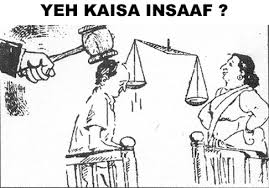
NEPOTISM

Nepotism is based on favoritism granted to relatives in various fields, including business, politics, entertainment, sports, religion and other activities.

WAYS TO HANDLE NEPOTISM AT WORKPLACE

  • In cases of nepotism, what’s often most frustrating is that a person feels overlooked because of opportunities given to someone perceived as less qualified. Document what you’ve achieved over time, and make sure to compile as much data to back you up as possible.
  • Identify a third-party ally – someone higher up than you, and thus who has more power within the organization but has no skin in the game. As with any complaint, documentation and witnesses are important. Together with the ally, determine how to best bring forward your concerns that won’t result in backlash.
  • Some might feel compelled to act out of emotion, but it’s best to build a case with evidence and details – including any information from colleagues who may be experiencing the same things you are – before approaching anyone.

NEPOTISM IN BOLLYWOOD                       

A cake walk debut of a star kid and a difficult entry for others, nepotism cannot guarantee success though it has existed in Bollywood for a long time. Many star kids tried to make their presence on the screen, but failed to grab viewers’ attention. Nepotism in industry is defined with the surname famously associated with known actors. The legacy of Kapoor emerged from the golden age of Indian cinema watching the 3rd generation now. The father-son duo of Sunil Dutt and Sanjay Dutt, Dharmendra and Sunny Deol, there are many such names that get a grand welcome in cinema.

SOME OF THE RESULTS OF NEPOTISM

  • Alia Bhatt- daughter of Mahesh Bhatt
  • Varun Dhawan- son of David Dhawan
  • Sonam Kapoor- daughter of Anil Kapoor
  • Athiya Shetty- daughter of Suniel Shetty
  • Sonakshi Sinha- daughter of   Shatrughan Sinha
  • Abhishek Bachchan- son of Amitabh Bachchan
  • Janhvi Kapoor- daughter of Sridevi
  • Ananya Pandey- daughter of Chunky Pandey

NEPOTISM- RIGHT OR WRONG

The nepotism debate has been reignited after the demise of Bollywood actor Sushant Singh Rajput. While there is no official statement by authorities on the reason behind his suicide, Twitterati and many celebrities have concluded that his death was in some way connected to nepotism in Bollywood. Recently, Kangana Ranaut appeared on a channel where she spoke about the prevalent culture of nepotism in Bollywood and how that resulted in Sushant Singh Rajput’s death. The conversation around nepotism was first ignited by Ranaut on Karan Johar’s chat show Koffee with Karan in 2017, where she called the filmmaker the ‘flag-bearer of nepotism’.

CELEBS WHO CLAIM THAT THEY HAD TO FACE THE BRUNT OF NEPOTISM

  • Abhinav Kashyap said Salman Khan and family ruined his career.
  • Resul Pookutty said no one gave him work after he won an Oscar.
  • Sonu Nigam says ‘Music Mafia’ crushes talented musicians.
  • Sona Mohapatra said she never got a second chance even after a blockbuster song Ambarsariya.
  • Upen Patel said that “they” cut him out suddenly and he felt left out.
  • Shreyas Talpade said that Karan Johar and YRF never showed interest in working with him.

INDIAN INDEPENDENCE DAY

Independence Day is celebrated annually on 15 August as a national holiday in India commemorating the nation’s independence from the United Kingdom on 15 August 1947, the day when the provisions of the Indian Independence Act 1947, which transferred legislative sovereignty to the Indian Constituent Assembly, came into effect. India retained King George VI as head of state until its transition to a full republic, when the nation adopted the Constitution of India on 26 January 1950 (celebrated as Indian Republic Day) and replaced the dominion prefix, Dominion of India, with the enactment of the sovereign law Constitution of India. India attained independence following the Independence Movement noted for largely non-violent resistance and civil disobedience.

Independence coincided with the partition of India, in which British India was divided along religious lines into the Dominions of India and Pakistan; the partition was accompanied by violent riots and mass casualties, and the displacement of nearly 15 million people due to religious violence. On 15 August 1947, the first Prime Minister of India, Jawaharlal Nehru raised the Indian national flag above the Lahori Gate of the Red Fort in Delhi. On each subsequent Independence Day, the incumbent Prime Minister customarily raises the flag and gives an address to the nation.The entire event is broadcast by Doordarshan, India’s national broadcaster, and usually begins with the shehnai music of Ustad Bismillah Khan.

British rule in India began in 1757 when, following the British victory at the Battle of Plassey, the English East India Company began exercising control over the country. The East India Company ruled India for 100 years, until it was replaced by direct British rule (often referred to as the British raj) in the wake of the Indian Mutiny in 1857–58. The Indian independence movement began during World War I and was led by Mohandas K. Gandhi, who advocated for a peaceful and nonviolent end to British rule.

Independence Day is marked throughout India with flag-raising ceremonies, drills, and the singing of the Indian national anthem. Additionally, various cultural programs are made available in the state capitals. After the prime minister participates in the flag-raising ceremony at the Red Fort historic monument in Old Delhi, a parade ensues with members of the armed forces and police. The prime minister then delivers a televised address to the country, recounting the major accomplishments of India during the previous year and outlining future challenges and goals. Kite flying has also become an Independence Day tradition, with kites of various sizes, shapes, and colours filling the sky. Also, to commemorate the day, government offices in New Delhi remain lit throughout the holiday, even though they are closed.

Independence Day, India
Independence Day, IndiaSchoolchildren waving flags on Independence Day in India

Happy Independence Day to all-Jai Hind

Basic Structure of Constitution

Basic Structure of Constitution – Myth or Reality

Basic Structure of the Constitution, sometimes also called as “Basic features” of the Constitution, this doctrine was laid down by the Hon’ble Supreme Court in the case of Keshavananda Bharti v. State of Kerala, AIR 1973 SC 1461: (1973) 4 SCC 225.

A brief overview of the doctrine of ‘Basic Structure of Constitution’ may show that it is just what the hon’ble Supreme Court has held to be as the Basic Structure of the Constitution in various cases that consists of the Basic Structure of the Constitution. But such a case would give rise to ambiguity, as it implies that there is no definite yard-stick to determine whether a particular provision is part of the Basic Structure or not. Such an ambiguity gives rise to wide discretionary powers of the Judge who is to decide as to a provision being a part of the basic structure or not as it would mean that it is solely dependant upon what the person sitting as Judge, in his personal opinion, thinks as to whether the provision is part of the basic structure or not. Such wide discretionary powers have been provided against by the Constitution by way of Article 14 which guarantees Right to Equality. Hence, such a case would mean that the doctrine is itself contradictory to the provisions of the very Constitution which it seeks to protect from ‘harm’. Hence, the doctrine becomes ultra vires and hence, void. So it would mean that the Doctrine of the Basic Structure is nothing but a myth created by the hon’ble Supreme Court.

But a deeper and closer look at the doctrine and the case laws of the hon’ble Supreme Court clearly shows that there is more to it than just what first meets the eye. When we speak of the Basic Structure, we don’t speak of the Articles of the Constitution or its provisions, but the principles which they enshrine. It may be said that Basic Structure consists of the principles keeping which in mind, the Constitution was framed. As for example, Objectives specified in the Preamble, Right to Equality, Right to Life and Personal Liberty, Right to Freedom of speech and expression, Separation of Powers, etc., may be called as some of such Principles and hence may be said to form the Part of Basic Structure of the Constitution. The provisions which enshrine these principles if changed in such a way that they serve the same purpose in the same way or in a better way, it would not imply changing the Basic Structure of the Constitution. To make my point more clear, I would like to cite the following example: “No person shall be deprived of his life or personal liberty except according to procedure established by law.” These words don’t form part of the Basic Structure but the Principle of Right to Life and Personal Liberty which is guaranteed to every person through these words is what the Basic Structure consists of. So, if they were changed to, say “No person shall be deprived of his life or personal liberty except according to due procedure established by law.”, such a change doesn’t affect the essence of the original Article/Provision and still preserves the Right to Life and Personal Liberty in the way it was intended to be. It only makes the point as to the kind of procedure to be followed, more clear and precise. Hence, though an Article which forms the Basic Structure of the Constitution is changed, it does not imply changing the Basic Structure of the Constitution. But if it were changed to, say “No citizen shall be deprived of his life or personal liberty except according to procedure established by law.” or “No person shall be deprived of his life except according to procedure established by law.”, any such amendment or change would mean changing the Basic Structure of the Constitution because it tries to change the provision and make it in such a way which was not intended by the framers of the Constitution; as in this case, to limit the scope of the provision and hence take away the Right from a particular class of persons (in the former case), or to eliminate the Right to Personal Liberty (in the latter case). And these Principles can be clearly made out by a thorough reading of the provisions of the Constitution.

From the above discussion, it can be concluded that the Basic Structure is, in fact a reality, and there is more to it than just the Supreme Court case laws. Like the Doctrine of ultra vires which seeks to prevent any law/rule that violates the provisions of the Constitution, this Doctrine seeks to negate any attempt to change the Constitution in a ‘negative’ way and hence, preserve the sanctity of the Constitution. In the end, I would like to conclude by saying that the doctrine of Basic Structure of Constitution was framed and has been very rightly implemented by the Hon’ble Supreme Court in the various cases to protect the very Principles this great Nation is built upon.

Freedom

What is freedom according to you ?

Being able to watch my favourite channel  whenever I like.

Eating as many ice creams and choclates as I want and dentist don’t tell anything about teeth.

Not getting up early in the morning.

To Do what I like.

College should run according to our method.

I want to be free of all reponsibilities.

Chatting on phone as long as I want.


Independence day: how far has the golden bird soared

“Long years ago we made a tryst with destiny, and now the time comes when we shall redeem our pledge, not wholly or in full measure, but very substantially. At the stroke of the midnight hour, when the world sleeps, India will awake to life and freedom.”

– Pandit Jawaharlal Nehru, Tryst with Destiny

15 August 1947, a day immortalised as the first independence day of India. This was the very day we gained our independence after almost 200 hundred years of British oppression. The path to independence was not an easy one. It cost us millions of lives, and years of bloodshed to regain something which shouldn’t have been taken from us in the first place. The sacrifices of those who fought for our noble land are honoured and remembered, as we celebrate the 74th Indian Independence Day in 2020. In these past 73 years of freedom, a lot has changed as we have struggled to find our own identity and fix the damages done to us.

Let us look back to what was happening 73 years ago. On 20 February 1947, it was announced by the British Prime Minister Clement Attlee that their government would grant full self-governance to British India by June 1948 at the latest. This was a result of the realisation by the labour party that due to the exhaustion of their resources by the Second World War and lack of international support, they could no longer control restless India. Yet, the day of independence was not all pretty. Communal riots, rampage and bloodshed on both sides of the border led to the loss of between 250,000 to 1,000,000 lives. Amidst all this, the first Prime Minister of independent India, Pandit Jawaharlal Nehru delivered his famous speech, Tryst With Destiny, to commemorate our independence. This speech is considered one of the greatest speeches of the 20th century.

It is an undeniable fact that in the past 73 years we have made a lot of progress. If we look at the economy, we can see that the standards of living and income levels have grown tremendously. The gross domestic product (GDP) increased from Rs 2,939 billion during 1950-51 to an estimated Rs 1,40,776 billion in 2018-19. At the same time, the income of the average Indian worker has gone up to Rs 92,565 during 2018-19 from just around Rs 7,513 during 1950-51. In 1991, the economic liberalisation  of our economic policies was initiated, to make the economy more market- and service-oriented, and expanding the role of private and foreign investment. Our economy is one of the fastest-growing economies of the world. Literacy rates have increased significantly, from 18.3% during the 1950s to 73% in 2011. So much more has been done, which makes one’s chest swell with pride.

Although it is pleasing to see the progress which has been made, our country is not perfect. People are still being discriminated against. Colourism in India which has been fuelled due to events under British colonial rule, where British officials consistently demeaned dark-skinned Indians and favoured light-skinned Indians for jobs is still prevalent. Even though our economy is growing fast, the growth in India is not inclusive enough. The rich are getting richer, while the poor suffer. India is also not very safe for women due to the increasing number of assaults against women. Sexist practices like dowry and female foeticide are still happening in the remote areas of the country, even though they have been banned. The number of lynching cases has also grown up, which is incredibly saddening.

Nobody likes to look at the negatives, yet we cannot ignore the problems with the system. An Indian citizen has to address these problems and work for the betterment of their country. 

This independence day, we stand together for our country, and celebrate and salute the brave and the fearless for the sacrifices made by them to help us achieve our freedom. Jai Hind!

RIGHT TO EDUCATION ACT IN INDIA

The Constitution (Eighty-sixth Amendment) Act, 2002 inserted Article 21-A in the Constitution of India to provide free and compulsory education of all children in the age group of six to fourteen years as a Fundamental Right in such a manner as the State may, by law, determine. The Right of Children to Free and Compulsory Education (RTE) Act, 2009, which represents the consequential legislation envisaged under Article 21-A, means that every child has a right to full time elementary education of satisfactory and equitable quality in a formal school which satisfies certain essential norms and standards.

Human Rights And Right To Education | Law Corner

Article 21-A and the RTE Act came into effect on 1 April 2010. The title of the RTE Act incorporates the words ‘free and compulsory’. ‘Free education’ means that no child, other than a child who has been admitted by his or her parents to a school which is not supported by the appropriate Government, shall be liable to pay any kind of fee or charges or expenses which may prevent him or her from pursuing and completing elementary education. ‘Compulsory education’ casts an obligation on the appropriate Government and local authorities to provide and ensure admission, attendance and completion of elementary education by all children in the 6-14 age group. With this, India has moved forward to a rights based framework that casts a legal obligation on the Central and State Governments to implement this fundamental child right as enshrined in the Article 21A of the Constitution, in accordance with the provisions of the RTE Act.Right of children to free and compulsory education till completion of elementary education in a neighbourhood school.

It clarifies that ‘compulsory education’ means obligation of the appropriate government to provide free elementary education and ensure compulsory admission, attendance and completion of elementary education to every child in the six to fourteen age group. ‘It makes provisions for a non-admitted child to be admitted to an age appropriate class.

It specifies the duties and responsibilities of appropriate Governments, local authority and parents in providing free and compulsory education, and sharing of financial and other responsibilities between the Central and State Governments.

conclusion:-

It benificiated somany children.This is a great amendment.

INDEPENDENT INDIA

The British rule played an important role in shaping modern India. British ruled over India for more than a century (1757-1947). The British rule in India started with the East India Company, a private company owned by stakeholders. The anti-colonialism movement emerged in response to the “divide and rule” approach used by the British. Gandhi, and his revolutionary methods of protest, played a pivotal role in Indian independence. India gained its independence from Britain on 15 August 1947, after decades of clashes and protesting.

THE BATTLE OF PLASSEY

Britain had been trading in India since about 1600, but it did not begin to seize large sections of land until 1757, after the Battle of Plassey. This battle pitted 3,000 soldiers of the British East India Company against the 50,000-strong army of the young Nawab of Bengal, Siraj ud Daulah, and his French East India Company allies. The Nawab lost at least 500 troops, while Britain lost only 22. Britain seized the modern equivalent of about $5 million from the Bengali treasury and used it to finance further expansion.

THE MUTINY OF INDIA IN 1857                         

On May 10, 1857, the Indian Revolt began, with Bengali Muslim troops marching to Delhi and pledging their support to the Mughal emperor. After a year-long struggle, the rebels surrendered on June 20, 1858.

WORLD WAR I

During World War I, Britain declared war on Germany on India’s behalf, without consulting Indian leaders. About 1.5 million Indian soldiers and laborers were serving in the British Indian Army by the time of the Armistice. A total of 60,000 Indian soldiers were killed or reported missing. In April 1919, more than 15,000 unarmed protesters gathered at Amritsar, in Punjab. British troops fired on the crowd, killing hundreds of men, women, and children, even though the official death toll of the Amritsar Massacre as reported was 379.

WORLD WAR II

When World War II broke out, India once again contributed hugely to the British war effort. In addition to troops, the princely states donated substantial amounts of cash. By the end of the war, India had an incredible volunteer army of 2.5 million men. About 87,000 Indian soldiers died in combat.

STRUGGLE FOR INDEPENDENCE

Even as World War II raged on, Gandhi and other members of the Indian National Congress (INC) demonstrated against British rule. The 1935 Government of India Act had provided for the establishment of provincial legislatures across the colony. The Act also created a federal government for the provinces and princely states and granted the right to vote to about 10% of India’s male population.

ARRESTS OF GANDHI

Gandhi and the INC did not trust the British envoy and demanded immediate independence in return for their cooperation. When the talks broke down, the INC launched the “Quit India” movement, calling for the immediate withdrawal of Britain from India. In response, the British arrested the INC’s leadership, including Gandhi and his wife. Mass demonstrations were carried out across the country but were crushed by the British Army.

PARTITION

On August 17, 1946, violent fighting broke out between Hindus and Muslims in Calcutta. The trouble quickly spread across India. Meanwhile, cash-strapped Britain announced its decision to withdraw from India by June 1948. Sectarian violence flared again as independence approached. In June 1947, representatives of the Hindus, Muslims, and Sikhs agreed to divide India along sectarian lines. Hindu and Sikh areas remained part of India, while predominantly Muslim areas in the north became the nation of Pakistan. This division of territory was known as the Partition. Millions of refugees flooded across the border in each direction, and up to 2 million people were killed in sectarian violence. Pakistan became independent on August 14, 1947. India followed the next day.

the bitter beverage

With more than 400 billion cups consumed each year, coffee is the most popular beverage in the world. The global coffee industry earns an estimated $60 billion annually. After oil, it is the world’s second-most-valuable commodity exported by developing countries, and people cannot get enough. Consumption of coffee varies worldwide, with some people even consuming 4 cups a day. As a student, coffee is a staple for me. Many people around the world, including me, cannot get by their days without consuming at least one cup of coffee. This love for coffee is justifiable, as it has many benefits. It energises us, helps us stay focused, reduce the risk of Dementia, and can even lower the risk of certain types of cancer. But, even though millions around the world drink coffee, many fail to acknowledge the dark side of it.

Caffeine is a highly addictive substance. Many people think that they need to consume some form of it. Excessive consumption of caffeine can lead to nervousness and restlessness, sometimes even death. However, we as a society have completely normalised caffeine addiction. Many joke about the fact that they cannot survive without that daily cup of coffee and call it a cup of “liquid sanity” when in reality it is not something to be joked about. It should be taken as seriously as any other addiction. Those trying to reduce or quit coffee, might experience withdrawals in the form of severe headaches, irritability, drowsiness, depression and sometimes even nausea and vomiting.

Conventional coffee not only harms your health (if consumed in large quantities ) but also have negative effects on our planet. Coffee was traditionally grown in shady areas, and it had its benefits. It prevented soil erosion and provided some form of refuge for the species native to the regions where it was grown. But, since the yields and therefore profits of shade-grown coffee are lower, many switched to open fields. Growing coffee under the sun depletes the nutrients in the soil, and render the land useless. Such type of coffee also requires a higher amount of pesticides and fertilisers. Since the workers working in such plantations are generally poor, they cannot afford proper safety equipment and suffer from skin rashes and difficulty in breathing.

Coffee farmers are severely underpaid. But, since this is sometimes their only source of income, they are forced to pull their children out of schools and employ them in plantations. It is extremely unsafe for children as young as 6 to be exposed to such high amounts of pesticides used, and even saddening to know that in Brazil child labour rates were approximately 37% higher—and school enrolment 3% lower—than average in regions where coffee is produced. Moreover, big brands such as Nestlé have admitted to purchasing coffee from plantations where slavery and forced labour are prevalent.

Unfortunately, ethical consumption of any commodity is challenging under modern-day capitalism, and a few people cannot guarantee safe working conditions and fair wages for all coffee farmers. Yet, there are still some things we can do on our part to make our coffee consumption more ethical. For starters, we can avoid buying from unethical brands like Nestlé, and instead switch to fair trade brands. The best thing would be to simply purchase your coffee from local shops that get their beans from small farmers. If you reside in India, then try purchasing from the largest certified organic coffee plantation in the Eastern Ghats, Araku Coffee. Moreover, do not stop educating yourself about these issues; don’t let them go unnoticed. The fight for change is a difficult one, but never stop fighting for what’s right.

Sources: https://foodispower.org/our-food-choices/coffee/

Go away

Rain, rain go away

Come again another day

Rain, rain go away

Little Ahana wants to play.

Corona, Corona go away,

Little Ahana wants to play

Corona, Corona go away,

Never show your face again.

Constitutionalism

The concept of constitutionalism is that of a polity governed by or under a constitution that ordains essentially limited government and rule of law as opposed to arbitrary authoritarian or totalitarian rule. Constitutional government, therefore, should necessarily be democratic government.

In other words, Constitutionalism is a political philosophy in which the functions of government of a state must be in accordance with the provisions of the constitution meaning thereby the actions of government must reflect constitutionality.

As the constitutionalism is a political spirit or philosophy, so it is not necessary that the states who have a constitution must be embodied with the concept of constitutionalism. According to Douglas Greenberg

, Constitutionalism is a commitment to limitations on ordinary political power, it revolves around a political process, one that overlaps with democracy in seeking to balance state power and individual and collective rights, it draws on particular cultural and historical contexts from which it emanates and it resides in public consciousness.

Now to identify that whether constitutionalism is present in India or not. It can be analyzed with the help of various provisions of constitution that are:-

• Preamble
• Judicial Review
• Rule of law
• Separation of power
• Checks and balances and so on.

There is no exhaustive list of features by which the validity or existence of constitutionalism can be tested; but the every feature which limits the government and proves helpful to establish a position of sovereignty under fundamental principles of constitutional jurisprudence may be a considerable point for constitutionalism.

In Indian context,
Preamble may be a point to check the presence of constitutionalism. Our Constitution enacted on 26th November,1949, since then, a question always a matter of great concern that whether preamble is a part of Indian constitution or not. However, in 1960, In Re Beru Beri case, it was held that preamble is not a part of constitution but after a long time, In case of Keshavanand Bharti v State of Kerala, AIR 1973 SC 1461

, 13 judges largest bench of Indian constitutional history rejected previous contentions and declared that

“Preamble is a part of Indian Constitution”.
Preamble explains the objectives of constitution in two ways, one about the composition of bodies of governance and other about the objectives sought to be achieved in independent India. Objectives explained in preamble as follows:-
• To constitute India into Sovereign, Socialist, Secular, Democratic Republic (words Socialist and Secular inserted by 42nd constitutional Amendment,1976) Other provisions of preamble that are;-
• Justice – Social, Economic, and Political;
• Liberty – of thought, expression, belief, faith and worship;
• Equality of status and opportunity;
• Fraternity assuring the dignity of the individual and the unity and integrity of the nation (word unity inserted by 42nd constitutional Amendment,1976) may be invoked to determine the ambit of Fundamental rights and Directive principles of state policy.

According to Justice Subbarao,
Preamble is the soul of the constitution, without which a body in the form of state cannot be survived. The objectives of constitution ensure the dignified conditions for the people of India and provide them all rights and liberties within ambit of fundamental spirit of constitutionalism embodied in entire body of the constitution. E.g. Dr. Radhakrishnan, former President of India, has explained secularism in this country, as follows:-
When India is said to be a secular state, it does not mean that we reject the reality of an unseen spirit or the relevance of religion to life or that we exalt irreligion. It does not mean that secularism itself becomes a positive religion or that the state assumes divine prerogatives…..we hold that not one religion should be given preferential status…This view of religious impartiality, or comprehension and forbearance, has a prophetic role to play within the National and International life.

In other words,
Secularism, which reflects no state religion, means every citizen has a right to profess religion of their own choice, which promotes automatically liberty of faith and worship.

In this way, It can be surmised that preamble hold the spirit of constitutionalism. Second feature is Judicial Review, however, this doctrine is not clearly stated in Indian
constitution but its reflection is somewhere found in Article 13(2), Actually, this doctrine was firstly introduced in 1803 by Justice Marshall in Marbury v Madison(3) case, In USA
where he clearly said that ‘It is the duty of judge to annul the law made by the legislature which violated the constitution or contrary to it.

The similar spirit found in Article 13(2) of Indian Constitution that the laws “which are inconsistent to part III of constitution shall be declared null and void”, but it is not clearly defined that if any contrary law made, then who will check its validity, then an answer comes into light in reference to Justice Marshall that Judiciary can check such contrary acts of legislature and also can review the laws made by legislature.

And also a concept of “Higher law” emerged from this doctrine, because a judge has to follow the mandates or directions of Higher law while checking the consistency of provision. In written constitution, Higher law depicts constitution as Supreme but where there is no written constitution; there are some principles which can be regarded as Supreme or Higher law principle. In Gopalan V State of Madras (1950) SCR 88(100) has upheld that it is difficult to restrict the sovereign legislative power by judicial interference except so far as the express provision of written constitution. It is only the written provisions of constitution which may restrain legislative power, but where there is no written constitution, then, who restrain legislative power, and then its answer is judiciary by following various principles, precedents, customs, usages, and different statutes can check the consistency.

It clearly signifies that in absence of power of judicial review in hands of judiciary, judiciary is only a puppet of legislators.

Justice Frankfurter (4)(USA)…. said that judicial review, itself a limitation on popular government, is a fundamental part of our constitutional system; means if there is no power of judicial review then the constitution merely becomes a draft for the code of conduct for government as well as citizens, It also signifies as a

“Law without Sanction”.
However, this type of situation has been prevalent in India, till 2007, in different cases, such as Shankari Prasad case, Sajjan Singh caseGolak Nath caseKeshavanand Bharti case, N.Ramchandra case, traced a picture of conflict between legislature and judiciary, no clear cut demarcation of powers under which organs of government can overview the validity of their actions for upholding the true spirit of constitutionalism in a political entity could be realized. But the Raja Ram Pal case and I.R.Coelho v State of Tamil Nadu case 2007 have reshaped the whole demarcation and establish superiority of principles such as Basic Structure Theory enhancing the spirit of constitutionalism.

In this way, by exercising Appellate and Advisory jurisdiction, judiciary can secure uniformity in the interpretation and application of the constitution as amongst the states.

Third provision is “Rule of Law”, on its basis spirit of constitutionalism can be present in a state. This doctrine is given by dicey (a well known constitutionalist of England) in 1865 wrote a book titled

“An Introduction to the law of the constitution” in which the term “Rule of Law” was given a comprehensive amplitude. In reality, it is a doctrine of England where there is no written constitution, so it is placed as a higher law there to check the validity of any law made by legislature. This doctrine shows that whatever law is present in our state, must be ruled over everyone, meaning thereby the law is supreme in all respect and in every sphere. It clarifies that “No one above the law”. Now a question arises, what the law is? The answer of this question resides in two principles that are-

• Due Process
• Procedure established by law.
Due Process is a doctrine of USA, and its ambit is not defined comprehensively, but its sphere is to be explained by judges as per the facts and circumstances of the case. It represents judicial supremacy and also there is a danger for judicial autocracy because the court if not self restrained may go beyond the limits set by the constitution.

But in India, there is a “Procedure established by law” doctrine prevails, adopted from

Constitution of Japan
and clearly enshrined in Article 21 of Indian Constitution. It shows parliamentary sovereignty because in India, law is made by the legislature, it restricts the judicial supremacy and only infers right to do literal interpretation not statutory construction of laws.There are also some other elements embedded in Rule of law, such as

• Absence of arbitrary power on the part of government, which is undoubtedly present in form of judicial review in which judiciary always look after the actions of other organs of government.

• Equality of all persons in the eye of law, which can be justified on the basis of provisions of Article 14-18 with some reasonable restrictions.

• Rules of constitutional law are the results of the ordinary law of the land means the laws made by legislature must not be contrary to the provisions of constitution, otherwise it will be declared as null and void.

In England, Rule of Law flourished sovereignty of legislature, being unwritten constitution there is no higher law to circumscribe the plenary powers of the sovereign legislature but in India, there is written constitution and the concept of judicial review also present, so the doctrine of Rule of Law cannot be assigned a paramount place. But to promote the spirit of constitutionalism, the shadow of this doctrine reflects in various provisions of Indian Constitution in the form of fundamental principles of natural justice.

Next provision is Separation of Power
Among organs of government. In India, under Article 245,246 and Schedule VII there is a clear demarcation of legislative power among union and state government, under Articles 256-263 administrative relations are also clearly defined, and under Article 254 if there is any inconsistency between centre and state laws, then central law prevails, under Article 264-291 fiscal relation between centre and state is given, meaning thereby there is a rare chance of clash between union and states, so that public policies can be properly implemented as per the requirements of the people. As the powers of centre and state clearly divided, so there is no space to use arbitrary powers over any subject. Generally, subjects which have national importance vests in Union list and those have regional importance vests in State list and for the establishment of unity and integrity in the nation, Concurrent list is made in which for universalization of laws, central government made law but according to the requirements of a particular region, state and legislature may make any a difference.

In this way, this feature also promotes the spirit of constitutionalism.

And other provisions as Fundamental rights defined in Articles 12-35, provide some rights to the citizens and to every person for whose infringement people may approach towards Courts of Justice under Articles 32 and 226 respectively of Indian Constitution, which shows that citizens also have some rights to protect themselves from the arbitrariness of government. And Directive Principles of state policy under Articles 36-51 connotes that these principles should be in consideration of government while framing of its policies, because its trend helps to provide or flourish social, economic equality among people. As the aim of government cannot touch their destination without the contribution of public at large. That’s why the Fundamental duties of citizens also explained in Article-51A which should be obeyed by every citizen of nation.

In this way , these provisions shows the checks and balances among the actions of governmental organs and the public. The Emergency provisions under Articles 352, 356 and 360 also shows the spirit of constitutionalism by restraining the exclusive powers of state organs at the time of external aggression, armed rebellion, failure of constitutional machinery in particular state, financial crisis etc. It signifies the curtailment of powers of state functionaries in favour of public interest and all powers vests in union government to deal with such sort of situations. To uplift weaker sections of society, concept of reservation is also present in Indian constitution under Articles 330-342, in these provisions Doctrine of Appeasement is present by providing some reserved seats to lower society people in every functionary organ of government. Such as-under Articles 330 & 332, Reservation of seats for SC and ST in House of People and legislative assembly of states. With the help of this clause, the problems related to SC and ST comes in front of legislature and proves helpful to protect the interest of particular community.

Conclusion
The brief discussion of provision of constitution provides us a vision to see the process going on in the political system of country, in which we find that there are very detailed description of powers of organs of government so that they can exercise their powers within the boundaries of constitution i.e. Higher law in India, owing to which governmental organs become unable to entertain arbitrary powers and also these provisions provide a paramount place to laws whose main aim is to protect the interest of individuals in the country. In this way, In India constitutionalism is undoubtedly present but there is only one exception that the doctrine of Rule of Law does not prevail in India as in England (regarding parliamentary sovereignty). It exists in India in form of natural justice principles to govern administrative functions, since the rule of law and judicial review in a single system cannot be realized easily. It would create a conflict between parliament and constitution (The Guardian of constitution i.e. judiciary).Judges are to promote the value of constitutionalism emanating from a legal draft, drafted by constituent assembly constituted of representatives expressing their public opinion. Although, Secondary public opinion cannot overrule primary public opinion, But every provision has its own importance and if any provision is not explicitly present in a constitution but its reflection is found in some clauses, then it will be sufficient to promote the spirit of constitutionalism.