GOVERNMENT LIKELY TO SPEND MUCH LESS THIS FISCAL YEAR

Rationalisation of expenditure by the government for the second quarter of the current fiscal year has led to rising concerns. Fear’s have plummeted as many believe that the government may end up spending way less than the budget level, it has previously estimated, this would result in the economy taking even longer to recover than before.

Lower revenue intake and rising debt rates of central and state governments due to increased borrowing to cope with COVID-19 pandemic-related spending have also contributed to worries about the debt-GDP ratio crossing the 80 per cent notional red line from the 70 per cent rate seen in the last fiscal period. Nevertheless, the worries are being challenged by some analysts who stress the need to focus on economic recovery and prosperity instead of relying exclusively on debt figures, with high economic costs of debt reining in terms of jobs and loss of life and wellbeing.

Last week, the Finance Ministry released spending control guidelines in the quarter of July-September, extending an earlier order for the cash management system, dated April 8. The April order had grouped divisions of government and ministries into three, detailing their April-June quarter budget limit. Class A has without limitation ministries and agencies such as the Department of Agriculture, Cooperation and Farmers’ Welfare, the Ministry of Civil Aviation, the Department of Health and Family Welfare, the Department of Rural Development and the Supreme Court of India.

Category B ministries and departments such as fertilizers, taxation, home affairs, election commissions and road and highways are expected to restrict spending to 20% of the 2020-21 budget total, whereas Category C ministries such as petrochemicals, energy, commerce, telecommunications, education , housing and urban affairs will only spend 15% of the budget.

The budget rationalization is likely being undertaken to allow enough headroom to dovetail the stimulus package unveiled last month, particularly when receipts are projected to be significantly smaller than this year’s projections. Direct taxes dropped by more than 25 per cent in the first quarter, though GST collections were just 45 per cent of the monthly mark. Economists point to some key aspects of the stimulus program, such as the allocation of funds to micro, small and medium-sized businesses under the 100 percent Emergency Credit Line Guarantee System that are failing to take off, thus exacerbating the effects of the continuing reduction of government spending.

With insufficient cash outgoing, fiscal support from the government in the aftermath of the COVID-19 pandemic has been constrained. Schemes that are part of the stimulus plan, such as providing funds to micro, small and medium-sized enterprises under the 100% Emergency Credit Line Guarantee Programme, are failing to take off, with banks able to disburse a little over 7% of the volume distributed under this heading over the last one month. For MSMEs, hard hit by the pandemic lockdown, credit remains a challenge amid the demand slump. Official data shows that as of June 18, state-owned banks sanctioned loans worth Rs 40,416 crore under the scheme, of which Rs 21,028.55 crore has been disbursed, which is a little over 7 per cent of the Rs 3 lakh crore package under this head.

Source:https://indianexpress.com/article/explained/explained-why-the-government-is-likely-to-spend-much-less-this-fiscal-6481331/

BOYCOTT CHINA CONTROVERSY

What is Boycott China controversy?

Boycott of Chinese products is a slogan used by Internet campaigns that advocate a boycott of Chinese-made products. Commonly cited reasons for the boycott include the alleged low quality of products, human rights issues, territorial conflicts involving China, support for separatist movements within China, and objection to more specific matters relating to China, such as the eating of dog meat and the Yulin Dog Meat Festival, and more recently, the government’s alleged mismanagement of the COVID-19 pandemic.

Countries including India, Philippines, and Vietnam have called for a boycott of Chinese goods, as have separatist movements in China itself. A full boycott of Chinese products is considered to be difficult to achieve, as the country manufactures a large number of goods that are widely sold and used across the world, and also holds stakes in various non-Chinese companies.

Causes

China is the largest country in the world by population, and the third largest by territory, sharing long borders with several other nations. Border conflicts have occurred many times between China and their neighbors during its history.] At the center of Asia, some Chinese emperors attempted to expand their empires through war. There are also a lot of conflicting national interests and policies between China and other nations, like the disputes between the other nations with China and its allies. As a result of these conflicts, there is dissent against China amongst its bordering nations, and calls for the boycotting of Chinese products originate from residual resentment due to border conflicts.

In 1949, the Communist Party of China won the Chinese Civil War, gaining control of China. Since the 1980s, with the “reform and opening up”, Chinese leaders have made economic development one of their first priorities. Chinese businesses often produce goods tailored to market expectations; therefore, Chinese products generally may lack quality when consumers prefer to pay a low price.

Overpopulation is also considered a possible reason for manufacturing low-quality products; some firms cannot find enough of the needed raw materials to produce goods that serve customer requirements and follow safety standards, instead producing products made with cheaper or low-quality material. Many companies and businesses also lack capital, industry expertise, and marketing power, leading to their manufacturing of counterfeit products. Many companies produce such goods to piggyback on the popularity of legitimate companies such as Apple, Hyatt and Starbucks are copied. However, by looking at the situation in the context of history, it is often argued that this is simply a normal transition in manufacturing, and that a phase of low quality and counterfeit manufacturing is not unique to China alone, as Japan, South Korea, and Taiwan have undergone very similar economic phases. Keeping the aforementioned information in mind, with high quality goods being delivered from Chinese firms such as Huawei and Lenovo in recent years, it can be observed that the state of Chinese manufacturing quality is ostensibly trending upward.

The 2008 Chinese milk scandal was considered a signal of poor food safety, affecting thousands of people, and as a result, many Chinese parents do not trust Chinese milk products. In recent years, however, the Chinese government has taken many actions in order to prevent sales of substandard food.

Technology produced by Chinese companies has also been a subject of scrutiny, especially by the United States; for example, in 2018, Donald Trump, the President of the United States, signed the National Defense Authorization Act for Fiscal Year 2019 into law, containing a provision that banned Huawei and ZTE equipment from being used by the U.S. federal government, citing security concerns.

Some organisations have used the COVID-19 pandemic as part of campaigns against China; for example, the Vishva Hindu Parishad in India has called for a boycott of China in retaliation for China’s allegedly being directly responsible for the Severe acute respiratory syndrome coronavirus 2 virus strain and the subsequent COVID-19 pandemic.

Boycott in India

India and Tibet have called for a joint campaign to boycott Chinese goods in response to border intrusion incidents allegedly perpetrated by China. Rashtriya Swayamsevak Sangh sarsanghchalak (chief) Mohan Bhagwat stated “We speak about self-dependence and standing up to China. The new government seems to be standing up to it. But where will the government draw strength from if we don’t stop buying things from China?”

In 2016, China denied the entry of India to the Nuclear Suppliers Group. Along with this, China is viewed as a major roadblock by Indians towards its permanent seat in the United Nations Security Council, with China having used its veto power repeatedly to keep India out of the UNSC while the US, UK, France and Russia support India. Meanwhile, China provides Pakistan unconditional support in many international stages; despite the fact that many countries including India and the USA claim that Pakistan is a state sponsor of terrorism. Also, China makes a large amount of investments in Pakistan. During the conflict between the India and Pakistan in August–September 2016 after the Uri attack, the supporting stand of China towards Pakistan led to a campaign to boycott Chinese products in India. As a consequence, sales of Chinese products dipped by about 40 percent in the period immediately after the boycott call. Patanjali Ayurved founder Ramdev Baba was among the many people to have spoken of boycotting Chinese goods amid the 2017 Doklam standoff when nationalist sentiments had risen.

In May 2020, in response to the 2020 China–India skirmishes which were allegedly perpetrated by China’s People’s Liberation Army, Indian engineer, educator and innovator Sonam Wangchuk appealed to Indians to “use your wallet power” and boycott Chinese products. He called for India to “stop using Chinese software in a week and hardware in a year”. This appeal was covered by major media houses and supported by various celebrities.

In spite of various campaigns by notable individuals and organisations, Chinese companies still have influence over various markets, especially relating to consumer technology and software. For example, as in March 2020, Xiaomi, Oppo, Realme and Vivo accounted for approximately 73% of smartphone sales in India. On the other hand, Samsung Electronics and Nokia, both companies that once led the market, together accounted for less than 22% of smartphone sales. In spite of the campaigns, retailers have stated that the growing rhetoric is unlikely to sway consumer behaviour, especially due to alleged “value for money” in Chinese products, especially smartphones.

Chinese companies also invest heavily in Indian companies; 18 out of 30 of India’s billion-dollar startups are funded by China. Major Chinese investment firms like Alibaba Group and Tencent hold investments in major companies that are considered to be Indian, like BYJU’S, Zomato, Ola Cabs and Flipkart. In spite of the Indian government recording the origin of foreign direct investment, many Chinese companies exploit loopholes by investing in Indian companies through their non-Chinese subsidiaries; for example, Alibaba’s investment in Paytm was by Alibaba Singapore Holdings Pvt. Ltd. Hence, these investments don’t get recorded in India’s government data as Chinese investments.

In view of these circumstances, various other issues have been pointed out. For example, B. Thiagrajan, managing director of Blue Star Limited, an Indian manufacturer of air conditioners, air purifiers and water coolers said “We are not worried about finished goods. But most players across the globe import key components such as compressors from China,” and added that it would take a long time to set up local supply chains, and that there were few alternatives for certain kinds of imports. Besides, boycotting popular Chinese apps such as TikTok has been suggested as a more effective alternative to boycotting physical goods in terms of value added because there are multiple alternatives

Is it practically possible to boycott China?

It is not practically possible for India to cease the entry of Chinese products altogether. Even if the Government passes a law to stop the official use of Chinese products, then also Chinese products are going to hit the market through unauthorized entry and smuggling. People are all so attracted towards the Chinese products because they are cheap. We all know that India is a third world country or a developing country. So the majority of the population here are lower middle class or lower class. As a result they do not have enough money to spend on costly luxurious things. So they try to settle for a cheap but look-alike substitute by which they can still enjoy some of the benefits of the modern world. This chiefly includes smartphones, smart watches, laptops and other electronic items.

Apart from that, there is a huge annual transaction between India and China. This boosts the economy of both the countries. But as China is the producer of the goods, so even if they are cornered, they can produce their own stuff and carry on their life almost normally. But if the boycott is started by India, then India will not only suffer monetary losses, but also it will not receive the goods needed for the day to day life of its citizens.

So although the hostilities between India and China in recent times is completely unacceptable and also there have been reports that China heavily funds Pakistan, which is renowned all over the world as the hub of terrorist funding, it is not pragmatic for India to completely stop using Chinese hardware, that too in the course of a year. But, of course, if the Indian Government plans to stop the use of Chinese apps and softwares, that is a still practical decision but then Indian companies will have to come up with applications and softwares that would replace the boycotted Chinese apps. In a nutshell, before India plans to make any drastic decision, it should check all grounds to see if this #BoycottChina is a very practical decision or not.

Union Home Minister accuses Congress President indulging in Shallow Politics

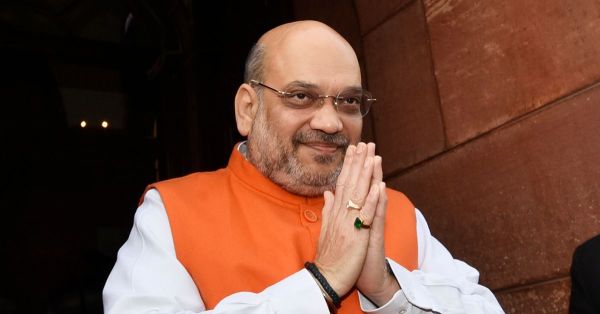
Union Home Minister Amit Shah

Union home minister Amit Shah made a scathing attack on former Congress president Rahul Gandhi, accusing him of indulging in “shallow politics”.

“We are fully capable of handling anti-India propaganda but it does pain when a former president of such a big political party does ‘ochhi Rajini (shallow politics)’ at a time of problems,” Amit Shah said in an interview to the news agency.

Rahul Gandhi has been leading the Congress attack on the face-off between Indian and Chinese soldiers in Ladakh’s Galwan Valley in which 20 Indian soldiers were killed. He even accused Prime Minister Narendra Modi of surrendering India’s territory to China using the words ‘Surender Modi’ for him on Twitter.

“It is a matter of self-introspection for him and Congress that his hashtag is being taken forward by Pakistan and China. It is not for me. It is a matter of concern for Congress that the hashtag of their leader is being encouraged by Pakistan and China. You say what China and Pakistan like. And at this time of crisis,” said Shah.

He also said that the government is ready for discussion on the issue in Parliament. “There will be a Parliament (session). If you want to discuss this, we will. Let everything be discussed from 1962 to today. No one is afraid of discussion. But when the soldiers of the country are making efforts, the government is taking solid steps after taking a stand, at that time, making statements that please Pakistan and China should not be done,” said Shah.

Mr. Gandhi’s “Surender” dig was a response to the Prime Minister’s comment at an all-party meet that China has not captured any Indian territory or crossed the border.

“Neither is anyone inside our territory nor is any of our post captured… While we have given a free hand to our armed forces, diplomatically too we have made our stand clear to China. India wants peace and friendship but protecting its sovereignty is supreme,” the Prime Minister had said.

He also took on Congress for not appointing anyone apart from the members of Gandhi family its president. “After Advaniji, Rajnathji, Nitinji, Rajnathji again, I became (party president) and now Naddaji. Is there a member of the same family? After Indiraji, tell me a Congress President who is outside the Gandhi family. What democracy they talk about?” said Shah.

Gandhi and the Congress party have been attacking the government since the June 15 skirmish. On Friday, Gandhi posted a video and said Prime Minister Narendra Modi should tell “the truth” as several accounts were saying that China has made incursions in Eastern Ladakh.

His mother and Congress president Sonia Gandhi accused the PM Modi-led central government of “mismanagement” which led to a full-blown crisis on the borders with China.

“True to its character, the government is in denial. The intrusion was detected and reported on May 5. Instead of a resolution, the situation deteriorated rapidly and there were violent clashes on June 15-16. Twenty Indian soldiers were martyred, 85 injured and 10 went ‘missing’ until they were returned,” she said at a virtual meeting of the Congress Working Committee (CWC), the party’s highest decision-making body.

Today again, the Congress party accused the government on Twitter of “giving in” to intruders.

12 Year Old Rail Enthusiast From Kerala

Adwaith Krishna, a 12 year old boy from Thrissur, Kerala has achieved a lot of praise at such an early age. This 7th class student is a rail enthusiast. He has made a replica of a train model just by using a paper and glue. In all, just by using 33 sheets of old newspapers and 10 A4 size paper sheets he has made a wonderful steam locomotive model.

His creative work was even recognized and appreciated by Railway Ministry who shared his train model’s post on social media and tweeted, “Master Adwaith Krishna, a 12 year old rail enthusiast from Thrissur, Kerala has unleashed his creative streak and has made a captivating train model using newspapers. His near perfection train replica took him just 3 days”.

This tweet was sooner trended on Internet. It was liked over 6600 times on Facebook and over 1400 times on twitter. This boy truly illustrates that our future is in bright hands.

Boycott of fairness creams is a step ahead

Recently, the death of George Floyd has caused a mass stream of revolutionary change against racism, an issue that has been suppressed for years and now has suddenly taken over the streets of almost every country and every social media platform. All kinds of people, black, white, hypocrites, old, and especially the youth is engaged in the process to find out a way to get rid of every kind of racist activity that has been going on since years.If the past records were to be seen, the fault actually lies in our upbringings and educational norms, that have resulted in the acts like, racism. From the day a child is born into this world, is the day, his/her, colour has been judged by the family members, unapologetically, till the day he dies and cremated over. Until, what the person has to go through, is the racist comments and teasers, that unfortunately kills the person from within, even if, unknowingly. Here, there, every where, from school to the work place, judged on the basis of colour.People getting along the streets, outrage over the social media, all the tireless efforts that have been put to provide justice to the victim of racism, George Floyd, is a clear message to the people promoting racism, and racist activities, hypocrites;it is not an era of early 90s, instead, as an human being, as a national of any country, all are up against the evil that have been proliferating since past many a years. The take on this incident has, even, awakend a large amount of celebrities and actors, who were earlier engrossed in the promotions of fairness products and creams, namely, Yami Gautam, Kiara Advani, Katrina Kaif,Deepika Padukone and a series of the young age actors. But, so says the grapevine –

Better late than never

The decision over removing the word “fair” from the product “fair and lovely”,by the company Unilever, past two days ago, is a huge step ahead in promoting, every lives matter, very strongly. It is definitely a step ahead towards the conformation of the idea on banishing racism, as well as racist activities. It is also likely to affect the fairness endorsing products in the near future, abiding the norms of black lives matter, along with a jerk to those who were earlier engaged in promotion of fairness products and now are proudly supporting the revolution against racism.


Now is the time to prove the reason why we are living altogether on the same planet, the need to awake the humanity and purpose of human evolution.

Employees Cannot Be Fired Merely For Being Homosexual Or Transgender

In a remarkable and righteous decision, the US Supreme Court in Gerald Lynn Bostock Vs Clayton County, Georgia which is Certiorari To The United States Court Of Appeals For The Eleventh Circuit No. 17-1618 and which was delivered on June 15, 2020, has laid down cogently, clearly and convincingly that employees cannot be fired from the jobs merely because of their transgender and homosexual identity. It also lays down in simple and straight language that, “An employer who fires an individual merely for being gay or transgender defies the law.” Very rightly so!

                                            To put things in perspective, the majority judgment was authored by Justice Neil McGill Gorsuch in which Roberts, C.J., and Ginsburg, Breyer, Sotomayor and Kayan, J.J. joined. But Justices Alito, Thomas and Kavanaugh dissented. The Court by a 6-3 majority held that Civil Rights Act of 1964 prohibiting workplace discrimination on the basis of sex also protects employees based on their sexual orientation or gender identity. It must be mentioned here that the Civil Rights Act explicitly prohibits discrimination of any kind in the workplace on the basis of race, colour, religion, sex or national origin.

                                       Be it noted, in this case which arises out of a petition filed by Bostock who is a long-time employee was allegedly fired by his employer simply for being homosexual or transgender. The issue that was considered by the Court was whether the Act prohibits discrimination on the ground of sexual orientation or gender identity? This key issue was examined in detail by the US Supreme Court.   

                                     To start with, it is first and foremost most explicitly stated at the outset that, “Sometimes small gestures can have unexpected consequences. Major initiatives practically guarantee them. In our time, few pieces of federal legislation rank in significance with the Civil Rights Act of 1964. There, in Title VII, Congress outlawed discrimination in the workplace on the basis of race, color, religion, sex or national origin. Today, we must decide whether an employer can fire someone simply for being homosexual or transgender. The answer is clear. An employer who fires an individual for being homosexual or transgender fires that person for traits or actions it would not have questioned in members of a different sex. Sex plays a necessary and undisguisable role in the decision, exactly what Title VII forbids.”

                                 As it turned out, it is then clarified in the next para that, “Few facts are needed to appreciate the legal question we face. Each of the three cases before us started the same way: An employer fired a long-time employee shortly after the employee revealed that he or she is homosexual or transgender – and allegedly for no reason other than the employee’s homosexuality or transgender status.”

                                             To say the least, it is then mentioned in this judgment about the different cases of discrimination that, “Gerald Bostock worked for Clayton County, Georgia, as a child welfare advocate. Under his leadership, the county won national awards for its work. After a decade with the county, Mr. Bostock began participating in a gay recreational softball league. Not long after that, influential members of the community allegedly made disparaging comments about Mr. Bostock’s sexual orientation and participation in the league. Soon, he was fired for conduct “unbecoming” a county employee. Donald Zarda worked as a skydiving instructor at Altitude Express in New York. After several seasons with the company, Mr. Zarda mentioned that he was gay and, days later, was fired.”

                            While continuing in the same vein, it is then envisaged that, “Aimee Stephens worked at R.G. & G.R. Harris Funeral Homes in Garden City, Michigan. When she got the job, Ms. Stephens presented as a male. But two years into her service with the company, she began treatment for despair and loneliness. Ultimately, clinicians diagnosed her with gender dysphoria and recommended that she begin living as a woman. In her sixth year with the company, Ms. Stephens wrote a letter to her employer explaining that she planned to “live and work full-time as a woman” after she returned from an upcoming vacation. The funeral home fired her before she left telling her “this is not going to work out”.”

                               Importantly, the next important point that must be stated here of this notable judgment is this: “From the ordinary public meaning of the statute’s language at the time of the law’s adoption, a straight forward rule emerges: An employer violates Title VII when it intentionally fires an individual employee based in part on sex. It doesn’t matter if other factors besides the plaintiff’s sex contributed to the decision. And it doesn’t matter if the employer treated women as a group the same when compared to men as a group. If the employer intentionally relies in part on an individual employee’s sex when deciding to discharge the employee – put differently, if changing the employee’s sex would have yielded a different choice by the employer – a statutory violation has occurred. Title VII’s message is “simple but momentous”: An individual employee’s sex is “not relevant to the selection, evaluation, or compensation of employees.” Price Waterhouse v. Hopkins, 490 U.S. 228, 239 (1989) (plurality opinion).”

                                            More importantly, it is then rightly stated next in this commendable judgment that, “The statute’s message for our cases is equally simple and momentous: An individual’s homosexuality or transgender status is not relevant to employment decisions. That’s because it is impossible to discriminate against a person for being homosexual or transgender without discriminating against that individual based on sex. Consider, for example, an employer with two employees, both of whom are attracted to men. The two individuals are, to the employer’s mind, materially identical in all respects, except that one is a man and the other a woman. If the employer fires the male employee for no reason other than the fact he is attracted to men, the employer discriminates against him for traits or actions it tolerates in his female colleague. Put differently, the employer intentionally singles out an employee to fire based in part on the employee’s sex, and the affected employee’s sex is a but-for cause of his discharge. Or taken an employer who fires a transgender person who was identified as a male at birth but who now identifies as a female. If the employer retains an otherwise identical employee who was identified as female at birth, the employer intentionally penalizes a person identified as male at birth for traits or actions that it tolerates in an employee identified as female at birth. Again the individual employee’s sex plays an unmistakable and impermissible role in the discharge decision.”

                          Equally importantly, it is then also held that, “When an employer fires an employee for being homosexual or transgender, it necessarily and intentionally discriminates against that individual in part because of sex. And that is all Title VII has ever demanded to establish liability. An employer who fires an individual for being homosexual or transgender fires that person for traits or actions it would not have questioned in members of a different sex. Sex plays a necessary and undisguisable role in the decision, exactly what Title VII forbids. An employer who fires a woman, Hannah, because she is insufficiently feminine and also fires a man, Bob, for being insufficiently masculine may treat men and women as groups more or less equally. But in both cases the employer fires an individual in part because of sex. Instead of avoiding Title VII exposure, this employer doubles it.”  

                                        Most importantly, in the concluding part, it is very rightly underscored that, “Ours is a society of written laws. Judges are not free to overlook plain statutory commands on the strength of nothing more than suppositions about intentions or guesswork about expectations. In Title VII, Congress adopted broad language making it illegal for an employer to rely on an employee’s sex when deciding to fire that employee. We do not hesitate to recognize today a necessary consequence of that legislative choice: An employer who fires an individual merely for being gay or transgender defies the law.”

                                                No doubt, the US Supreme Court by this latest, landmark and extremely laudable judgment has prima facie made it absolutely clear that employees cannot be fired merely for being homosexual or transgender. All the employers must always adhere to this extremely commendable judgment in totality. The employers must refrain from indulging in discrimination against any employee just for being homosexual or transgender as it has got just nothing to do with the job at hand and every person has a right to be either homosexual or transgender and no one can have an unfettered right to interfere in that! There can be no denying or disputing it!

Sanjeev Sirohi, Advocate,

s/o Col BPS Sirohi,

A 82, Defence Enclave,

Sardhana Road, Kankerkhera,

Meerut – 250001, Uttar Pradesh.