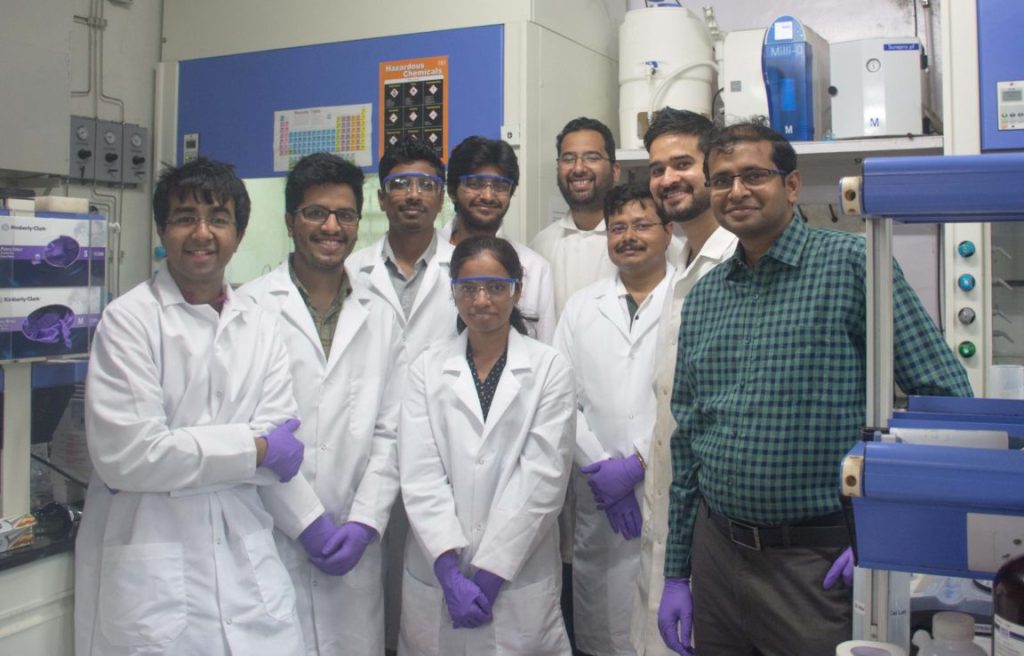
Scientists at the Mumbai-based Tata Institute of Fundamental Research (TIFR) used gold nanoparticles and, by rearranging size and gaps between them, developed a new material which has unique properties like the capacity to absorb light and carbon dioxide.
one of the largest consumers of the precious metal globally. Now Indian scientists have tinkered with the chemistry of the material and turned it into ‘black gold’ which they say has the potential to be used for applications ranging from harvesting solar energy to desalinating seawater.
Scientists at the Mumbai-based Tata Institute of Fundamental Research (TIFR) rearranged the size and gaps between gold nanoparticles to develop a new material which has the unique properties of absorbing light and carbon dioxide. Gold does not have these properties. In appearance the new material is black, hence the name ‘black gold.
While speaking to India Science Wire, Vivek Polshettiwar, who led the research team, explained, “We have not doped gold nanoparticles with any other material or added other materials. We varied inter-particle distance between gold nanoparticles using a cycle-by-cycle growth approach by optimizing the nucleation-growth step, using dendritic fibrous nanosilica whose fibers were used as the deposition site for gold nanoparticles.”
One of the most fascinating properties of the new material is its ability to absorb the entire visible and near-infrared region of solar light. It does so because of inter-particle plasmonic coupling as well as heterogeneity in nanoparticle size. Black gold could also act as a catalyst and could convert carbon dioxide into methane at atmospheric pressure and temperature using solar energy.
“If we develop an artificial tree with leaves made out of black gold, it can perform artificial photosynthesis, capturing carbon dioxide and converting it into fuel and other useful chemicals,” added Prof Polshettiwar. The efficiency of conversion of carbon dioxide into fuel, at present, is low but researchers believe it could be improved in future.
In order to study the new material’s ability to harvest solar energy, researchers dispersed it into water and exposed the solution to light for one hour and the temperature of the solution was measured. The temperature of the solution, with pure silica spheres, rose to 38 degrees while the ones with different concentrations of black gold rose to 67 to 88 degrees. The maximum increase in temperature was attributed to creation of thermal hotspots due to the heterogeneity of the particle sizes as well as optimum inter- particle coupling.
Researchers said the material can be used as a nano-heater to covert seawater into potable water with good efficiency. “Our results indicate the potential application of black gold in purification of seawater to potable water via steam generation using solar energy under atmospheric reaction conditions.”
The research team included Mahak Dhiman, Ayan Maity, Anirban Das, Rajesh Belgamwar, Bhagyashree Chalke and Vivek Polshettiwar (TIFT); Yeonhee Lee, Kyunjong Sim and Jwa-Min Nam (Seoul National University).
The study was funded by the Department of Science and Technology (DST) and the Department of Atomic Energy (DAE).
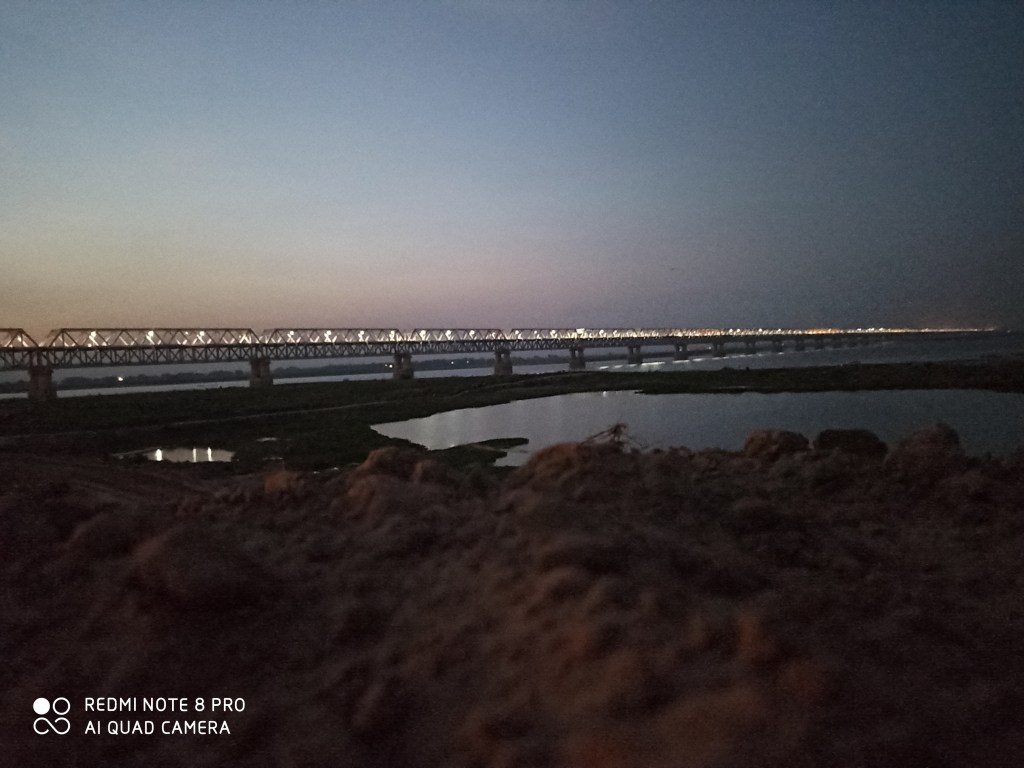
Patna (Pataliputra), the capital of Bihar state, is a historic city located at the confluence of three rivers, the Ganga, the Gandak, and the Sone. The Ganga flows all along its northern boundary. The area in the south is generally low-lying and as such is prone to floods from the rivers Punpun and Sone. The city has a mean elevation of 173 feet (53 m) above sea level and is situated at 28°37′ north latitude and 85°10′ east longitude. It has been a center of learning, religion, and art since time immemorial. Hinduism, Buddhism, Jainism, and Sikhism are deeply connected to this city. It is one of the longest and the narrowest among the largest cities of the country, with a population of over a million and a half spread over an area of about 30 square miles (77.7 sq. km).
@martin_photography
The ancient city of Pataliputra was a mere village—Pataligram—in the time of the Buddha in the sixth century b.c. However, Ajatasatru realized its great strategic value for the growing kingdom of Magadha, facing the rival Licchavis republic of Vaisali on the northern bank (other side) of the Ganga, and erected a military outpost there. The natural advantage of the site made it commercially important and also helped its growth. The Magadhan king Udai transferred his capital from Rajgriha to Pataliputra. It remained the imperial capital under the Nandas, the Mauryas, and the Guptas. It was a prosperous and populous city when Megasthenes, the Greek ambassador to the court of Chandragupta Maurya, visited it twice.
Pataliputra acquired the status of a capital city during the reign of Emperor Ashoka (ruled c. 268–231 b.c.). However, it later faced Indo-Greek invasion, and the city was sacked in a.d. 185. But its glory again revived under the Guptas. Fahsien, the Chinese pilgrim who studied there for three years during the reign of Chandragupta I in the early fifth century a.d., not only considered it a famous center of learning but also the most beautiful and largest city of the world. The city again suffered destruction, and when Hsieun Tsang visited the city in a.d. 637, it had become desolate and deserted.
@martin_photography
Pataliputra emerged from its political obscurity when Sher Shah, the great Pathan ruler, built a fort there in 1541, transferred the provincial capital from Bihar Sharif, and gave it the new name of Patna. It became an important commercial center during the seventeenth century. Mughal emperors further extended the city in 1704. Prince Azimusshan, the grandson of Aurangzeb, the new governor (subedar) of Bihar, renamed Patna as Azimabad. With the coming of the Europeans, the city had expanded beyond its fortified walls and became famous in Southeast Asia as a source of sugar and salt-peter. The importance of Patna was further enhanced when it was made the capital of the newly created province of Bihar in 1912. It also contributed significantly to India’s freedom struggle against British imperial rule. More recently, Jaya Prakash ( J. P) Narayan launched his “Total Revolution” against corruption from Patna in 1974.
The subject of empowerment of women has becoming a burning issue all over the world including India since last few decades. Many agencies of United Nations in their reports have emphasized that gender issue is to be given utmost priority. It is held that women now cannot be asked to wait for any more for equality.
Inequalities between men and women and discrimination against women have also been age-old issues all over the world. Thus, women’s quest for equality with man is a universal phenomenon. What exists for men is demanded by women?
They have demanded equality with men in matters of education, employment, inheritance, marriage, politics and recently in the field of religion also to serve as cleric (in Hinduism and Islam). Women want to have for themselves the same strategies of change which menfolk have had over the centuries such as equal pay for equal work. Their quest for equality has given birth to the formation of many women’s associations and launching of movements.
#feminism
The position and status of women all over the world has risen incredibly in the 20th century. We find that it has been very low in 18th and 19th centuries in India and elsewhere when they were treated like ‘objects’ that can be bought and sold. For a long time women in India remained within the four walls of their household. Their dependence on menfolk was total.
A long struggle going back over a century has brought women the property rights, voting rights, an equality in civil rights before the law in matters of marriage and employment (in India women had not to struggle for voting rights as we find in other countries).
In addition to the above rights, in India, the customs of purdha (veil system), female infanticide, child marriage, sati system (self-immolation by the women with their husbands), dowry system and the state of permanent widowhood were either totally removed or checked to an appreciable extent after independence through legislative measures.
#women_empowerment
Two Acts have also been enacted to emancipate women in India. These are: Protection of Women from Domestic Violence Act, 2005 and the Compulsory Registration of Marriage Act, 2006. The Domestic Violence Act recognizes that abuse be physical as well as mental.
Anything that makes a woman feel inferior and takes away her self-respect is abuse. Compulsory Registration of Marriage Act can be beneficial in preventing the abuse of institution of marriage and hindering social justice especially in relation to women.
It would help the innumerable women in the country who get abandoned by their husbands and have no means of proving their marital status. It would also help check child marriages, bigamy and polygamy, enable women to seek maintenance and custody of their children and widows can claim inheritance rights. The Act is applicable on all women irrespective of caste, creed or religion. It would truly empower Indian women to exercise their rights.
To what extent legislative measures have been able to raise the status of women in India? Are women now feel empowered in the sense that they are being equally treated by men in all spheres of life and are able to express one’s true feminine urges and energies? These are the important questions to be investigated with regard to women’s empowerment in India.
A study published in Psychological Science found that green pathways, green stretch, spaces, parks and gardens in high density city areas have the power to enhance the quality of life and the well-being of those who live there. People, who live in greener environment – where trees are grown, are happier than their counterparts who stay in tree-less environments.
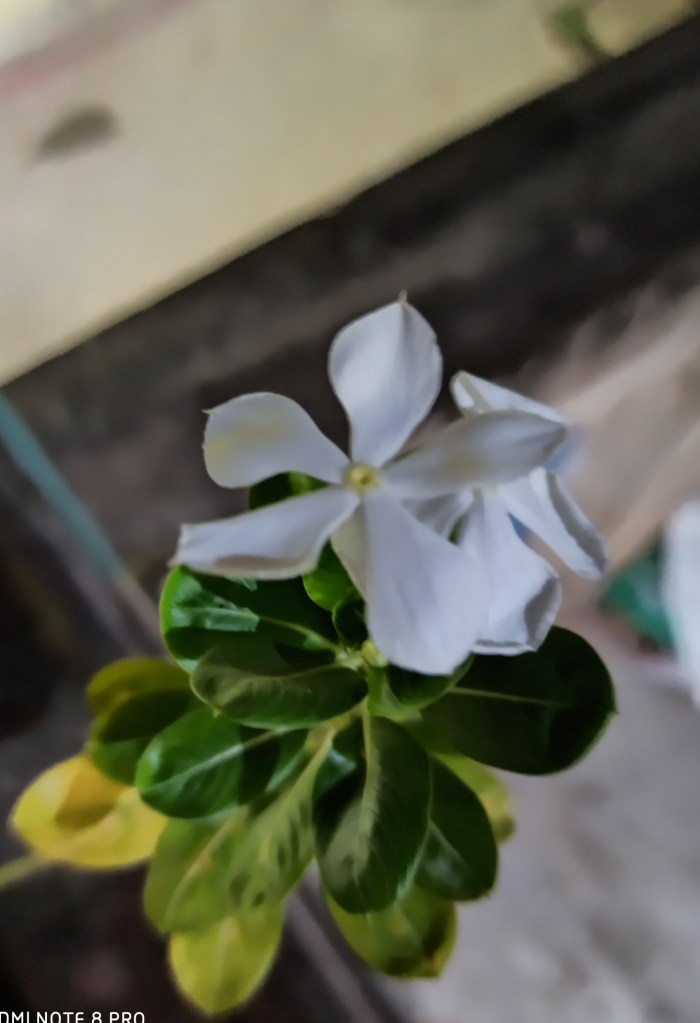
The rapid pace of urbanization owing to the rural–urban migration is putting lot of strain on the urban infrastructure in cities. But seeing greener patches in the concrete jungles sooth the eyes and minds both. Privacy goes for a toss in cities; but, well-placed plantings offer privacy and tranquility by keeping the noise and harsh sunlight in the afternoons and glare of vehicle headlights in evenings. Gardening in your small terrace, windows, or flowerbeds in your gallery contribute to healthy, active living both physically and emotionally. Horticulture therapists have discovered that gardening provides a form of emotional expression and release. Seeing your plants growing taller and greener gives immense happiness.
In a study done by the American Institutes for Research, a group of sixth graders attended outdoor school for six weeks, while another group did not. During the outdoor programme, students did hands-on activities like searching for aquatic insects in a stream and identifying tree species and drawing conclusions on the “health” of a forest. At the end of the programme, the students, teachers and parents were surveyed. The group that did the outdoor education rated better in self-esteem, conflict resolution, relationship with peers, problem solving, motivation to learn and behavior in class. The children who attended outdoor school also had an improved Science score, measured by a pre & post test. This study measured how ‘green’ the children’s homes were, stressful life events (such as being bullied in school, relocating to another home or fighting with one’s parents), and how well they coped with these events. Nearby nature was found to buffer the effects of stressful life events on children’s psychological distress
Doctors have shown that people recover faster in a hospital when given a landscape view, rather than seeing only the walls of adjoining buildings. If you can manage to make gardening your hobby it acts as a as the perfect antidote to the modern world; as it is a perfect way of reclaiming some of the intangible things we have lost in our busy lives.
@martin_photography
These days, due to scarcity of place, Hydroponic gardening is becoming famous in cities. This style of gardening uses no soil; rather, plant roots are suspended in specially formulated clay pellets and bathed with liquid nutrients. This keeps roots tightly compacted, which allows you to hang dozens of growing plants in a single window. You can build your own hydroponic garden using recycled materials or purchase kits available in the market.
A garden is a grand teacher. It teaches patience and careful watchfulness; it teaches industry and thrift; above all it teaches entire trust. _ Martin Christopher
What can we do when someone we love is going through a really hard time or even a dark night of the soul? Even though you care dearly for your loved one, you have to be careful not to make their turmoil about you.
Here are some suggestions for healthy ways to support someone during a painful period in their lives.
Give them space Back off from making demands on their time or energy. Give them the space and freedom to sort through their feelings and beliefs. Don’t interrupt their process by putting too many demands on them. Let them be for a little while.
Give them acceptance Don’t judge them. Someone who is going through a healing process may act in ways you don’t particularly like. Let them explore who they want to be and accept that it is their choice and their free will. Remind them that they will have to live with the consequences of their actions, but don’t tell them how to feel or think or how to behave, even when you desperately want to.
Help them see options Sometimes people are lost and they are looking for the beacon they can follow back to the light. Be a beacon for them without grabbing them and moving them onto a path you want them to be on. Help them sort through their options without needing or requiring them to behave a certain way. Sometimes people can’t see their way out of the darkness and if you stand there and hold the light, they will come to it. But don’t jump in the water to save the drowning victim. You’ll get pulled under. Just let them know you’ll be there with a helping hand when they’re ready to move forward.
Get help from the other side Talk to the person’s higher self. See if you can get guidance from their higher self about what they are going through or how to help them. Often you can get this information from the person’s guides or higher self or angels, even when the person themselves has no idea how to heal. Some people are unable to connect to their own guides when they need help. If you are skilled with intuition, you can make the connection for them. Or you can book a session with me and I’ll find out from their guides how you can best help.
Ask them what they need Instead of giving them what you would want in their position, actually ask them how they would like to be supported. “How would you like to be supported right now?” is a beautiful question. Some people might simply say, “It’s enough to know you care.” Or they might say, “I really need help with the kids right now so I can have some time to think or get away.” You won’t know until you ask.
Help them find gratitude Help them raise their vibration if you can. Get them to see what they have to be grateful for. Take them out someplace where they can practice kindness towards others. Often that’s a catalyst for coming out of their own dark place.
Always be gentle when someone is going through a hard time. Sometimes this can last a long while. Be there for your loved one, but don’t allow a toxic situation to persist. Guard your energy while you’re helping others.
In a culture obsessed with measuring talent and ability, we often overlook the important role of inspiration. Inspiration awakens us to new possibilities by allowing us to transcend our ordinary experiences and limitations. Inspiration propels a person from apathy to possibility, and transforms the way we perceive our own capabilities. Inspiration may sometimes be overlooked because of its elusive nature. Its history of being treated as supernatural or divine hasn’t helped the situation. But as recent research shows, inspiration can be activated, captured, and manipulated, and it has a major effect on important life outcomes.
Inspiration has three main qualities. Pyschologists Todd M. Thrash and Andrew J. Elliot have noted these core aspects of inspiration: evocation, transcendence, and approach motivation. First, inspiration is evoked spontaneously without intention. Inspiration is also transcendent of our more animalistic and self-serving concerns and limitations. Such transcendence often involves a moment of clarity and awareness of new possibilities. As Thrash and Elliot note, “The heights of human motivation spring from the beauty and goodness that precede us and awaken us to better possibilities.” This moment of clarity is often vivid, and can take the form of a grand vision, or a “seeing” of something one has not seen before (but that was probably always there). Finally, inspiration involves approach motivation, in which the individual strives to transmit, express, or actualize a new idea or vision. According to Thrash and Elliot, inspiration involves both being inspired by something and acting on that inspiration.
Inspired people share certain characteristics. Thrash and Elliot developed the “Inspiration Scale,” which measures the frequency with which a person experiences inspiration in their daily lives. They found that inspired people were more open to new experiences, and reported more absorption in their tasks. “Openness to Experience” often came before inspiration, suggesting that those who are more open to inspiration are more likely to experience it. Additionally, inspired individuals weren’t more conscientious, supporting the view that inspiration is something that happens to you and is not willed. Inspired individuals also reported having a stronger drive to master their work, but were less competitive, which makes sense if you think of competition as a non-transcendent desire to outperform competitors. Inspired people were more intrinsically motivated and less extrinsically motivated, variables that also strongly impact work performance. Inspiration was least related to variables that involve agency or the enhancement of resources, again demonstrating the transcendent nature of inspiration. Therefore, what makes an object inspiring is its perceived subjective intrinsic value, and not how much it’s objectively worth or how attainable it is. Inspired people also reported higher levels of important psychological resources, including belief in their own abilities, self-esteem, and optimism. Mastery of work, absorption, creativity, perceived competence, self-esteem, and optimism were all consequences of inspiration, suggesting that inspiration facilitates these important psychological resources. Interestingly, work mastery also came before inspiration, suggesting that inspiration is not purely passive, but does favor the prepared mind.
@martin_christopher
Inspiration is not the same as positive affect.Compared to the normal experiences of everyday life, inspiration involves elevated levels of positive affect and task involvement, and lower levels of negative affect. Inspiration is not the same state as positive affect, however. Compared to being in an enthusiastic and excited state, people who enter an inspired state (by thinking of a prior moment they were inspired) reported greater levels of spirituality and meaning, and lower levels of volitional control, controllability, and self-responsibility for their inspiration. Whereas positive affect is activated when someone is making progress toward their immediate, conscious goals, inspiration is more related to an awakening to something new, better, or more important: transcendence of one’s previous concerns.
Inspiration is the springboard for creativity.Inspired people view themselves as more creative and show actual increases in self-ratings of creativity over time. Patent-holding inventors report being inspired more frequently and intensely than non-patent holders, and the higher the frequency of inspiration, the higher the number of patents held. Being in a state of inspiration also predicts the creativity of writing samples across scientific writing, poetry, and fiction (as judged by a panel of fellow students) independent of SAT verbal scores, Openness to Experience, positive affect, specific behaviors (e.g., deleting prior sentences), and aspects of the product quality (e.g., technical merit). Inspired writers are more efficient and productive, and spend less time pausing and more time writing. The link between inspiration and creativity is consistent with the transcendent aspect of inspiration, since creativity involves seeing possibility beyond existing constraints. Importantly, inspiration and effort predict different aspects of an activity. Individuals who exerted more effort writing spent more of their time pausing, deleted more words, wrote more sentences per paragraph, and had better technical merit and use of rhyming in poems, but their work was not considered more creative.
Inspiration facilitates progress toward goals. In a recent study conducted by Marina Milyavskaya and her colleagues, college students were asked to report three goals they intended to accomplish throughout the course of the semester. They then reported on their progress three times a month. Those who scored higher on the Inspiration Scale displayed increased goal progress, and their progress was a result of setting more inspired goals. Therefore, people who were generally more inspired in their daily lives also tended to set inspired goals, which were then more likely to be successfully attained. Importantly, the relationship between inspiration and goal progress was reciprocal: goal progress also predicted future goal inspiration. As the researchers note, “this suggests that goal progress and goal inspiration build on each other to form a cycle of greater goal inspiration and greater goal pursuit.” Finally, inspired individuals reported experiencing more purpose in life and more gratitude.
Inspiration increases well-being. In another study, those who were exposed to Michael Jordan’s greatness experienced higher levels of positive affect, and this increase in positive affect was completely explained by their score on the Inspiration Scale. This inspiration was not transitory though, predicting positive well-being (e.g., positive affect, life satisfaction) three months later! Inspiration was more strongly related to future than to present satisfaction. The extent to which inspiration lasted was explained by self-reported levels of purpose and gratitude in life.
These findings show that inspiration matters a lot, which may cause someone to feel pressure to become inspired and helpless to do so considering the evocative and spontaneous nature of inspiration. The writer Elizabeth Gilbert rightly expresses this concern in her inspiring TED talk. I agree with Gilbert that one should not put pressure on oneself to become inspired. These key scientific findings suggest that inspiration is not willed–it happens. Knowing this should free you from the pressure to make inspiration happen.
This does not mean that inspiration is completely outside your control. Contrary to the view of inspiration as purely mythical or divine, I think inspiration is best thought of as a surprising interaction between your current knowledge and the information you receive from the world. There are things you can do to increase the likelihood of inspiration occurring. Research shows quite clearly that preparation (“work mastery”) is a key ingredient. While inspiration is not the same as effort, effort is an essential condition for inspiration, preparing the mind for an inspirational experience. Openness to Experience and positive affect are also important, as having an open mind and approach-oriented attitude will make it more likely that you will be aware of the inspiration once it arrives. Small accomplishments are also important, as they can boost inspiration, setting off a productive and creative cycle.
How can the smartest man on earth know nothing? I heard this paradoxical wisdom for the first time from my school teacher when I was 14 or 15. It made such an impact on me that I used Socrates’s quote as my learning strategy.
“I know nothing” to me, means that you might be a wise person, but still, you know nothing. You can learn from everything and everyone.
One thing that I like better than learning from my mistakes is to learn from other people’s mistakes. Over the years, I’ve been blessed to have great mentors, teachers, family, friends, that taught me about life.
What you will find below is a list of the most important things I learned from other people and books. Some of the lessons took me a long time to learn—but if I had to learn these things all by myself, it would take me a lot longer.
We might learn things quickly, but we often forget things at the same rate—and sometimes we need to remind ourselves of the things we’ve learned.
Here are 25 of those reminders that others taught me.
Struggle Is Good Never say “I can’t take it anymore.” Say “Bring it on!”
Don’t Complain Complaining is the biggest waste of time there is. Either do something about it, and if you can’t, shut up about it.
Spend Time With People You Love That’s your family and best friends. If you don’t have a family, create one. Most people in life are only visitors. Family is for life.
Don’t Start A Relationship If You’re Not In Love I’ve done this more than once. You kind of like someone and think: “We might as well give it a shot.” Not a good idea. You’re either in love, or you are not. Don’t fool yourself. It’s not fair to you and the other person.
Exercise Daily I didn’t get this until recently. A healthy body is where you have to start everything in life. If you can’t build a healthy and strong body, what CAN you build in life?
Keep A Journal No, keeping a journal is not for children. It helps you to become a better thinker and writer. “I don’t want to be a writer” you might think. Well, how many emails and texts do you send a day? Everybody is a writer.
Be Grateful Say ‘thank you’ to everyone and everything. “Thank you for this beautiful day.” “Thank you for your email.” “Thank you for being there for me.”
Don’t Care About What People Think We all die in the end, do you really think it matters what people think of you?
Take More Risks Don’t be such a wimp.
Pick An Industry, Not A Job If you want to become good at something, you need to spend years and years doing that. You can’t do that if you hop from industry to industry. Pick an industry you love and start at the bottom. You will find the perfect role for you eventually.
Lead The Way When you find yourself in a situation where everyone looks at each other, it’s time for you to lead. You‘re a leader when you decide to become one. There’s no initiation or a title. Just a decision.
Money Is Not The Most Important Thing You have to train yourself not to care about money and focus on providing value instead. Also, don’t become too dependent on the stuff you own — otherwise, the stuff will own you.
Be Nice I don’t mean you should be a pushover. You can be someone that doesn’t take shit and be nice about it. Just don’t insult people, think you’re better than them, or act like an idiot.
Learn Every Day You’ve got to train your brain to stay alert. You don’t have to read a book a day to learn every day. Learn from your mistakes. Learn from the people around you — be open to what they can teach you.
Rest Before You Are Tired Even if you love your job, and every day seems like a holiday, you need to take time to rest. You’re a human and not an android, never forget that.
Don’t Judge Just because people make different choices than you, they are not stupid. Also, you don’t know everything about people, so don’t judge them — help them.
Think About Others Just be mindful, that’s all. We all have families, bills to pay, and our own issues. Don’t always make everything about yourself.
Give Without Expecting Something In Return Don’t keep score. You will become a bitter person if you do that. Give solely for the joy of giving. If you get something in return, great, if you don’t, great.
There’s No End Game We, as species, just are. Don’t try to figure it all out. Enjoy your journey.
Enjoy Small Things I like clichés because they are true. Especially this one. You know why? Everyone says they know it, but no one lives up to it. They just chase big things.
Don’t Take Yourself So Seriously Yeah, yeah, you’re an individual, and people have to take you seriously, I get it. But at the end of the day, we’re all a bunch of ants trying to chase the same things. Lighten up.
Don’t Blame People What’s the point? Do you want to punish them? You don’t do that to people. Also don’t blame yourself — you’re only human.
Create Something Not to leave a legacy, you won’t be here to see it anyway, but to be of use. Make music, write a book, build a table, anything. You’ll feel good about yourself, plus you give something back to people to use or enjoy.
Never Look Back Too Long Reflecting on the past is only good for one thing: Learning.
Take Action Don’t just sit there, do something. Without action, there is no outcome.
You might know a lot. But like Socrates, you and I know nothing at all. So we have to keep learning.
Nikon Ambassador and National Geographic magazine photographer Ami Vitale has traveled to more than 100 countries, bearing witness not only to violence and conflict, but also to surreal beauty and the enduring power of the human spirit. Throughout the years, Ami has lived in mud huts and war zones, contracted malaria, and donned a panda suit— keeping true to her belief in the importance of “living the story.” In 2009, after shooting a powerful story on the transport and release of one the world’s last white rhinos, Ami shifted her focus to today’s most compelling wildlife and environmental stories. Instyle Magazine named Ami one of fifty Badass Women, a series celebrating women who show up, speak up and get things done. She appeared alongside a group of incredible women including Jane Goodall, Christiane Amanpour and Ruth Bader Ginsburg. She has been named Magazine photographer of the year in the International Photographer of the Year prize, received the Daniel Pearl Award for Outstanding Reporting and named Magazine Photographer of the Year by the National Press Photographers Association, among others. She is a five-time recipient of WorldPress Photos, including 1st Prize for her 2018 National Geographic magazine story about a community in Kenya protecting elephants. She published a best-selling book, Panda Love, on the secret lives of pandas. She is a featured speaker for the National Geographic LIVE series, and frequently gives talks and workshops throughout the Americas, Europe, and Asia.
Her photographs have been commissioned by nearly every international publication and exhibited around the world in museums and galleries. She is a founding member of Ripple Effect Images, an organization of renowned female scientists, writers, photographers and filmmakers working together to create powerful and persuasive stories that shed light on the hardships women in developing countries face and the programs that can help them. She is also on the Photojournalism Advisory Council for the Alexia Foundation.
Currently based in Montana, Ami Vitale is a contract photographer with National Geographic magazine and frequently gives workshops throughout the Americas, Europe and Asia.
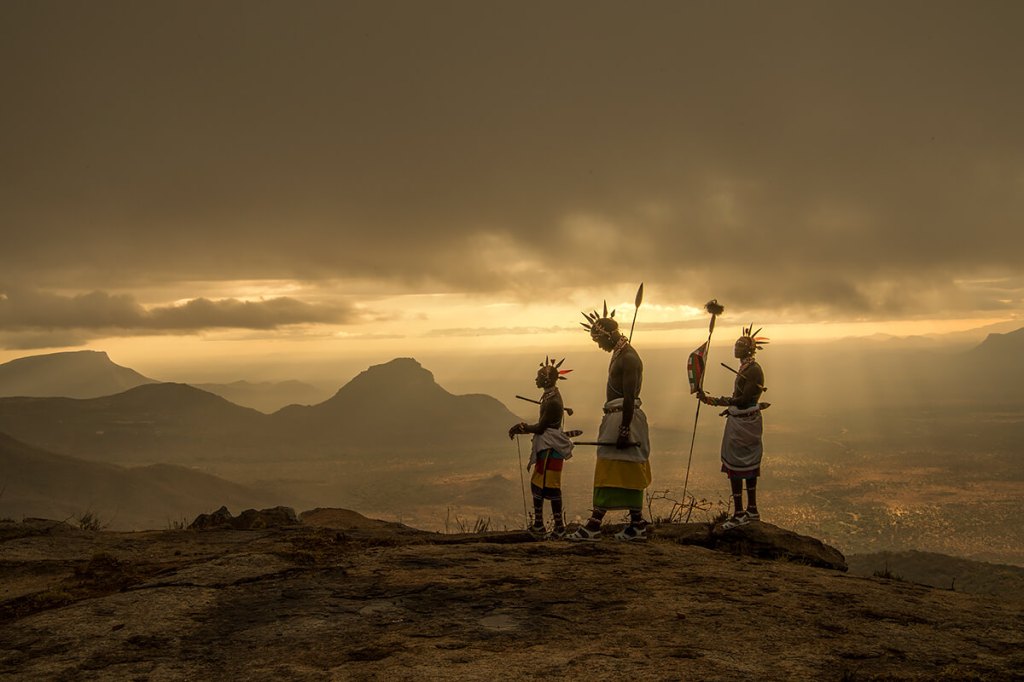
Samburu warriors stand at the top of the northern Kenya’s Mathews Range where the 850,000 acre Namunyak Wildlife Conservancy is situated. The area is home to Africa’s second-largest elephant population. There community-based wildlife keepers, like these Samburu warriors, are working to rehabilitate abandoned and orphaned elephants in order to eventually return them to the nearby wild herds. In many ways, community based conservation is likely to be the only viable alternative for vast tracts of Africa, in the parts beyond agriculture and where big animals and nomadic pastoralists still make their home. This elephant sanctuary is the culmination of a two-decades long process of tipping conservation upon its head, protecting wildlife for, and not just from people. In that sense the sanctuary is as much about people as it’s about elephants.
RANIA MATAR
Rania Matar was born and raised in Lebanon and moved to the U.S. in 1984. As a Lebanese-born American woman and mother, her cross-cultural experience and personal narrative inform her photography.
Matar’s work has been widely published and exhibited in museums worldwide, including the Museum of Fine Arts, Boston, the Carnegie Museum of Art, National Museum of Women in the Arts, and more. A mid-career retrospective of her work was recently on view at the Cleveland Museum of Art, and at the Amon Carter Museum of American Art, in a solo exhibition: In Her Image: Photographs by Rania Matar
She has received several grants and awards including a 2018 Guggenheim Fellowship, 2017 Mellon Foundation artist-in-residency grant at the Gund Gallery at Kenyon College, 2011 Legacy Award at the Griffin Museum of Photography, 2011 and 2007 Massachusetts Cultural Council artist fellowships. In 2008 she was a finalist for the Foster Award at the Institute of Contemporary Art/Boston, with an accompanying solo exhibition.
Her work is in the permanent collections of several museums, institutions and private collections worldwide.
She has published three books: L’Enfant-Femme, 2016; A Girl and Her Room, 2012; Ordinary Lives, 2009.
She is currently associate professor of photography at the Massachusetts College of Art and Design.
GEORGINA GOODWIN
Georgina Goodwin is a documentary photographer and Canon Ambassador born and based in Kenya with a focus on women, refugees, social issues and environment. Known for her award-winning work on Kenya’s post-election violence, cancer in Kenya and Westgate terror attack, and most recently refugee children in Tanzania, Georgina is a contributor to Getty Images and Everyday Climate Change and a member of Women Photograph and African Photojournalism Database, a collaboration of World Press Photo and Everyday Africa. Her work has been published by NY Times, Elle, Vogue, AFP and many others, and has been exhibited in Times Square NYC, Tokyo Japan and The Louvre Paris amongst others. Georgina was a speaker at TEDxKakumaCamp, the first TED talks to be held at a refugee camp, and one of 19 finalist speakers at TEDx Nairobi in 2017.
Amina Suleiman Gas, 45 stands amidst the carcasses of her dead animals, piled for burning outside the compound where she has lived for 10 years in Barwako village 20kms into the desert from Anaibo Town, central Somaliland. She sent most of her livestock west with her neighbor in November 2016 when the drought began to get worse and fears they have not survived, March 2017. Barwako was a village of 100 families but 245 more came in from the surrounding area because of the drought. As a member of the Villlage Savings and Loans Association (VSLA) Amina and her group shared all their savings with the displaced families, leaving them with nothing. At least 6.2 million people, more than half the population, were in need of assistance after four consecutive seasons of failed rains over three years leaving the region depleted of all its resources and experiencing a drought on a scale not seen since 1974 and on the verge of famine.
CIG HARVEY
The photographs and artist books of Cig Harvey have been widely exhibited and remain in the permanent collections of major museums and collections, including the Museum of Fine Arts, Houston, Texas; the Farnsworth Art Museum, Rockland, Maine; and the International Museum of Photography and Film at the George Eastman House, Rochester, New York. Cig began working in a darkroom at thirteen and has been dedicated to photography ever since. She grew up in the deep valleys of Devon in the UK, and came to the States for her MFA in 1999, after years spent living in Barcelona and Bermuda.
Cig Harvey’s first monograph, You Look At Me Like An Emergency (Schilt Publishing, 2012,) is a collection of ten years of pictures and written vignettes. It sold out in all printings and was named one of PDNʼs Best Books of the Year 2012. Cig had her first solo museum show at the Stenersen Museum in Oslo, Norway, in conjunction with the release. The book was well reviewed in a number of publications, including The Independent, Aesthetica, the Boston Globe, Blink, and PDN. Pro Photographer magazine ran an in depth feature, Chance: Cig Harvey’s deceptively simple photographs tap into the universal elements of the human experience: love, loss, longing and belonging. She’s in demand for editorial and commercial work-as well as her for her fine art prints and books.
Cig Harvey’s second monograph, Gardening at Night (Schlit Publishing, 2015,) was published in conjunction with solo shows at Robert Mann Gallery, New York, Robert Klein Gallery, Boston and Paul Kopeiken Gallery, Los Angeles. The book received critical acclaim with features and reviews in Vogue, The Telegraph, the International Wall Street Journal, the International New York Times, and Aesthetica among others. The International Wall Street Journal said of the series, Though the subjects and setting are familiar to us, we cannot help but feel that Cig Harvey has led us through the looking glass to a world of wonder. In the way that twilight is not quite day and not quite night, the photographs of Gardening at Night are stories not yet fully developed, while still capturing the unexpected yet oddly harmonious moments that surround us daily.
Cig Harvey’s work has been displayed at Paris Photo, Art Miami, and AIPAD every year since 2006. She has been a nominee for John Gutmann fellowship and the Santa Fe Prize, and a finalist for the BMW Prize at Paris Photo and for the Prix Virginia, an international photography prize for women.
Cig’s devotion to visual storytelling has lead to innovative international campaigns and features with New York Magazine, Harper’s Bazaar Japan, Kate Spade, and Bloomingdales. Cig teaches workshops and regularly speaks on her work and processes at institutions around the world. She is known for her high energy, sense of humor and creativity. She brings a profound sense of optimism to all that she does.
Cig lives in a farmhouse in the Midcoast of Maine with her husband Doug (who has the profile of an emperor on a Roman coin), their wayward daughter Scout, and Scarlet the dog (the original baby). The slow passing of time and the natural surroundings of her rural home has made her alert to the magic in the mundane.
‘content writer’ is the most searched job in india,says study
The latest study for digital marketing job trends in world’s leading nations conducted by SEMrush, the online visibility management, and content marketing SaaS platform showcased that amongst the most searched digital marketing jobs in different countries, India clearly showed a great share of 73.87 per cent for content writer jobs with a monthly/daily search volume of 26309.
Content writer jobs in other countries contributed with a lower share of 32.24 per cent for Australia, 31.66 per cent for the UK, 30.68 per cent for Canada, and 30.27 per cent for the USA.
A deeper insight from SEMrush revealed that content writing and content marketing jobs gained great prominence.
The study showed that the keywords – ‘how to do content marketing’, why content marketing is important’, ‘what is content marketing strategy’ and other queries regarding content marketing and content writing ranked high in terms of search volume in comparison with other digital marketing jobs.
India showcased vast changes in the priority of content writer jobs in recent years and surpassed other fast-evolving digital marketing jobs like social media managers, SEO analyst, Content marketing manager, etc.
The research conducted in the world’s leading nations highlighted the overall share of content writer jobs to be 47.57 per cent amongst all leading digital marketing jobs.

























 International Journal of Research (IJR)