 The stranger came early in February, one wintry day, through a biting wind and a driving snow, the last snowfall of the year, over the down, walking as it seemed from Bramblehurst railway station, and carrying a little black portmanteau in his thickly gloved hand. He was wrapped up from head to foot, and the brim of his soft felt hat hid every inch of his face but the shiny tip of his nose; the snow had piled itself against his shoulders and chest, and added a white crest to the burden he carried. He staggered into the Coarch and Horses, more dead than alive as it seemed, and flung his portmanteau down. “A fire,” he cried, “in the name of human charity! A room and a fire!” He stamped and shook the snow from off himself in the bar, and followed Mrs. Hall into her guest parlour to strike his bargain. And with that much introduction, that and a ready acquiescence to terms and a couple of sovereigns flung upon the table, he took up his quarters in the inn.Mrs. Hall lit the fire and left him there while she went to prepare him a meal with her own hands. A guest to stop at Iping in the wintertime was an unheard-of piece of luck, let alone a guest who was no “haggler,” and she was resolved to show herself worthy of her good fortune. As soon as the bacon was well under way, and Millie, her lymphatic aid, had been been brisked up a bit by a few deftly chosen expressions of contempt, she carried the cloth, plates, and glasses into the parlour and began to lay them with the utmost éclat. Although the fire was burning up briskly, she was surprised to see that her visitor still wore his hat and coat, standing with his back to her and staring out of the window at the falling snow in the yard. His gloved hands were clasped behind him, and he seemed to be lost in thought. She noticed that the melted snow that still sprinkled his shoulders dripped upon her carpet. “Can I take your hat and coat, sir,” she said, “and give them a good dry in the kitchen?””No,” he said without turning.She was not sure she had heard him, and was about to repeat her question.He turned his head and looked at her over his shoulder. “I prefer to keep them on,” he said with emphasis, and she noticed that he wore big blue spectacles with side-lights, and had a bushy side-whisker over his coatcollar that completely hid his cheeks and face.”Very well, sir,” she said. “As you like. In a bit the room will be warmer.”He made no answer, and had turned his face away from her again, and Mrs. Hall, feeling that her conversational advances were ill-timed, laid the rest of the table things in a quick staccato and whisked out of the room. When she returned he was still standing there, like a man of stone, his back hunched, his collar turned up, his dripping hat-brim turned down, hiding his face and ears completely. She put down the eggs and bacon with considerable emphasis, and called rather than said to him, “Your lunch is served, sir.””Thank you.” he said at the same time, and did not stir until she was closing the door. Then he swung round and approached the table with a certain eager quickness.As she went behind the bar to the kitchen she heard a sound repeated at regular intervals. Chirk, chirk, chirk, it went, the sound of a spoon being rapidly whisked round a basin. “That girl!” she said. “There! I clean forgot it. It’s her being so long!” And while she herself finished mixing the mustard, she gave Millie a few verbal stabs for her excessive slowness. She had cooked the ham and eggs, laid the table, and done everything, while Millie (help indeed!) had only succeeded in delaying the mustard. And him a new guest and wanting to stay! Then she filled the mustard pot, and, putting it with a certain stateliness upon a gold and black tea-tray, carried it into the parlour.She rapped and entered promptly. As she did so her visitor moved quickly, so that she got but a glimpse of a white object disappearing behind the table. It would seem he was picking something from the floor. She rapped down the mustard pot on the table, and then she noticed the overcoat and hat had been taken off and put over a chair in front of the fire, and a pair of wet boots threatened rust to her steel fender. She went to these things resolutely. “I suppose I may have them to dry now,” she said in a voice that brooked no denial.”Leave the hat,” said her visitor, in a muffled voice, and turning she saw he had raised his head and was sitting and looking at her.For a moment she stook gaping at him, too surprised to speak.He held a white cloth—it was a serviette he had brought with him—over the lower part of his face, so that his mouth and jaws were completely hidden, and that was the reason for his muffled voice. But it was not that which startled Mrs. Hall, It was the fact that all his forehead above his blue glasses was covered by a white bandage, and that another covered his ears, leaving not a scrap of his face exposed excepting only his pink, peaked nose. It was bright, pink, and shiny just as it had been at first. He wore a dark-brown velvet jacket with a high, black, linen-lined collar turned up about his neck. The thick black hair, escaping as it could below and between the cross bandages, projected in curious tails and horns, giving him the strangest appearance conceivable. This muffled and bandaged head was so unlike what she had anticipated, that for a moment she was rigid.He did not remove the serviette, but remained holding it, as she saw now, with a brown gloved hand, and regarding her with his inscrutable blue glasses. “Leave the hat,” he said, speaking very distinctly through the white cloth.Her nerves began to recover from the shock they had received. She placed the hat on the chair again by the fire. “I didn’t know, sir,” she began, “that—” and she stopped embarrassed.”Thank you,” he said dryily, glancing from her to the door and then at her again.”I’ll have them nicely dried, sir, at once,” she said, and carried his clothes out of the room. She glanced at his white-swathed head and blue goggles again as she was going out the door; but his napkin was still in front of his face. She shivered a little as she closed the door behind her, and her face was eloquent of her surprise and perplexity. “I never,” she whispered. “There!” She went quite softly to the kitchen, and was too preoccupied to ask Millie what she was messing about with now, when she got there.The visitor sat and listened to her retreating feet. He glanced inquiringly at the window before he removed his serviette, and resumed his meal. He took a mouthful, glanced suspiciously at the window, took another mouthful, then rose and, taking the serviette in his hand, walked across the room and pulled the blind down to the top of the white muslin that obscured the lower panes. This left the room in a twilight. This done, he returned with an easier air to the table and his meal.”The poor soul’s had an accident or an operation or something,” said Mrs. Hall. “What a turn them bandages did give me, to be sure!”She put on some more coal, unfolded the clothes-horse, and extended the traveller’s coat upon this. “And they goggles! Why, he looked more like a divin’-helmet than a human man!” She hung his muffler on a corner of the horse. “And holding that handkercher over his mouth all the time. Talkin’ through it! . . . Perhaps his mouth was hurt too—maybe.” She turned round, as one who suddenly remembers. “Bless my soul alive!” she said, going off at a tangent; “ain’t you done them taters yet, Millie?”When Mrs. Hall went to clear away the stranger’s lunch, her idea that his mouth must also have been cut or disfigured in the accident she supposed him to have suffered, was confirmed, for he was smoking a pipe, and all the time that she was in the room he never loosened the silk muffler he had wrapped round the lower part of his face to put the mouthpiece to his lips. Yet it was not forgetfulness, for she saw he glanced at it as it smouldered out. He sat in the corner with his back to the window-blind and spoke now, having eaten and drunk and been comfortably warmed through, with less aggressive brevity than before. The reflection of the fire lent a kind of red animation to his big spectacles they had lacked hitherto.”I have some luggage,” he said, “at Bramblehurst station,” and he asked her how he could have it sent. He bowed his bandaged head quite politely in acknowledgement of her explanation. “To-morrow!” he said. “There is no speedier delivery?” and seemed quite disappointed when she answered, “No.” Was she quite sure? No man with a trap who would go over?Mrs. Hall, nothing loath, answered his questions and developed a conversation. “It’s a steep road by the down, sir,” she said in answer to the question about a trap; and then, snatching at an opening, said, “It was there a carriage was up-settled, a year ago and more, A gentleman killed, besides his coachman. Accidents, sir, happens in a moment, don’t they?”But the visitor was not to be drawn so easily. “They do,” he said through his muffler, eyeing her quietly through his impenetrable glasses.”But they take long enough to get well, sir, Don’t they? . . . There was my sister’s son, Tom, jest cut his arm with a scythe, Tumbled on it in the ‘ayfield, and, bless me! he was three months tied up, sir. you’d hardly believe it. It’s regular given me a dread of a scythe, sir.””I can quite understand that,” said the visitor.”He was afraid, one time, that he’d have to have an op’ration—he was that bad, sir.”The visitor laughed abruptly, a bark of a laugh that he seemed to bite and kill in his mouth. “Was he?” he said.”He was, sir. And no laughing matter to them as had the doing for him, as I had—my sister being took up with her little ones so much. There was bandages to do, sir, and bandages to undo. So that if I may make so bold as to say it, sir—””Will you get me some matches?” said the visitor, quite abruptly. “My pipe is out.”Mrs. Hall was pulled up suddenly. It was certainly rude of him, after telling him all she had done. She gasped at him for a moment, and remembered the two sovereigns. She went for the matches.”Thanks,” he said concisely, as she put them down, and turned his shoulder upon her and stared out of the window again. It was altogether too discouraging. Evidently he was sensitive on the topic of operations and bandages. She did not “make so bold as to say,” however, after all. But his snubbing way had irritated her, and Millie had a hot time of it that afternoon.The visitor remained in the parlour until four o’clock, without giving the ghost of an excuse for an intrusion. For the most part he was quite still during that time; it would seem he sat in the growing darkness smoking in the firelight, perhaps dozing.Once or twice a curious listener might have heard him at the coals, and for the space of five minutes he was audible pacing the room. He seemed to be talking to himself. Then the armchair creaked as he sat down again.Story by—H. G. Wells

 Oft, in the stilly night,Ere slumber’s chain has bound me,Fond memory brings the lightOf other days around me;The smiles, the tears,Of boyhood’s years,The words of love then spoken;The eyes that shone,Now dimm’d and gone,The cheerful hearts now broken!Thus, in the stilly night,Ere slumber’s chain hath bound me,Sad memory brings the lightOf other days around me.When I remember allThe friends, so link’d together,I’ve seen around me fall,Like leaves in wintry weather;I feel like oneWho treads aloneSome banquet-hall deserted,Whose lights are fled,Whose garlands dead,And all but he departed!Thus, in the stilly night,Ere slumber’s chain has bound me,Sad memory brings the lightOf other days around me.
 An Italian doctor writes:There is a terrible tragedy happening in our country. The old patients are tears before they die.They don’t have the opportunity to take away from the close ones. They didn’t want to die alone, but they had to say goodbye to camera.They are dying in wisdom, to bear all the troubles. In most cases, husband and wife are dying on the same day. Old Grandparents, grandparents are not able to see their grandchildren for the last time.This disease is more dangerous than flu. Believe me, it’s a different disease than flu. Please don’t call this disease so flu.Fever is impossible. The patient’s breath wants to come off in such a way as if he is drowning. The patients don’t want to come to the hospital.They are forced to get a little oxygen.Very few medicines work against this disease. We’re trying to help, but everything depends on the patient’s condition.The old patients are not able to fight with the disease.We are crying. Our nurses are crying. We can’t save everyone alive.I see the life of the machine stop in front of the eyes. Lots of patients are coming. We’ll need more bed soon. Everyone is the same problem. General Pneumonia. Very strong pneumonia.Tell me which flu gives birth to this tragedy?It’s very contagious. This virus is totally different.It is dangerous for some people. In our country, about 65 older aged people have diabetes, high blood pressure, or any disease. For some young people, this disease is dangerous.If you see these young patients, no young people can feel relaxed with themselves.There is no surgery in our hospital. Children’s birth, eye operation, or skin treatment.Surgery rooms have been converted into intensive care unit.Everyone is fighting against the virus. The number of patients is increasing every hour. The test result is coming out. All positive. Positive. Positive!All patients are kind of common:Impossible fever.Breath is pain.Cough.Feeling like drowning.Almost everyone is taking treatment in intensive care. Some can’t breathe even under oxygen mask. Oxygen Machine is more expensive than gold.I can’t believe how fast this happened! We are all tired.But no one wants to stop. Everyone is working till midnight. Doctors continue to work continuously like nurses. I don’t go home for two weeks. I’m afraid of my family’s old members.Talking to the children using the camera. Sometimes I cry by looking at the picture of the wife. We don’t have any fault.For those who told us this disease is not so dangerous, all their guilt. They said it was a common kind of flu. No action has been taken. And now it’s too late.Please don’t get out of the house. Listen to us. Don’t get out of the house without emergency reasons.Use Simple Mask. Let us use the professional months.Our Health is also at risk due to lack of mask. Some of the doctors are now affected.Many of their families are at the moment of life and death. So try to save yourself. Don’t let the elderly family get out of the house.We can’t stay at home because of our profession. Until the last moment, we are trying to save our patients.Unfortunately, we are returning home with disease and broken heart. I am trying to reduce the pain of the body of those who can’t save. If everything is fine tomorrow, everyone will forget about us. This is the profession of doctors.That’s why I’m trying to save people.Be careful even if this disease does not touch you. Stay away from the public. Don’t go to the movie, don’t go to the museum, don’t go to the field of the playground.Please try to feel the sadness of the old people. Their life is in your hands. And you are able to save the lives of more people than we are. You are the only one who can protect them.Please share this post. Share so that all Italy can read this letter. Let’s read before everything ends.Italy Be Gavatseni hospital Dr. Daniele MachiniWhen will my country understand! When will you stop saying “don’t be panic”!
 Do you remember your childhood when you use to sing that beautiful song ‘Anek chidiya ‘?today ,like the ‘chidiya ‘,the song has become almost extinct!even birds like the commando sparrow,which we used to see in large in numbers,are scarcely seen today.these ‘chirpy little fellows ‘ that used to delight us onces upon a time should now be named ‘Sorrow’ instead of ‘sparrow’. That is what their lives have become. Full of sorrows! Human beings have no mercy for them. They shoo them away. They do not allow them to make nests on their balconies Or terraces. Rapid urbanization has resulted in cutting down of trees. This destroyed their natural habitat. An over – Abandunce of vehicle and factories have polluted the atmosphere. We have erected mobile towers and use cellphones, the vibration of which, distrub these birds.how do we expect them to live in the concrete jungles that we have erected? We have changed the entire infrastructure around us. We have paved the roads. We have tiled the areas around our buildings. Where are the green areas? As a result these little friends of ours have escaped, no more return. Trees provide our friends, the sparrows, with fruits and insects to eat. Now they are facing an acute security of food. It is for us, human being, to take more efforts to make things easy for these birds. We could provide grain or food for them to eat outside our balconies or windows. We could provide them with little boxes in which to have a dust bath. How enjoyable it would be to see these cheery little creatures flapping around in the mud! More importantly, we could plant more trees. Is anyone reading out there? Will anyone heed their plight and take necessary steps to help them? Otherwise these friendly Birds are facing extinction! The lifestyles of the people has been changed and they are no longer environment or Bird-Friendly. So this is our responsibility to do something for that little one. Just think about it! This is the small msg from that little sparrow–🌠Dear friends, I am little sparrow and how helpless I am? In fact, my name should have been ‘sorrows’ instead of sparrow, because Human beings have no Marcy on us, little birds that we are. They pollute the atmosphere and erect mobile towers, making it impossible for us to breathe or live. They cut down trees that are our natural habitat. Tell me, where we expect to live? In the past, the trees provided us with fruits & insects to eat. Now, however because of deforestation, we are facing a scarcity of food. I wish human beings would take more efforts to make things easy for us. They could provide us food & shelter. They plant more trees. These are our expectations from you people. Will they heed our plight and take necessary steps to help us? Otherwise we are facing near extension! Thank you all!
 IN A LITTLE district west of Washington Square the streets have run crazy and broken themselves into small strips called “places.” These “places” make strange angles and curves. One street crosses itself a time or two. An artist once discovered a valuable possibility in this street. Suppose a collector with a bill for paints, paper and canvas should, in traversing this route, suddenly meet himself coming back, without a cent having been paid on account!So, to quaint old Greenwich Village the art people soon came prowling, hunting for north windows and eighteenth-century gables and Dutch attics and low rents. Then they imported some pewter mugs and a chafing dish or two from Sixth avenue, and became a “colony.”At the top of a squatty, three-story brick Sue and Johnsy had their studio. “Johnsy” was familiar for Joanna. One was from Maine; the other from California. They had met at the table d’hote of an Eighth street “Delmonico’s,” and found their tastes in art, chicory salad and bishop sleeves so congenial that the joint studio resulted.That was in May. In November a cold, unseen stranger, whom the doctors called Pneumonia, stalked about the colony, touching one here and there with his icy fingers. Over on the east side this ravager strode boldly, smiting his victims by scores, but his feet trod slowly through the maze of the narrow and moss-grown “places.”Mr. Pneumonia was not what you would call a chivalric old gentleman. A mite of a little woman with blood thinned by California zephyrs was hardly fair game for the red-fisted, short-breathed old duffer. But Johnsy he smote; and she lay, scarcely moving, on her painted iron bedstead, looking through the small Dutch window-panes at the blank side of the next brick house.One morning the busy doctor invited Sue into the hallway with a shaggy, gray eyebrow.“She has one chance in—let us say, ten,” he said, as he shook down the mercury in his clinical thermometer. “And that chance is for her to want to live. This way people have of lining-up on the side of the undertaker makes the entire pharmacopeia look silly. Your little lady has made up her mind that she’s not going to get well. Has she anything on her mind?”“She—she wanted to paint the Bay of Naples some day,” said Sue.“Paint?—bosh! Has she anything on her mind worth thinking about twice—a man, for instance?”“A man?” said Sue, with a jew’s-harp twang in her voice. “Is a man worth—but, no, doctor; there is nothing of the kind.”“Well, it is the weakness, then,” said the doctor. “I will do all that science, so far as it may filter through my efforts, can accomplish. But whenever my patient begins to count the carriages in her funeral procession I subtract 50 per cent. from the curative power of medicines. If you will get her to ask one question about the new winter styles in cloak sleeves I will promise you a one-in-five chance for her, instead of one in ten.”After the doctor had gone Sue went into the workroom and cried a Japanese napkin to a pulp. Then she swaggered into Johnsy’s room with her drawing board, whistling ragtime.Johnsy lay, scarcely making a ripple under the bedclothes, with her face toward the window. Sue stopped whistling, thinking she was asleep.She arranged her board and began a pen-and-ink drawing to illustrate a magazine story. Young artists must pave their way to Art by drawing pictures for magazine stories that young authors write to pave their way to Literature.As Sue was sketching a pair of elegant horseshow riding trousers and a monocle on the figure of the hero, an Idaho cowboy, she heard a low sound, several times repeated. She went quickly to the bedside.Johnsy’s eyes were open wide. She was looking out the window and counting—counting backward.“Twelve,” she said, and a little later “eleven”; and then “ten,” and “nine”; and then “eight” and “seven,” almost together.Sue looked solicitously out the window. What was there to count? There was only a bare, dreary yard to be seen, and the blank side of the brick house twenty feet away. An old, old ivy vine, gnarled and decayed at the roots, climbed half way up the brick wall. The cold breath of autumn had stricken its leaves from the vine until its skeleton branches clung, almost bare, to the crumbling bricks.“What is it, dear?” asked Sue.“Six,” said Johnsy, in almost a whisper. “They’re falling faster now. Three days ago there were almost a hundred. It made my head ache to count them. But now it’s easy. There goes another one. There are only five left now.”“Five what, dear? Tell your Sudie.”“Leaves. On the ivy vine. When the last one falls I must go, too. I’ve known that for three days. Didn’t the doctor tell you?”“Oh, I never heard of such nonsense,” complained Sue, with magnificent scorn. “What have old ivy leaves to do with your getting well? And you used to love that vine so, you naughty girl. Don’t be a goosey. Why, the doctor told me this morning that your chances for getting well real soon were—let’s see exactly what he said—he said the chances were ten to one! Why, that’s almost as good a chance as we have in New York when we ride on the street cars or walk past a new building. Try to take some broth now, and let Sudie go back to her drawing, so she can sell the editor man with it, and buy port wine for her sick child, and pork chops for her greedy self.”“You needn’t get any more wine,” said Johnsy, keeping her eyes fixed out the window. “There goes another. No, I don’t want any broth. That leaves just four. I want to see the last one fall before it gets dark. Then I’ll go, too.”“Johnsy, dear,” said Sue, bending over her, “will you promise me to keep your eyes closed, and not look out the window until I am done working? I must hand those drawings in by tomorrow. I need the light, or I would draw the shade down.”“Couldn’t you draw in the other room?” asked Johnsy, coldly.“I’d rather be here by you,” said Sue. “Besides, I don’t want you to keep looking at those silly ivy leaves.”“Tell me as soon as you have finished,” said Johnsy, closing her eyes, and lying white and still as a fallen statue, “because I want to see the last one fall. I’m tired of waiting. I’m tired of thinking. I want to turn loose my hold on everything, and go sailing down, down, just like one of those poor, tired leaves.”“Try to sleep,” said Sue. “I must call Behrman up to be my model for the old hermit miner. I’ll not be gone a minute. Don’t try to move ’till I come back.”Old Behrman was a painter who lived on the ground floor beneath them. He was past sixty and had a Michael Angelo’s Moses beard curling down from the head of a satyr along the body of an imp. Behrman was a failure in art. Forty years he had wielded the brush without getting near enough to touch the hem of his Mistress’s robe. He had been always about to paint a masterpiece, but had never yet begun it. For several years he had painted nothing except now and then a daub in the line of commerce or advertising. He earned a little by serving as a model to those young artists in the colony who could not pay the price of a professional. He drank gin to excess, and still talked of his coming masterpiece. For the rest he was a fierce little old man, who scoffed terribly at softness in any one, and who regarded himself as especial mastiff-in-waiting to protect the two young artists in the studio above.Sue found Behrman smelling strongly of juniper berries in his dimly lighted den below. In one corner was a blank canvas on an easel that had been waiting there for twenty-five years to receive the first line of the masterpiece. She told him of Johnsy’s fancy, and how she feared she would, indeed, light and fragile as a leaf herself, float away when her slight hold upon the world grew weaker.Old Behrman, with his red eyes plainly streaming, shouted his contempt and derision for such idiotic imaginings.“Vass!” he cried. “Is dere people in de world mit der foolishness to die because leafs dey drop off from a confounded vine? I haf not heard of such a thing. No, I will not bose as a model for your fool hermit-dunderhead. Vy do you allow dot silly pusiness to come in der prain of her? Ach, dot poor leetle Miss Yohnsy.”“She is very ill and weak,” said Sue, “and the fever has left her mind morbid and full of strange fancies. Very well, Mr. Behrman, if you do not care to pose for me, you needn’t. But I think you are a horrid old—old flibbertigibbet.”“You are just like a woman!” yelled Behrman. “Who said I will not bose? Go on. I come mit you. For half an hour I haf peen trying to say dot I am ready to bose. Gott! dis is not any blace in which one so goot as Miss Yohnsy shall lie sick. Some day I vill baint a masterpiece, and ve shall all go away. Gott! yes.”Johnsy was sleeping when they went upstairs. Sue pulled the shade down to the window-sill, and motioned Behrman into the other room. In there they peered out the window fearfully at the ivy vine. Then they looked at each other for a moment without speaking. A persistent, cold rain was falling, mingled with snow. Behrman, in his old blue shirt, took his seat as the hermit miner on an upturned kettle for a rock.When Sue awoke from an hour’s sleep the next morning she found Johnsy with dull, wide-open eyes staring at the drawn green shade.“Pull it up; I want to see,” she ordered, in a whisper.Wearily Sue obeyed.But, lo! after the beating rain and fierce gusts of wind that had endured through the livelong night, there yet stood out against the brick wall one ivy leaf. It was the last on the vine. Still dark green near its stem, but with its serrated edges tinted with the yellow of dissolution and decay, it hung bravely from a branch some twenty feet above the ground.“It is the last one,” said Johnsy. “I thought it would surely fall during the night. I heard the wind. It will fall to-day, and I shall die at the same time.”“Dear, dear!” said Sue, leaning her worn face down to the pillow, “think of me, if you won’t think of yourself. What would I do?”But Johnsy did not answer. The lonesomest thing in all the world is a soul when it is making ready to go on its mysterious, far journey. The fancy seemed to possess her more strongly as one by one the ties that bound her to friendship and to earth were loosed.The day wore away, and even through the twilight they could see the lone ivy leaf clinging to its stem against the wall. And then, with the coming of the night the north wind was again loosed, while the rain still beat against the windows and pattered down from the low Dutch eaves.When it was light enough Johnsy, the merciless, commanded that the shade be raised.The ivy leaf was still there.Johnsy lay for a long time looking at it. And then she called to Sue, who was stirring her chicken broth over the gas stove.“I’ve been a bad girl, Sudie,” said Johnsy. “Something has made that last leaf stay there to show me how wicked I was. It is a sin to want to die. You may bring me a little broth now, and some milk with a little port in it, and—no; bring me a hand-mirror first, and then pack some pillows about me, and I will sit up and watch you cook.”An hour later she said:“Sudie, some day I hope to paint the Bay of Naples.”The doctor came in the afternoon, and Sue had an excuse to go into the hallway as he left.“Even chances,” said the doctor, taking Sue’s thin, shaking hand in his. “With good nursing you’ll win. And now I must see another case I have downstairs. Behrman, his name is—some kind of an artist, I believe. Pneumonia, too. He is an old, weak man, and the attack is acute. There is no hope for him; but he goes to the hospital to-day to be made more comfortable.”The next day the doctor said to Sue: “She’s out of danger. You’ve won. Nutrition and care now—that’s all.”And that afternoon Sue came to the bed where Johnsy lay, contentedly knitting a very blue and very useless woolen shoulder scarf, and put one arm around her, pillows and all.“I have something to tell you, white mouse,” she said. “Mr. Behrman died of pneumonia to-day in the hospital. He was ill only two days. The janitor found him on the morning of the first day in his room downstairs helpless with pain. His shoes and clothing were wet through and icy cold. They couldn’t imagine where he had been on such a dreadful night. And then they found a lantern, still lighted, and a ladder that had been dragged from its place, and some scattered brushes, and a palette with green and yellow colors mixed on it, and—look out the window, dear, at the last ivy leaf on the wall. Didn’t you wonder why it never fluttered or moved when the wind blew? Ah, darling, it’s Behrman’s masterpiece—he painted it there the night that the last leaf fell.”Story by–O Henry.

 The ticket collector came in and started checking people’s tickets. Suddenly, he looked in my direction and asked, ‘What about your ticket?”Not you, madam, the girl hiding below your berth. Hey, come out, where is your ticket?’ Someone was sitting below my berth. When the collector yelled at her, the girl came out of hiding.She was thin, dark, scared and looked like she had been crying profusely. She must have been about 13 or 14 years old. She had uncombed hair and was dressed in a torn skirt and blouse. She was trembling and folded both her hands. The collector started forcibly pulling her out from the compartment. Suddenly, I had a strange feeling. I stood up and called out to the collector. ‘Sir, I will pay for her ticket,’ I said.Then he looked at me and said, ‘Madam, if you give her ten rupees, she will be much happier with that than with the ticket.’I did not listen to him. I told the collector to give me a ticket to the last destination, Bangalore, so that the girl could get down wherever she wanted.Slowly, she started talking. She told me that her name was Chitra. She lived in a village near Bidar. Her father was a coolie and she had lost her mother at birth. Her father had remarried and had two sons with her stepmother. But a few months ago, her father died. Her stepmother started beating her often and did not give her food. She did not have anybody to support her so she left home in search of something better.By this time, the train had reached Bangalore. I said goodbye to Chitra and got down from the train. My driver came and picked up my bags. I felt someone watching me. When I turned back, Chitra was standing there and looking at me with sad eyes. But there was nothing more that I could do. I had paid her ticket out of compassion but I had never thought that she was going to be my responsibility!I told her to get into my car. My driver looked at the girl curiously. I told him to take us to my friend Ram’s place. Ram ran separate shelter homes for boys and girls. We at the Infosys Foundation supported him financially. I thought Chitra could stay there for some time and then we could talk about her future.Ram suggested that Chitra could go to a high school nearby. I said that I would sponsor her expenses. I left the shelter knowing that Chitra had found a home and a new direction in her life.I always enquired about Chitra’s well-being over the phone. She was studying well and her progress was good.. I offered to sponsor her college studies if she wanted to continue studying. But she said, ‘No, Akka. I have talked to my friends and made up my mind. I would do my diploma in computer science so that I can immediately get a job after 3 years.’ She wanted to become economically independent as soon as possible. Chitra obtained her diploma & got a job in a software company as an assistant testing engineer. When she got her first salary, she came to my office with a sari and a box of sweets.One day, I got a call from Chitra. She was very happy. ‘Akka, my company is sending me to USA! I wanted to meet you and take your blessings but you are not here in Bangalore.’Years passed. Occasionally, I received an e-mail from Chitra. She was doing very well in her career. She was posted across several cities in USA and was enjoying life. I silently prayed that she should always be happy wherever she was.Years later, I was invited to deliver a lecture in San Francisco for Kannada Koota, an organization where families who speak Kannada meet and organize events. The lecture was in a convention hall of a hotel and I decided to stay at the same hotel. After the lecture, I was planning to leave for the airport. When I checked out of the hotel room and went to the reception counter to pay the bill, the receptionist said, ‘Ma’am, you don’t need to pay us anything. The lady over there has already settled your bill. She must know you pretty well.’ I turned around and found Chitra there.She was standing with a young white man and wore a beautiful sari. She was looking very pretty with short hair. Her dark eyes were beaming with happiness and pride. As soon as she saw me, she gave me a brilliant smile, hugged me and touched my feet. I was overwhelmed with joy and did not know what to say. I was very happy to see the way things had turned out for Chitra. But I came back to my original question. ‘Chitra, why did you pay my hotel bill? That is not right.’ Suddenly sobbing, she hugged me and said, ‘Because you paid for my ticket from Bombay to Bangalore!'(Excerpted from Mrs. Sudha Murty’s ‘The Day I Stopped Drinking Milk’ )
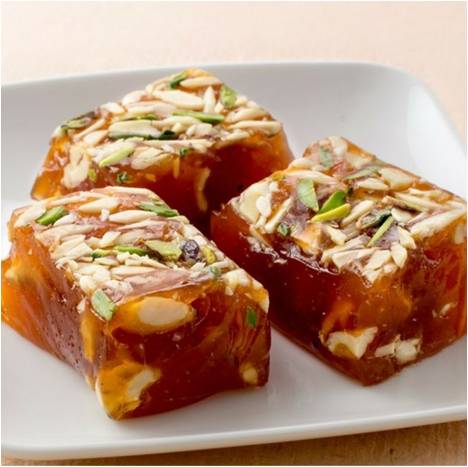 There lived in Boston a wise and ancient chemist by the name of Dr. Daws, who dabbled somewhat in magic. There also lived in Boston a young lady by the name of Claribel Sudds, who was possessed of much money, little wit and an intense desire to go upon the stage.So Claribel went to Dr. Daws and said:”I can neither sing nor dance; I cannot recite verse nor play upon the piano; I am no acrobat nor leaper nor high kicker; yet I wish to go upon the stage. What shall I do?””Are you willing to pay for such accomplishments?” asked the wise chemist.”Certainly,” answered Claribel, jingling her purse.”Then come to me to-morrow at two o’clock,” said he.All that night he practiced what is known as chemical sorcery; so that when Claribel Sudds came next day at two o’clock he showed her a small box filled with compounds that closely resembled French bonbons.”This is a progressive age,” said the old man, “and I flatter myself your Uncle Daws keeps right along with the procession. Now, one of your old-fashioned sorcerers would have made you some nasty, bitter pills to swallow; but I have consulted your taste and convenience. Here are some magic bonbons. If you eat this one with the lavender color you can dance thereafter as lightly and gracefully as if you had been trained a lifetime. After you consume the pink confection you will sing like a nightingale. Eating the white one will enable you to become the finest elocutionist in the land. The chocolate piece will charm you into playing the piano better than Rubenstein, while after eating you lemon-yellow bonbon you can easily kick six feet above your head.””How delightful!” exclaimed Claribel, who was truly enraptured. “You are certainly a most clever sorcerer as well as a considerate compounder,” and she held out her hand for the box.”Ahem!” said the wise one; “a check, please.””Oh, yes; to be sure! How stupid of me to forget it,” she returned.He considerately retained the box in his own hand while she signed a check for a large amount of money, after which he allowed her to hold the box herself.Are you sure you have made them strong enough?” she inquired, anxiously; “it usually takes a great deal to affect me.””My only fear,” replied Dr. Daws, “is that I have made them too strong. For this is the first time I have ever been called upon to prepare these wonderful confections.””Don’t worry,” said Claribel; “the stronger they act the better I shall act myself.”She went away, after saying this, but stopping in at a dry goods store to shop, she forgot the precious box in her new interest and left it lying on the ribbon counter.Then little Bessie Bostwick came to the counter to buy a hair ribbon and laid her parcels beside the box. When she went away she gathered up the box with her other bundles and trotted off home with it. Bessie never knew, until after she had hung her coat in the hall closet and counted up her parcels, that she had one too many. Then she opened it and exclaimed:”Why, it’s a box of candy! Someone must have mislaid it. But it is too small a matter to worry about; there are only a few pieces.” So she dumped the contents of the box into a bonbon dish that stood upon the hall table and picking out the chocolate piece–she was fond of chocolates–ate it daintily while she examined her purchases.These were not many, for Bessie was only twelve years old and was not yet trusted by her parents to expend much money at the stores. But while she tried on the hair ribbon she suddenly felt a great desire to play upon the piano, and the desire at last became so overpowering that she went into the parlor and opened the instrument.The little girl had, with infinite pains, contrived to learn two “pieces” which she usually executed with a jerky movement of her right hand and a left hand that forgot to keep up and so made dreadful discords. But under the influence of the chocolate bonbon she sat down and ran her fingers lightly over the keys producing such exquisite harmony that she was filled with amazement at her own performance.That was the prelude, however. The next moment she dashed into Beethoven’s seventh sonata and played it magnificently.Her mother, hearing the unusual burst of melody, came downstairs to see what musical guest had arrived; but when she discovered it was her own little daughter who was playing so divinely she had an attack of palpitation of the heart (to which she was subject) and sat down upon a sofa until it should pass away.Meanwhile Bessie played one piece after another with untiring energy. She loved music, and now found that all she need do was to sit at the piano and listen and watch her hands twinkle over the keyboard.Twilight deepened in the room and Bessie’s father came home and hung up his hat and overcoat and placed his umbrella in the rack. Then he peeped into the parlor to see who was playing.”Great Caesar!” he exclaimed. But the mother came to him softly with her finger on her lips and whispered: “Don’t interrupt her, John. Our child seems to be in a trance. Did you ever hear such superb music?””Why, she’s an infant prodigy!” gasped the astounded father. “Beats Blind Tom all hollow! It’s–it’s wonderful!”As they stood listening the senator arrived, having been invited to dine with them that evening. And before he had taken off his coat the Yale professor–a man of deep learning and scholarly attainments–joined the party.Bessie played on; and the four elders stood in a huddled but silent and amazed group, listening to the music and waiting for the sound of the dinner gong. Mr. Bostwick, who was hungry, picked up the bonbon dish that lay on the table beside him and ate the pink confection. The professor was watching him, so Mr. Bostwick courteously held the dish toward him. The professor ate the lemon-yellow piece and the senator reached out his hand and took the lavender piece. He did not eat it, however, for, chancing to remember that it might spoil his dinner, he put it in his vest pocket. Mrs. Bostwick, still intently listening to her precocious daughter, without thinking what she did, took the remaining piece, which was the white one, and slowly devoured it.The dish was now empty, and Claribel Sudds’ precious bonbons had passed from her possession forever!Suddenly Mr. Bostwick, who was a big man, began to sing in a shrill, tremolo soprano voice. It was not the same song Bessie was playing, and the discord was shocking that the professor smiled, the senator put his hands to his ears and Mrs. Bostwick cried in a horrified voice:”William!”Her husband continued to sing as if endeavoring to emulate the famous Christine Nillson, and paid no attention whatever to his wife or his guests.Fortunately the dinner gong now sounded, and Mrs. Bostwick dragged Bessie from the piano and ushered her guests into the dining-room. Mr. Bostwick followed, singing “The Last Rose of Summer” as if it had been an encore demanded by a thousand delighted hearers.The poor woman was in despair at witnessing her husband’s undignified actions and wondered what she might do to control him. The professor seemed more grave than usual; the senator’s face wore an offended expression, and Bessie kept moving her fingers as if she still wanted to play the piano.Mrs. Bostwick managed to get them all seated, although her husband had broken into another aria; and then the maid brought in the soup.When she carried a plate to the professor, he cried, in an excited voice:”Hold it higher! Higher–I say!” And springing up he gave it a sudden kick that sent it nearly to the ceiling, from whence the dish descended to scatter soup over Bessie and the maid and to smash in pieces upon the crown of the professor’s bald head. At this atrocious act the senator rose from his seat with an exclamation of horror and glanced at his hostess.For some time Mrs. Bostwick had been staring straight ahead, with a dazed expression; but now, catching the senator’s eye, she bowed gracefully and began reciting “The Charge of the Light Brigade” in forceful tones.The senator shuddered. Such disgraceful rioting he had never seen nor heard before in a decent private family. He felt that his reputation was at stake, and, being the only sane person, apparently, in the room, there was no one to whom he might appeal.The maid had run away to cry hysterically in the kitchen; Mr. Bostwick was singing “O Promise Me;” the professor was trying to kick the globes off the chandelier; Mrs. Bostwick had switched her recitation to “The Boy Stood on the Burning Deck,” and Bessie had stolen into the parlor and was pounding out the overture from the “Flying Dutchman.”The senator was not at all sure he would not go crazy himself, presently; so he slipped away from the turmoil, and, catching up his had and coat in the hall, hurried from the house.That night he sat up late writing a political speech he was to deliver the next afternoon at Faneuil hall, but his experiences at the Bostwicks’ had so unnerved him that he could scarcely collect his thoughts, and often he would pause and shake his head pityingly as he remembered the strange things he had seen in that usually respectable home.The next day he met Mr. Bostwick in the street, but passed him by with a stony glare of oblivion. He felt he really could not afford to know this gentleman in the future. Mr. Bostwick was naturally indignant at the direct snub; yet in his mind lingered a faint memory of some quite unusual occurrences at his dinner party the evening before, and he hardly knew whether he dared resent the senator’s treatment or not.The political meeting was the feature of the day, for the senator’s eloquence was well known in Boston. So the big hall was crowded with people, and in one of the front rows sat the Bostwick family, with the learned Yale professor beside them. They all looked tired and pale, as if they had passed a rather dissipated evening, and the senator was rendered so nervous by seeing them that he refused to look in their direction a second time. While the mayor was introducing him the great man sat fidgeting in his chair; and, happening to put his thumb and finger into his vest pocket, he found the lavender-colored bonbon he had placed there the evening before.”This may clear my throat,” thought the senator, and slipped the bonbon into his mouth.A few minutes afterwards he arose before the vast audience, which greeted him with enthusiastic plaudits.”My friends,” began the senator, in a grave voice, “this is a most impressive and important occasion.”Then he paused, balanced himself upon his left foot, and kicked his right leg into the air in the way favored by ballet-dancers!There was a hum of amazement and horror from the spectators, but the senator appeared not to notice it. He whirled around upon the tips of his toes, kicked right and left in a graceful manner, and startled a bald-headed man in the front row by casting a languishing glance in his direction.Suddenly Claribel Sudds, who happened to be present, uttered a scream and sprang to her feet. Pointing an accusing finger at the dancing senator, she cried in a loud voice:”That’s the man who stole my bonbons! Seize him! Arrest him! Don’t let him escape!”But the ushers rushed her out of the hall, thinking she had gone suddenly insane; and the senator’s friends seized him firmly and carried him out the stage entrance to the street, where they put him into an open carriage and instructed the driver to take him home.The effect of the magic bonbon was still powerful enough to control the poor senator, who stood upon the rear seat of the carriage and danced energetically all the way home, to the delight of the crowd of small boys who followed the carriage and the grief of the sober-minded citizens, who shook their heads sadly and whispered that “another good man had gone wrong.”It took the senator several months to recover from the shame and humiliation of this escapade; and, curiously enough, he never had the slightest idea what had induced him to act in so extraordinary a manner. Perhaps it was fortunate the last bonbon had now been eaten, for they might easily have caused considerably more trouble than they did.Of course Claribel went again to the wise chemist and signed a check for another box of magic bonbons; but she must have taken better care of these, for she is now a famous vaudeville actress.* * * * *This story should teach us the folly of condemning others for actions that we do not understand, for we never know what may happen to ourselves. It may also serve as a hint to be careful about leaving parcels in public places, and, incidentally, to let other people’s packages severely alone.Story by—- L. Frank Baum–
 Indians-In DebtWith kargil and indo-chaina, with Mangalyaan and Aryabhatt, with the 70’s winning world cups and miss Universe titles,with earthquake and floods India Today is seventy one, not out , not out. So on the fifteen day of August and the twenty sixth day of January we take pride in putting up the tiranga in our cars and on our bikes. We take pride to be an Indian. That’s all great but what hurts is that most of us take pride only on fifteen of August or on twenty six of January. We sing with great power to celebrate our Independence and us being a Republic. We make promise, hoist our flag, clean our streets, and listen to speech with great enthusiasm only on the fifteen of August and twenty sixth day of January. We think about all those martyrs only on days when we feel a sense of belonging. And it hurts more that people don’t even feel for their country like they used to. Everyone looks for an opportunity to flee the nation rather than to contribute towards it’s development. Everyone feels comfortable blaming the government (no matter what majority) when thetmy were the ones who elected them. Everyone will curse the garbage but throw a wrapper on the road themselves. We can aya that India is developing, but it is not progressing. The rich are geeting richer and the poor are geeting poorer. The roads are geeting wider but the pot holes are geeting deeper. The numbers of school are increasing, but rhe quality if education is decreasing. The real politicians are decreasing and corruption is increasing. I can say with a broken heart, India you are a ness right now. I cannot tell what can be done about it or lay my opinion on the table, because to be honest I have no clue. I have no clue how to shut the negativity down. I have no clue how to convince people and seek help for this soon to be drowned Nation with its flawed judiciary, legislative, political and police systems. But all I would like to tell everyone is that fell patriotic three sixty-five days a wear and always remember you are not bound to the nation just with its physical boundary the people make the nation. And I hople we can better ourselves in large and subtle ways to benifit India together.
 They heard you cry . And they still laughed .Upon seeing your battel scare , They only pretended to care.All you could do was sit alone, Under the blanket or in the corner, crying , About all ifs, but &whys.Realizing no one cared about you trying. They meat the world to you And you meant like a mole on a hlii , You kept asking yourself was if all worth When all yours feelings were nothing but hurt. Was it okay to quit you wondered, When you saw the sly outfit And then you remember what your mother taught you, A bitter truth is better than a thousand lies.

 The GDP growth rate of India overtook the GDP growth rate of China in 2015. This has fuelled many newspaper articles in India stating that India is also on the path to replicating the Chinese growth story. However, the truth seems far from it. Despite the Indian media’s frantic efforts to put India and China in the same league by using statistics that are misleading to compare the two economies, India is still a long way behind China. True, that India has made rapid strides on the path to becoming an economic powerhouse. However China has been doing so for decades. China’s Economy is Four Times Larger Than India’s EconomyThe GDP of India is close to $1.5 trillion. At the same time, the GDP of China is close $7 trillion. The economy of China is at least 4 times as big as the economy of India. This means that even if China grows at the rate of a meager 1.5% and India grows at a rate of 7%, the Chinese economy would have added the same amount in output as the Indian economy would have!Comparing the GDP growth rates of India and China is therefore a pointless exercise. China’s growth rate has been consistently higher than India’s growth rate over the past three decades or so. India has barely overtaken the Chinese growth rate for a couple of quarters. Only if India can continue to beat the Chinese growth rate by a huge margin for the next two to three decades, does India stand a chance of overtaking the Chinese economy.Inflation in India is 6 times higher than it is in ChinaIndia’s GDP growth has been accompanies by runaway inflation in the country. Growth rate accompanied by inflation cannot last for a long period of time. Instead, such growth rate is indicative of the short term impetus that has been given to the economy by the monetary policy.On the other hand, China’s inflation has been relatively stable at a negligible 0.8% for many years. This has been accomplished despite the fact that China has been recording fiscal surplus for the past many years and ideally should be reeling with inflation. To the contrary, China has established sovereign wealth funds, which invest the additional cash in foreign assets keeping the inflation rate low.Given the fact that Indian economy is severely marred by inflation, it seems unlikely that they will be able to compete against China in the long run. China’s Manufacturing Productivity is 1.6 times than that of IndiaChina produces a lot more than India does. It also does so remarkably more efficiently. Given the better quality infrastructure and better production techniques at China’s disposal, it is not astounding that the average Chinese worker produces 1.6 times more output than that of the average Indian worker. This means that the productivity of China as a nation is 60% higher.The Indian manufacturing sector has multiple problems. These problems include erratic electricity supply, slow and expensive transport systems as well as lack of skills that increase manufacturing productivity.Given that a large portion of these problems are structural in nature, it seems unlikely that India will be able to overcome them in the near future.WorkforceThe Indian economy on the other hand, has a clear strategic advantage when the workforce is considered. The Indian education system was created by the British. As such, Indian workforce is global in nature. They can speak fluent English which gives them an edge over Chinese nationals who face language barriers. Also, the Indian workforce does high end jobs for the information technology industry and BPO industry as compared to the Chinese workforce which works menial jobs on the factory shop floor. Given that the future of the world lies in high skilled knowledge jobs, the Indian workforce may soon rise in prominence while the Chinese workforce may soon become redundant.One Child PolicyAlso, China faces what many economists call a demographic time bomb. For the past couple of decades, China has followed the one child policy to control population. However, now China faces a situation wherein there are more people out of the workforce than in it. On an average, every Chinese worker is expected to pay for the costs of at least two Chinese retirees.India, on the other hand, is facing a demographic dividend. It has a huge, extremely skilled workforce. Hence, if the government is able to provide jobs to these workers, the Indian economy is expected to grow by leaps and bounds. Given the fact that there will be a lot more people in the workforce than out of it, India is poised to become an economic superpower.EntrepreneurshipChina is still more or less a communist country. This means that all the enterprises there are run by the state. State run enterprises are usually not efficient and definitely not innovative. On the other hand, the Indian industry is based on innovative enterprises. Given the competitive nature of the world economy, the Indian industry stands a better chance at success in the future. This can already be seen as capital intensive Chinese industries such as coal and cement are going bankrupt whereas knowledge intensive industries such as information technology are thriving!The China India comparison is therefore absurd at the moment. China is a full-fledged superpower that has begun to show signs of decline whereas India has just started rising. The path is long and uncertain and only time will answer certain questions!
 International Journal of Research (IJR)