A testing vote

India had good reasons to abstain , but might have to revisit it’s stance if the conflict worsens

Thwarted at the UN Security Council in their resolution to condemn Russian aggression on Ukraine , the U.S. and European allies now plan to ensure a censure of Moscow’s actions at the UN General Assembly, where they already have the support of more than 80 countries . The Russian veto of resolution 8979 was a predetermined outcome : as a permanent UNSC member, Russia has vetoed UNSC resolutions earlier that were critical of its decision to send to send troops into Georgia (2008) , and Crimea (2014) , and could hardly have done otherwise . What was perhaps more disappointing for the western coalition was that it was unable to move India from its consistent position of abstention . China shifted from its support for Russia in the previous vote to abstention after the U.S. and Albania , the two “penholders ” of the resolution, agreed to drop the reference to chapter VII ( the authorisation of the use of force against Russian troops ). The coalition against Russia is making a political statement at the UN, but not setting much store on the global body’s effectiveness . Instead, the U.S. and the EU have adopted unilateral sanctions which they hope will cripple Russian president Vladimir Putin’s ability to sustain a longer assualt on Ukraine , and also excised the Russian economy from the international SWIFT transaction system. In addition, the U.S., Germany and other countries have announced weapon supplies for Ukrainian forces . However, in the absence of direct air power assistance and foreign troops , it is unlikely that Ukraine will be able to change the balance of power in the equation with Russia easily.

India’s abstention from the UNSC resolution too was perhaps a foregone conclusion. Prime Minister Narendra Modi’s decision to take a call from Mr. Putin before the vote indicated that India would not take any stand against Russia . Apart from the India-Russia defence and strategic partnership , Russia is India’s most trusted P-5 ally when it comes to blocking intusive resolutions on Kashmir. In contrast, Mr. Modi only accepted the call from the Ukrainian president after the vote, and rather than offering the support , requested assistance for the safe exit of Indian students . While India’s hesitation to take a stand against Russia is understood, New Delhi must now consider whether it’s aspirations to be a “leading power” can be achieved without having a clear position on a conflict that threatens global security,even as the Modi government focuses solely on the well being of Indians amidst the peril faced by others . This will be especially true if the Russian military operation in Ukraine is prolonged, and the Government’s ambivalence is read as active support for aggressive transgressions by a more powerful neighbour over a weaker one , something India has protested in its own neighborhood.

Having enemies makes you stronger,finds a study of flies

Because of selection,both fruit fly(host) and bacterium (pathogen) evolve having the maximum fitness

The natural world is rife with pairs of antagonists . Plants and viruses ,insects and pathogens , bacteria and their phages , and so on. In these systems it is an interesting question to study how the resistance to a pathogen, in the case of the host , and virulence towards the host,in the case of a pathogen, evolve. Towards understanding this better , Indian Institute of Science Education and Research Mohali researchers have taken up the system of the fruit fly (Drosophila melanogaster) and a bacterial pathogen that affects the fruit fly, sometimes even causing death – Pseudomonas entomophilia – have been co- evolved to study the pathway of evolution taken by the system of antagonists . In this case , they find that being surrounded by enemies actualy makes the organism stronger , or fitter , to combat the enemy .

Co – evolving systems

How does one set up a co evolving system experimentally ? A population of flies are infected by the pathogen and the infection is allowed to take its course . Among the infected flies ,only those that survive the infection, namely the ones that have the best immune systems to combat the pathogen , are taken to breed the next generation. Similarly, bacteria are collected from the flies that die due to the infection. These are the bacteria that have the virulence sufficiently strong to cause death in the present population. These bacteria are taken to breed the and also infect the flies in the next generation. Thus , both the host (fruit fly) and the pathogen (bacteria) are selected for having the maximum fitness .

Four types

The methodology of the experiment is like this : Four types of populations were bred in the lab . One in which , as described above , the host and pathogen both co-evolved . The second was a population in which only the host was selected from the flies that did not die due to the infection. Every generation, infection was done from a stock of ancestral bacteria which was not evolving. The third and fourth were two types of control populations. This methodology allowed the researchers to compare the evolution process in hosts that were co-evolved against their pathogen and the hosts that were adapted against a static , non evolving pathogen. They found that the former category evolved higher survivorship against the co-evolved pathogen than the hosts that was adapted against a non -evolving , static pathogen . Further they also found that the co-evolved hosts showed higher survivorship with respect to ancestral , unevolved pathogens than their counterparts who have been pitted against static pathogens .

Inspired Morning Work

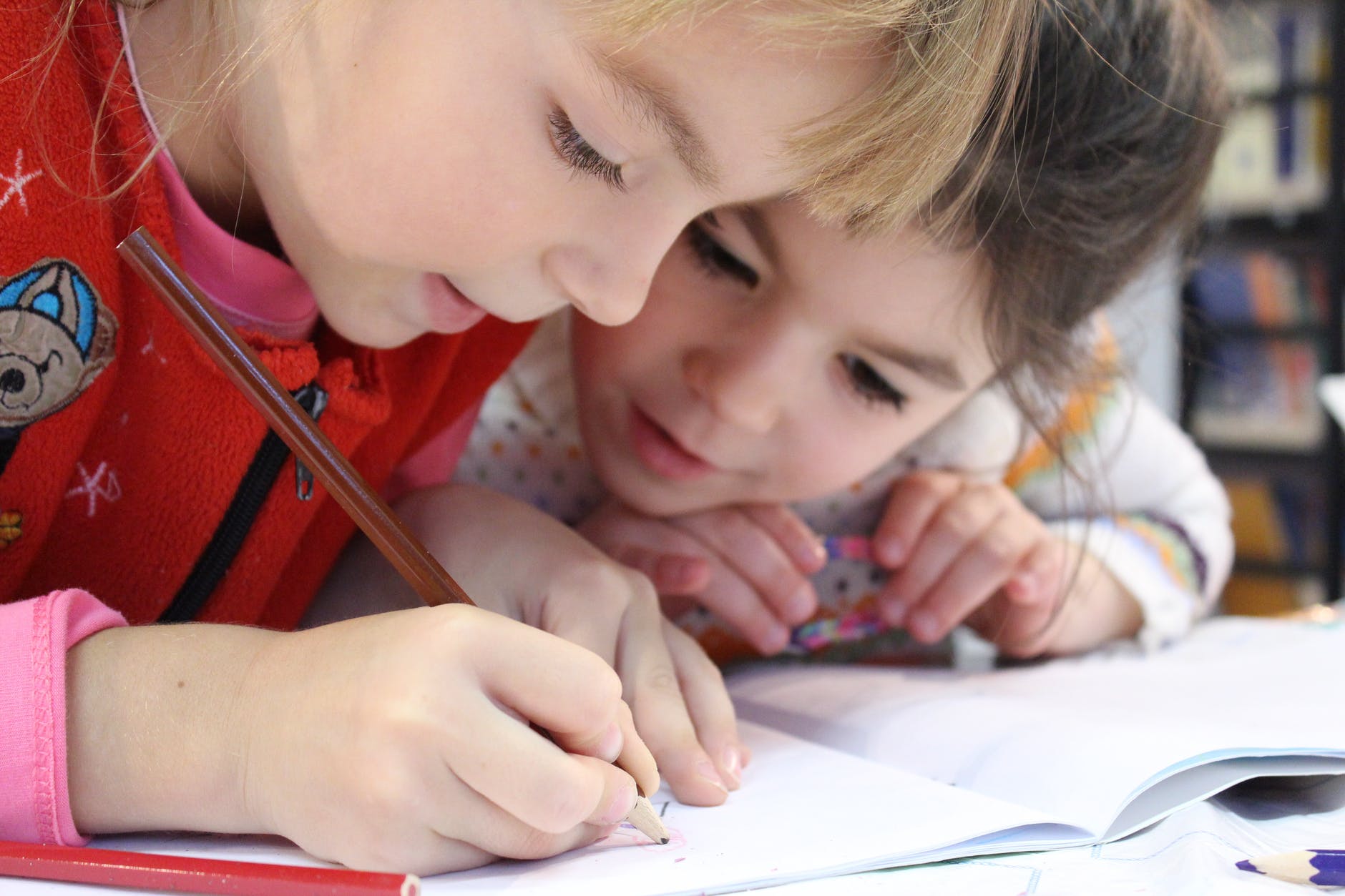
For elementary schools there is no right way to do morning work. Teachers across classrooms and grade levels have all found ways that morning work fits their teaching style and their classroom. However, there is definitely a wrong way to do morning work; skipping it entirely. Teachers that skip morning work are missing out on creating a consistent start to their day and are missing out on an easy way to help their students.

Photo by Helena Lopes on Pexels.com

For most teachers the absence of morning work isn’t something that they do out of lack of care for their students. Most believe that their time and energy is better spent elsewhere. Others may simply be overwhelmed with what to do for morning work. Below are some great examples of what can become part of a great morning work routine. 

Journals and Writing Prompts

Journaling and writing prompts are a popular form of morning work for many teachers for a number of reasons.  

  • They are low prep. All that is needed is a pen and a notebook.
  • They create a great way to know your students
  • Prompts can focus on supplementing student’s learning goals in other subjects
  • Prompts can be used as a knowledge pre-test

Journaling can also be incredibly beneficial because it will help you to build a rapport with your students quickly. It also earns bonus points as a way to engage children who may be a little more introverted and not like to share with teachers or classmates as much. 

Social Emotional Learning (SEL) Activities

Social emotional learning and it’s support has come to the forefront of education with both parents and teachers. The Covid pandemic has created a generation of students who have stresses and anxieties that no other group before them has had to deal with. SEL lessons can help educators check in with their students in a number of ways including:

  • Emotion or Mental Health Checks
  • Positive coping methods
  • Sharing circles 
  • Mindful minutes

Warm Up Time

Children, just like adults, enjoy quiet time to themselves at the start of the work day to drink their morning coffee or energy drink. Now I’m not saying to let a group of kids crack a soda or energy drink before class starts, I’m sure we all know that’s  a bad idea. Instead give them activities that will let them ease into the day and warm up their bodies and minds for the learning ahead. These activities include classics such as:

  • Puzzles 
  • Mazes
  • Guided drawings
  • Guided sculptures with clay or playdough 
  • Building with Legos
  • Yoga or stretching

Job Time

Teachers that like to have a well regimented classroom often find ways to help students feel like they are young adults and contributing to the classroom. These teachers can often be found implementing “classroom jobs” that students do in the morning. When put on a rotating schedule this can not only keep your classroom organized but teach teamwork and responsibility. Tasks included can be:

  • Attendance check offs
  • Taking lunch orders
  • Picking up homework
  • Returning or delivering books from the classroom library
  • Checking cubbies or backpack spaces
  • Organizing and delivering supplies for the day

Next Steps for Morning Work Ideas

Chances are that the above ideas inspired you to start thinking about a way to include morning work into your classroom routine. The great thing about morning work is the ability for it to be adapted to every classroom and every teaching style. If you aren’t sure where to start though try checking out some morning work for third graders that has already been created. As teachers the easiest thing to do is use resources that are already created by someone else and then over time tweak them to your style!

SIGNS OF PEACE

Russia’s pulling back some troops suggests it sees potential in Macron , Scholz proposals

Photo by Artem Podrez on Pexels.com

Russia’s announcement that it is pulling back some troops from Ukraine’s borders is the strongest signal of de-escalation from Moscow. Russia has always maintained that it had no plans to attack Ukraine . But the massive troop mobilisation on the three flanks of Ukraine , which included combat aircraft , warships and S400 missile defence systems , had raised fears of war. Besides , the U.S’s warning that a Russian invasion could come “any day” and its decision to shut the American embassy in Kiev added to the frenzy . The Russian approach appeared to have been rooted in building military pressure around Ukraine to gain diplomatic leverage in talks with the west. In the last few weeks , European leaders , Hungary’s Viktor Orban , France’s Emmanuel Macron and Germany’s Olaf Scholz , have visited Moscow. Of these, the diplomatic interventions by Mr. Macron , who called for respecting Russian security concerns and sought to revive the Minsk agreement on Ukraine’s civil strife , and Mr. Scholz , who said in Kiev that Ukraine’s entry into NATO was “not on the agenda right now”, were significant . Their talks with Russian President Vladimir Putin opened a diplomatic path towards de-escalation.

It is too early to say that the crisis is over. The complex issue is rooted in Russia’s security concerns & NATO’s expansionary open door policy with no quick solutions . But the suggestions from the talks Russia and the west have had point to a formula for peace . Russia’s three concerns are: one, it does not want neighbours Georgia and Ukraine to be members of NATO. Two, it wants NATO to roll back its military presence and drills from Eastern Europe and the Black sea. Three, it wants the Ukraine crisis—the civil conflict between Kiev and the Russia -backed separatists in Donbas -to be resolved through the Minsk process.

In conclusion the only thing is that The West and Russia should take that road aimed at finding a lasting solution to Europe’s most dangerous security crisis .

ISRO puts 3 satellites into orbit, first launch of 2022

The first launch of the year under the new Chairman S. Somanath went off without a glitch.

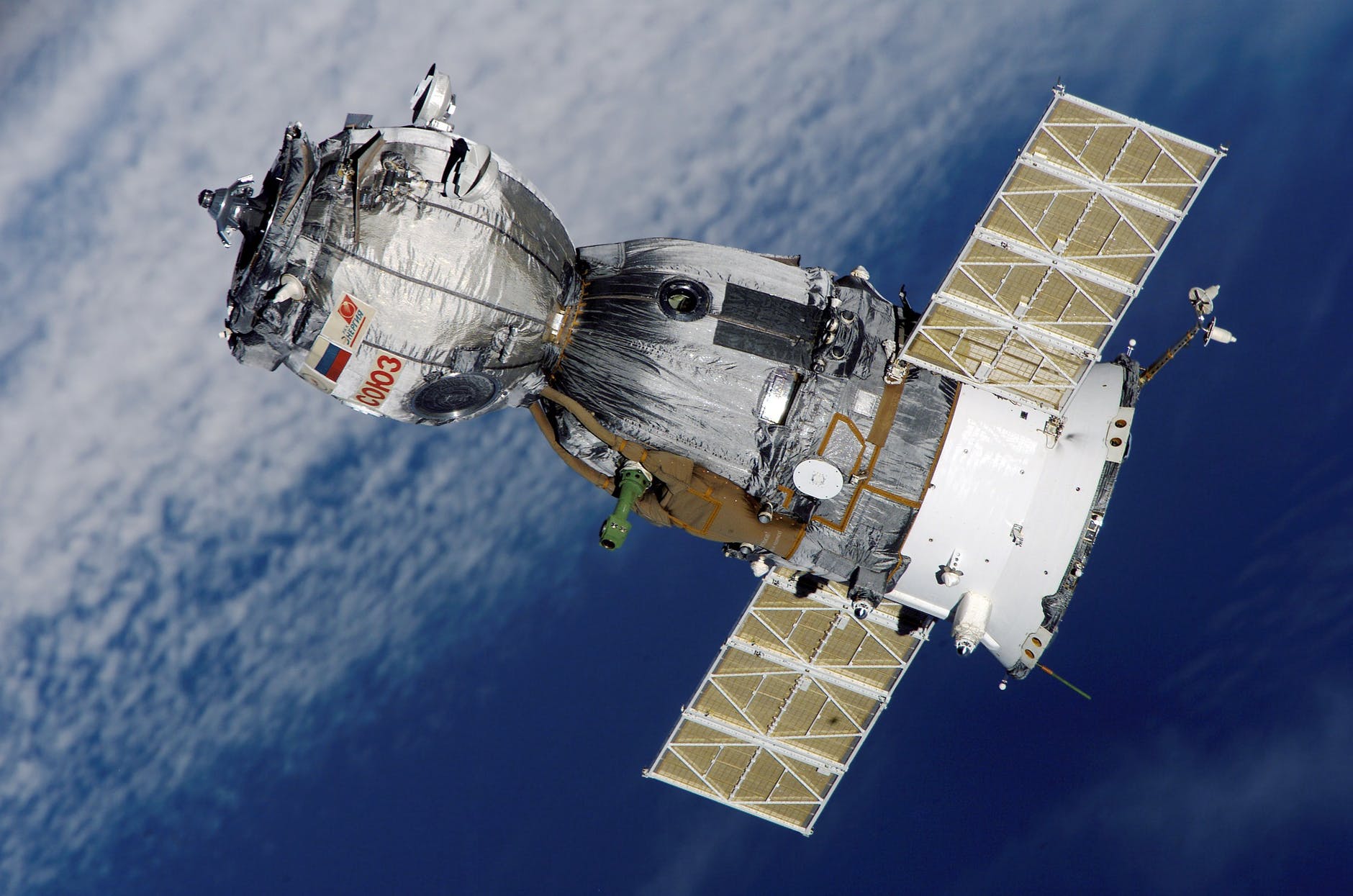
Thick orange fumes from the PSLV C-52 briefly lit up the pre-dawn dark sky and Pulicat Lake as the workhorse of the Indian Space Research Organisation soared into the skies from the first launch pad of the Satish Dhawan Space Centre , Sriharikota, on Monday, the booming noise of the launch vehicle carrying three satellites breaking the morning silence.

Photo by Pixabay on Pexels.com

The ISRO’s maiden launch of 2022 and the first under its new chairman , S. Somanath, went off without a glitch , placing all the three satellites into orbit with precision. The PSLV C-52 was the 54th flight of the rocket and the 23rd in its XL configuration. The success of the launch was crucial for ISRO that had a very muted 2020 with just two launches , one of which -the GSLV-F10–failed after launch. The PSLV C-52 carrying the Earth Observation Satellite , EOS -04 , the INS-2TD, a technology demonstrator from ISRO , and the INSPIRE-sat-1, a student satellite, lifted off at 5:59 a.m.

Around 18 minutes later , the three satellites were separated and placed into their orbits . “The primary satellite, the EOS-04 has been put in a precise orbit . The co passenger satellites have been placed into the right orbit,” Mr. Somanath said adding ISRO will be” back with the next launch of PSLV very soon”.

With a mission life of 10 years , the EOS-4, a radar imaging satellite is designed to provide high quality images in all weather conditions for applications such as agriculture, forestry, plantation , flood mapping, soil moisture and hydrology. The satellite will collect earth observation data in C-band and will complement and supplement the data from Resourcesat, Cartosat series and RISAT-2Bseries, ISRO said.

PM’s Message

Prime Minister Narendra Modi congratulated India’s space scientists on Monday on the successful launch of the PSLV C52 mission.

Mr. Modi tweeted ,” Congratulations to our space scientists on the successful launch of PSLV C-52 mission . EOS-04 satellite will provide high resolution images under all weather conditions for agriculture, forestry and plantations, soil moisture and hydrology as well as flood mapping.”

JWST spots its first star , in Ursa Major

NASA’S new space telescope has captured its first starlight and even taken a selfie of its giant , gold mirror .

All 18 segments of the primary mirror on the James Webb space Telescope seem to be working properly a month and half into the mission , officials said on Friday.

Photo by Felix Mittermeier on Pexels.com

The telescope’s FIRST TARGET WAS a bright star 258 light years away in the constellation Ursa Major. ” That was just a real wow moment ,” said Marshall PERRIN of the space telescope science institute in Baltimore.

Over the next few months , the hexagonal mirror segments will be aligned and focused as one ,allowing science observations to begin by the end of June . The $10 billion infrared observatory – considered the successor to the ageing Hubble Space Telescope – will seek light from the first stars and galaxies that formed in the universe nearly 14 billion years ago. It will also examine the atmospheres of alien worlds for for any possible signs of life.

NASA did not detect the crippling flaw in Hubble’s mirror until after its 1990 launch; more than three years passed before space walking astronauts were able to correct the telescope’s blurry vision .

While everything is looking good so far with Webb , engineers should be able to rule out any major mirror flaws by next month, Feinberg said.

Largest mirror

Webb’s 6.5 metre , gold-plated mirror is the largest ever launched into space. After 20 years with the project ,” it is just unbelievably satisfying ” to see everything working so well so far, said the University of Arizona’s Marcia Rieke, principal scientist for the infrared camera. Webb blasted off from South America in December and reached its designated perch 1.6 million Kilometres away last month.

IJR – Call for Papers 2022

International Journal of Research (IJR) is an applied, international hospitality and tourism management journal designed to help practitioners and researchers stay abreast of the latest developments in the field, as well as facilitate the exchange of ideas.

Photo by Anete Lusina on Pexels.com

An exciting and challenging international forum, the journal reflects current happenings and trends in the industry. It welcomes both theoretical and applied research papers, and encourages the submission of the results of collaborative research undertaken between academia and industry. Current issue of the journal is available at https://ijrjournal.com/index.php/ijr

Send papers for publication to ijr@ijrjournal.com

The topics related to this journal include but are not limited to:

• Beverage Management

• Consumer Behavior

• Human Resource Management

• Intriguing Case Examples

• Managing Cultural Diversity

• Managing Guests Expectations and Experiences

• Marketing Management

• Private Club Management

• Resident Attitudes toward Tourism

• Resident Attitudes toward Host Quality Of Life

• Restaurant Management

• Strategic Alliances

• Interrelationship between Hospitality and Tourism

The School closure in India

In the last two years , India has achieved the dubious distinction of becoming the country with the second longest COVID-19 pandemic-linked school closure in the world–next only to Uganda. According to a United Nations report ,it is an estimated 82 weeks , with some intermittent classes in between . Much has been said ,written and published about the impact of school closure on learning loss. However,there has been very limited discourse on why—inspite of scientific evidence to support re-opening —Indian states continued to remain reluctant to reopen schools . Analysing the root causes of school closure in India is an urgent need to derive lessons and to guide future policy interventions .

Photo by Pixabay on Pexels.com

The Bane of misinformation

To start with, one of the biggest reasons for continued school closure has been widespread misinformation. Unsubstantiated statements such as ‘the third wave would affect children ‘ and ‘let’s wait for vaccination of kids before reopening schools ‘ were made by influential individuals and amplified on social media . These scared parents and ( incorrectly) linked school reopening with COVID-19 vaccination of children. Occasional reports of children being hospitalised in different parts of the world were on loop on television channels , sensationalising the matter ; while it boosted their target rating point (TRP) ,it harmed hapless children.

Two, the opinion of a small section of privileged parents and self proclaimed representatives of their association — often not fully understanding the complexity of issues — dominated and prevailed in the mainstream discourse. Though surveys had indicated that poor and middle class parents – no matter which part of the country they were from — wanted schools to be open ,they were largely ignored in decision making , which was also influenced by ‘sensational ‘ newspaper reports and high pitched TV debates. Many experts-on-everything appeared on television channels with the argument ‘ let’s err on the side of caution ‘ , as if epidemiological and scientific evidence were of no value .

Every time privileged parents or an ‘expert on everything’ spoke, they deprived children from poor and marginalised backgrounds of their opportunity of and right to education. It needs no reiteration that, in the last two years, already wide educational inequities have only widened further.

Three, the Government’s response, at all levels, to the misinformation was delayed and arguably insufficient. Though science communication increased over a period of time, it did not match the pace of misinformation. Politicians in most States played to the gallery and used the opposition (by a small group of the mostly privileged) to re-open schools as an excuse to delay school reopening.

  • The learnings during the novel coronavirus pandemic have been (wrongly) equated with completion of the syllabus.
  • Continued school closure and a hesitation in reopening academic institutions are the symptoms of a deeper malady in India’s education system.

What is essential Practice test?

Recently, the action of some pre-university colleges in Karnataka refusing entry to Muslim girl students wearing hijabs, or head scarves , has now become a national controversy. While the girls have been protesting against being denied access to education, the counter protests by a section of Hindu students wearing saffron shawls and turbans have led to a tense situation outside some campuses . The action of the college where the row broke out in Udipi is now being questioned in the Karnataka High Court. The court , by an interim order , has directed that students should not wear attire linked to any religion until it resolves the legal questions arising from the issue.

Photo by Buro Millennial on Pexels.com

But the main question that rises among many other questions is that whether students can be kept out of educational institutions merely because they are wearing a piece of clothing indicating their religion.

While students are arguing in favour of their freedom , the Government is of the view that compelling a student to remove the head-scarf is not a violation of Article 25 .

Going by the Government’s stand, the issue can also be framed differently: whether the wearing of head scarves will have an adverse impact on law and order by pitting two communities against one another , and thereby , enable the government to prohibit religious attire in the interest of public order – one of the grounds on which a right under Article 25 can be curbed . The question whether educational institutions can bar religious attire as part of their power to prescribe uniforms for students is also linked to the constitutional question whether the ban on such attire will come within the power to restrict freedom of religion in the interest of public order , health and morality. Yet, another question is whether the denial of entry into schools amounts to violation of the students’ right to education under article 21A .

Study finds high viral shedding in Asymptomatic people

The Imperial College London has concluded the first study on 36 participants aged 18-29 years who were deliberately exposed to low dose of SARS-cOV-2 virus through the nose, and the various facets of infection were studied. All the volunteers had no previous infection or vaccination . In all, only 18 of the 36 participants became infected, and the viral load in these people increased steeply before peaking on day five post-exposure.

Photo by Anna Shvets on Pexels.com

Virus was first detected in the throat but the viral load increased to significantly higher levels in the nose than in the throat. Viral shedding began within two days of infection and the viral load increased to high levels and remained detectable for as long as 12 days after exposure to the virus. The results are posted as a preprint server Research Square. Preprints are yet to be peer-reviewed.

“This paper is the first of a series of deep analyses that this unprecedented consortium will produce. The manufacture of a delta challenge agent is nearly complete,” imunologist Dr. Christopher Chiu from the Imperial College of London who led the team tweeted.

Since some participants continued to shed infectious virus even 12 days after virus introduction, and, on average, viable virus was detectable 10 days post-symptom onset advocated i many guidelines to minimise onward transmission,” they note.

Neutralising antibodies were generated in all infected participants 14 days post inoculation and further increased at 28 days.