


By Shashikant Nishant Sharma
The Anthropocene, a term coined to describe the current geological era marked by significant human impact on the Earth’s ecosystems, has not spared the financial sector. As our global society becomes increasingly aware of the pressing need for sustainable practices, it is imperative to critically examine the role of the financial industry in shaping the Anthropocene. This review delves into the key aspects of the financial sector’s influence on the environment, social welfare, and economic stability, ultimately highlighting the urgent need for transformative change.
Environmental Impact:
The financial sector plays a crucial role in allocating capital and investment decisions, making it a powerful driver of environmental change. Unfortunately, the sector has often prioritized short-term gains and failed to adequately consider environmental risks. Financing projects with harmful ecological footprints, such as fossil fuel extraction and deforestation, demonstrates a severe disconnect from the urgent need to transition to a sustainable future. The Anthropocene demands a fundamental shift towards green finance and responsible investment that actively supports renewable energy, conservation, and climate change mitigation.
Social Responsibility:
Beyond its environmental impact, the financial sector has a profound influence on social welfare. The pursuit of profit maximization has led to growing income inequality and socio-economic disparities. Wealth concentration in the hands of a few exacerbates societal divisions, jeopardizing social stability and cohesion. Furthermore, predatory lending practices and unethical investments have caused harm to vulnerable communities, deepening social inequalities and perpetuating systemic injustices. The Anthropocene necessitates a financial system that values social responsibility, promotes fair distribution of resources, and actively addresses societal challenges.
Economic Stability:
The financial sector’s actions have had far-reaching consequences for economic stability, as evidenced by the 2008 global financial crisis. Short-sighted risk-taking, inadequate regulation, and the pursuit of profit at all costs contributed to the collapse of major financial institutions and subsequent economic downturns. The Anthropocene demands a financial system that places a greater emphasis on long-term sustainability, resilience, and transparency. Robust risk management frameworks, ethical practices, and responsible lending are imperative to avoid future economic crises and ensure a stable and equitable economy.
Regulatory Framework:
One of the critical shortcomings in addressing the Anthropocene within the financial sector lies in the inadequate regulatory framework. Despite some progress in recent years, regulations often lag behind the rapidly evolving complexities of the sector. Regulatory bodies must strengthen oversight, enhance transparency, and enforce stricter environmental and social standards. Additionally, international cooperation is vital to harmonize regulations and prevent regulatory arbitrage, where financial activities with negative environmental or social impacts simply relocate to jurisdictions with lax regulations. Such measures would help align the financial sector’s operations with the imperatives of the Anthropocene.
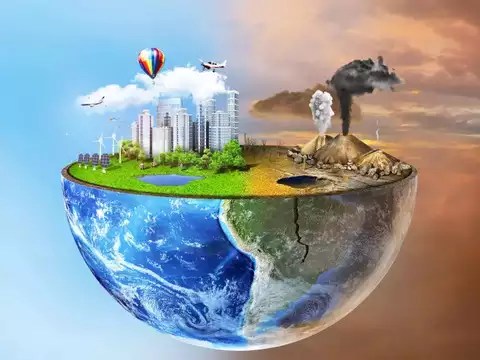
The Anthropocene poses significant challenges and opportunities for the financial sector. To navigate this era successfully, the sector must prioritize sustainability, social responsibility, and economic stability. Green finance, ethical investment practices, fair wealth distribution, and robust regulations are all indispensable components of a financial system that contributes positively to the Anthropocene. While some progress has been made, much remains to be done to ensure that the financial sector becomes a catalyst for positive change rather than a driver of environmental degradation and social inequality. The time for transformative action is now.
References
Al Amosh, H. (2024). The Anthropocene reality of financial risk. Social and Environmental Accountability Journal, 44(1), 85-86.
Crona, B., Folke, C., & Galaz, V. (2021). The Anthropocene reality of financial risk. One Earth, 4(5), 618-628.
Roka, K. (2020). Anthropocene and climate change. Climate Action, 20-32.
Snick, A. (2021). Social finance in the anthropocene. Innovations in social finance: Transitioning beyond economic value, 13-34.
Sharma, S. N. Agricultural Marketing: Enhancing Efficiency and Sustainability in the Agriculture Sector.
Sharma, S. N. (2018). Transformation of Aspirational Districts Programme: A Bold Endeavor Towards Progress. Think India Journal, 21(4), 197-206.
Shrivastava, P., Zsolnai, L., Wasieleski, D., Stafford-Smith, M., Walker, T., Weber, O., … & Oram, D. (2019). Finance and Management for the Anthropocene. Organization & Environment, 32(1), 26-40.
Tarim, E. (2022). Modern finance theory and practice and the Anthropocene. New political economy, 27(3), 490-503.

 International Journal of Research (IJR)