
Introduction
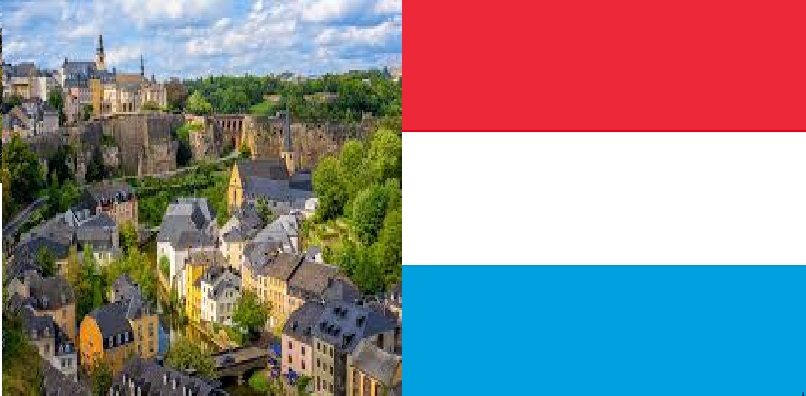
Luxembourg is European landlocked country, situated in northern-western Europe. Luxembourg is one of the world’s smallest countries. Its surrounded by Belgium on the west and north, France on the south, and Germany on the northeast and east. Luxembourg has come under the control of many states and ruling houses in its long history, but it has been a separate, if not always autonomous, political unit since the 10th century.
Its capital, Luxembourg City is one of the four official capitals of the European Union. Luxembourg has three official languages i.e. French, German and national language Luxembourgish. Its culture is specially affected by the France and Germany. The repeated invasion by Germany, especially during the World War 2, resulted in the country’s strong will for mediation between France and Germany as well as including the foundation of European Union.
This country spread an area of 2,586 sq. km. (as per Wikipedia site), it is one of the smallest sovereign states in Europe. In 2019, Luxembourg recorded 6.26 hundred thousand as population. It is one of least populated country in the world. Luxembourg is a developed country, it is empowered with advance economy and of the world’s highest GDP.
Political System:
This country is a constitutional monarchy, a parliamentary democracy and a prominent financial center. The country is a member of the Benelux Economic Union and was one of the founding members of European Union. Monarchical chief of the state is the Grand Duke of Luxembourg. Head of the government is the Prime Minister appointed by the Grand Duchy (normally most popular voted candidate).
Geographical Condition
The northern third of Luxembourg, known as the Oesling, compromises a corner of the Ardennes Mountains, which lie mainly in southern Belgium. It is a plateau that averages 1,500 feet(450 metres) in elevation and is composed of schists and sandstones. This forested highland region is incised by the deep valleys of a river network organized around the Suer (or Sauer) River, which runs eastward through north-central Luxembourg before joining the Moselle (or Mosel) River on the border with Germany. The Oesling’s forested hills and valleys support the ruins of numerous castles, which are a major attraction for the region’s many tourists. The fertility of the relatively thin mountain soils of the region was greatly improved with the introduction in the 1890s of a basic-slag fertilizer, which is obtained as a by-product of the grand duchy’s steel industry.
Climate
Luxembourg has a mild climate with considerable precipitation. The north is slightly colder and more humid than the south. The mean temperatures in Luxembourg city range from the mid-30s F (about 0.7 °C) in January to the low 60s F (about 17 °C) in July, but in the Oesling both extremes are slightly lower. The Oesling receives more precipitation than the Bon Pays, but the greatest amount, about 40 inches (1,000 mm), and the least, about 27 inches (about 685 mm), fall in the southwest and southeast, respectively. The sheltered valley of the Moselle River benefits from a gentler and sunnier climate than does the rest of the duchy.

 International Journal of Research (IJR)