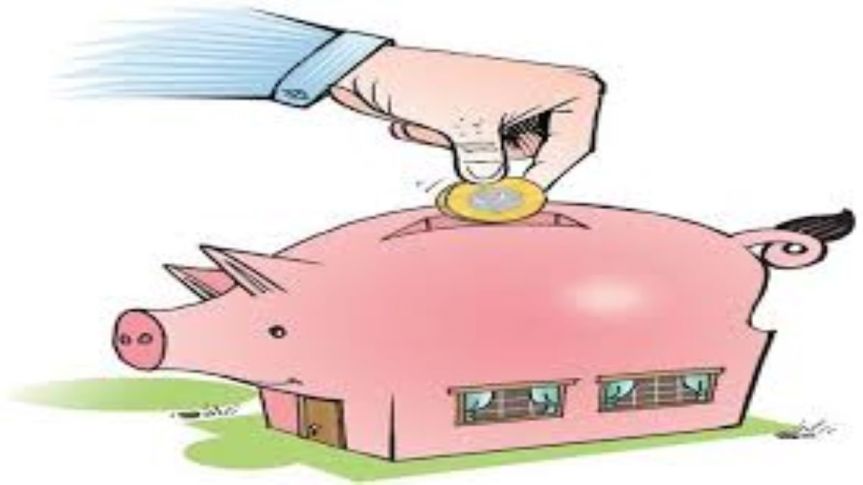
Spike in household savings expected due to covid-19

Due to forced slowdown in COVID-related consumption household savings are expected to spike in Q1’20-21. This will come in handy to finance the economy’s recovery, an RBI research paper said as it is the Indian economy’s most reliable and self-reliant source of capital.

In this time of layoffs and the economy is absolute turmoil, this research comes as a beacon of hope.In India, as compared t other countries saving has been considered very important, especially by middle-class families.Due to our mindset and traditional values saving has always been preferred over spending . In fact consumerism came very late to India in comparison with other countries that achieved independence from colonial powers around the same time that we did.A lot can be attributed to the fact that the standard of living in our country had been stagnant for a very long period of time.

Only in the last decade or two, the standard of living of masses have some how increased, this can be mainly attributed to increase in the country’s overall literacy rate, for both men as well as women and also rapid infrastructural development that we have witnessed since the turn of the century.One of the many policies of this government that played a major role in this would be the 1990 Economic Policies, this particular policy has drastically changed the prevalent economic structure of the country.One of the important implementations of the policy was the opening up of the country’s economy and integrating ourselves with the world economy.This created a healthy competition in the economy which motivated Indian firms to increase the quality of their product to be at par international standards

A spike in households’ net financial assets is likely due to a sharp drop in lockdown-induced consumption in the first quarter of 2020–21. According to the paper written by Anupam Prakash, Anand Prakash Ekka, Kunal Priyadarshi, Chaitali Bhowmick and Ishu Thakur of the RBI Department of Economic and Policy Research, several studies show that households tend to save more during a slowdown and income uncertainty.

After the nationwide lock-down to combat the COVID-19 pandemic, economists forecast an ever worse contraction of the Indian economy during FY’21. The paper also warns that lags in the pickup of economic activity may cause households’ financial surplus in subsequent quarters to taper off. With construction activity at a standstill, households are likely to move from physical assets such as residential property to financial assets such as deposits, currency, and mutual funds, and are more useful in financing businesses and the growth of the economy. At Rs 15.6 lakh crore, India’s net financial savings rose to 7.7 per cent in FY’20 as of March 2020 from 7.2 per cent in FY’19.

For the Indian economy, the report notes, the household sector is the most sustainable and self-reliant source of finance. In the light of the policy initiative gathering critical mass to lift the Indian economy from the vice-like grip of a recession and, more recently, the life-threatening COVID-19 pandemic, it said, its position is likely to become crucial.

The Indian households hold financial assets or financial savings in currency, bank deposits, debt securities, mutual funds, insurance , pension funds and small savings. Currency and bank deposits accounted for 66 per cent of overall financial assets, led by pension companies and mutual funds contributing 30.2 per cent respectively. Such in-turns are strong sources of company financing.


Source:https://economictimes.indiatimes.com/news/economy/finance/covid-related-consumption-crunch-may-spike-q1-household-savings/articleshow/76322161.cms

Johnson & Johnson to start human trails for covid-19 vaccine in july

Johnson & Johnson has decided to move up it’s clinical trials by two months, from September to July, says the company as the pharmaceutical giant , like many others expects to be the first, in the race of creating ‘the’ vaccine,i.e COVID -19 vaccine.

The speeding up of the process will allow J&J to participate in the U.S. government’s proposed major clinical trials project which targets to provide an successful vaccine by the end of the year. In March, J&J signed agreements with the U.S. government to build adequate production resources to manufacture more than 1 billion doses of its vaccine by 2021, even before it has confirmation that the vaccine will be effective.

There are currently no recognized medications or vaccines approved for the virus in the USA. A vaccination is seen as necessary to end the pandemic that has affected more than 7.2 million people and killed more than 412,000 people across the globe and has also had an adverse affect on the several economies around the world .

“Based on the strength of the pre-clinical data we have seen so far and interactions with the regulatory authorities, we have been able to further accelerate the clinical development,”Chief Scientific Officer Paul Stoffels of J&J said in a statement on Wednesday.

The trails by J&J will test the vaccine for safe operation and early signs of effectiveness in 1,045 healthy volunteers aged 18 to 55, and in those aged 65 and older. The trial will take place in the United States and Belgium.

The firm is also in discussions with the National Institutes of Allergy and Infectious Diseases (NIAID) to begin bigger, late-stage studies before time, based on early research outcomes and regulatory clearance.

The United States plans to study a number of participants for the coronavirus vaccine in studies that would involve up to 30,000 people and get a potency result as soon as possible.  Health Chief of National Institutes Dr Francis Collins said.

Stoffels said last week that J&J hopes to have results of its vaccine efficacy trials in the first quarter of 2021. He added that the company is “working hard to bring it back to the end of the year.” A lot will depend on how much virus is circulating at that time, he said.

The company plans to test the vaccine in high-transmission regions within the United States. If the incidence is low, “we will complement that with international sites to make sure that we reach enough endpoints quickly to prove the vaccine works,” Stoffels said.

Moderna Inc, which is working in close partnership with NIAID, has started testing its vaccine candidate in a 600-subject mid-stage trial. The company expects to begin late-stage trials in July.

Moderna’s vaccine uses messenger RNA technology, an approach that has yet to produce any approved vaccines. J&J is utilizing the same technology used to make its Ebola vaccine, which won European regulatory approval late last month.

The trick with developing a vaccine is that it has to be widely tested and developed in a format that is effective on everyone and thus, can be mass-produced , so that the vaccine is profitable for the company manufacturing it too.

There are about 10 coronavirus vaccines in human testing. Experts have said a safe and effective vaccine could take at least 12 to 18 months from the start of development, which would shave several years off the typical vaccine development timeline.

Source:https://www.reuters.com/article/us-health-coronavirus-johnson-johnson/jj-to-begin-human-trials-of-covid-19-vaccine-in-second-half-of-july-idUSKBN23H24F?utm_campaign=fullarticle&utm_medium=referral&utm_source=inshorts

world’s largest vaccine manufacturer invests usd 100 million to develop potential Covid-19 vaccine

According to a company official of , the world’s largest producer of vaccines, the Serum Institute of India , is planning to invest USD 100 million on a potential vaccine for COVID-19,  being developed at Oxford University. The organization established in Pune, has collaborated with AstraZeneca, a British bio-pharmaceutical corporation mammoth, to ensure a stable supply to India and other low- and middle-income countries of the AZD1222 vaccines.

“Our manufacturing facility is ready and we plan to start production in two months. We are spending more than USD 100 million for this facility. Till the trials are completed successfully for safety and efficacy, vaccines will not be distributed either in India or anywhere else in the world,” Adar Poonawalla, Chief Executive Officer, Serum Institute of India (SII), said.

With high hopes the company is planning to mass produce up to a million units, and is planning to stockpile the same at personal risk. According to the company when it comes to determine how many units India is likely to get in the first phase, they commented that it might be too early too comment. “However, if the vaccine trials succeed, India will gain access to the doses as it will also be the requirement of the Government of India. And we are certain that everybody will respect if the substantial volumes go to India,” he added.

According to their website, Serum Institute of India was founded in 1966 by Dr. Cyrus Poonawalla with the aim of manufacturing life-saving immuno-biologicals, which were in shortage in the country and imported at high prices. Thereafter, several life-saving biologicals were manufactured at prices affordable, and now is the world’s largest vaccine manufacturer by number of doses produced and sold globally (more than 1.5 billion doses) which includes Polio vaccine as well as Diphtheria, Tetanus, Pertussis, Hib, BCG, r-Hepatitis B, Measles, Mumps and Rubella vaccines. It is estimated that about 65% of the children in the world receive at least one vaccine manufactured by Serum Institute. Vaccines manufactured by the Serum Institute are accredited by the World Health Organization, Geneva and are being used in around 170 countries across the globe in their national immunization programs, saving millions of lives throughout the world.

Serum Institute of India is ranked as India’s No. 1 biotechnology company, manufacturing highly specialized life saving biologicals like vaccines using cutting edge genetic and cell based technologies, antisera and other medical specialties.

Serum Institute of India also has plans and is working on developing a vaccine with USA based firm Codagenix, Poonawalla recently said that at present, the firm is undergoing pre-clinical trials (animal trial phase) and hope to progress to the human trial phase by September/October.

“The aim is to make the vaccine over the next 1.5-2 years to help combat the novel corona-virus. With the combined efforts of our partner Codagenix, we are optimistic that we will be able to provide a viable and effective vaccine for mass use,” Adar Poonawalla, Chief Executive Officer, Serum Institute of India (SII), said.

SII along with Oxford and Codagenix is also working with an Austria-based firm, Themis and two other promising candidates to develop an effective and affordable vaccine for COVID-19.At least half a dozen attempts to build a coronavirus vaccine are underway worldwide but the ones in Oxford are considered one of the most assuring and promising ones.   A vaccine will be a much needed intervention that can bring the loss of lives caused by the infections, to a complete halt.

Source:https://economictimes.indiatimes.com/industry/healthcare/biotech/pharmaceuticals/serum-institute-investing-usd-100-million-on-potential-covid-19-vaccine/articleshow/76288408