Ben Jonson (1547-1637)

Benjamin Jonson was an English playwright and poet. Jonson’s artistry exerted a lasting influence upon English poetry and stage comedy. He was born at Westminister and educated at Westminister school. His father died before Jonson’s birth, and the boy adopted the trade of his stepfather, who was a master bricklayer. From this, he turned to acting and writing plays, engaging himself, both as actor and playwright, with the Lord Admiral’s company (1597). In 1617, he has created a poet for the king, and the close of James’s reign saw Jonson the undisputed ruler of English literature. His favourite haunt was the Mermaid Tavern, where he reigned as dictator over a younger literary generation. He was buried in Westminister Abbey, and over him was placed the epitaph “o rare Ben Jonson!”

Jonson’s numerous works, comedies, tragedies, masques, and lyrics, are of widely varying merit, but all of them, as well as his Timber, a kind of commonplace-book, which is of considerable interest for its critical comment on literature. To him, the chief function of literature was to instruct. His play was divided conventionally into comedies and tragedies, for Jonson, true to his classical models, did not combine the two. In his comedies, he aimed to return to the controlled, satirical, realistic comedy of the classical dramatist, and the inductions of his plays make it clear that he hoped to reform the drama on these lines. His main concern was with the drawing of character, and his creations are important because they introduce the “comedy of humours“. Many of his characters arc, in consequence, types, but the best, like Bobadill in Every Man in his Humour, rise above the type and live as truly great comic characters.

His early comedies, Every Man in his Humour (1598), Every Man out of Humour (1599), Cynthia’s Revels (1600), and The Poetaster (1601), show his ingenuity of plot, his hearty humour, his wit, and they are full of vivacity and fun. Every Man in his Humouris, perhaps, his greatest work. The middle group of comedies, Volpone, or the Fox (1605), Epicoene, or The Silent Woman (1609), The Alchemist (1610), and Bartholomew Fayre (1614), represents, as a group, his best work. They are all satirical in tone, realistic and natural in dialogue, and ingenious in the plot. The characters are less angular and more convincing. His later comedies, The Devil is an Ass (1616) and The Staple of News (1625), show a distinct falling-off in dramatic power.

The two historical tragedies, Sejanus his Fall (1603) and Catiline his Conspiracy (1611), are composed of classical models. They are too laboured and mechanical to be reckoned as great tragedies. Jonson was also friends with many of the writers of his day, and many of his most well-known poems include tributes to friends such as Shakespeare, John Donne, and Francis Bacon. Ben Jonson died in Westminster on August 8, 1637. A tremendous crowd of mourners attended his burial at Westminster Abbey. He is regarded as one of the major dramatists and poets of the seventeenth century.

John Bunyan

John Bunyan was an English writer and Puritan preacher. He was born in Elstow, near Bedford, in 1628, the son of Thomas Bunyan and Margaret Bentley. He followed his father into the tinker’s trade but rebelled against God and ‘had but few equals, both for cursing, swearing, lying, and blaspheming the holy name of God’. As a teenager, he joined Cromwell’s New Model Army but continued his rebellious ways. His life was saved on one occasion when a fellow soldier took his place at the siege of Leicester, and ‘as he stood sentinel he was shot in the head with a musket bullet and died’.

Bunyan married at age 21. Those books his wife brought to the marriage began a process of conversion. Gradually, he gave up recreations like dancing, bell ringing, and sports; he began attending church and fought off temptations. Later, he realised that he was lost and without Christ when he came into contact with a group of women whose ‘joyous conversation about the new birth and Christ deeply impressed him’. In 1651 the women introduced him to their pastor in Bedford, John Gifford, who was instrumental in leading Bunyan to repentance and faith.

That same year he moved to Bedford with his wife and four children, including Mary, his firstborn, who had been blind from birth. He was baptised by immersion in the River Ouse in 1653. Appointed a deacon of Gifford’s church, Bunyan’s testimony was used to lead several people to conversion. By 1655 Bunyan was himself preaching to various congregations in Bedford, and hundreds came to hear him. In the following years, Bunyan began publishing books and became established as a reputable Puritan writer, but around this time, his first wife died. He remarried in 1659, a young woman named Elizabeth, who was to be a staunch advocate for her husband during his imprisonments for in 1660 Bunyan was arrested for preaching without official permission from King Charles II; he was to spend the next 12½ years in Bedford County Gaol.

In January 1672, Charles II issued the Declaration of Religious Indulgence with to make Roman Catholicism legal. As a result, many religious prisoners were pardoned and released, including John Bunyan. That same month, he became pastor of the Bedford church. In March 1675, he was imprisoned for preaching again because Charles II withdrew the Declaration of Religious Indulgence. This time he was imprisoned in the Bedford town jail on the stone bridge over the Ouse.

Bunyan became a prolific author as well as a popular preacher, though most of his works consisted of expanded sermons. He wrote, The Pilgrim’s Progress, in two parts, the first of which was published in London in 1678, and the second in 1684. He had begun the work in his first period of imprisonment and probably finished it during the second. The earliest edition with the two parts combined in one volume was published in 1728. A third part, falsely attributed to Bunyan, appeared in 1693 and was reprinted as late as 1852. The Pilgrim’s Progress is arguably one of the most widely known allegories ever written. It has been extensively translated into other languages.

Two other successful works of Bunyan’s are less well-known: The Life and Death of Mr. Badman (1680), an imaginary biography, and The Holy War (1682), an allegory. A third book that reveals Bunyan’s inner life and his preparation for his appointed work are, Grace Abounding to the Chief of Sinners (1666). It is all about Bunyan’s spiritual path. Bunyan died in 1688 after catching a cold while riding through a rainstorm on a journey to reconcile a quarreling family. He was buried at the Nonconformist cemetery of Bunhill Fields in London.

Christopher Marlowe

Christopher Marlowe, also known as Kit Marlowe, was an English playwright, poet, and translator of the Elizabethan era. Marlowe is among the most famous of the Elizabethan playwrights. He was Shakespeare’s most important predecessor in English drama, who is noted especially for his establishment of dramatic blank verse. He was born at Canterbury and educated there and at Cambridge. He adopted literature as a profession and became attached to the Lord Admiral’s players.

Marlowe’s plays, all tragedies, were written within five years (1587-92). He had no bent for comedy, and the comic parts found in some of his plays are always inferior and maybe by other writers. Only in Edward II does he show any sense of plot construction, while his characterization is of the simplest, and lacks the warm humanity of Shakespeare’s. All the plays, except Edward II, revolve around one figure drawn in bold outlines. This character shows no complexity or subtlety of development and is the embodiment of a single idea.

In Tamburlaine the Great, the shepherd seeks the “sweet fruition of an earthly crown,” in The Jew of Malta Barabbas seeks “infinite riches in a little room,” while the quest of Doctor Faustus is for more than human knowledge. Each of the plays has behind it the driving force of this vision, which gives it an artistic and poetic unity. It is, indeed, as a poet that Marlowe excels. Though not the first to use blank verse in English drama, he was the first to exploit its possibilities and make it supreme. His verse is notable for its burning energy, its splendour of diction, its sensuous richness, its variety of pace, and its responsiveness to the demands of varying emotions.

The Massacre at Paris is a short and luridly written work, the only surviving text of which was probably a reconstruction from memory of the original performance text, portraying the events of the Saint Bartholomew’s Day Massacre in 1572, which English Protestants invoked as the blackest example of Catholic treachery. It features the silent “English Agent”, whom subsequent tradition has identified with Marlowe himself and his connections to the secret service. The Massacre at Paris is considered his most dangerous play, as agitators in London seized on its theme to advocate the murders of refugees from the low countries and, indeed, it warns Elizabeth I of this possibility in its last scene.

Doctor Faustus (or The Tragicall History of the Life and Death of Doctor Faustus), based on the German Faustbuch, was the first dramatised version of the Faust legend of a scholar’s dealing with the devil. While versions of “The Devil’s Pact” can be traced back to the 4th century, Marlowe deviates significantly by having his hero unable to “burn his books” or repent to a merciful God to have his contract annulled at the end of the play. Marlowe’s protagonist is instead carried off by demons, and in the 1616 quarto his mangled corpse is found by several scholars. Doctor Faustus is a textual problem for scholars as two versions of the play exist: the 1604 quarto, also known as the A text, and the 1616 quarto, or B text. Both were published after Marlowe’s death. On 30 May Marlowe was stabbed to death during a fight at a house in Deptford, apparently after an argument about a bill. He was about 29. The incident’s relation, if any, to Marlowe’s investigation by the Privy Council is unknown.

The Life of John Donne

John Donne was an English poet, scholar, and secretary. John Donne is considered now to be the pre-eminent metaphysical poet of his time. He was born in Bread Street, London in 1572 to a prosperous Roman Catholic family. He was the son of a wealthy merchant. His parents were Roman Catholics, and he was educated in their faith before going to Oxford and Cambridge. He entered the Inns of Court in 1592, where he mingled wide reading with the life of a dissolute man-about-town. He wrote his Satires, the Songs and Sonets, and the Elegies, but, though widely circulated in manuscript, they were not published until 1663, after his death. He entered the Anglican Chruch, after a severe personal struggle, and in 1621, became Dean of St. Paul’s, which position he held until his death in 1631. He was the first great Anglican preacher.

John Donne, Self-potrait

His Poetry

Donne was the most independent of the Elizabethan poets and revolted against the easy, fluent style, stock imagery, and pastoral conventions of the followers of Spenser. His poetry is forceful, Vigorous, and despite faults of rhythm, often strangely harmonious. His cynical nature and keenly critical mind led him to write satires, such as Of the Progres of the Soule (1601). His love poems, the Songs and Sonets, were written in the same period, and are intense and subtle analyses of all the moods of a lover, expressed in vivid and startling language, which is colloquial rather than conventional. His poems are all intensely personal and reveal a powerful and complex being. Among the best known and most typical of the poems of this group are Aire and Angels, A Nocturnall upon S.Lucies day, A Valediction: forbidding mourning, and The Extaise.

His religious poetry was written after 1610, and the greatest, the nineteen Holy Sonets, and the lyric such as A Hymn to GOD THE FATHER, after his wife’s died in 1617. They too are intense and personal and have a force unique in this class of literature. “He affects the metaphysics”, said Dryden of Donne, and the term ‘metaphysical’ has come to be applied to Donne and a group of poets who followed him. The most distinctive feature of the metaphysical is their imagery, which, in Donne, is almost invariably unusual and striking, often breath-taking, but sometimes far-fetched and fantastic.

His Prose

Donne’s prose work is considerable both in bulk and achievement. The Pseudo-Martyr (1610) was a defense of the oath of allegiance, while Ignatius His Conclave (1611) was a satire upon Ignatius Loyola and the Jesuits. The best introduction to Donne’s prose is his Devotions (1614), which give an account of his spiritual struggles during a serious illness. His finest prose works are his Sermons, which number about 160. In seventeenth-century England, the sermon was a most important influence, and the powerful preacher in London was a public figure capable of Wielding great influence. Donne’s sermons, of which the finest is probably Death’s Duell (1630), contain many of the features of his poetry. Donne seems to have used a dramatic technique that had a great hold on his audiences.

Conclusion

Donne left a deep and pervasive influence on English poetry. The metaphysical lyricists owed a great debt to him. Sometimes, his followers excelled him in happy conceit, passion, and paradoxical reasoning. And yet he gave a sincere and passionate quality to the Elizabethan lyric. He is one of those great poets who have left a mark on the history of English poetry. At times, his poetry is strange, fantastic, bizarre, maybe repellent. Donne may not be capable at times of graceful love or sweetness of song, but he enriched Elizabethan poetry with sincerity, originality, and fullness of thought.

The Reformation

Reformation is the term used to refer to the great religious movement of the sixteenth century, having for its object the reform of the doctrines and practices of the church of Rome and ending in the establishment of the various Reformed or Protestant churches of Central and North-Western Europe. In the words of Hilaire Belloc, it was a revolt against Catholicism and an explosion of forces. There were many causes for the Reformation Movement. First and foremost was the fact that some of the doctrines and practices of the Church had become outdated and irrelevant and therefore need reform. Then there was the growing spirit of nationalism. The seed of nationalism was swon by Joan of Arc there was a tendency on the part of every nation to assert its independence and individuality. The spirit of the time was France for the French and Germany for the Germans.

The Early Reformation in England

In England, the creation of an independent national church was directly powered by political events. In 1527 Henry VIII attempted to obtain a divorce from Katherine of Aragon. When the Pope would not comply, Henry adopted a solution suggested by his advisor Thomas Cromwell that he takes the title of ‘Supreme Head of the English Church’. Monasteries were forcibly disbanded and images and shrines were destroyed (in attacks known as iconoclasm). Henry’s Roman Catholic Lord Chancellor, Thomas More, who had refused to accept Henry’s supremacy of the church, was executed and the Bible appeared in English for the first time.

Henry VIII

However, it was not until the accession of the boy king Edward VI that the English Protestant Reformation touched the lives of the people of the realm more widely. Under a protectorate of Protestant nobles, significant religious reforms were executed in the king’s name. A Book of Common Prayer was issued in English and over the period 1547-1553 the structure of church ceremonies was simplified. The appearance of parish churches continued to be drastically transformed; communion tables replaced altars, images were removed, the king’s royal arms were installed and walls once filled with paintings were whitewashed.

Return to Roman Catholicism under Mary I

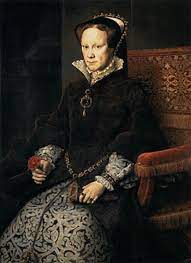
There was an abrupt halt to reform with the accession of the Roman Catholic Mary I. In 1553 Queen Mary appointed Cardinal Pole as Archbishop of Canterbury and the Catholic Mass was reintroduced. Many Protestant clerics left England to study abroad. Others, such as Thomas Cranmer, who was responsible for the first Protestant Book of Common Prayer, were accused of treason and executed.

Mary Tudor, Queen of England

Religious Reform under Elizabeth I

When Elizabeth I came to the throne in 1558 she reversed Mary’s Roman Catholic policies. As the daughter of Henry VIII and Anne Boleyn, whose marriage had caused the original break with Rome, Elizabeth has been described as the ‘literal and biological product’ of the Reformation. She may have been destined to uphold the Protestant faith, but the less ardent version of reform she introduced reflected her desire to attain unity with people of varying religious outlooks. As a consequence, the Elizabethan Church pleased neither extreme Protestants nor Roman Catholics.

Elizabeth I

The Bible and the Book of Common Prayer were republished in English and Queen Elizabeth adopted the title of ‘Supreme Governor of the English Church’. How far, and how quickly people in England and Wales adopted the reformed religion is a matter still debated today. Some parts of England, such as Kent and Devon, enthusiastically supported reform while other places, like Yorkshire, retained strong groups of those loyal to the Roman Catholic faith. Yet, as a result of the relative prosperity and stability that the country experienced under Elizabeth I, the Protestant religion slowly became an accepted part of life in England and Wales.

The Renaissance

Renaissance means rebirth. The word is usually used about the revival of learning of classical literature between the fourteenth and the sixteenth century. During this period there developed a spirit of inquiry, a spirit of freedom of thought and action. Social, political, and religious ideas were all revolutionized. In the words of Prof. Jebb, “The Renaissance in the largest sense of the term is the process of transition in Europe from the medieval to modern order”. The word “Renaissance” suggests different things to different people. To the love of art and literature Renaissance means the recovery of the masterpieces of the ancient world and the revived knowledge of Greek and Latin. Hence, Walter Pater is right in calling the Renaissance “a complex and many-sided movement”.

Renaissance Inventions and Discoveries

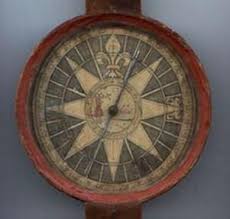
There were certain inventions and discoveries, which contributed to the general movement of the Renaissance. Of these, the most important was the invention of the printing press. The art of printing was introduced into Europe by John Gutenberg of Germany in 1454 and a few years, presses were established in every important town of Western and Central Europe. The first Latin Bible was printed in 1455, at Mainz in Germany. The art of printing reached all over the world. The first printing press in England was established in 1476 by William Caxton at Westminister. Another invention of great importance was the “mariner’s compass”, which enabled sailors to undertake longer voyages that had hitherto been possible. Along with this came also the invention of the telescope, a century later. The invention of the telescope marks the beginning of the science of astronomy.

Renaissance Writers

Dante, Petrarch, and Boccaccio prepared the ground for the Renaissance in Italy. Italian states were ruled by despots who competed with one another in the splendor of their courts. Another great Italian writer of the period was Machiavelli. In France, the effect of the Renaissance was seen in the lyric poetry of Ronsard, the vigorous prose of Francis Rabelais, and the scholarly essays of Montaigne. In Spain, the literary glory of the Renaissance was the glory of Cervantes. His “Don Quixote”, a burlesque of the romances of Chivalry is the most beautiful gift of the Renaissance of the literature of the world. In England, the Renaissance was heralded by Geoffrey Chaucer and selling who had contacts with Italy. A good start was given by three Oxford friends, Thomas Linacre, William Grocyn, and Hugh Latimer. All of them studied in Italy and later lectured on Greek at Oxford University.

Geoffery Chaucer

Renaissance Art and Literature

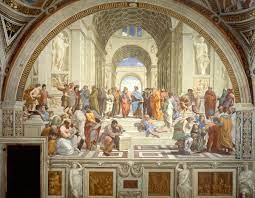
The period of Renaissance was also an age of translation. Virgil, Ovid, Cicero…were all translated into English. The first part of Chapman’s “Homer” appeared in 1598. Thus people like Shakespeare who knew little Latin and less Greek became familiar with classical mythology. The Renaissance in literature may be said to have begun in England with Sir Thomas More. His Famous work, “Utopia”, which is a Greek word meaning “nowhere” was written in Latin and first published in 1516. The English translation was published in 1551. Spenser, the author of the first great English epic “Faerie Queene”, is the representative poet of the English Renaissance. The names closely associated with the Renaissance in Art and literature are those of Michael Angelo, Raphael, and Leonardo da Vinci. They were all-rounder’s, poets, painters, and sculptors. Their work is the glory of the picture galleries in Europe. As a sculptor, Michael Angelo’s most famous work is the Virgin Mary holding the dead body of Christ on her lap. As a painter, he painted the ceiling of the Sistine Chapel and the great fresco of the “Last Judgement” on the walls of the same Chapel. As a poet, Michael Angelo wrote many sonnets and love poems. Leonardo da Vinci is famous for the fresco of the “Last Supper” in the refectory of Maria Delle Grazie in Milan.

Renaissance Religion

The Renaissance in religion consists of two movements, the Reformation and Counter-Reformation. The Reformation started in Germany. Martin Luther, the leader of the Movement, translated the Old and New Testaments into German. William Tindale gave an English rendering of the translation made by Erasmus. These translations of the Bible helped people to read and interpret the text for themselves. As an antidote to this, there started a Counter-Reformation and founding of the society of Jesus by Ignatius of Loyola in 1540. As an outcome of this Renaissance in religion, there was a split in the church and those who protested against the supremacy of the pope came to be known as Protestants.

Chruch in Renaissance period

Shakespeare’s History Plays

Many of Shakespeare’s plays have historical elements, but only certain plays are categorized as true Shakespeare histories. The “history plays” written by Shakespeare are generally thought of as a distinct genre: they differ somewhat in tone, form, and focus from his other plays (the “comedies,” the “tragedies” and the “romances”). Shakespeare’s history play can be divided into two types those dealing with English history and those dealing with Roman history. For the first type, Shakespeare borrowed materials from the English chronicles plays of the period. Marlowe and Peele had written historical plays and chronicle history was popular at that time because it flattered the patriotic spirit of the English. When converted into dramatic form, chronicle history gave opportunities for striking action and enabled the playwrights to freely mingle the comic and the tragic. Shakespeare followed the theatrical fashions of the time.

While many of Shakespeare’s other plays are set in the historical past, and even treat similar themes such as kingship and revolution (for example, Julius Caesar, Antony and Cleopatra, Hamlet, or Cymbeline), the eight history plays have several things in common: they form a linked series, they are set in late medieval England, and they deal with the rise and fall of the House of Lancaster-what later historians often referred to as the “War of the Roses.”

Shakespeare’s most important history plays were written in two “series” of four plays. The first series, written near the start of his career (around 1589-1593), consists of Henry VI, Parts 1, 2 & 3, and Richard III, and covers the fall of the Lancaster dynasty–that is, events in English history between about 1422 and 1485. The second series, written at the height of Shakespeare’s powers (around 1595-1599), moves back in time to examine the rise of the Lancastrians, covering English history from about 1398 to 1420. This series consists of Richard II, Henry IV, Parts 1 & 2, and Henry V.

Shakespeare drew on several different sources in writing his history plays. His primary source for historical material, however, is generally agreed to be Raphael Holinshed’s massive work, The Chronicles of England, Scotland, and Ireland, published in 1586-7. Holinshed’s account provides the chronology of events that Shakespeare reproduces, alters, compresses, or conveniently avoids-whichever serves his dramatic purposes best. However, Holinshed’s work was only one of an entire genre of historical chronicles that were popular during Shakespeare’s time. He may well have used many other sources as well; for Richard II, for example, more than seven primary sources have been suggested as having contributed to the work.

It is important to remember when reading the history plays, the significance to this genre of what we might call the “shadows of history.” One of the questions which preoccupy the characters in the history plays is whether or not the King of England is divinely appointed by the Lord. If so, then the overthrow or murder of a king is tantamount to blasphemy and may cast a long shadow over the reign of the king who gains the throne through such nefarious means. This shadow, which manifests in the form of literal ghosts in plays like Hamlet, Macbeth, Julius Caesar, and Richard III, also looms over Richard II and its sequels.

Characteristics of Romantic Revival

The first half of the nineteenth century records the triumph of romanticism in literature. Newton’s science and Locke’s philosophy were important contributions to the eighteenth-century ethos that made the literature of Pope and Dryden. The revolution of 1789 had violently shaken English thought and aroused liberal ideas in England. Romanticism in the broad sense meant individualism and the revival of imaginative faculty in the matter of literary compositions. Romanticism is described as a return to Nature and ‘the renascence of wonder’. It is the introduction of imagination and a sense of mystery in literature.

Famous poets of the Romanticism Movement

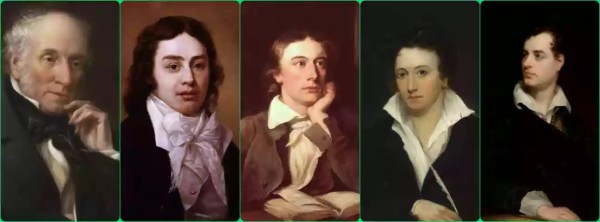
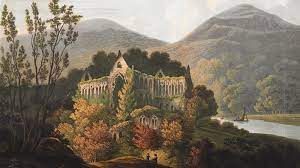
William Wordsworth (1770-1850) endowed Nature with a new meaning and significance. He wrote about familiar common subjects and gave them a light that was never on sea or land. He departed from the gaudy poetic diction and wrote in familiar language as far as practicable. His great contribution to English poetry was the re-interpretation of Nature as a vital entity, a speaking presence, and an acting principle. Wordsworth through his poetry made a revolt against urban-industrial civilization and considered the evils of modern life as stemming from man’s separation from Nature. His long poem, the Prelude, and his poem like Lines Written on Tintern Abbey are eloquent expressions of his philosophy of nature. In short, Wordsworth spearheads the movement against the neo-classical school.

Tintern Abbey

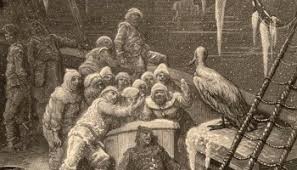
Coleridge (1772-1834) made the supernatural and thereby widened the scope of imaginative understanding. Coleridge introduced into romance a touch of dream and fantasy that increased its unreality and reduced the total living experience to the level of a mere groundwork for a supernatural thrill and a tenuous symbolism. Coleridge’s Ancient Mariner, Christabel, Kubla Khan are remarkable for evoking the thrill of the supernatural through suggestive details and witchery of language.

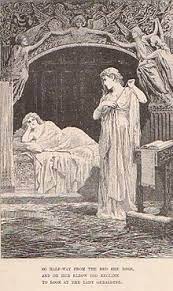
John Keats (1795-1821) added to the basic quality of romance a sensuousness, hunger, and yearning for beauty in all its concrete shapes and forms, a sense of regret and frustration more poignantly felt because rooted in his personal experience. In his poetry, he suggests a contrast between the real world of suffering and frustrations and the imaginative ideal world of dreams and desires and his poetry records his wistful yearning for the ideal world. Keats’ romanticism lies in suggesting the thrill of beauty through sensuous pictures and expressions. His Lamia, the Eve of St Agnes, Ode to a Nightingale, Ode on a Grecian Urn, Ode to Autumn show his romantic aspiration.

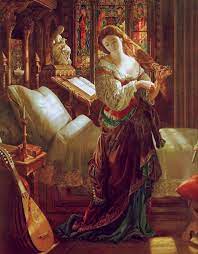
The Eve of St. Agnes

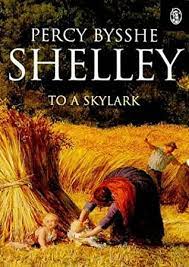
Shelley (1792-1822) was the most vital instinct with the pure essence of a romantic spirit. He gave himself up most unreservedly to the impulse and inspiration of the romantic spirit. He had imbibed the explosive forces of the French Revolution and championed the cause of revolution and freedom in every sphere of human life. There is, however, a melancholy note in his poetry which springs from his frustrations and unfulfilled desires. He pined for an ideal world of beauty, love, and freedom but he yearned in vain. He sang of the millennium when evils of life would disappear like patches of clouds. Shelley’s best qualities are revealed in his Prometheus Unbound, Ode to the West Wind, To a Skylark. He is a lyrical genius par excellence: His poetry is marked by melody and imagery.

Lord Byron (1788-1824) is rightly described as a romantic poet only on the outer fringe of his consciousness. He was affiliated to the Popian tradition by his satiric spirit and adoption of the couplet. Yet he possessed a romantic ardor which is manifested in his upholding the cause of freedom and liberty and in his zeal for expressing his ego-centric consciousness.

The literature of this period was free from restrictions and technicalities. The poets aimed at the spontaneous and exuberant expression of emotions. The Romantic Revival helped the revival of the lyric form marked by its spontaneity and musical qualities. It allowed a free play of imagination. There was variety and individuality in the literature of the Romantic Revival. The poets of the period chose a variety of themes and styles of expression. The romantic poets wrote narrative poems, lyrics, sonnets, odes, ballads, and generally used blank verse. The spirit of the Romantic Revival lasted until the arrival of the Victorian poets who combined the lyricism of the Romantics with the sense of order and restraint of the classicists.

The Romantic Revival

The first thirty years of the 19th century is termed as the period of the Romantic Revival in English literature. The Elizabethans were the first romantics. The romantic spirit suffered a decline during the subsequent ages and it was left to the writers, especially the poets of the early 19th century, to bring back that spirit once again to literature. The Romantic Revival is a broad term used to indicate the change that came over literary sensibility and expression during this period.

Romantic Revival in English Literature

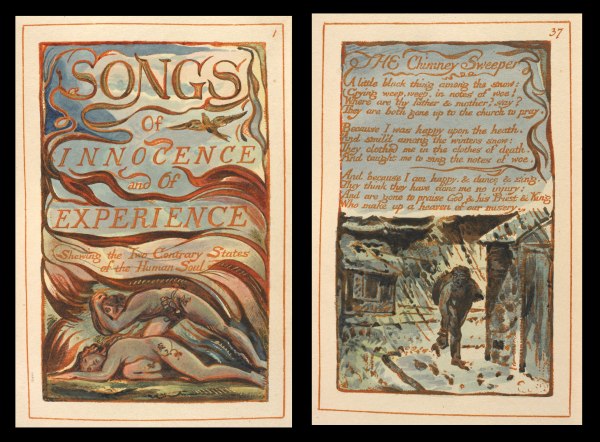
The Romantic Revival was a revolt against the neo-classical spirit. The classical mode had outlived its utility and a change was universally felt. The signs of revolt became evident when James Thompson published his ‘The Season’, a poem new in matter and manner. Collins and Gray enlarged the spirit of the movement in their odes and elegies. Burns, Crabbe, and Cowper also contributed to the incipient revolt against the neo-classical traditions. Among the early romantics, William Blake was the most revolutionary and his two publications ‘Songs of Innocence’ (1789) and ‘Songs of Experiences’ (1794) were landmarks in the evolution of the romantic spirit in English poetry. These poets are called ‘the transition poets’ because they represented a period just before the great romantics.

Impact on French Revolution

The ideas of the French Revolution such as liberty, equality, and fraternity encouraged the growth of the romantic spirit. The literature and arts of ancient Greece and Rome and the writings of philosophers like Rousseau also had an impact on the Romantic Revival. Victor Hugo defined romanticism as liberalism in literature. The romantic outlook emphasised spontaneity of expression and encouraged man’s right to utter his thoughts without restrictions.

Romanticism in poetry

Romanticism is the expression of sharpened sensibilities and heightened imaginative feeling. It found solace in going back to the ancients both in mythology and history. It was also a return to nature. Romanticism was not only concerned with beauty and inner life but also added strangeness to beauty. Other aspects of romanticism are a subtle sense of mystery, an exuberant intellectual curiosity, and an instinct for the elemental simplicities of life. Thus the Romantic Revival brought back many of the characteristics of the Renaissance and the Reformation. The dignity and importance of man were recognised and the emotions and feelings of even the humblest human being were recognised as worthy of artistic and literary expression. The spirit of the Romantic Revival was best expressed in the poetry of the great romantics Wordsworth, Coleridge, Keats, Shelley, and Byron and the novels of Walter Scott. Even the prose writings of Charles Lamb were colored by romantic sentiments.

The Lyrical Ballads published by Wordsworth and Coleridge in 1798 inaugurated the romantic era. It is called the period of Romantic Revival because the glorious productions of the nineteenth century had a close kinship with those of the spacious age of Elizabeth. Unbridled imagination, the first joy of a newfound power-the inevitable consequence of the Renaissance and Reformation characterised the Elizabethan and Caroline literature in the seventeenth century. But this spirit of imaginative enthusiasm was subjected to deep scrutiny and close criticism by the growing self-consciousness of the nation in the next age-the age of Pope and Johnson. During the eighteenth century, in society, in politics, in life and literature which is but a reflection of life, it stood for order, dignity, clarity, and for a certain standard of grace and beauty of ‘correctness’ and decorum in expression, and for the smothering of all passions and emotions which came to be regarded as barbaric and genteel. Against this spirit, the natural reaction was the second Romantic movement which was founded by William Blake and strengthened by William Wordsworth.

Victor Hugo describes romanticism as ‘liberalism in literature’. Wordsworth in his preface to the Lyrical Ballads boldly asserts “Those who have been accustomed to the gaudiness and inane phraseology of modern writers, if they persist in reading this book to its conclusion will no doubt, frequently have to struggle with feelings of strangeness and awkwardness.”