Water Conservation and Minimizing Wastage

Like in many philosophical traditions of the world, the Indian tradition puts great emphasis on the importance of water in life. In the ancient Indian tradition, ap or water is one of the five panchmahabhutas or great elements of life. Early Indian literature belonging to Hinduism, Buddhism, Jainism and other traditions had highlighted the importance of water and its conservation. The rich Ayurvedic literature of the subcontinent has countless treaties on water. It goes to the extent of defining it as jiva or life. However, this elixir of life is becoming increasingly scarce due to challenges of rising population, rapid urbanisation, industrial growth and increasing water pollution. Since the second half of the previous century, the world has been urbanizing rapidly. According to the Population Division of the UN Department of Economic and Social Affairs (UNDESA), a division established in 1946 to study “population dynamics and monitoring demographic trends and policies worldwide”, in 1950, only 30 per cent of the world’s population lived in urban areas, whereas by 2018 the world population living in the urban setting had grown to 55 per cent. The urban population of the world has grown rapidly from 751 million in 1950 to 4.2 billion in 2018.

The rapid urbanization has led to a severe crisis of useable water in the world, particularly in developing countries such as ours. In India, per capita availability of water has decreased from 2209 m3/year in 1991 to 1545 m3/year in 2011 and it is estimated to decline further up to 1140m3/ year in the year 2050. Furthermore, demand for water from various sectors viz. irrigation, drinking water, industry, energy and others are expected to rise from 710 billion cubic metres (BCM) in the year 2010 to 843 BCM in the year 2025 and further to 1180 BCM in the year 2050.

 According to a 2018 NITI Aayog report, currently, 600 million Indians face high to extreme water stress and about two lakh people die every year due to inadequate access to safe water. By 2030, the country’s water demand is projected to be twice the available supply, implying severe water scarcity for hundreds of millions of people and an eventual six per cent loss in the country’s GDP. When we speak of water, we generally mean freshwater because even when 70 per cent of our planet is covered with water, only 2.5 per cent of it is consumable. 

According to the UN Environment’s document ‘Freshwater Strategy 2017-2021’, freshwater plays a fundamental role in support of the environment, society and the economy. Since water is a natural resource and it cannot be created in factories or laboratories, the only solution to our looming water crisis is conserving water. 

In seven out of India’s 10 most populous cities, the depth to groundwater has increased significantly over the last two decades. This is an alarming situation because India is the biggest user of groundwater. According to a report India extracts more groundwater than China and the US the next two biggest pullers of groundwater combined. Half of the total clean water needed in our country is met from groundwater. 

The 2014 report o the parliamentary standing committee on water resources constituted on August 5, 2004, found that the groundwater forms the largest share of India’s agriculture and drinking water supply. About 89 per cent of groundwater extracted in India is used for irrigation making it the highest category with 9 per cent share of the extracted groundwater followed by the industry that uses only 2 per cent of it. Similarly, the Central Ground Water Board (CGWB) has stated in Lok Sabha that 50 per cent of urban water requirement and 85 per cent of rural domestic water needs are fulfilled by groundwater. This kind of use has caused a reduction in groundwater levels in India by 61 per cent between 2007 and 2017.

The present government has shown unprecedented interest in water conservation, minimising wastage and ensuring equitable distribution. In his first Mann Ki Baat programme in the second term as the Prime Minister of India, Shri Narendra Modi described the water crisis as on one of the biggest challenges facing India today. Apart from this, to encourage stakeholders like water user associations, institutions, corporate sector, individuals, Non-Governmental Organisations (NGOs), gram panchayats, urban local bodies to adopt innovative practices of groundwater augmentation like creating awareness through people’s participation, rainwater harvesting and artificial recharge, promoting water use efficiency, recycling and reuse of water, the government in 2007 launched the Groundwater Augmentation Awards and National Water Award.

On the dark side of the Moon

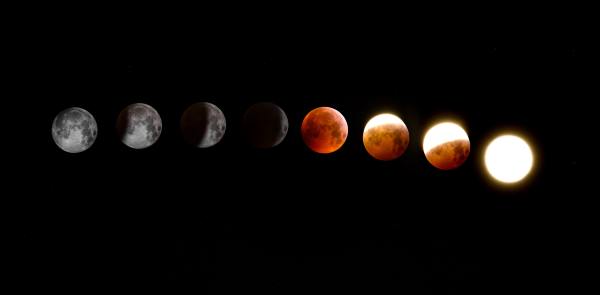
Were we ever lost in the moon while looking up high in the skies? You might remember, maybe you’ve dreamt about touching the moon or maybe walking towards it with a ladder. They might sound silly, but these facts used to fantasize us when we were young and heard such stories from our parents and grandparents too. We see the moon is round, and then it changes shape to crescent and diminishes one day. Do you know there are eight phases of the moon? They are :

  • new moon
  • waxing crescent
  • first quarter
  • waxing gibbous
  • full moon
  • waning gibbous
  • third quarter
  • waning crescent.
The phases of the moon in a single frame.

We know only one moon, but there are 219 in total in our solar system. Our planet earth has one, Mercury and Venus even have a single one, don’t they feel lonely, you can comment down. You may know the Venus does appear in the sky, so does the Mercury, try finding them next time. The other moons with the distribution as Phobos and Deimos of the Mars planet, 14 moons of the Neptune, 27 satellites of the Uranus, 79 moons of the Jupiter planet. The most leading number of moons is bound to Saturn, with 82 moons discovered till now. Moon, also a natural satellite, still can face a lunar eclipse.

We, humans, have put the first foot on the moon in the year 1969. Well, the moon is lighter being almost one-fourth than Earth and by 80 times with its diameter of 3476 kilometres. Can we see the entire moon surface, even during a supermoon? It does come a little bit close, but there is the other unknown side to discover. Recently, findings say that there are a minute number of radioactive elements on the near sides. There is around 31 percent dark region present on the near side. Let us know more about these sides. Mare, the dark zone, is usually at a lower elevation and typically flat. You may also notice the dark spot; those spots known as craters traditionally formed by the impact of a meteor attack. NASA also bought some rocks collected during Apollo missions.

An astronaut on the moon surface.

The worst thing among this situation was that the US, in the earlier 1950s, planned to destroy the moon using bombs. As in a book by John Greenwald, Jr, with the title called “Secrets from the Black Vault,” where it gets mentioned. It was due to the Soviet Union accomplished several missions and feared that they might dominate it. But luckily, the US reached the moon first, and such plans vanished out somewhere, and hopefully, someone didn’t talk about the topic.

Coming back, KREEP, a new rock found, is named before the initials of potassium (K), rare-earth elements, and phosphorous on the moon’s surface. The near side has regions with items like Uranium, Thorium which is rarely present on the other sides of the moon. These will help to know about the formation, and it’s earlier existence.

Well, even the moon, as we see, is not round in nature, but it’s an oblate spheroid. There are more things to discover, let’s us keep for the next time.

Concept of Planning

Planning is deciding in advance the objectives to be achieved during a given period, formulating alternative courses of action to achieve them and selecting the best course of action.

Planning bridges the gap between where we are and where we want to go. It is like a mental exercise that requires imagination, foresight and sound judgment.

“Planning is deciding in advance what is to be done. It involves the selection of objectives, policies, procedures and programmes among alternatives”. – ME Hurley

“Planning is the thinking process, the organised foresight, the vision based on facts and experience that is required for intelligent action”. – Alfred and Beatty

Features of Planning

1. Planning is s primary function

Planning lays down the base for other functions of management. All other managerial functions are performed on the basis of plan made beforehand. Thus, it can be said that planning precedes other functions.

2. Planning focuses on achieving objectives

Planning start with the determination of objectives. It identifies the actions that would lead to the desired results quickly and economically. It has no meaning unless it contributes to the achievement of predetermined goals.

3. Planning is pervasive

It is required at all levels of management as well as in all departments of the organisation. It is not a function restricted to top level only. It is performed at every level.

4. Planning is continuous

Planning is an ongoing process as it follows a cycle. Once, a plan is drawn, it is implemented and is followed by another plan and so on.

5. Planning is looking ahead

Planning is for looking ahead and preparing for future. The purpose of planning is to meet future events effectively to the best advantage of an organisation.

6. Planning involves decision making

Planning is essentially the process of choosing among various alternatives. So in order to make a choice effective, examination and evaluation of each alternatives is necessary. Thus it is concerned with decision making.

7. Planning is a mental exercise

Planning is a mental exercise as it requires creativity, imagination and higher thinking with sound judgment. It is an intellectual activity of thinking rather than doing.

Benefits of Planning

1. Planning provides direction

By deciding in advance what is to be done, planning provides direction for action. It clearly defines what employees have to do and how to do.

2. Planning reduces risk of uncertainty

Planning is an activity which enables a manager to look ahead and anticipate changes. By deciding in advance, it shows the way to deal with changes and uncertain events.

3. Planning reduces overlapping and wasteful activities

Planning serves as the base for coordination. Various activities of different departments and division are carried on in an effective manner, which reduces the overlapping and wasteful activities.

4. Planning promotes innovative ideas

Planning requires high thinking and it is an intellectual process, so there is a great scope of finding better ideas and better methods to perform a particular job.

5. Planning facilities decision making

Planning helps the manager to look into the future and choose amongst various alternative courses of action. Thus it facilitate decision making.

6. Planning establishes standards for controlling

Planning provides the standards against which actual performance is measured. It helps in finding deviations and thus we can say planning provides the basis for controlling.

Limitations of Planning

1. Planning leads to rigidity

When in an organisation, a well defined plan is drawn then a manager may not be in a position to change it. This leads to create rigidity.

2. Planning may not work in a dynamic environment

Business environment is dynamic, it changes from time to time. Hence I becomes difficult to forecast future and it leads to create obstacles to effective planning.

3. Planning reduces creativity

Planning is an activity, which is done by the top management and rest of the members just implement these plans. Due to which much of the initiative or creativity inherent in managers or other members get lost or reduced.

4. Planning involves huge cost

Planning is an expensive process. Money, time and lots of efforts have to be made in forecasting, collection of information and evaluation of alternative etc. So, it is a costly process.

5. Planning is a time consuming process

Sometimes, plans to be drawn up take so much of time that there is not much time left for their implementation.

6. Planning does not guarantee success

The success of an enterprise is possible only when plans are properly drawn up and implemented. Planning is based on forecasts, which estimate the future and future prediction is very difficult thus, it does not guarantee success.

*The End*

83 Killed In Lightning Strikes, Thunderstorms In Bihar, PM Condoles Deaths

Prime Minister Narendra Modi expressed his condolences after lightning strikes and thunderstorms in Bihar killed 83 people, injured many and caused widespread damage to property in the last two days.

The state disaster management department said 23 districts of the state were gravely affected with Gopalganj accounting for the maximum number of casualties at 13. Uttar Pradesh has also been affected by the thunderstorms and has reported casualties.

PM Modi expressed his anguish at the loss of lives and said the state governments are working towards relief and rehabilitation.

“Received tragic news about death of several people in some districts of Uttar Pradesh and Bihar due to heavy rains and lightening. The state governments are engaged in relief work with promptness,” he tweeted in Hindi.

Reports from districts said more than 20 people were injured and admitted to hospital. Lightning strikes has also caused widespread damage to houses and properties of the residents.

Bihar Chief Minister Nitish Kumar has announced a compensation of Rs 4 lakh for the families of the victims.

Mr Kumar has also appealed to everyone to remain alert and stay indoors as much as possible during the storms.

Home Minister Amit Shah also expressed grief on the tragedy.

“I am extremely saddened by the death of many people in Uttar Pradesh and Bihar due to heavy rain and lightning. Relief work is going on fast in both the states. I express my condolences to the families of those who have lost their lives in this disaster and wish the injured to be well soon,” he tweeted in Hindi.

Bengal Chief Minister Mamata Banerjee also extended her condolences to the victims’ families.

Congress leader Rahul Gandhi also tweeted his condolences.

“I am shocked to hear the news of 83 people dying due to lightning in Bihar. May God grant strength to their loved ones to bear this sorrow,” he said in a tweet in Hindi.

“I appeal to the Congress workers to extend all possible help to the families of the victims,” he added.

The weather office has predicted thunderstorms in all the 38 districts of the state over the next few days along with “heavy to very heavy rainfall” in the northern, flood-prone districts, bordering Nepal.

@Martin_christopher

Father— poetry

Father, the fire is now gone
and your dreams, now extinguished
crippled under the ire of fire.
let alone the home, there isn’t even the house.
the words, they refuse to come out of my  mouth.
Get up father, 
your lolled head is where all my dreams are kept.
Look father, I’ve been a good girl.
Everyone’s here to meet you,
all the preparations done only for you!
For you is the ceremony, 
for you is the new house a bustling, and the people, soon disappearing.
Look father, father, father!
The fire, it melted my shield, 
My father does not hear me.
Hos breath quintened forever ,
His body stilled like never.
The unsolicited questioning eyes surround me,
Like waves in a sea
But I, I trudge to the crematory
Yet another but intentional fire giving a final end to his story.

Reach out to me on instagram @ekanika_shah

25 June |India’s Black day

On 25 june , 1975 Prime Minister Indira Gandhi declared a National Emergency , which is the blackest day in India’s Democracy.

There are total three type of Emergency provision in India’s Constitution National Emergency, President rule , Financial Emergency .All these Emergency cannot be declared without the approvement of President and that time President was Fakhruddin Ali Ahmed who approved the National Emergency declaration at mignight on 25 , June.

It was the third time when the National Emergency was a declareded within in the country.In 1962 the National Emergency was declared for the first time during the India-China war and the 2nd Emergency was declared in 1971 during Indo-Pak war.

This emergency was mainly imposed due to four reasons Navnirman Andolan in Gujarat .This movement in 1974 was lead by student and middle class against economic crisis(Hipe in food rates and fees) and Coruption. It all started by the protest by student .In December 1973 Amhedabad protest was lead by students of L.D. College of Engineering against a hike in fees .This was the first and only agitation which led to victory dissolving the state government.

After the successful movement in gujarat there were many movement led in other parts of country and Bihar movement is one of them intiated by students and led by Jayaprakash Narayan, the socialist who fought against misrule and corruption due to which the problems of indira gandhi started increasing .

The third reason behind the emergency was the Railway Strike by the workers of Railways in 1974.And the major and last i.e. forth reason was the Raj Narayan Verdict .

Indira Gandhi elected election from Rae Bareilly  against Raj Narayan in 1971 .After losing election Raj Narayan filed a case in Allahbad High Court against Indira Gandhi to use malpractices like bribing voters with liquor and using misusing goverment machinery ,ultimately using her power in the wrong way.On 12 , june 1975 verdict was declared that she was found guilty and was barred for election for six years and high court declared the verdict that she have to leave the prime minister post .She was losing control and in order to be in power she filed a petion in supreme court ruling the high court decision.

On 24 june , 1975 Supreme Court judge, Justice VR Krishna Iyer ruled the vedict partially and she was allowed to remain prime minister but cannot vote as a MP until the final verdict .She was not happy by the decision .

On next day , 25 june 1975 she imposed National emergency at midnight.All prominent leaders Jayaprakash Narayan, Atal Bihari Vajpayee, LK Advani, Morarji Desai were arrested. 

In order to save her legacy she imosed Emergency .After this outbreak press censorship was imposed i.e.freedom of press were totally carry off .Fundamental rights were demolished and many restriction was imposed and whosoever ,stand against the decision were sent into jail.

After many protest against her and when International Media started portraying her image as a dictator , After 21 months i.e. On 21,March 1977 she finally dispose of the Emergency .

According to experts , if there was no Raj Narayan nor the Energency would declared.it is no denial, 25 June was the darkest day in the Indian History since Independence .

Music

Many people like to listen and sing music at various festivals and events. Some people listen to music every time like: in office, at home, on the way, etc. It helps to keep away from all the problems of life and also gives solutions to the problems. Nowadays, at the time of working in offices in big companies, there is a trend of singing in a low voice to make their brain refreshing, peaceful, focused, positive thoughts as well as to increase the efficiency of the employees.
Music is very powerful and delivers a positive message to all emotional problems and does not ask anyone for anything. It is a kind of melodious music. Though tells us everything and shares more problems than humans. The nature of music is to encourage and promote, which removes all negative thoughts and increases the power of human concentration. Music is something that helps to remember all the good memories we had with our most loved person. It has no boundaries, constraints and rules directory; It only needs to be heard with dedication and devotion.

Whenever we listen to music, it brings great feeling in the heart and brain, which connects us with our soul. This connection is the all-powerful power of God. Someone has rightly said about music; “Music has no limits, it is beyond all limits.” And “Music is rooted in life and life is music.”
Music has a lot of power, it makes a place in the minds of people in many ways. Where it can make work it can also spoil it. Music has a profound effect on everyone’s life, from humans to trees, plants, animals etc. Scientist has proved that the treatment of diseases can be done well through music. Its use has been very successful in the treatment of eye disease and heart disease. Digestion related diseases are also used to treat music.
As a man gets lost in the melody of music, his attention gets away from everything and he starts feeling relaxed.
Music is like yoga. It makes us happy and also maintains hormonal balance in our body. Along with this, it also works to give relief to body and brain. Due to which it helps us to keep our body healthy both physically and mentally. It also works to protect us from obesity and mental problems.

I love music very much and I love listening to music every morning. Music is also very important for our heart and it also helps us in getting a good sleep.

Stop for death? Nah!

Because I could not stop for Death –
He kindly stopped for me –
The Carriage held but just Ourselves –
And Immortality.

The eternal date, the gentlemen with unmatched conduct! The speaker could barely spare any time for Death so death took pity on her and kindly stopped to greet and tag her along with him. The speaker climbed in Death’s carriage, which held just the two of them and Eternal Life.

We slowly drove – He knew no haste
And I had put away
My labor and my leisure too,
For His Civility –

They drove the carriage quite slow and  Death seemed to be in no hurry. Seeing Death’s courteous behaviour she put away all her work and pleasures. She wanted to appear respectful and devote time to him for his sensible conduct.

We passed the School, where Children strove
At Recess – in the Ring –
We passed the Fields of Gazing Grain –
We passed the Setting Sun –

They crossed a school, where children played during their break time, huddled in a circle. Then they passed fields of crops and the sun as it was setting.

Or rather – He passed Us –
The Dews drew quivering and Chill –
For only Gossamer, my Gown –
My Tippet – only Tulle –

The speaker then corrects herself by saying it was quite possible that instead of them passing the Sun, the Sun had probably passed them indicative of their lack of awareness. The night came and the dew formed. The speaker was feeling cold because she was wearing clothes not suited for the night. The night drawing, the sun setting, the cold enveloping her with Death for her company paints a sombre fatalistic picture of things to come.

We paused before a House that seemed
A Swelling of the Ground –
The Roof was scarcely visible –
The Cornice – in the Ground –

They stopped before a house which was partly buried in the ground. The speaker could barely see the roof and the ceiling seemed to be in the ground.

Since then – ’tis Centuries – and yet
Feels shorter than the Day
I first surmised the Horses’ Heads
Were toward Eternity –

The speaker then proceeds to state that since that day, centuries have passed yet it feels that the entire duration has been less than a day for her when compared to the day she understood that the carriage was headed towards a never-ending eternity.

The poem brilliantly explores the inevitability of death yet Emily Dickinson paints a hue of positivity with the vivid imagery that doesn’t fail to delight. The beauty of the poem lies in the ambiguity surrounding her existence. It is not clear to the reader as to whether the speaker is already dead or is headed towards death and the carriage journey is one last melody that she gets to enjoy. The comfort in death, the gateway from suffering has been subtly portrayed by Dickinson where Death has been portrayed as a considerate gentleman. The poem so soothing in appearance deceitfully hides its grim undertones.

Is media oversueing its freedom?

No matter how much people love to read the newspapers early mornings, with lukewarm tea, there’s always a keenness among the personages to get updated information, at every point of time. And they look up towards the digital media to get all the world’s knowledge. Apart from the media platforms that have come today, that, somewhere, are more unbiased and neutral, people still appeal towards the news channels that are being telecasted on the television due to less popularity of those on social media platforms and that can only be accessed through internet and digital media.

In such an era, as this, news channels have become the best medium to convey the news of every minute, even seconds. They are always try to find interesting ways to give the best to the audiences through debates, showcasing interesting news, and speaking up equivocally. Today most of them have all the world’s freedom to speak up and provide every pros and cons of any happening around the world, and they actually does. But, unfortunately, they have surpassed all the limits of freedom and autarky, and those end up showing the news and the information that is in favour of their sponsors and government whom so ever they have sold themselves to. Always wondering the reason behind such doings? Found out, it is actually for the sake of popularity, as well as to “be the good guy of the room” whether we believe it or not, in some way or the other, they show us, at last, what they really want us to believe and perceive.

Either they telecast such news that is all hot and debated amongst political parties, or nothing at all. The use of language in their headlines, is also something that is to be worried on, beyond imagination, too pathetic and so to say, low quality to handle. And it is because of such stuff, people come under believing in those news that are even not that tension worthy, leaving behind the happenings that are to be focused on. Again, if we talk about how they have created a mess among the people, who are no one, but believes what is being shown to them, sometimes they come up with such facts and datas that are nowhere in the history, nobody has ever mentioned that.

For instance, the recent incident of Chinese troops’ standoff on the Indian borders, is telecasted on and off the television again and again, claiming that the Chinese Army has been terrified by the revert back of the Indian Army. And they are proudly claiming and rejoicing that all the way in their news, which is a really worth appreciating. But, the picture behind the scenes isn’t made clear to the public yet; it is the Chinese cyber attacks that is also a big and a disaster for Indian IT sectors, that is unluckily not been promoted to show up on the television screens of millions of Indians, leaving them untouched from the reality.

Although,media did, does, and is doing such an appreciable work all the time, every single minute, faster it is than the print media and has given all the freedom to provide information, quality information to its viewers. But, certainly, their quality, the news that they display over the television screens have got limited with time and space;certainly due to enormous pressure of their sponsors. Which is why, “news channels must start wearing sponser jackets, like Nascar drivers, then we know who owns them.

JOKER

She needs, He needs, Family needs,

All their needs stood at the back stabbed together,

Where his eyes were too deep

To cry? To smile? To frustrate to shout

But he has the heart of the joker

His madness came as a flawed words, to his quivering funny lips ,

He showed of his best, the rest is roar

One on stage and other off stage

Two entities laughed at each other,

Knowing themselves deep inside of their needs,

while the show reached its peak

the dying joker was in everyone!